2026 Sales Enablement Playbook: Boost Deal Velocity by 15%

The 2026 Sales Enablement Playbook: Achieving a 15% Increase in Deal Velocity (INSIDER KNOWLEDGE)
The pace of business is accelerating, and in the competitive landscape of 2026, sales teams are under immense pressure to not just meet, but exceed, ambitious targets. The traditional sales methodologies, while foundational, are no longer sufficient to navigate the complexities of today’s buyer journey. This is where a robust and forward-thinking sales enablement playbook becomes not just an advantage, but a necessity. This comprehensive guide will equip you with the insider knowledge to craft a sales enablement playbook that can realistically deliver a 15% increase in deal velocity, transforming your sales organization into a lean, efficient, and highly effective machine.
We’re not just talking about incremental improvements; we’re talking about a strategic overhaul that leverages cutting-edge technology, refined processes, and a deep understanding of human psychology. By 2026, the sales landscape demands a proactive, data-driven approach, and this sales enablement playbook is your blueprint for success.
Understanding the Evolving Sales Landscape in 2026
Before we delve into the specifics of building your sales enablement playbook, it’s crucial to understand the context. What defines the sales environment in 2026? Several key trends are shaping how sales are conducted:
- Hyper-Personalization at Scale: Buyers expect experiences tailored to their specific needs and pain points. Generic outreach is dead. AI and machine learning are no longer novelties but essential tools for delivering hyper-personalized content and interactions at scale.
- Data-Driven Decision Making: Gut feelings are out; data insights are in. Every aspect of the sales process, from lead qualification to deal closure, is informed by sophisticated analytics.
- The Rise of the Hybrid Seller: The distinction between inside and outside sales is blurring. Sellers are adept at both virtual and in-person engagements, leveraging technology to bridge geographical gaps and enhance interactions.
- Buyer Self-Service and Research: Buyers are more informed than ever before. They conduct extensive research before engaging with sales, meaning sellers must add significant value beyond simply providing product information.
- Emphasis on Customer Success: The sales cycle doesn’t end at the close. Customer success and retention are integral to long-term revenue growth, making seamless handoffs and ongoing support critical.
- AI as a Co-Pilot: AI isn’t replacing salespeople, but it’s augmenting their capabilities. From predictive analytics to automated content recommendations, AI acts as a powerful co-pilot, freeing up sellers to focus on high-value activities.
These trends underscore the need for a dynamic and adaptable sales enablement playbook that empowers sellers to thrive in this complex environment.
Pillars of a High-Impact Sales Enablement Playbook for 2026
A successful sales enablement playbook isn’t just a collection of documents; it’s a living, breathing strategic framework. It’s built upon several interconnected pillars, each designed to optimize a specific aspect of the sales journey and ultimately, accelerate deal velocity.
Pillar 1: Intelligent Content Strategy and Management
Content is the fuel for your sales engine. In 2026, an intelligent content strategy means more than just having a library of brochures. It means dynamic, personalized, and easily accessible content that aligns with every stage of the buyer’s journey.
- Dynamic Content Generation: Leverage AI-powered tools to create and customize sales collateral on the fly, ensuring relevance to individual prospect needs and industry specifics. Think interactive presentations, personalized case studies, and tailored proposals.
- Centralized Content Repository with AI Search: A single source of truth for all sales content, easily searchable and filterable using natural language processing. Sellers shouldn’t waste time hunting for materials.
- Content Performance Analytics: Track which content pieces resonate most with buyers, at what stage of the sales cycle, and which content contributes most to deal progression. This data informs continuous optimization of your content strategy within your sales enablement playbook.
- Micro-Content and Video: Shorter, digestible content formats like short videos, infographics, and interactive demos are increasingly effective in capturing buyer attention and conveying complex information quickly.
- Personalization at Scale: Implement tools that allow sellers to quickly adapt existing content with prospect-specific data, ensuring every interaction feels bespoke.
Pillar 2: Advanced Sales Technology Stack Integration
The right technology stack is the backbone of your sales enablement playbook. By 2026, fragmented systems are a significant drag on efficiency. Seamless integration is paramount.
- CRM as the Central Hub: Your CRM (Customer Relationship Management) system must be the single source of truth for all customer data and interactions. Ensure it integrates seamlessly with all other sales enablement tools.
- AI-Powered Sales Engagement Platforms: These platforms automate and optimize outreach, provide real-time coaching, suggest next best actions, and analyze buyer engagement. They are critical for boosting productivity and ensuring consistent messaging.
- Sales Content Management (SCM) Systems: Beyond simple storage, SCM systems offer version control, approval workflows, and analytics on content usage and effectiveness.
- Learning Management Systems (LMS) for Sales: Dedicated platforms for ongoing sales training, skill development, and certification.
- Predictive Analytics and Forecasting Tools: Leverage AI to identify at-risk deals, predict future sales performance, and recommend optimal strategies, making your sales enablement playbook truly data-driven.
- Conversation Intelligence: Tools that transcribe, analyze, and provide insights from sales calls and meetings, helping identify best practices and areas for coaching.
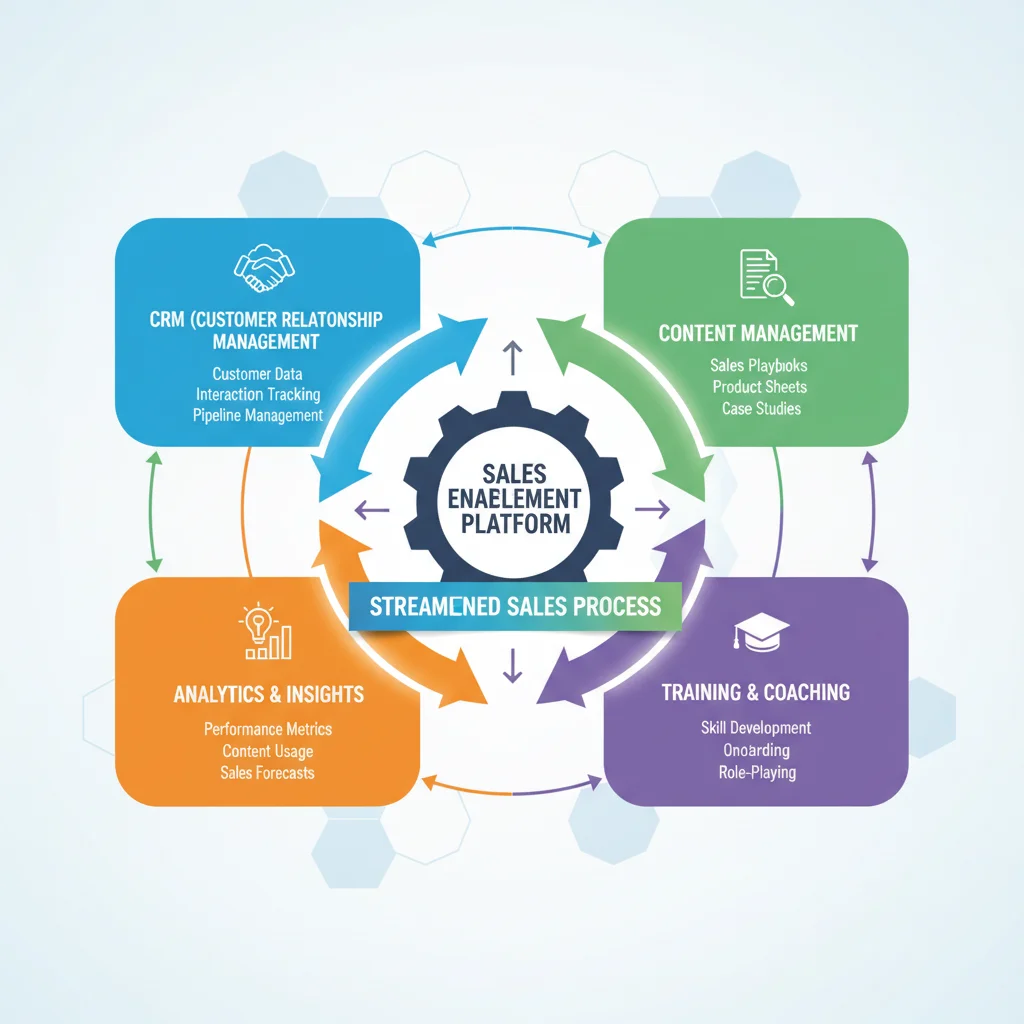
Pillar 3: Dynamic Sales Training and Coaching
Sales enablement is fundamentally about empowering your people. In 2026, training and coaching must be continuous, personalized, and performance-driven.
- Personalized Learning Paths: Move beyond one-size-fits-all training. Use AI to identify individual skill gaps and recommend tailored learning modules and resources within the sales enablement playbook.
- Micro-Learning Modules: Deliver training in short, digestible bursts that can be consumed on demand, fitting into busy sales schedules.
- Role-Playing and Simulation Tools: Utilize virtual reality (VR) or augmented reality (AR) for realistic sales simulations, allowing reps to practice pitches and handle objections in a safe environment.
- AI-Powered Coaching: Leverage conversation intelligence tools to provide real-time feedback during calls and post-call analysis, identifying areas for improvement in communication, objection handling, and product knowledge.
- Peer-to-Peer Learning Platforms: Foster a culture of knowledge sharing where top performers can share best practices and mentor less experienced colleagues, strengthening the overall sales enablement playbook.
- Continuous Certification: Implement ongoing certification programs to ensure product knowledge, sales methodologies, and compliance are always up-to-date.
Pillar 4: Streamlined Sales Process and Workflow Automation
Inefficient processes are deal killers. Your sales enablement playbook for 2026 must focus on removing friction and automating repetitive tasks.
- Optimized Buyer Journey Mapping: Clearly define each stage of your buyer’s journey and align your sales process to it, identifying key touchpoints and required resources.
- Automated Lead Routing and Qualification: Use AI to intelligently qualify and route leads to the most appropriate sales rep, reducing response times and improving conversion rates.
- Automated Follow-Up Sequences: Implement smart automation for email sequences and outreach, ensuring timely and consistent communication without manual effort.
- Proposal Generation Automation: Tools that pull relevant data and content to generate personalized proposals quickly and accurately, minimizing administrative burden.
- Contract Management Integration: Streamline the contracting process with integrated e-signature and contract lifecycle management solutions.
- Feedback Loops and Iteration: Establish mechanisms for continuous feedback on process effectiveness from the sales team, allowing for agile adjustments to the sales enablement playbook.
Implementing Your 2026 Sales Enablement Playbook: A Step-by-Step Guide
Developing a robust sales enablement playbook is one thing; successfully implementing it is another. Follow these steps to ensure a smooth and impactful rollout:
Step 1: Conduct a Comprehensive Sales Audit
Before you can optimize, you need to understand your current state. Analyze your existing sales process, identify bottlenecks, assess your current technology stack, and gather feedback from your sales team. What are their biggest challenges? Where do they spend most of their non-selling time? This audit forms the baseline for your sales enablement playbook.
Step 2: Define Clear Objectives and KPIs
What does a 15% increase in deal velocity look like for your organization? Define specific, measurable, achievable, relevant, and time-bound (SMART) objectives. Key Performance Indicators (KPIs) might include:
- Average deal cycle length
- Win rates
- Sales productivity (e.g., number of qualified meetings per rep)
- Content utilization rates
- Sales rep ramp-up time
- Customer lifetime value (CLTV)
These KPIs will be crucial for measuring the success of your sales enablement playbook.
Step 3: Design Your Ideal Buyer Journey and Sales Process
Based on your audit and objectives, map out your ideal buyer journey, from initial awareness to post-sale advocacy. Then, align your sales process to this journey, identifying the specific actions, content, and tools required at each stage. This detailed mapping will be a core component of your sales enablement playbook.
Step 4: Select and Integrate Your Sales Technology Stack
Choose the technologies that best support your redesigned process and content strategy. Prioritize seamless integration between systems to avoid data silos and ensure a smooth workflow. Remember, your CRM should be the central nervous system of your sales enablement playbook.
Step 5: Develop and Curate Intelligent Content
Begin creating or updating your sales content based on the buyer journey and identified needs. Focus on dynamic, personalized, and value-driven content. Organize it within your SCM system for easy access and robust analytics.
Step 6: Create a Continuous Training and Coaching Program
Launch your personalized learning paths and micro-learning modules. Implement AI-powered coaching and foster a culture of continuous improvement. Regular, structured coaching sessions are vital for reinforcing learned skills and adapting to new challenges, as outlined in your sales enablement playbook.
Step 7: Pilot, Iterate, and Scale
Don’t roll out everything at once. Pilot your new sales enablement playbook with a small, motivated team. Gather feedback, make necessary adjustments, and then gradually scale across the entire sales organization. Agility and a willingness to iterate are key.
Step 8: Measure, Analyze, and Optimize
Continuously monitor your defined KPIs. Use the data to identify what’s working and what’s not. Leverage predictive analytics to anticipate challenges and opportunities. Your sales enablement playbook should be a living document, constantly evolving based on performance data and market shifts.

Insider Knowledge: Advanced Tactics for Boosting Deal Velocity
Beyond the foundational pillars, here are some advanced tactics to truly supercharge your sales enablement playbook and hit that 15% deal velocity increase:
- AI-Driven Lead Prioritization: Implement AI models that not only qualify leads but also score them based on their likelihood to convert and close quickly. Direct your sales reps to the hottest, fastest-moving opportunities.
- Predictive Content Delivery: Leverage AI to predict which content a prospect needs at their exact stage in the buying journey, and proactively deliver it to the sales rep or even directly to the prospect.
- Automated Objection Handling Suggestions: During live calls, AI can listen for common objections and provide real-time suggestions to the sales rep on how to address them effectively, improving conversion rates and shortening sales cycles.
- Personalized Video Selling: Encourage and enable your sales team to create short, personalized video messages for prospects at key touchpoints. This builds rapport and cuts through email clutter.
- Gamification of Training and Performance: Introduce gamified elements into your sales training and performance tracking. Leaderboards, badges, and rewards can motivate reps to engage with enablement resources and improve their skills, directly impacting deal velocity.
- Deep Integration with Marketing Automation: Ensure a seamless flow of data and content between sales enablement and marketing automation platforms. This allows for hyper-personalized buyer journeys and ensures sales has access to all relevant marketing insights.
- Ethical AI Usage and Transparency: As AI becomes more prevalent, ensure your sales enablement playbook includes guidelines for ethical AI use, data privacy, and transparency with prospects about how their data is being used to enhance their experience.
- Focus on "Time to Value" Messaging: Train your sales team to articulate the immediate and long-term value your solution provides, focusing on how quickly a customer can realize benefits. This resonates with buyers looking for rapid ROI and can accelerate decision-making.
- "Dark Funnel" Insights: Use advanced analytics to identify potential buyers who are researching your solutions or competitors without directly engaging with your marketing or sales teams. Tools exist to infer intent from public online behavior, allowing your sales team to engage proactively and shorten the discovery phase.
Measuring Success: Beyond Deal Velocity
While a 15% increase in deal velocity is a compelling goal, the true measure of your sales enablement playbook’s success lies in its holistic impact. Look at metrics like:
- Sales Rep Engagement with Enablement Tools: Are your reps actually using the resources provided? High adoption rates indicate value.
- Sales Rep Satisfaction and Retention: Empowered and effective salespeople are happier and less likely to leave.
- Customer Satisfaction and Retention: Faster, more efficient sales processes often lead to better initial customer experiences and stronger long-term relationships.
- Revenue Growth and Profitability: Ultimately, a more efficient sales engine should translate into increased revenue and improved margins.
By focusing on these broader indicators, you ensure that your sales enablement playbook is not just a tactical tool, but a strategic asset driving sustainable business growth.
Conclusion: Your Future-Proof Sales Enablement Playbook
The sales landscape of 2026 demands agility, intelligence, and a relentless focus on the buyer. By meticulously crafting and continuously refining your sales enablement playbook, you empower your sales team to meet these demands head-on. The 15% increase in deal velocity isn’t just an ambitious target; it’s a tangible outcome of a well-executed strategy that integrates intelligent content, advanced technology, continuous training, and streamlined processes.
Embrace the insights and strategies presented in this insider knowledge guide to build a sales enablement playbook that not only accelerates your deals but also positions your organization as a leader in the competitive sales arena of tomorrow. The future of sales is enabled, and your playbook is the key to unlocking its full potential.