CX Process Optimization: Friction to Flow by 2026

From Friction to Flow: Optimizing 4 Key CX Processes for 2026 Efficiency
In today’s hyper-competitive market, customer experience (CX) is no longer just a buzzword; it’s the bedrock of business success. As we hurtle towards 2026, the imperative to transform customer interactions from points of friction into seamless, delightful flows has never been more critical. Businesses that prioritize CX process optimization are not just surviving; they are thriving, building lasting customer loyalty and driving significant growth. This comprehensive guide delves into four pivotal CX processes that, when optimized, will redefine your customer journey and set you apart from the competition by 2026.
The digital age has empowered customers like never before. They expect instant gratification, personalized interactions, and effortless resolutions. Any hiccup in their journey can lead to frustration, churn, and negative word-of-mouth. Therefore, proactively identifying and eliminating these friction points through strategic CX process optimization is paramount. This article will explore the ‘why’ and ‘how’ of optimizing customer onboarding, service and support, feedback collection and utilization, and personalized engagement, providing actionable insights to help your organization achieve unparalleled efficiency and customer satisfaction.
The Imperative of CX Process Optimization in a Dynamic Market
The landscape of customer expectations is constantly shifting. What was considered exceptional CX yesterday is merely table stakes today. Businesses must continuously adapt and evolve their processes to meet these escalating demands. Failure to do so can result in significant losses, both in revenue and reputation. CX process optimization isn’t a one-time project; it’s an ongoing commitment to excellence that permeates every facet of your organization.
A well-optimized CX process leads to a multitude of benefits. It reduces operational costs by streamlining workflows, minimizes errors, and frees up valuable resources. More importantly, it fosters customer loyalty, turning first-time buyers into lifelong advocates. Satisfied customers are more likely to make repeat purchases, recommend your brand to others, and even forgive occasional missteps. In essence, CX process optimization is an investment that yields substantial returns, positioning your business for sustained success in the years to come.
Before diving into specific processes, it’s crucial to understand that successful optimization hinges on a holistic approach. It requires a deep understanding of your customer journey, leveraging data analytics, embracing new technologies, and fostering a customer-centric culture within your organization. Without these foundational elements, even the most well-intentioned optimization efforts may fall short.
1. Streamlining Customer Onboarding: The First Impression That Lasts
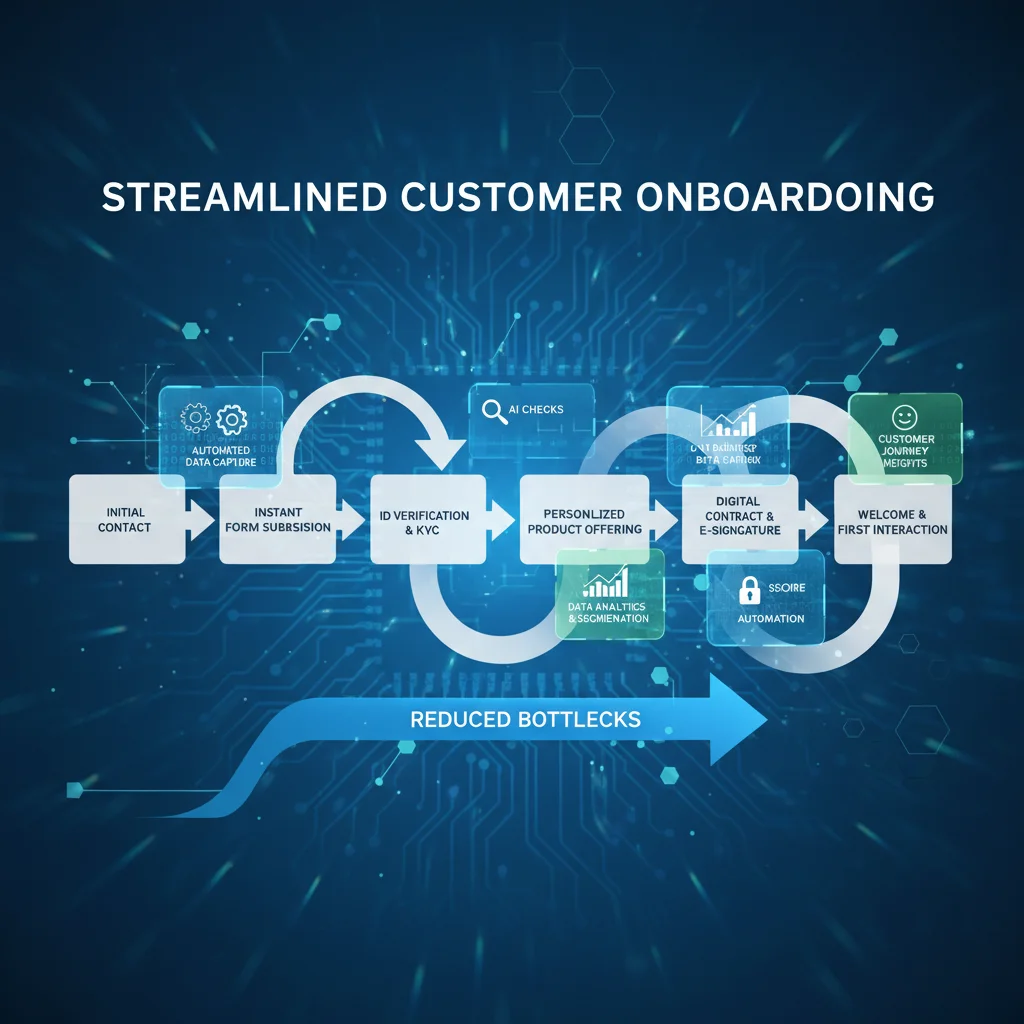
The customer onboarding process is arguably the most critical stage of the entire customer journey. It’s where expectations are set, trust is built (or broken), and the foundation for a long-term relationship is laid. A clunky, confusing, or overly complex onboarding experience can lead to early churn, regardless of the quality of your product or service. Therefore, making CX process optimization a priority in this area is non-negotiable.
Identifying Onboarding Friction Points
Begin by meticulously mapping out your current onboarding journey. Walk through it from the customer’s perspective. Where do they encounter confusion? What steps are redundant? Are there too many forms, too much jargon, or insufficient guidance? Common friction points include:
- Excessive Data Entry: Asking for the same information multiple times or requiring unnecessary details.
- Lack of Clarity: Ambiguous instructions, unclear next steps, or a lack of progress indicators.
- Slow Activation: Delays in granting access to services or products.
- Poor Communication: Insufficient follow-up, generic messages, or a lack of personalized support.
- Technical Glitches: Software bugs, broken links, or unresponsive interfaces.
Strategies for Onboarding Optimization
To transform your onboarding into a seamless flow, consider these CX process optimization strategies:
- Automate and Digitize: Leverage automation tools for form filling, document verification, and initial communication. Digital-first onboarding minimizes manual effort and speeds up the process.
- Personalize the Journey: Use data to tailor onboarding content and communication. Address customers by name, recommend relevant resources, and acknowledge their specific needs.
- Provide Clear Guidance: Implement interactive walkthroughs, tooltips, and in-app guides. Use video tutorials and FAQs to preempt common questions.
- Set Expectations: Clearly communicate what customers can expect at each stage and how long each step will take.
- Offer Proactive Support: Integrate live chat or a dedicated onboarding specialist to assist customers in real-time if they encounter difficulties.
- Leverage AI and Machine Learning: AI can predict potential issues, suggest relevant product features, and even automate personalized welcome sequences, significantly enhancing CX process optimization.
- Iterative Improvement: Regularly collect feedback from new customers and analyze onboarding completion rates to identify areas for continuous improvement.
By investing in CX process optimization for onboarding, you not only improve initial customer satisfaction but also reduce support tickets, increase product adoption, and lay the groundwork for long-term customer relationships. It’s about making the customer feel valued and empowered from day one.
2. Enhancing Customer Service and Support: From Reactive to Proactive
Customer service and support are often considered cost centers, but in reality, they are crucial touchpoints that can either solidify or shatter customer loyalty. The goal for 2026 should be to move beyond reactive problem-solving towards a proactive, predictive, and personalized support model. This requires significant CX process optimization in how your teams interact with customers.
Common Support Friction Points
Think about your own experiences with customer support. What frustrates you? These are likely the same pain points your customers face:
- Long Wait Times: Being stuck in a queue for extended periods.
- Repetitive Information: Having to explain the issue multiple times to different agents.
- Lack of First Contact Resolution: Issues not being resolved during the initial interaction.
- Limited Channel Options: Inability to reach support through their preferred channel.
- Unknowledgeable Agents: Agents lacking the information or authority to help effectively.
- Disconnected Systems: Customer history and context not being accessible to agents.
Strategies for Service and Support Optimization
To achieve excellence in service and support through CX process optimization:
- Implement Omnichannel Support: Allow customers to seamlessly switch between channels (phone, email, chat, social media) without losing context. A unified agent desktop is key here.
- Empower Agents with Knowledge: Provide comprehensive knowledge bases, CRM integration, and AI-powered tools that offer real-time information and suggested solutions.
- Leverage Self-Service Options: Develop robust FAQs, help centers, and chatbots that can resolve common issues instantly, freeing up human agents for more complex problems.
- Proactive Outreach: Use data analytics to identify potential issues before they impact customers. For example, monitor system performance to alert users of outages or offer assistance based on usage patterns.
- Personalized Interactions: Train agents to use customer history and preferences to offer tailored solutions and recommendations.
- Feedback Loop Integration: Ensure that feedback from support interactions is captured and used to improve products, services, and processes.
- AI-Powered Routing and Triage: Use AI to intelligently route customer inquiries to the most appropriate agent, reducing transfer times and improving resolution rates.
- Continuous Training and Development: Invest in ongoing training for your support teams, focusing not just on product knowledge but also on empathy, communication skills, and conflict resolution.
By implementing these CX process optimization strategies, you can transform your support function from a cost center into a powerful differentiator, fostering loyalty and enhancing brand reputation.
3. Optimizing Feedback Collection and Utilization: The Voice of the Customer
Customer feedback is a goldmine of insights, but only if it’s collected effectively and, more importantly, acted upon. Many organizations gather feedback but fail to integrate it into their CX process optimization efforts, leading to missed opportunities and continued customer frustration. By 2026, efficient feedback loops will be non-negotiable for competitive advantage.
Ineffective Feedback Practices
Common issues in feedback processes include:
- Irrelevant Surveys: Asking too many questions or questions that aren’t actionable.
- Poor Timing: Requesting feedback at an inappropriate point in the customer journey.
- Limited Channels: Only offering one or two ways for customers to provide input.
- Lack of Follow-Up: Customers feel their feedback disappears into a black hole.
- Siloed Data: Feedback data not being shared across departments or integrated with other customer data.
- No Action Taken: The biggest friction point – feedback is collected but not used to drive improvements.
Strategies for Feedback Optimization
To harness the power of the customer’s voice for CX process optimization:
- Multi-Channel Feedback Collection: Offer various avenues for feedback, including in-app surveys, email surveys, social media listening, review sites, and direct customer service interactions.
- Timely and Contextual Surveys: Ask for feedback immediately after key interactions (e.g., post-purchase, after a support call) to capture fresh perspectives.
- Short, Relevant Surveys: Keep surveys concise and focused on specific aspects of the experience. Use NPS, CSAT, and CES metrics strategically.
- Close the Loop: Acknowledge receipt of feedback and, where appropriate, inform customers about actions taken based on their input. This builds trust and encourages future feedback.
- Centralized Feedback Management: Consolidate all feedback into a single platform. Use AI-powered sentiment analysis and text analytics to extract key themes and identify trends.
- Integrate Feedback into Workflows: Embed feedback insights directly into product development, marketing, and service improvement processes. Make it a mandatory input for decision-making.
- Employee Empowerment: Train employees across all departments on how to interpret and act on customer feedback relevant to their roles.
- Predictive Analytics: Use historical feedback data to predict potential pain points and proactively address them before they escalate, a core aspect of advanced CX process optimization.
By effectively collecting and utilizing feedback, you not only improve specific processes but also foster a culture of continuous improvement and demonstrate to customers that their opinions truly matter. This contributes significantly to overall CX process optimization.
4. Personalizing Customer Engagement: Building Deeper Connections
Generic, one-size-fits-all communication is a relic of the past. Modern customers expect personalized experiences that acknowledge their unique preferences, history, and needs. This goes beyond simply addressing them by their first name; it involves tailoring every touchpoint to resonate deeply. Achieving this level of personalization requires sophisticated CX process optimization.
Challenges in Personalization
Common hurdles in delivering personalized engagement include:
- Data Silos: Customer data scattered across different systems, making a unified view impossible.
- Lack of Data Analysis: Collecting data but not having the tools or expertise to extract actionable insights.
- Generic Content: Creating marketing messages or product recommendations that don’t align with individual customer profiles.
- Poor Timing: Sending personalized messages at irrelevant or inconvenient times.
- Over-Personalization/Creepiness: Crossing the line from helpful to intrusive due to excessive data use.

Strategies for Personalized Engagement Optimization
To master personalized engagement through CX process optimization:
- Unified Customer Profiles: Implement a robust Customer Data Platform (CDP) or CRM that aggregates all customer data (demographics, purchase history, browsing behavior, support interactions) into a single, accessible profile.
- Segmentation and Micro-Segmentation: Go beyond broad segments. Use advanced analytics to create highly specific customer micro-segments based on behavior, preferences, and lifecycle stage.
- AI-Powered Recommendations: Utilize AI and machine learning algorithms to analyze customer data and provide highly relevant product recommendations, content suggestions, and offers in real-time.
- Dynamic Content: Employ tools that allow for dynamic content insertion in emails, websites, and apps, ensuring that each customer sees content tailored to them.
- Journey Orchestration: Map out customer journeys and use automation platforms to trigger personalized communications and actions at the optimal moment.
- Omnichannel Personalization: Ensure that personalization extends across all channels, from your website and mobile app to email, social media, and even in-store experiences.
- Consent and Transparency: Be transparent about data collection and give customers control over their preferences. Respect privacy to build trust.
- A/B Testing and Iteration: Continuously test different personalization strategies and refine your approach based on performance data.
By embracing these strategies for CX process optimization, you can move beyond superficial personalization to create truly meaningful and impactful customer interactions, fostering deeper loyalty and driving conversion rates. It’s about making each customer feel seen, understood, and valued.
The Role of Technology in CX Process Optimization
Achieving significant CX process optimization by 2026 is inextricably linked with leveraging cutting-edge technology. While technology isn’t a silver bullet, it provides the tools and capabilities necessary to execute sophisticated CX strategies. Here are some key technological enablers:
- Customer Relationship Management (CRM) Systems: The foundation for managing customer interactions and data. Modern CRMs offer advanced analytics and integration capabilities essential for a unified customer view.
- Customer Data Platforms (CDPs): Crucial for aggregating and harmonizing customer data from various sources, creating a single, comprehensive customer profile. This enables true personalization and segmentation.
- Artificial Intelligence (AI) and Machine Learning (ML): AI powers chatbots, sentiment analysis, predictive analytics, personalized recommendations, and intelligent routing, significantly enhancing efficiency and effectiveness in CX process optimization.
- Automation Platforms: Automate repetitive tasks in onboarding, service, and engagement, freeing up human resources for more complex and empathetic interactions.
- Business Intelligence (BI) and Analytics Tools: Provide the insights needed to identify friction points, measure the impact of optimizations, and make data-driven decisions.
- Omnichannel Engagement Platforms: Facilitate seamless customer interactions across all channels, ensuring consistency and continuity.
- Workflow Automation and Robotic Process Automation (RPA): These tools can automate back-office operations that impact CX, such as order fulfillment or data updates, reducing errors and speeding up processes.
Integrating these technologies effectively requires careful planning, a clear understanding of your CX goals, and a willingness to invest in both the tools and the training required to maximize their potential. Technology should serve your CX process optimization strategy, not define it.
Building a Customer-Centric Culture for Sustainable CX Process Optimization
Technology and processes, however advanced, are only as effective as the people who implement and manage them. For sustainable CX process optimization, an organization must cultivate a deeply ingrained customer-centric culture. This means:
- Leadership Buy-in: CX must be a top-down priority, with leadership actively championing customer-centric initiatives and allocating necessary resources.
- Employee Empowerment: Equip employees with the training, tools, and authority to make decisions that benefit the customer. Encourage empathy and problem-solving.
- Cross-Functional Collaboration: Break down departmental silos. CX is everyone’s responsibility, and different teams must collaborate seamlessly to deliver a cohesive customer journey.
- Continuous Learning: Foster an environment where employees are encouraged to learn from customer interactions, share insights, and adapt processes based on feedback.
- Metrics That Matter: Align employee performance metrics with CX outcomes, such as customer satisfaction, retention, and Net Promoter Score (NPS).
- Celebrate Successes: Recognize and reward teams and individuals who demonstrate exceptional customer-centricity and contribute to successful CX process optimization.
A customer-centric culture ensures that CX process optimization is not just a project but a fundamental way of doing business, driving continuous improvement and innovation that benefits both customers and the bottom line.
Measuring Success: KPIs for CX Process Optimization
How do you know if your CX process optimization efforts are paying off? Measurement is key. Here are essential Key Performance Indicators (KPIs) to track:
- Customer Satisfaction (CSAT): Measures satisfaction with specific interactions or overall experience.
- Net Promoter Score (NPS): Gauges customer loyalty and willingness to recommend.
- Customer Effort Score (CES): Assesses how much effort a customer had to exert to get an issue resolved or a request fulfilled. Lower scores are better.
- First Contact Resolution (FCR): Percentage of customer issues resolved during the first interaction.
- Average Handle Time (AHT): Average time spent on a customer interaction. While not always directly a CX measure, it indicates efficiency.
- Churn Rate: Percentage of customers who stop using your service over a period.
- Customer Lifetime Value (CLTV): The total revenue expected from a customer over their relationship with your business.
- Onboarding Completion Rate: Percentage of new customers who successfully complete the onboarding process.
- Time to Value (TTV): How quickly customers realize the value of your product or service.
- Personalization Effectiveness: Track metrics like conversion rates on personalized offers, engagement with personalized content, and reduced opt-out rates.
Regularly reviewing these KPIs will provide clear insights into the effectiveness of your CX process optimization initiatives and highlight areas that require further attention. Remember, the goal is not just to hit targets but to continuously improve the customer experience.
Conclusion: Paving the Way for a Seamless CX Future by 2026
The journey from friction to flow in customer experience is an ongoing one, but by focusing on CX process optimization in these four critical areas – onboarding, service and support, feedback collection, and personalized engagement – your organization can achieve remarkable efficiency and customer satisfaction by 2026. This isn’t merely about tweaking existing processes; it’s about fundamentally rethinking how you interact with your customers, placing their needs and preferences at the very heart of your operations.
Embrace technology as an enabler, cultivate a deeply customer-centric culture, and commit to continuous improvement. The businesses that successfully navigate this transformation will not only build stronger relationships with their customers but also unlock new avenues for growth and innovation. The future of customer experience is seamless, personal, and proactive – are you ready to build it?
Take Action Today:
- Audit your current CX processes: Identify immediate pain points in onboarding, service, feedback, and personalization.
- Invest in the right technology: Explore CRM, CDP, AI, and automation solutions that align with your strategic goals.
- Empower your teams: Provide training and resources to foster a customer-centric mindset.
- Start small, iterate fast: Don’t try to optimize everything at once. Pick one process, implement changes, measure, and then expand.
By taking these proactive steps, you can ensure that your organization is well-prepared to deliver an exceptional customer experience that truly sets you apart in the competitive landscape of 2026 and beyond. The power of effective CX process optimization is immense, and its rewards are enduring.