Conversational AI in Sales: Boost Customer Satisfaction 18% with 3 Digital Tools

In the dynamic landscape of modern business, customer satisfaction reigns supreme. It’s no longer just about offering a great product or service; it’s about delivering an exceptional experience at every touchpoint. This is where conversational AI in sales emerges as a game-changer. The integration of advanced digital tools powered by artificial intelligence is not merely a trend; it’s a strategic imperative for businesses aiming to thrive in a competitive market. Recent data from the US indicates a remarkable 18% boost in customer satisfaction for companies effectively leveraging conversational AI, underscoring its profound impact.
The traditional sales funnel, often characterized by manual interventions and delayed responses, is rapidly evolving. Customers today expect immediate gratification, personalized interactions, and seamless support, 24/7. Conversational AI addresses these demands head-on, transforming how businesses engage with their prospects and existing clientele. By automating routine inquiries, personalizing recommendations, and providing instant assistance, these intelligent systems free up human sales teams to focus on more complex, high-value interactions, ultimately leading to stronger customer relationships and increased revenue.
This comprehensive guide will delve into the transformative power of conversational AI in sales, exploring how three pivotal digital tools are reshaping the industry. We’ll examine the mechanisms behind their success, the tangible benefits they offer, and practical strategies for their implementation. Prepare to unlock the secrets to achieving an 18% surge in customer satisfaction and propelling your sales efforts into a new era of efficiency and efficacy.
The Rise of Conversational AI in Sales: A Paradigm Shift
The term ‘Conversational AI’ encompasses a broad spectrum of technologies that enable computers to understand, process, and respond to human language in a natural, human-like manner. In the context of sales, this translates into automated systems that can engage with customers through text or voice, mimicking human conversation. This technological evolution represents a significant leap from simple chatbots, which often followed rigid scripts, to sophisticated AI models capable of understanding context, sentiment, and even intent.
For businesses, the implications are vast. Imagine a potential customer visiting your website at 2 AM, seeking information about a product. Instead of encountering a static FAQ page or waiting for business hours, they are greeted by an intelligent virtual assistant that can answer their questions instantly, guide them through product options, and even assist with the initial stages of a purchase. This immediate responsiveness not only enhances the customer experience but also significantly increases the likelihood of conversion.
The shift towards Conversational AI Sales is driven by several factors. Firstly, customer expectations have soared. In an age of instant communication, patience for slow responses has dwindled. Secondly, the sheer volume of customer inquiries can overwhelm even the most robust human sales teams. AI provides the scalability needed to handle a multitude of interactions simultaneously, ensuring no lead is left unattended. Lastly, the advancements in natural language processing (NLP) and machine learning have made conversational AI more accurate, intelligent, and capable of delivering truly personalized experiences.
This paradigm shift is not about replacing human sales professionals but empowering them. By offloading repetitive tasks and initial customer qualification to AI, sales teams can dedicate their valuable time to building deeper relationships, closing complex deals, and strategizing for growth. The result is a more efficient, customer-centric, and ultimately, more profitable sales operation.
Unlocking the Benefits: Why Conversational AI is Essential for Sales
The allure of conversational AI in sales extends far beyond mere automation. It’s about creating a more intelligent, responsive, and ultimately more human-like sales journey for your customers. The reported 18% increase in customer satisfaction in the US is a testament to the tangible benefits these technologies bring. Let’s explore some of the key advantages:
24/7 Availability and Instant Response
One of the most immediate and impactful benefits is the ability to provide round-the-clock support and instant responses. In today’s globalized marketplace, customers operate on different time zones and often have questions outside of traditional business hours. Conversational AI, whether through chatbots or voice assistants, ensures that inquiries are addressed immediately, preventing frustration and keeping potential leads engaged. This continuous availability significantly improves the customer experience, making them feel valued and attended to.
Enhanced Personalization at Scale
Gone are the days of generic, one-size-fits-all sales pitches. Customers crave personalized experiences. Conversational AI, integrated with CRM systems, can access customer data, purchase history, and preferences to tailor interactions. This allows for personalized product recommendations, customized offers, and even a conversational tone that resonates with the individual customer. This level of personalization fosters stronger connections and significantly increases conversion rates, making Conversational AI Sales a powerful tool for building loyalty.
Improved Lead Qualification and Nurturing
A significant portion of a sales representative’s time is often spent on qualifying leads. Conversational AI can effectively automate this process by asking a series of targeted questions to assess a lead’s needs, budget, and timeline. Only qualified leads are then passed on to human sales teams, ensuring that reps are spending their time on prospects with the highest potential. Furthermore, AI can nurture leads through automated follow-ups and relevant content delivery, keeping them engaged until they are ready for a human interaction.
Reduced Operational Costs
While the initial investment in conversational AI tools may seem substantial, the long-term cost savings are considerable. By automating routine tasks and customer service inquiries, businesses can reduce the need for large customer support teams, especially during off-peak hours. This optimization of human resources translates directly into reduced operational costs, allowing businesses to reallocate funds to other strategic areas, making Conversational AI Sales an economically sound decision.
Valuable Data Collection and Insights
Every interaction a conversational AI system has with a customer generates valuable data. This data can be analyzed to gain insights into customer behavior, common pain points, popular product queries, and overall satisfaction levels. These insights are invaluable for refining sales strategies, improving product offerings, and optimizing the customer journey. By understanding customer needs at a deeper level, businesses can proactively address issues and anticipate future demands.
Consistent Brand Messaging
Human sales representatives, despite their best efforts, can sometimes deliver inconsistent messaging. Conversational AI, on the other hand, ensures that brand messaging, product information, and service details are consistent across all interactions. This uniformity reinforces brand identity and builds trust with customers, contributing to a more professional and reliable image.
The confluence of these benefits paints a clear picture: conversational AI is not just an add-on but a fundamental component of a modern, successful sales strategy. It’s about working smarter, not just harder, to achieve unparalleled customer satisfaction and drive significant business growth.
3 Digital Tools Revolutionizing Conversational AI in Sales
The power of Conversational AI Sales is actualized through a suite of sophisticated digital tools. While the market offers a plethora of options, three categories stand out for their profound impact on customer satisfaction and sales efficiency. These tools, often integrated and working in concert, form the backbone of a successful AI-driven sales strategy.
1. Advanced AI-Powered Chatbots for Website and Social Media
Perhaps the most visible and widely adopted form of conversational AI, advanced chatbots have evolved far beyond simple rule-based systems. Modern AI-powered chatbots leverage sophisticated Natural Language Processing (NLP) and machine learning algorithms to understand complex queries, interpret sentiment, and provide highly relevant responses. They are deployed across various platforms, including company websites, social media channels (Facebook Messenger, WhatsApp), and even within mobile applications.
How they boost satisfaction:
- Instant Problem Resolution: Chatbots can immediately answer common questions about products, services, pricing, shipping, and returns, resolving customer queries without delay. This instant gratification is a major driver of customer satisfaction.
- Lead Generation and Qualification: They can engage website visitors, gather contact information, understand their needs, and qualify leads before handing them off to a human sales representative. This ensures that sales reps focus on high-potential prospects, improving efficiency and conversion rates.
- Personalized Recommendations: By integrating with CRM data, chatbots can suggest relevant products or services based on a customer’s browsing history, past purchases, or stated preferences, creating a highly personalized shopping experience.
- 24/7 Support: Unlike human agents, chatbots are available around the clock, providing uninterrupted support and sales assistance, regardless of time zones or business hours.
- Scalability: They can handle hundreds or thousands of simultaneous conversations without any drop in performance, ensuring that no customer is left waiting.
2. Voice AI and Virtual Sales Assistants
While chatbots dominate text-based interactions, Voice AI and virtual sales assistants are making significant inroads into voice-based communication. These tools leverage Automatic Speech Recognition (ASR) to convert spoken language into text, and then use NLP to understand and respond. They can be deployed through IVR systems, smart speakers (like Alexa or Google Assistant), or dedicated virtual assistant platforms. This is a crucial aspect of Conversational AI Sales, particularly for industries with complex products or services.
How they boost satisfaction:
- Natural and Intuitive Interaction: Many customers prefer speaking over typing. Voice AI offers a more natural and intuitive way to interact, especially for complex queries or when multitasking.
- Automated Call Routing and Support: Virtual sales assistants can intelligently route calls to the appropriate department or agent, reducing wait times and directing customers to the right resource immediately. They can also handle common support requests, freeing up human agents.
- Proactive Outreach: Voice AI can be used for outbound calls to confirm appointments, provide order updates, or even conduct quick customer satisfaction surveys, enhancing the overall customer experience.
- Accessibility: Voice-based interfaces are incredibly beneficial for customers with disabilities, making sales and support more accessible to a wider audience.
- Hands-Free Experience: For customers who are driving, cooking, or otherwise occupied, voice assistants offer a convenient hands-free way to engage with a business.
3. CRM Integrated Conversational Platforms
The true power of conversational AI is unleashed when it is seamlessly integrated with Customer Relationship Management (CRM) systems. These integrated platforms act as a central hub, allowing AI tools to access and update customer data in real-time. This ensures that every interaction is informed by a complete understanding of the customer’s history, preferences, and previous engagements. This deep integration is what truly elevates Conversational AI Sales beyond simple automation.
How they boost satisfaction:
- 360-Degree Customer View: By pulling data from CRM, conversational AI can offer highly personalized and contextually relevant responses, making customers feel truly understood and valued.
- Seamless Handoffs: When a conversational AI tool determines that a human agent is needed, it can transfer the entire conversation history and relevant customer data directly to the agent. This eliminates the need for customers to repeat themselves, a common point of frustration.
- Automated Data Entry: AI can automatically log interactions, update customer profiles, and create tasks within the CRM, reducing administrative burden for sales teams and ensuring data accuracy.
- Predictive Analytics: Integrated platforms can leverage AI to analyze customer data and predict future needs or potential churn, allowing sales teams to proactively engage and offer solutions.
- Consistent Experience Across Channels: Whether a customer interacts via chat, email, or phone, the integrated platform ensures a consistent and cohesive experience, as all interactions are recorded and accessible.
These three categories of digital tools are not mutually exclusive; in fact, their combined deployment often yields the most significant results. By strategically implementing and integrating these conversational AI solutions, businesses can create a robust, customer-centric sales ecosystem that consistently delivers an 18% or even higher boost in customer satisfaction.
Implementing Conversational AI: Best Practices for Success
While the benefits of Conversational AI Sales are clear, successful implementation requires careful planning and a strategic approach. Simply deploying a chatbot without a clear objective or proper integration can lead to frustration for both customers and your internal teams. Here are some best practices to ensure your conversational AI initiatives drive that impressive 18% increase in customer satisfaction:
1. Define Clear Objectives and Use Cases
Before investing in any tool, identify what you want your conversational AI to achieve. Are you aiming to reduce customer service call volumes? Improve lead qualification? Streamline appointment scheduling? Enhance post-purchase support? Clearly defined objectives will guide your tool selection, design, and performance metrics. Start with a few high-impact use cases and expand gradually.
2. Understand Your Customer Journey and Pain Points
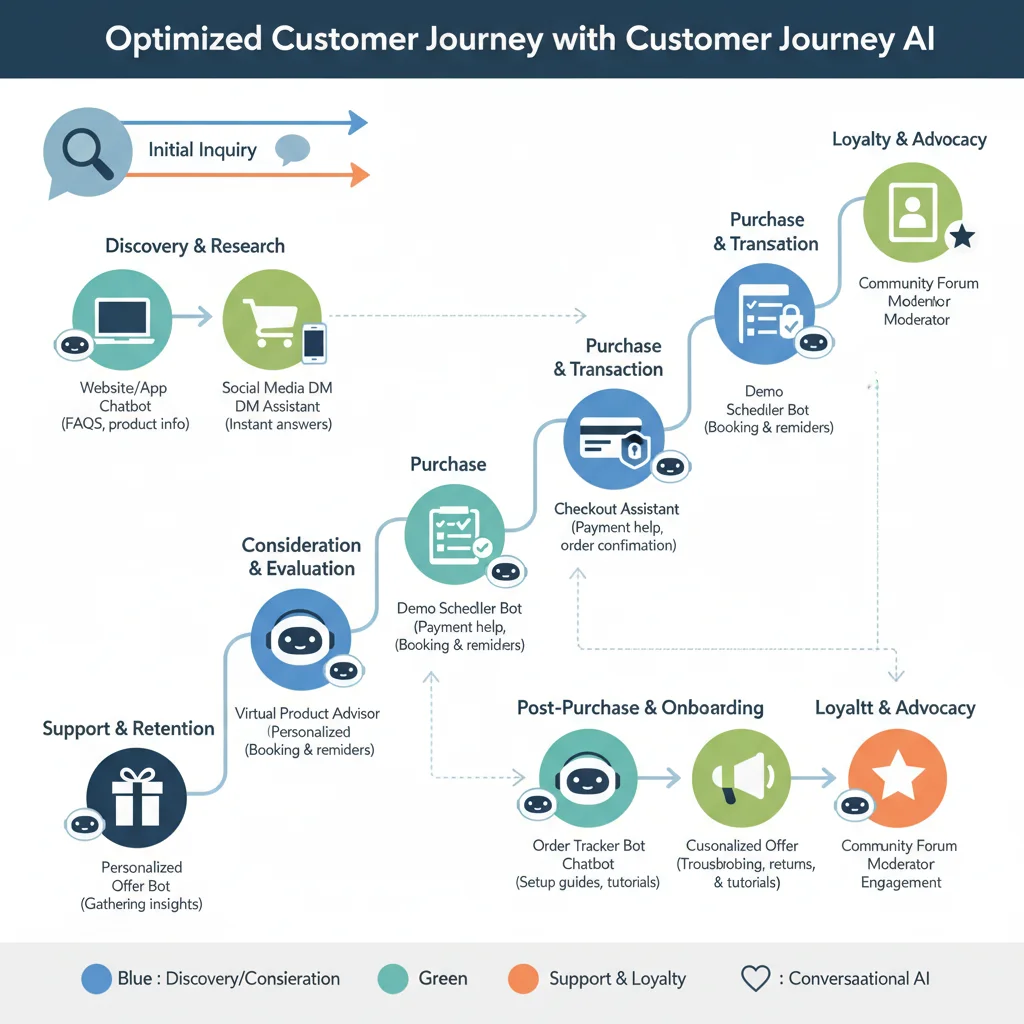
Map out your customer journey to identify key touchpoints where conversational AI can add the most value. Where do customers typically get stuck? What are their most common questions? By understanding these pain points, you can design AI interactions that directly address customer needs and provide timely solutions, significantly boosting satisfaction.
3. Start Small, Learn, and Iterate
Don’t try to solve all problems at once. Begin with a pilot project focusing on a specific function or department. Gather feedback from both customers and internal teams. Analyze interaction data to identify areas for improvement. Conversational AI is an iterative process; continuous learning and refinement are crucial for long-term success. This agile approach allows you to optimize your Conversational AI Sales strategy over time.
4. Prioritize Seamless Integration with Existing Systems
As highlighted earlier, integration with your CRM, ERP, and other business systems is paramount. Without it, your AI tools will operate in silos, unable to access the rich customer data needed for personalized interactions. A seamless flow of information ensures that AI-powered conversations are informed and that human agents have full context during handoffs.
5. Design for Human Handoffs
Conversational AI is a powerful tool, but it’s not meant to replace human interaction entirely, especially in complex sales scenarios. Design your AI to recognize when a query is beyond its capabilities or when a customer expresses a desire to speak with a human. Ensure a smooth and efficient handoff process, providing the human agent with all the necessary context from the AI conversation. This hybrid approach optimizes both efficiency and customer experience.

6. Focus on Natural Language Understanding (NLU) and Personalization
Invest in AI solutions that offer robust NLU capabilities to accurately understand customer intent, even with variations in language or slang. The more natural and intelligent the conversation feels, the higher the customer satisfaction. Leverage personalization by using customer names, referring to past interactions, and offering tailored recommendations. This makes the experience feel less robotic and more human.
7. Monitor Performance and Gather Feedback
Regularly track key performance indicators (KPIs) such as resolution rates, average handling time, customer satisfaction scores (CSAT), and conversion rates. Use analytics to identify common queries that AI struggles with, areas where customers drop off, or where handoffs occur frequently. Actively solicit feedback from customers through surveys or direct questions within the AI interaction. This data-driven approach is essential for continuous improvement of your Conversational AI Sales solutions.
8. Train and Empower Your Sales Team
Your sales team needs to understand how conversational AI fits into their workflow. Provide comprehensive training on how to interact with the AI, when to hand off conversations, and how to leverage the insights provided by the AI. Emphasize that AI is a tool to augment their capabilities, not replace them. Empowering your team to use these tools effectively will maximize their impact.
9. Ensure Data Privacy and Security
Customer data is sensitive. Ensure that any conversational AI tools you implement comply with all relevant data privacy regulations (e.g., GDPR, CCPA). Prioritize solutions with robust security features to protect customer information and build trust. Transparency about how customer data is used is also crucial.
By adhering to these best practices, businesses can effectively harness the power of conversational AI to not only achieve but surpass the reported 18% increase in customer satisfaction, creating a more efficient, customer-centric, and profitable sales ecosystem.
The Future of Conversational AI in Sales: What’s Next?
The journey of Conversational AI Sales is far from over; in fact, it’s just beginning. The rapid advancements in artificial intelligence and machine learning promise an even more sophisticated and integrated future for sales and customer engagement. As technology continues to evolve, we can anticipate several key developments that will further cement AI’s role in the sales landscape.
Hyper-Personalization and Predictive Sales
Future conversational AI will move beyond basic personalization to hyper-personalization. Leveraging vast amounts of data, AI will be able to predict customer needs even before they articulate them, proactively offering solutions or engaging in conversations at the most opportune moments. This will transform sales from reactive to highly proactive and predictive, leading to even higher conversion rates and unparalleled customer satisfaction.
Emotional Intelligence and Empathy
While current AI can detect sentiment, future models will likely incorporate more advanced emotional intelligence. This means AI will be better equipped to understand the nuances of human emotion, adapting its tone and responses to be more empathetic and supportive. This capability will be crucial for handling sensitive customer inquiries and building deeper trust, making Conversational AI Sales interactions feel even more human-like.
Multimodal AI Experiences
The distinction between text-based chatbots and voice AI will blur. Future conversational AI will seamlessly integrate across various modalities – text, voice, video, and even augmented reality (AR). Customers will be able to switch between these modes effortlessly during a single interaction, choosing the most convenient and effective way to communicate. Imagine a customer starting a chat, then seamlessly transitioning to a voice call with an AI, and then to a video call with a human agent, all with full context maintained.
AI-Powered Sales Coaching for Human Teams
Conversational AI won’t just interact with customers; it will also become an invaluable tool for coaching human sales teams. By analyzing sales calls and chat transcripts, AI can identify areas for improvement in communication skills, objection handling, and product knowledge. Real-time feedback and personalized training modules will empower sales representatives to become even more effective, directly impacting sales performance and customer satisfaction.
Enhanced Automation of Post-Sale Activities
The scope of conversational AI will expand beyond pre-sale and during-sale interactions to encompass more post-sale activities. This includes automated onboarding processes, proactive customer success check-ins, intelligent troubleshooting, and even personalized recommendations for repeat purchases or upgrades. This holistic approach ensures continuous customer engagement and loyalty, reinforcing the value of Conversational AI Sales throughout the entire customer lifecycle.
Ethical AI and Trust
As AI becomes more pervasive, the focus on ethical AI development will intensify. Ensuring transparency in AI interactions, protecting customer data, and preventing biases will be paramount. Building trust will be crucial for widespread adoption and continued customer acceptance. Regulations and industry standards will likely evolve to address these ethical considerations, guiding the responsible development of conversational AI.
The future of conversational AI in sales is one of greater intelligence, empathy, and seamless integration. Businesses that embrace these advancements will not only stay ahead of the curve but will also build stronger, more enduring relationships with their customers, consistently driving satisfaction and maximizing revenue potential.
Conclusion: Embrace Conversational AI for Unprecedented Sales Growth
The evidence is compelling: Conversational AI Sales is no longer a luxury but a necessity for businesses striving for excellence in customer satisfaction and sales performance. The remarkable 18% increase in customer satisfaction reported in the US is a powerful indicator of the transformative potential embedded within these intelligent digital tools. By leveraging advanced AI-powered chatbots, sophisticated voice AI, and seamlessly integrated CRM conversational platforms, companies can redefine their sales strategies, creating a more responsive, personalized, and efficient customer journey.
The benefits extend far beyond mere automation. Conversational AI empowers businesses with 24/7 availability, unparalleled personalization at scale, superior lead qualification, and significant operational cost reductions. It provides invaluable data insights that fuel strategic decision-making and ensures consistent brand messaging across all touchpoints. More importantly, it frees human sales professionals to focus on what they do best: building meaningful relationships and closing complex deals, rather than being bogged down by repetitive tasks.
Successful implementation, however, hinges on a strategic approach. It requires clear objectives, a deep understanding of the customer journey, and a commitment to continuous learning and iteration. Prioritizing seamless integration with existing systems, designing for effective human handoffs, and focusing on robust natural language understanding are critical steps towards unlocking the full potential of these technologies. Furthermore, empowering and training your sales team to work in harmony with AI is essential for maximizing its impact.
As we look to the future, the evolution of conversational AI promises even greater levels of hyper-personalization, emotional intelligence, and multimodal experiences. Businesses that proactively embrace these advancements will not only stay competitive but will also forge stronger, more loyal customer relationships, leading to sustained growth and unprecedented success. The time to invest in and optimize your Conversational AI Sales strategy is now, transforming challenges into opportunities and elevating your customer experience to new heights.
Don’t be left behind in the rapidly evolving digital sales landscape. Start exploring how these powerful AI tools can revolutionize your sales processes and deliver the exceptional customer satisfaction your business deserves.