AI Personalized Outreach: Boost Customer Engagement by 12% in US Markets
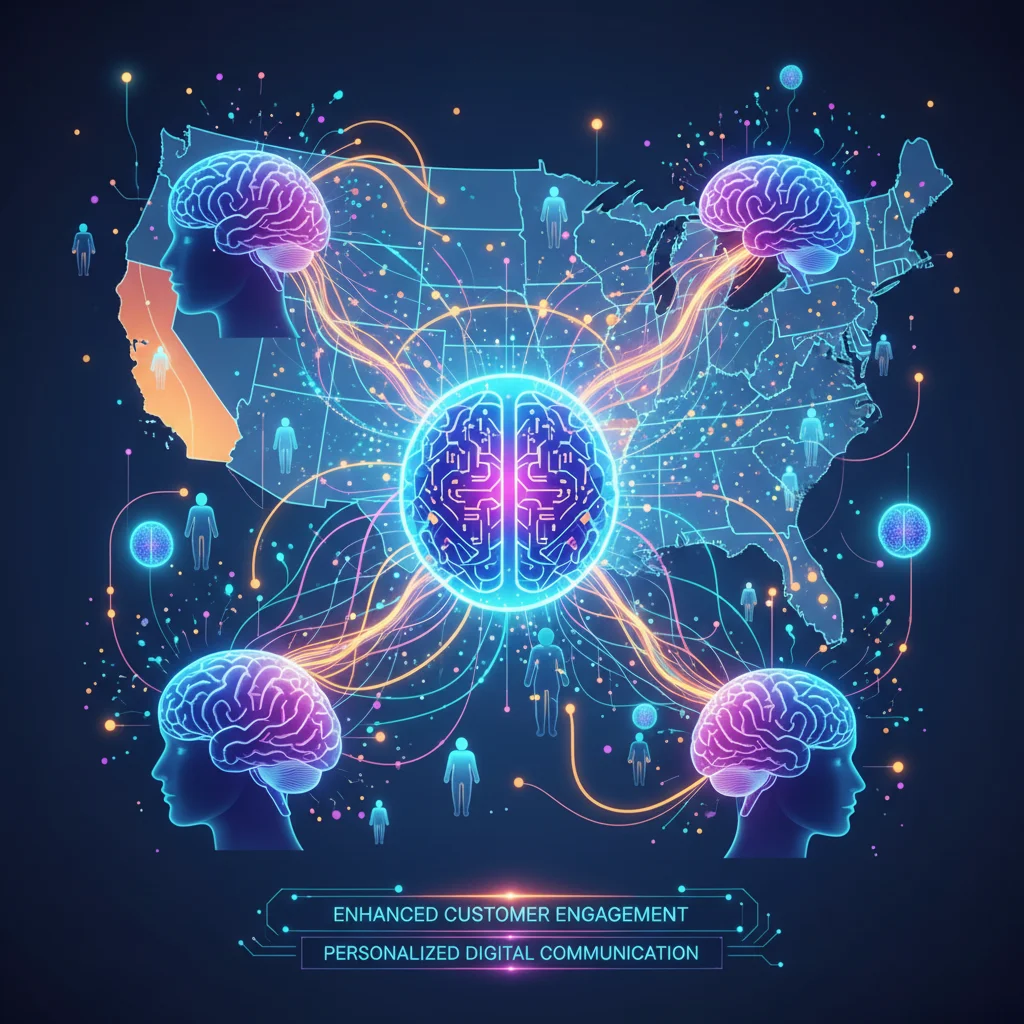
Leveraging AI for Personalized Outreach: 4 Digital Tools Delivering a 12% Uptick in Customer Engagement for US Markets
In the fiercely competitive landscape of US markets, capturing and retaining customer attention is more challenging than ever. Businesses are constantly seeking innovative strategies to cut through the noise and foster genuine connections. Enter AI personalized outreach – a transformative approach that is not just a trend, but a necessity for sustainable growth. This article delves into how artificial intelligence is revolutionizing customer engagement, specifically highlighting four powerful digital tools that are delivering a remarkable 12% uptick in customer engagement for businesses targeting US markets.
The Imperative of Personalized Outreach in Today’s Digital Age
Gone are the days of one-size-fits-all marketing. Modern consumers, especially in tech-savvy US markets, expect and demand experiences tailored to their individual preferences, behaviors, and needs. Generic communications are often ignored, leading to missed opportunities and a dwindling return on investment for marketing efforts. This is where AI personalized outreach shines, offering a solution that scales personalization to an unprecedented level.
Personalization, at its core, is about understanding the individual customer. It’s about knowing what they want before they even ask, anticipating their next move, and communicating with them in a way that resonates deeply. Traditional methods of achieving this were often manual, time-consuming, and limited in scope. However, with the advent of advanced AI, businesses can now analyze vast amounts of data, identify intricate patterns, and generate highly targeted and relevant communications at scale. This capability is not just about sending an email with a customer’s name; it’s about delivering the right message, through the right channel, at the right time, every single time.
For US markets, where consumers are bombarded with marketing messages daily, personalized outreach acts as a critical differentiator. It builds trust, fosters loyalty, and ultimately drives conversions. Studies consistently show that consumers are more likely to engage with brands that offer personalized experiences. The reported 12% uptick in customer engagement isn’t just a number; it represents a significant competitive advantage for businesses that embrace this technology.
Understanding the 12% Engagement Uptick: The AI Advantage
The 12% increase in customer engagement isn’t coincidental; it’s a direct result of AI’s ability to process and interpret data far beyond human capabilities. AI algorithms can analyze historical purchasing data, browsing behavior, social media interactions, demographic information, and even sentiment analysis to create a comprehensive profile of each customer. This deep understanding allows for:
- Hyper-Segmentation: Moving beyond broad demographic categories to micro-segments based on highly specific behaviors and preferences.
- Predictive Analytics: Anticipating future customer needs and actions, allowing for proactive outreach rather than reactive responses.
- Dynamic Content Generation: Automatically creating and adapting content (text, images, offers) to be uniquely relevant to each recipient.
- Optimal Channel Selection: Determining the most effective communication channel (email, SMS, in-app notification, social media) for each individual.
- Perfect Timing: Identifying the precise moment a customer is most receptive to a message.
This level of precision in AI personalized outreach transforms the customer experience from a series of generic interactions into a continuous, relevant, and valuable dialogue. For businesses operating in US markets, where customer expectations are high and competition is fierce, achieving such an uplift in engagement can translate into substantial gains in customer lifetime value, reduced churn, and increased revenue.
Key Pillars of Effective AI Personalized Outreach
To successfully implement AI personalized outreach and achieve significant engagement improvements, businesses must focus on several key pillars:
Data Collection and Integration
The foundation of any successful AI strategy is robust, clean, and integrated data. This includes CRM data, website analytics, social media insights, email engagement metrics, and even external market data. The more comprehensive and accurate the data, the better AI algorithms can perform their magic. Businesses must invest in data infrastructure that allows for seamless collection, storage, and access across different platforms.
Advanced AI and Machine Learning Algorithms
The core of personalization lies in sophisticated AI and machine learning algorithms. These algorithms are responsible for pattern recognition, predictive modeling, natural language processing (NLP) for content generation, and decision-making processes. The choice of AI tools and the expertise to train and fine-tune these models are crucial for maximizing their effectiveness.
Multichannel Communication Strategy
Personalized outreach isn’t limited to a single channel. Customers interact with brands across various touchpoints – email, social media, chatbots, websites, mobile apps, and even physical stores. An effective AI strategy integrates these channels, ensuring a consistent and personalized experience regardless of where the customer chooses to interact. AI helps to orchestrate these interactions, ensuring messages are coherent and relevant across the entire customer journey.
Continuous Optimization and Learning
AI is not a set-it-and-forget-it solution. It thrives on continuous learning and optimization. Performance metrics, customer feedback, and A/B testing results must be fed back into the AI models to refine their predictions and improve future outreach efforts. This iterative process ensures that the personalized experiences evolve and become even more effective over time, sustaining the 12% engagement uptick and potentially increasing it further.
4 Digital Tools Revolutionizing AI Personalized Outreach for US Markets
Now, let’s explore four categories of digital tools that are at the forefront of enabling effective AI personalized outreach, driving significant customer engagement in US markets.
1. AI-Powered Customer Relationship Management (CRM) Systems
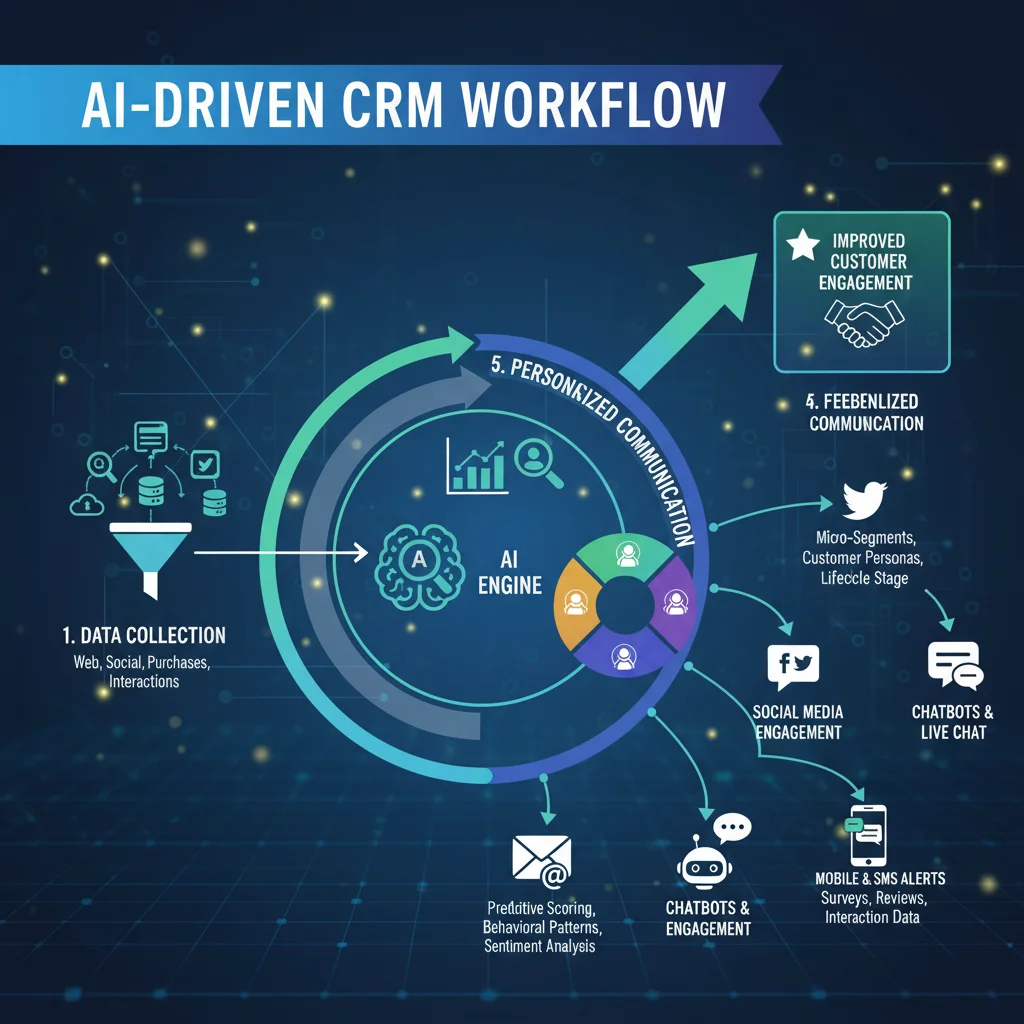
Modern CRM systems have evolved far beyond simple contact management. With AI integration, they become intelligent hubs for understanding and interacting with customers. AI-powered CRMs analyze vast datasets to provide actionable insights, automate personalized communications, and predict customer behavior. They are indispensable for any business serious about personalized outreach.
How they work: These systems leverage AI to aggregate customer data from all touchpoints (sales, marketing, service, social media). They then use machine learning algorithms to identify trends, segment customers dynamically, and suggest personalized next steps for sales and marketing teams. For example, an AI-powered CRM can flag customers at risk of churn, recommend specific products based on past purchases, or even draft personalized email responses based on customer inquiries.
Benefits for US Markets: In the fast-paced US business environment, speed and relevance are paramount. AI CRMs enable sales teams to spend less time on administrative tasks and more time on high-value, personalized interactions. They ensure marketing campaigns are highly targeted, leading to better conversion rates and a more efficient use of resources. The ability to predict customer needs and proactively address them significantly contributes to the 12% engagement increase.
Examples: Salesforce Einstein, HubSpot CRM (with AI features), Microsoft Dynamics 365 AI.
2. Advanced Marketing Automation Platforms with AI
Marketing automation platforms have long been essential for scaling marketing efforts. The integration of AI takes them to a new level, transforming them into engines for true AI personalized outreach. These platforms automate not just the sending of messages, but also the personalization of those messages and the optimization of their delivery.
How they work: AI within these platforms analyzes customer engagement data (email opens, clicks, website visits, content downloads) to build dynamic customer profiles. It then uses this information to trigger personalized email sequences, recommend relevant content, adjust website experiences in real-time, and even optimize ad targeting. AI can also predict the best time to send an email or deliver an ad for maximum impact.
Benefits for US Markets: For businesses trying to reach diverse US audiences, AI-driven marketing automation ensures that every campaign message is finely tuned to individual preferences. This leads to higher open rates, click-through rates, and ultimately, a more engaged customer base. The ability to automate complex personalization at scale frees up marketing teams to focus on strategy and creativity, while AI handles the execution of tailored outreach.
Examples: Braze, Iterable, Adobe Marketo Engage, Customer.io.
3. AI-Powered Chatbots and Conversational AI
Chatbots and conversational AI are on the front lines of customer interaction, providing instant, personalized support and engagement. These tools are crucial for businesses in US markets that operate 24/7 and need to provide immediate responses to customer queries.
How they work: Utilizing Natural Language Processing (NLP) and machine learning, AI chatbots can understand customer intent, provide relevant answers, guide users through processes, and even conduct sales conversations. They learn from every interaction, becoming more efficient and more personalized over time. Advanced conversational AI can even detect sentiment and adapt its tone and responses accordingly.
Benefits for US Markets: The expectation for instant gratification is high in US markets. AI chatbots meet this demand by offering immediate assistance, resolving common queries, and providing personalized recommendations around the clock. This not only improves customer satisfaction but also frees up human agents to handle more complex issues, leading to a more efficient and engaging customer service experience. The seamless, personalized support offered by these tools is a significant contributor to the 12% engagement uplift.
Examples: Intercom, Drift, LiveChat (with AI integrations), Ada.
4. Predictive Analytics and Personalization Engines
While often integrated into CRMs and marketing automation platforms, dedicated predictive analytics and personalization engines offer specialized capabilities for deep customer insight and real-time content delivery. These tools are the backbone of truly dynamic AI personalized outreach.
How they work: These engines ingest vast amounts of data, running complex algorithms to predict future customer behavior, identify product recommendations, and personalize website content or app experiences in real-time. They can analyze factors like purchase history, browsing patterns, session duration, and even external data points to create highly accurate individual profiles and deliver tailored experiences instantly.
Benefits for US Markets: For e-commerce businesses, media companies, and any online platform in the US, predictive personalization engines are game-changers. They transform a generic website into a unique, tailored storefront for each visitor, showing them products, articles, or services most relevant to their predicted interests. This leads to higher conversion rates, increased average order value, and a much more engaging user experience, directly contributing to the 12% engagement increase. The ability to anticipate customer needs before they are explicitly stated is a powerful driver of engagement.
Examples: Dynamic Yield, Optimizely, Segment (for data unification), Google Analytics (with predictive features).
Implementing AI Personalized Outreach: Best Practices for US Businesses
Achieving a 12% uptick in customer engagement through AI personalized outreach requires more than just adopting the right tools. It demands a strategic approach and adherence to best practices:
- Start with Clear Goals: Define what you want to achieve with personalization. Is it increased conversions, reduced churn, higher customer satisfaction, or all of the above? Clear objectives will guide your strategy.
- Invest in Data Quality: AI is only as good as the data it processes. Prioritize data hygiene, integration, and a unified customer view.
- Begin Small, Scale Gradually: Don’t try to personalize everything at once. Start with a specific segment or a particular customer journey touchpoint, measure the results, and then expand.
- Ensure Ethical AI Use and Data Privacy: For US markets, consumer data privacy is a significant concern. Be transparent about data collection and usage, comply with regulations like CCPA, and always prioritize customer trust.
- Combine AI with Human Touch: AI enhances human capabilities; it doesn’t replace them. Use AI to automate routine tasks and provide insights, allowing your human teams to focus on complex problem-solving and building deeper relationships.
- Monitor and Optimize Continuously: AI models need constant feedback and refinement. Regularly analyze performance metrics, conduct A/B tests, and iterate on your personalization strategies to maintain and improve engagement levels.
- Educate Your Team: Ensure your marketing, sales, and customer service teams understand how to leverage AI tools effectively and interpret the insights they provide.
- Focus on Customer Journey Mapping: Understand every step of your customer’s journey. This allows you to identify critical touchpoints where AI personalization can have the most impact.

Future Trends in AI Personalized Outreach
The field of AI personalized outreach is continuously evolving. Looking ahead, we can anticipate several key trends that will further amplify its impact, especially in dynamic US markets:
Even Deeper Hyper-Personalization
As AI models become more sophisticated and data collection becomes more granular, personalization will move beyond current capabilities to truly anticipate individual needs with uncanny accuracy. This could involve real-time adaptation of entire user interfaces, or even proactive suggestions for products or services before the customer realizes they need them.
Generative AI for Content Creation
The rise of generative AI models means that personalized content creation will become even more automated and nuanced. AI will be able to write entire emails, craft social media posts, and even generate personalized video scripts tailored specifically to individual customer profiles, maintaining brand voice and messaging consistency at scale.
Voice and Multimodal AI Interactions
With the increasing prevalence of voice assistants and smart devices, AI personalized outreach will extend further into voice and multimodal interactions. Imagine AI understanding your spoken queries and responding with personalized offers or support through your preferred smart device, creating a truly seamless and intuitive experience.
Enhanced Ethical AI and Transparency
As AI becomes more integrated into customer interactions, there will be an even greater emphasis on ethical AI development and transparency. Consumers in US markets will demand to know how their data is being used and how AI decisions are made, pushing companies to adopt more responsible AI practices and clear communication policies.
Integration with Virtual and Augmented Reality (VR/AR)
Future AI personalized outreach could extend into immersive experiences. Imagine an AR shopping experience where AI recommends products based on your style preferences and body measurements, or a VR customer service interaction where an AI avatar provides personalized assistance in a virtual showroom. The possibilities are vast and will redefine engagement.
Conclusion: The Undeniable Power of AI Personalized Outreach
The evidence is clear: AI personalized outreach is not just a strategic advantage; it’s a fundamental shift in how businesses connect with their customers. For companies operating in US markets, where customer expectations are at an all-time high, the ability to deliver relevant, timely, and individualized experiences is paramount. The reported 12% uptick in customer engagement is a compelling testament to the power of these digital tools.
By leveraging AI-powered CRM systems, advanced marketing automation platforms, intelligent chatbots, and sophisticated predictive analytics engines, businesses can move beyond generic communications to foster deeper connections, build lasting loyalty, and drive significant growth. The future of customer engagement is personalized, intelligent, and driven by AI. Embracing this transformation today is crucial for staying competitive and thriving in the dynamic US marketplace.
Don’t be left behind. Start exploring how these AI-driven tools can redefine your customer interactions and unlock a new era of engagement and success for your business.