AI Integration Reshaping U.S. Customer Journeys: 8% Conversion Boost by 2026

AI Integration Reshaping U.S. Customer Journeys: 8% Conversion Boost by 2026
The landscape of customer interaction is undergoing a profound metamorphosis, driven primarily by the relentless march of Artificial Intelligence (AI). In the United States, businesses are increasingly leveraging AI to not only understand their customers better but to actively shape and optimize every touchpoint of the customer journey. This isn’t merely an incremental shift; it’s a fundamental re-engineering of how businesses engage with their audience. Our projections indicate a significant milestone: an 8% improvement in conversion rates across various sectors in the U.S. by 2026, directly attributable to advanced AI integration within the AI customer journey U.S. framework.
The promise of AI lies in its ability to process vast amounts of data, identify patterns, and make predictions with a speed and accuracy that human analysis simply cannot match. For the customer journey, this translates into hyper-personalization, proactive problem-solving, and ultimately, a more seamless and satisfying experience that encourages conversion. This article will delve into the multifaceted ways AI is achieving this transformation, the challenges and opportunities it presents, and what businesses need to do to capitalize on this powerful trend.
The Dawn of Hyper-Personalization: Redefining the AI Customer Journey U.S.
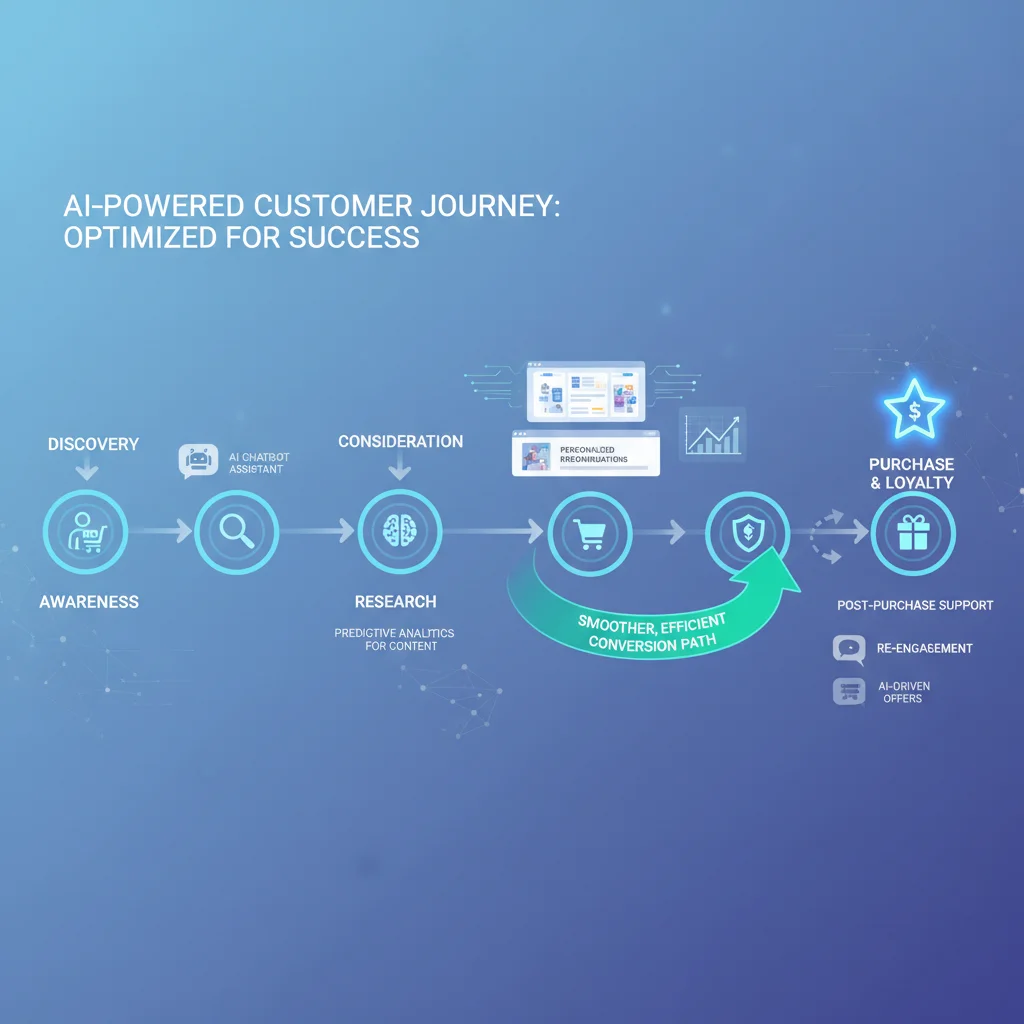
At the heart of AI’s impact on the customer journey is hyper-personalization. Gone are the days of generic marketing messages and one-size-fits-all customer service. AI algorithms can analyze individual customer behaviors, preferences, purchase history, and even real-time contextual data to deliver experiences that feel uniquely tailored. This level of personalization is crucial for enhancing the AI customer journey U.S., leading directly to improved engagement and conversion.
Predictive Analytics: Anticipating Customer Needs
Predictive analytics, a core component of AI, allows businesses to forecast future customer behavior with remarkable accuracy. By analyzing historical data, AI can identify customers likely to churn, those ready for an upsell, or those who might be interested in a specific product or service. This foresight enables businesses to intervene proactively, offering solutions or incentives at precisely the right moment. For instance, a telecommunications company might use AI to predict which customers are contemplating switching providers and then offer a personalized retention package before they even consider leaving. This proactive approach significantly strengthens the AI customer journey U.S., preventing potential losses and fostering loyalty.
Personalized Recommendations: Beyond the Obvious
While recommendation engines have been around for a while, AI has elevated them to an entirely new level. Modern AI-powered recommendation systems don’t just suggest items based on past purchases; they consider a broader spectrum of data, including browsing patterns, demographic information, social media activity, and even emotional sentiment derived from customer interactions. This allows for more nuanced and relevant recommendations that genuinely resonate with the customer, guiding them effortlessly through the purchase funnel. E-commerce giants are pioneers in this area, demonstrating how intelligent recommendations can dramatically increase average order value and repeat purchases, thereby optimizing the AI customer journey U.S..
Automating and Optimizing Customer Service
Customer service is often a critical bottleneck in the traditional customer journey. Long wait times, inconsistent advice, and repetitive queries can quickly frustrate customers and lead to abandonment. AI is revolutionizing this aspect by automating routine tasks and augmenting human agents, making the AI customer journey U.S. smoother and more efficient.
Chatbots and Virtual Assistants: Always On, Always Learning
AI-powered chatbots and virtual assistants are now ubiquitous, providing instant support 24/7. These intelligent agents can handle a vast array of customer inquiries, from answering FAQs to guiding users through troubleshooting steps. The key distinction from older, rule-based systems is their ability to understand natural language, learn from interactions, and even convey a degree of empathy. This not only reduces the burden on human customer service teams but also provides customers with immediate gratification, a crucial factor in today’s fast-paced world. The continuous learning capability ensures that these AI tools become more effective over time, further refining the AI customer journey U.S..
Sentiment Analysis: Understanding the Unspoken
Beyond explicit questions, AI can analyze the sentiment behind customer communications, whether it’s a text chat, an email, or even a voice call. Sentiment analysis tools can detect frustration, satisfaction, or urgency, allowing businesses to prioritize interactions and route complex or emotionally charged issues to human agents. This ensures that customers receive the appropriate level of support at the right time, preventing negative experiences from escalating and protecting the integrity of the AI customer journey U.S..
Streamlining the Sales Funnel with AI
The path from initial awareness to final purchase is often fraught with friction points. AI is proving instrumental in smoothing out this path, making the sales funnel more efficient and effective, and directly contributing to the projected 8% conversion rate improvement in the AI customer journey U.S..
Lead Scoring and Qualification: Focusing Efforts
Sales teams often spend valuable time pursuing leads that are unlikely to convert. AI-powered lead scoring systems analyze various data points – firmographics, behavior on the website, engagement with marketing materials – to assign a probability score to each lead. This allows sales representatives to prioritize high-potential leads, focusing their efforts where they are most likely to succeed. The result is a more efficient sales process and a higher conversion rate, a clear win for the AI customer journey U.S..
Dynamic Pricing and Offers: Real-Time Optimization
AI can dynamically adjust pricing and offers in real-time based on factors like demand, competitor pricing, customer segmentation, and even individual browsing behavior. This ensures that customers are presented with the most attractive offer at any given moment, maximizing the likelihood of conversion. For example, an e-commerce site might offer a discount on a product a customer has viewed multiple times but hasn’t purchased, or adjust shipping costs based on their location and past purchase history. This level of real-time optimization is a game-changer for the AI customer journey U.S..
Challenges and Considerations in the AI Customer Journey U.S.
While the benefits of AI integration are undeniable, implementing these technologies effectively comes with its own set of challenges. Businesses must navigate these complexities to truly realize the potential of an optimized AI customer journey U.S..
Data Privacy and Security: Building Trust
AI thrives on data, but collecting and utilizing customer data comes with significant responsibilities. Concerns about data privacy and security are paramount, especially in the U.S. with evolving regulations. Businesses must be transparent about their data practices, ensure robust security measures, and comply with all relevant laws (e.g., CCPA, state-specific privacy acts). A breach of trust can quickly undermine any gains made through AI optimization, so ethical data handling is foundational to a successful AI customer journey U.S..
Integration Complexities: A Unified Ecosystem
Implementing AI often requires integrating new systems with existing legacy infrastructure. This can be a complex and costly endeavor. For AI to be truly effective, it needs access to a holistic view of the customer, meaning data silos must be broken down and various systems (CRM, ERP, marketing automation, customer service platforms) must communicate seamlessly. A fragmented approach will limit AI’s capabilities and hinder the optimization of the AI customer journey U.S..
Talent Gap: The Need for Skilled Professionals
The successful deployment and management of AI solutions require specialized skills in data science, machine learning engineering, and AI ethics. There is currently a significant talent gap in these areas, making it challenging for many businesses to build and maintain their AI initiatives. Investing in training existing staff or attracting new talent is crucial for any organization looking to leverage AI effectively within their AI customer journey U.S. strategy.
The Future Landscape: What to Expect by 2026 and Beyond
The projected 8% conversion rate improvement by 2026 is just the beginning. The evolution of AI promises even more sophisticated and impactful applications for the AI customer journey U.S..
Proactive Customer Service: Anticipating Problems Before They Arise
Beyond predictive analytics, AI will move towards truly proactive customer service. Imagine a scenario where a smart home device detects a potential malfunction and automatically schedules a service appointment, or an airline proactively rebooks a passenger on an alternative flight before they even realize their original flight is delayed. This level of anticipatory service will redefine customer expectations and significantly enhance loyalty, becoming a hallmark of the advanced AI customer journey U.S..
Emotional AI: Understanding and Responding to Human Emotions
While current AI can detect sentiment, future iterations will be capable of understanding and responding to more nuanced human emotions. This ‘emotional AI’ could allow chatbots to adjust their tone based on a customer’s frustration, or sales agents to tailor their approach based on a prospect’s hesitation. This will create more empathetic and human-like interactions, bridging the gap between automation and genuine connection in the AI customer journey U.S..
Generative AI for Content Creation and Personalization
Generative AI, capable of creating new content, will play an increasingly important role. From dynamically generating personalized marketing copy and product descriptions to creating unique landing pages tailored to individual users, generative AI will enable hyper-personalization at scale. This will ensure that every piece of content a customer encounters is perfectly aligned with their interests and stage in the journey, dramatically improving conversion rates within the AI customer journey U.S..
Strategies for Businesses to Embrace the AI Customer Journey U.S.
To capitalize on the opportunities presented by AI and achieve the projected conversion rate improvements, businesses in the U.S. must adopt a strategic approach.
1. Start with a Clear Vision and Defined Goals
Before diving into AI tools, businesses need to clearly define what problems they are trying to solve and what outcomes they hope to achieve. Is it reducing customer service costs, improving lead qualification, or boosting online sales? A clear vision will guide the selection of appropriate AI technologies and ensure alignment with business objectives. This foundational step is critical for any successful AI customer journey U.S. implementation.
2. Invest in Data Infrastructure and Governance
AI is only as good as the data it’s fed. Businesses must prioritize building robust data infrastructure, ensuring data quality, consistency, and accessibility across all systems. Establishing strong data governance policies is also crucial for compliance, security, and ethical AI usage. Without a solid data foundation, AI initiatives will struggle to deliver meaningful results for the AI customer journey U.S..
3. Adopt a Phased Implementation Approach
Instead of attempting a massive, all-at-once AI overhaul, businesses should consider a phased approach. Start with pilot projects in specific areas of the customer journey where AI can deliver immediate, measurable impact. Learn from these initial implementations, iterate, and then scale up. This reduces risk and allows for continuous optimization, making the integration of AI into the AI customer journey U.S. more manageable.
4. Foster a Culture of AI Adoption and Learning
Integrating AI isn’t just about technology; it’s also about people. Employees need to understand how AI will impact their roles and be trained on how to work alongside these new tools. Fostering a culture of learning and experimentation around AI will encourage innovation and ensure that the workforce is prepared for the future of the AI customer journey U.S..

5. Prioritize Ethical AI and Transparency
As AI becomes more sophisticated, ethical considerations become increasingly important. Businesses must ensure that their AI systems are fair, unbiased, and transparent. This includes actively monitoring for algorithmic bias, providing clear explanations for AI-driven decisions, and giving customers control over their data. Building and maintaining customer trust is paramount for the long-term success of the AI customer journey U.S..
6. Measure and Optimize Continuously
AI implementation is not a one-time project; it’s an ongoing process of measurement, analysis, and optimization. Businesses must establish clear KPIs to track the performance of their AI initiatives and be prepared to iterate and refine their models based on real-world results. Continuous improvement is key to maximizing the return on investment from AI and achieving sustained conversion rate improvements within the AI customer journey U.S..
The Economic Impact of AI on U.S. Businesses
The projected 8% conversion rate improvement by 2026, driven by an optimized AI customer journey U.S., represents a significant economic uplift for businesses across the nation. This increase isn’t just about more sales; it’s about a more efficient allocation of resources, reduced operational costs, and ultimately, enhanced profitability. Companies that successfully integrate AI into their customer interactions will gain a substantial competitive advantage, setting new benchmarks for customer satisfaction and market share.
Increased Customer Lifetime Value (CLTV)
Beyond initial conversion, an improved AI customer journey U.S. fosters deeper customer relationships. Hyper-personalization and proactive service lead to higher customer satisfaction and loyalty, which directly translates into increased Customer Lifetime Value (CLTV). Loyal customers not only make repeat purchases but also become brand advocates, driving organic growth through word-of-mouth referrals. AI’s ability to predict churn and intervene with retention strategies further solidifies these long-term relationships.
Operational Efficiency and Cost Reduction
Automating routine customer service tasks with chatbots and virtual assistants significantly reduces the need for human intervention in repetitive queries, leading to substantial cost savings. AI-driven lead scoring ensures that sales teams focus on the most promising prospects, boosting sales efficiency and reducing wasted effort. Furthermore, predictive maintenance powered by AI can prevent costly outages or service disruptions, demonstrating how AI optimizes various facets of the business beyond direct customer interaction, all contributing to a more robust AI customer journey U.S. ecosystem.
Innovation and New Business Models
The insights gleaned from AI analysis of customer data can also spur innovation, leading to the development of new products, services, and even entirely new business models. By understanding unmet needs and emerging trends with greater precision, businesses can adapt more quickly to market demands and create offerings that truly resonate with their target audience. This dynamic capability is a key driver of sustained growth and competitive differentiation in the evolving AI customer journey U.S. landscape.
Conclusion: The Imperative of AI in the AI Customer Journey U.S.
The transformation of the U.S. customer journey through AI is not a distant future; it is a present reality rapidly accelerating towards a new paradigm. The projected 8% improvement in conversion rates by 2026 is a compelling testament to the power of AI to redefine customer engagement, streamline operations, and drive significant business growth. From hyper-personalization and predictive analytics to automated customer service and dynamic pricing, AI is touching every facet of the customer experience.
Businesses that embrace this shift with a strategic mindset, focusing on data governance, ethical implementation, and continuous optimization, will be the ones to reap the most significant rewards. The future of the AI customer journey U.S. is one where every interaction is intelligent, personalized, and designed to delight, leading to not just higher conversions but also stronger, more enduring customer relationships. The time to integrate AI into your customer journey strategy is now, to ensure you are not just participating in the future, but actively shaping it.