Top 5 Sales Enablement Platforms 2026: A Data-Backed Comparison for US Businesses
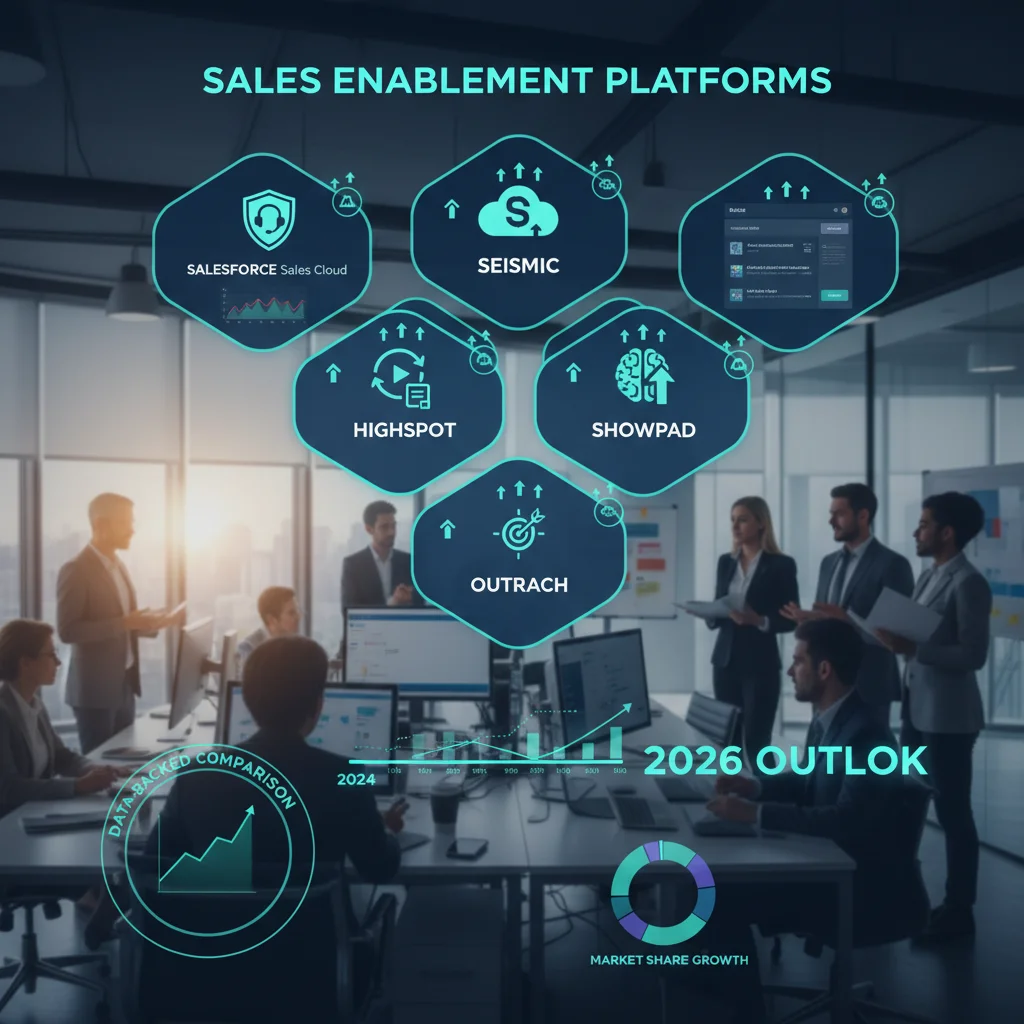
Top 5 Sales Enablement Platforms for 2026: A Data-Backed Comparison for US Businesses
In the rapidly evolving landscape of B2B sales, staying ahead means equipping your sales teams with the best tools available. As we look towards 2026, the importance of robust Sales Enablement Platforms cannot be overstated. These platforms are no longer just a luxury; they are a fundamental necessity for US businesses aiming to optimize their sales processes, enhance rep productivity, and ultimately drive revenue growth. The right sales enablement solution can transform how your sales force operates, providing them with the content, training, and analytics needed to close more deals faster.
The market for Sales Enablement Platforms is dynamic, with new features and integrations emerging constantly. Choosing the right one can be a daunting task, given the multitude of options and the specific needs of different organizations. This comprehensive, data-backed comparison aims to simplify that decision-making process for US businesses. We’ll dive deep into the top 5 platforms poised to dominate the market in 2026, examining their core functionalities, unique selling propositions, and how they cater to various business sizes and industries.
Our analysis is grounded in current market trends, expert predictions, and user feedback, ensuring that the insights provided are not only relevant but also actionable. Whether you’re a small startup looking to scale your sales efforts or a large enterprise seeking to refine your existing sales operations, understanding these leading platforms is crucial for making an informed investment.
What Exactly Are Sales Enablement Platforms?
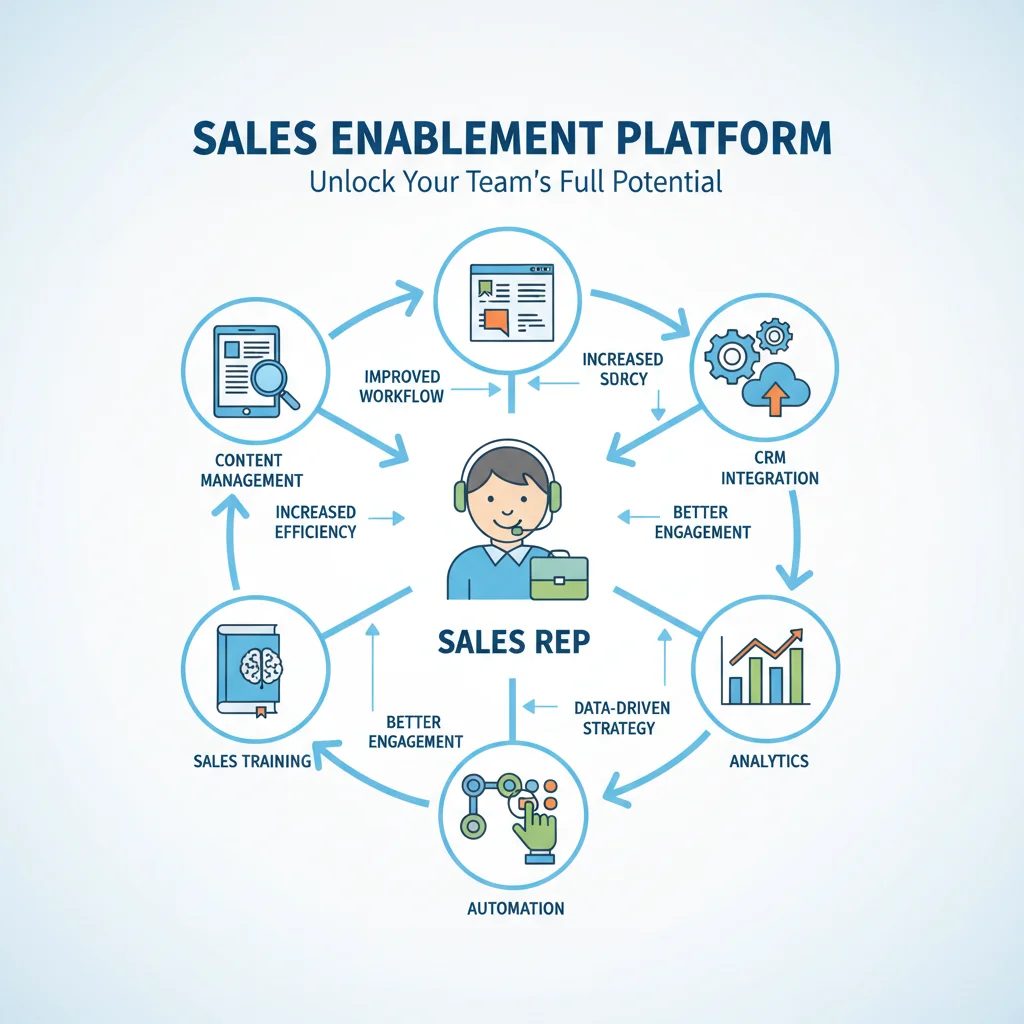
Before we delve into the top contenders, let’s clarify what Sales Enablement Platforms are and why they are so vital. At its core, sales enablement is the iterative process of providing your sales organization with the resources, tools, content, and training they need to sell more effectively. A sales enablement platform is the technology stack that facilitates this process, centralizing critical assets and streamlining workflows.
Key Components of a Modern Sales Enablement Platform:
- Content Management: Centralized repository for all sales collateral (presentations, case studies, whitepapers, demos, etc.), making it easily searchable and accessible for sales reps.
- Sales Training & Coaching: Tools for delivering ongoing training, skill development, and performance coaching, often incorporating AI-driven insights and personalized learning paths.
- Sales Analytics & Reporting: Capabilities to track content usage, sales rep performance, buyer engagement, and overall sales cycle effectiveness, providing data for continuous improvement.
- CRM Integration: Seamless connection with Customer Relationship Management (CRM) systems to ensure data consistency and enhance sales workflows.
- Automation & Workflow Optimization: Features that automate routine tasks, suggest next best actions, and guide reps through the sales process efficiently.
- Buyer Engagement Tools: Functionalities that help reps create personalized buyer experiences, track client interactions, and measure engagement with shared content.
The objective of these platforms is clear: to empower sales teams to have more productive conversations with prospects, tailor their approach to individual buyer needs, and ultimately shorten sales cycles while increasing win rates. For US businesses operating in competitive markets, this efficiency gain translates directly into a significant competitive advantage.
The Evolution of Sales Enablement: Why 2026 Will Be Different
The landscape of sales enablement is constantly evolving. What was considered cutting-edge five years ago is now standard. Looking towards 2026, several key trends will shape the features and capabilities of leading Sales Enablement Platforms:
- Hyper-Personalization at Scale: AI and machine learning will enable platforms to suggest not just the right content, but the right content tailored to a specific buyer’s industry, role, and even their recent online behavior, delivered at the optimal time.
- Advanced Predictive Analytics: Platforms will move beyond descriptive analytics to offer more robust predictive capabilities, helping sales leaders forecast sales more accurately and identify potential roadblocks before they occur.
- Integrated Coaching & Performance Management: Expect deeper integration of coaching tools directly into the sales workflow, providing real-time feedback and personalized development plans based on performance data.
- Seamless Multi-Channel Engagement: As buyers interact across more channels, platforms will offer more sophisticated tools for managing and analyzing interactions across email, social media, video, and more.
- Focus on Buyer Experience (BX): The emphasis will shift further from simply enabling sellers to actively improving the buyer’s journey, making sales interactions more valuable and relevant.
- Enhanced Security & Compliance: With increasing data privacy regulations, platforms will need to offer more robust security features and compliance certifications, especially for US businesses dealing with sensitive customer data.
These trends highlight a future where Sales Enablement Platforms are not just repositories of information but intelligent, proactive partners in the sales process. Now, let’s explore the top contenders for 2026.
Our Top 5 Sales Enablement Platforms for 2026
Our selection of the top 5 Sales Enablement Platforms for 2026 is based on a rigorous evaluation of their current market standing, projected growth, innovation in features, user satisfaction, and applicability to the diverse needs of US businesses. We considered factors such as integration capabilities, scalability, AI-driven functionalities, and comprehensiveness of their offerings.
1. Highspot: The Content Intelligence Powerhouse
Highspot continues to be a dominant force in the sales enablement space, and its trajectory suggests it will only solidify its position by 2026. What sets Highspot apart is its unparalleled focus on content intelligence. It doesn’t just store content; it helps sales reps find the most effective content for any given situation, tracks its performance, and provides insights into what resonates with buyers.
Key Strengths:
- Dynamic Content Management: Advanced AI-powered search and recommendations ensure reps always have the right content.
- Robust Sales Playbooks: Guides reps through the sales process with best practices and recommended content for each stage.
- Comprehensive Analytics: Deep insights into content performance, buyer engagement, and rep effectiveness.
- Powerful Coaching & Training: Tools for skill development, pitch practice, and personalized feedback.
- Seamless CRM Integration: Works effortlessly with Salesforce, Microsoft Dynamics, and other leading CRMs.
- Scalability: Suitable for both mid-market and large enterprise US businesses.
Considerations:
- Can be a significant investment for smaller businesses.
- The breadth of features might require a dedicated enablement team to maximize adoption.
By 2026, Highspot is expected to further enhance its AI capabilities, offering even more predictive insights into buyer behavior and content effectiveness, making it an indispensable tool for data-driven sales organizations.
2. Seismic: The Enterprise Standard for Content Orchestration
Seismic has long been recognized as an enterprise-grade solution, and it continues to innovate, ensuring its place among the top Sales Enablement Platforms. Its strength lies in its ability to orchestrate complex content strategies across large, diverse sales organizations. Seismic is particularly strong for businesses with extensive content libraries and a need for rigorous brand control and compliance.
Key Strengths:
- Advanced Content Automation: Automates the creation and personalization of sales collateral at scale.
- Personalized Buyer Experiences: Tools for building customized digital sales rooms and interactive presentations.
- Robust Governance & Compliance: Essential for highly regulated industries, ensuring content accuracy and brand consistency.
- Sales Training & Coaching: Offers comprehensive modules for onboarding and ongoing skill development.
- Deep Integration Ecosystem: Connects with a wide array of CRMs, marketing automation platforms, and other sales tools.
- Global Reach: Well-suited for multinational US businesses with diverse content needs.
Considerations:
- Primarily designed for larger enterprises; smaller businesses might find it overly complex or expensive.
- Implementation can be detailed due to its extensive feature set.
Seismic’s future development is likely to focus on even deeper AI-driven personalization and an expanded ecosystem of integrations, solidifying its role as the go-to platform for large US enterprises seeking sophisticated content orchestration.
3. Outreach: The Sales Execution and Engagement Leader
While often categorized as a Sales Engagement Platform, Outreach’s expanding capabilities mean it’s increasingly functioning as a comprehensive Sales Enablement Platform, particularly in its ability to drive consistent sales execution and provide actionable insights. Its strength lies in automating and optimizing the entire sales communication workflow.
Key Strengths:
- Powerful Sales Engagement Sequences: Automates multi-channel outreach (email, calls, social) with personalized content.
- AI-Powered Insights: Provides intelligence on buyer sentiment, optimal send times, and conversation effectiveness.
- Advanced Prospecting Tools: Helps reps identify and engage with high-value leads efficiently.
- Integrated Coaching & Call Recording: Offers tools for call analysis, transcriptions, and rep coaching.
- CRM Sync: Excellent two-way synchronization with Salesforce and other CRMs, ensuring data integrity.
- Focus on Rep Productivity: Streamlines workflows to maximize the time reps spend selling.
Considerations:
- While expanding, its content management capabilities are not as deep as Highspot or Seismic.
- Best suited for sales teams focused on high-volume outbound or inbound engagement strategies.
By 2026, Outreach is expected to further blur the lines between sales engagement and enablement, offering more robust content recommendations and deeper analytical insights into the entire buyer journey, making it a powerful choice for US businesses prioritizing engagement and execution.
4. Salesloft: The Holistic Revenue Workflow Platform
Similar to Outreach, Salesloft started as a sales engagement platform but has evolved into a more holistic revenue workflow solution, encompassing significant sales enablement functionalities. It provides a comprehensive suite of tools designed to help reps execute, manage, and analyze their sales activities across the entire customer lifecycle.
Key Strengths:
- Complete Cadence Management: Guides reps through multi-step, multi-channel outreach activities.
- Conversation Intelligence: Records, transcribes, and analyzes sales calls to identify key trends and coaching opportunities.
- Opportunity Management: Helps reps manage their pipeline, track deal progress, and identify potential risks.
- Content Recommendations: Suggests relevant content at different stages of the sales process.
- Robust Analytics & Reporting: Offers dashboards and reports on individual and team performance, engagement, and revenue.
- Strong Integration: Excellent connectivity with Salesforce, HubSpot, and other essential sales tools.
Considerations:
- Like Outreach, its primary focus remains engagement and workflow, with content enablement being a strong supporting feature rather than the core.
- Can be a substantial investment, best suited for growing and enterprise-level sales teams.
Salesloft’s roadmap for 2026 likely includes even more advanced AI-driven insights for content effectiveness and buyer sentiment, further solidifying its position as a go-to platform for US businesses seeking an integrated approach to revenue generation.
5. Showpad: The Unified Sales & Marketing Content Platform
Showpad stands out for its strong emphasis on unifying sales and marketing efforts through a powerful content experience. It aims to ensure that marketing-created content is not only easily accessible to sales but also utilized effectively to drive buyer engagement and close deals. Showpad is particularly beneficial for US businesses where sales and marketing alignment is a key strategic priority.
Key Strengths:
- Exceptional Content Experience: Provides a rich, interactive content hub for sales reps and buyers.
- Buyer Engagement Tracking: Offers detailed analytics on how buyers interact with shared content.
- Sales Coaching & Training: Includes tools for onboarding, skill development, and performance measurement.
- Integrates Marketing & Sales: Bridges the gap between content creation and sales execution.
- Personalized Pitches: Enables reps to quickly assemble customized presentations and content experiences.
- Strong Mobile Capabilities: Allows reps to access and present content effectively on the go.
Considerations:
- While strong in content, its pure sales engagement and automation features might not be as extensive as Outreach or Salesloft.
- Best utilized by organizations that have a mature content strategy and a strong desire to measure its impact on sales.
Looking to 2026, Showpad is expected to deepen its AI capabilities for content recommendations and further enhance its buyer experience features, making it an excellent choice for US businesses that prioritize a seamless content-driven sales journey.
Choosing the Right Sales Enablement Platform for Your US Business
Selecting the ideal Sales Enablement Platform is not a one-size-fits-all decision. The best platform for your US business will depend on several factors, including your company size, industry, sales process complexity, existing tech stack, and budget. Here’s a framework to guide your decision-making process:
1. Define Your Core Needs and Objectives:
- What specific sales challenges are you trying to solve? (e.g., inconsistent messaging, low content utilization, long sales cycles, poor rep onboarding).
- What are your key metrics for success? (e.g., increased win rates, higher quota attainment, reduced ramp-up time for new hires).
- What is your current sales process, and where are the biggest bottlenecks?
2. Evaluate Your Current Tech Stack:
- Which CRM are you using (Salesforce, HubSpot, Microsoft Dynamics, etc.)? Seamless integration is paramount.
- What marketing automation platform do you use?
- Are there other sales tools that need to integrate with the new platform?
3. Consider Your Content Strategy:
- How much content do you have? Is it well-organized, or do you need help with content creation and curation?
- How important is content personalization and tracking buyer engagement with content?
- Do you need strong brand governance and compliance features for your content?
4. Assess Your Sales Team’s Needs:
- What is the size of your sales team?
- What level of training and coaching do they currently receive, and what improvements are needed?
- Are your reps primarily inbound, outbound, or a mix?
- What is their comfort level with new technology?
5. Budget and Scalability:
- What is your allocated budget for a sales enablement solution?
- Can the platform scale with your business as it grows?
- Does the pricing model align with your usage and growth projections?
6. Vendor Support and Implementation:
- What kind of onboarding and ongoing support does the vendor offer?
- How complex is the implementation process, and what resources will be required from your team?
By thoroughly answering these questions, US businesses can narrow down their options and identify the Sales Enablement Platforms that best align with their strategic goals for 2026 and beyond.
The Future of Sales Enablement: AI and Data Dominance
As we move closer to 2026, the influence of Artificial Intelligence (AI) and advanced data analytics will become even more pronounced in Sales Enablement Platforms. AI will not just be a feature but an underlying fabric, enhancing nearly every aspect of the platform:
- Predictive Sales Coaching: AI will analyze call recordings, emails, and CRM data to identify specific areas where reps can improve, offering personalized coaching recommendations even before managers intervene.
- Dynamic Content Generation: Beyond just recommendations, AI might assist in dynamically generating or tailoring content snippets based on real-time buyer interactions and preferences.
- Enhanced Forecasting Accuracy: With more granular data on buyer engagement and rep activities, AI-powered forecasting models will become significantly more accurate, providing sales leaders with clearer visibility into future revenue.
- Automated Workflow Optimization: AI will learn from successful sales patterns to automatically suggest optimal next steps, automate follow-ups, and prioritize leads, freeing up reps to focus on high-value activities.
- Personalized Buyer Journeys: AI will play a critical role in creating truly individualized buyer experiences, adapting content, messaging, and even sales process steps based on real-time buyer behavior and feedback.
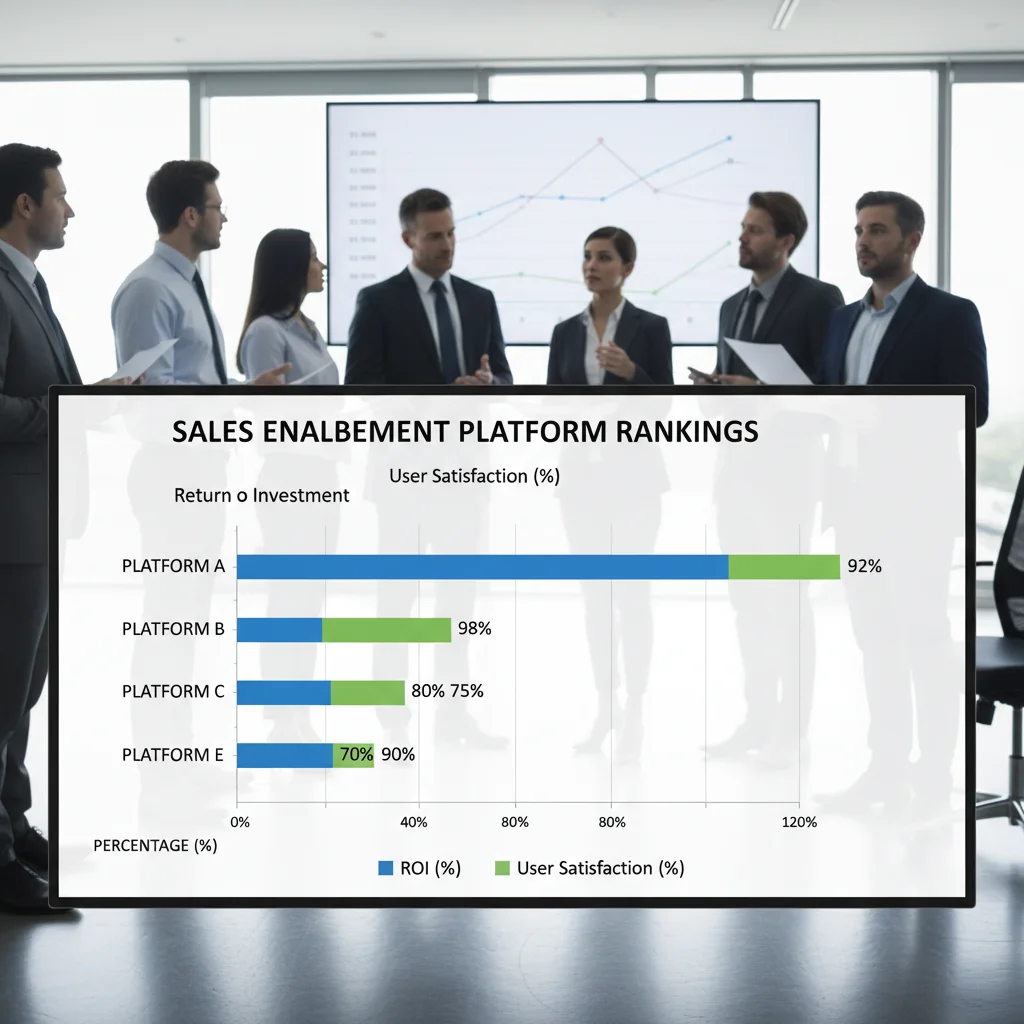
For US businesses, embracing these advancements in Sales Enablement Platforms will be key to maintaining a competitive edge. The platforms that best harness AI and data to deliver actionable insights and automate repetitive tasks will be the ones that drive the most significant ROI.
Conclusion: Investing in Your Sales Future with the Right Platform
The decision to invest in a Sales Enablement Platform is a strategic one, representing a commitment to empowering your sales team and driving sustainable revenue growth. As we’ve explored, Highspot, Seismic, Outreach, Salesloft, and Showpad are poised to be the leading platforms for US businesses in 2026, each offering unique strengths and catering to different organizational needs.
By conducting a thorough assessment of your specific requirements, aligning with your current tech stack, and considering your long-term growth objectives, you can confidently select a platform that will not only meet your immediate needs but also evolve with the dynamic sales landscape. The future of sales is intelligent, personalized, and efficient, and the right sales enablement platform will be the cornerstone of your success.
Don’t just equip your sales team; enable them to excel. The investment in a top-tier sales enablement solution is an investment in the future profitability and competitive advantage of your US business.