US Consumer Confidence 2026: Impact on Online Spending Q1

U.S. Consumer Confidence and Its 2026 Impact on Discretionary Online Spending: A Q1 Analysis
The economic landscape is a constantly shifting entity, influenced by a myriad of factors ranging from global geopolitical events to domestic policy changes. For businesses, particularly those operating within the vast and competitive realm of e-commerce, understanding the pulse of the consumer is not merely advantageous, but absolutely critical for survival and growth. As we navigate the complexities of the current economic environment and cast our gaze forward to Q1 2026, a central theme emerges: the pivotal role of consumer confidence 2026 in shaping discretionary online spending. This comprehensive analysis aims to dissect the various components influencing U.S. consumer sentiment, project its trajectory into early 2026, and elucidate its anticipated impact on the digital retail sector.
At its core, consumer confidence is a measure of how optimistic or pessimistic consumers are regarding the state of the economy and their personal financial situation. This sentiment directly correlates with their willingness to spend, especially on non-essential goods and services—what we term discretionary spending. When confidence is high, consumers are more likely to open their wallets, make significant purchases, and engage in online retail therapy. Conversely, when confidence wanes, they tend to retrench, prioritize savings, and defer non-essential expenditures. The digital marketplace, with its inherent convenience and vast product selection, is particularly sensitive to these shifts, as discretionary online spending often serves as an early indicator of broader economic health.
The period leading up to Q1 2026 is characterized by a confluence of economic forces that demand close attention. Inflationary pressures, interest rate adjustments by the Federal Reserve, employment figures, wage growth, and global supply chain stability all play significant roles in molding the prevailing mood of the American consumer. Furthermore, technological advancements, evolving consumer behaviors, and the ongoing maturation of the e-commerce ecosystem add layers of complexity to this intricate picture. Our exploration will delve into these factors, providing a nuanced understanding of how they are expected to converge and influence consumer confidence 2026, ultimately dictating the ebb and flow of discretionary online spending.
Understanding the Foundations of Consumer Confidence in Q1 2026
To accurately forecast the impact of consumer confidence 2026 on discretionary online spending, it’s essential to first establish a robust understanding of its foundational drivers. Several key economic indicators and psychological factors contribute to the overall sentiment. By Q1 2026, we anticipate a stabilization, if not a slight improvement, in many of these areas, laying the groundwork for potentially robust online retail activity. However, underlying vulnerabilities and emerging challenges must also be considered.
Inflationary Trends and Purchasing Power
The battle against inflation has been a defining characteristic of the early 2020s. By Q1 2026, it is widely hoped that inflationary pressures will have largely subsided, settling closer to the Federal Reserve’s target rates. A return to more stable prices directly bolsters consumer purchasing power. When the cost of essential goods and services is predictable and manageable, households have more disposable income available for discretionary items. This increased capacity for spending is a primary driver for online retail, as consumers feel more comfortable making non-essential purchases, from new gadgets to fashion items, via digital channels.
However, the path to disinflation is rarely linear. Any resurgence in energy prices, unexpected supply chain disruptions, or shifts in global trade policies could reignite inflationary concerns, quickly eroding the gains made in consumer confidence. Businesses must remain agile, monitoring these macroeconomic indicators closely, and be prepared to adjust their pricing and inventory strategies accordingly. The perception of value for money becomes paramount when consumers are sensitive to price changes, and online retailers that can offer competitive pricing without sacrificing quality are likely to thrive.
Employment and Wage Growth Dynamics
A strong labor market is arguably the most significant pillar of consumer confidence 2026. High employment rates and consistent wage growth provide individuals with financial security and the means to spend. As we approach Q1 2026, analysts generally project a healthy, albeit potentially cooling, job market. Continued job creation, coupled with real wage increases that outpace inflation, will be instrumental in sustaining positive consumer sentiment. When people feel secure in their jobs and see their incomes rising, they are more inclined to make discretionary purchases, including those made online.
Conversely, any signs of a significant slowdown in job growth or widespread layoffs could quickly dampen confidence. The gig economy and the increasing prevalence of remote work also introduce new dynamics into the employment picture, affecting income stability and spending patterns in ways that traditional economic models might not fully capture. Understanding these evolving employment trends is crucial for predicting where and how consumers will choose to allocate their discretionary online spending.
Interest Rates and Credit Availability
The Federal Reserve’s interest rate policies exert a profound influence on borrowing costs for both consumers and businesses. By Q1 2026, the expectation is that interest rates will have stabilized, potentially even seen some modest reductions if inflation is firmly under control. Lower interest rates make it cheaper for consumers to borrow for larger purchases, such as homes or vehicles, indirectly freeing up more cash for discretionary spending. More directly, lower rates on credit cards and personal loans can make consumers feel less burdened by debt, increasing their comfort level with additional spending.
The availability of credit also plays a role. If banks and other lenders maintain relatively accessible credit lines, consumers have more flexibility in their spending decisions. However, overly tight credit conditions could act as a significant drag on discretionary spending, regardless of other positive economic indicators. The interplay between interest rates, credit availability, and consumer debt levels will be a critical determinant of the strength of consumer confidence 2026.
Projecting Consumer Confidence for Q1 2026
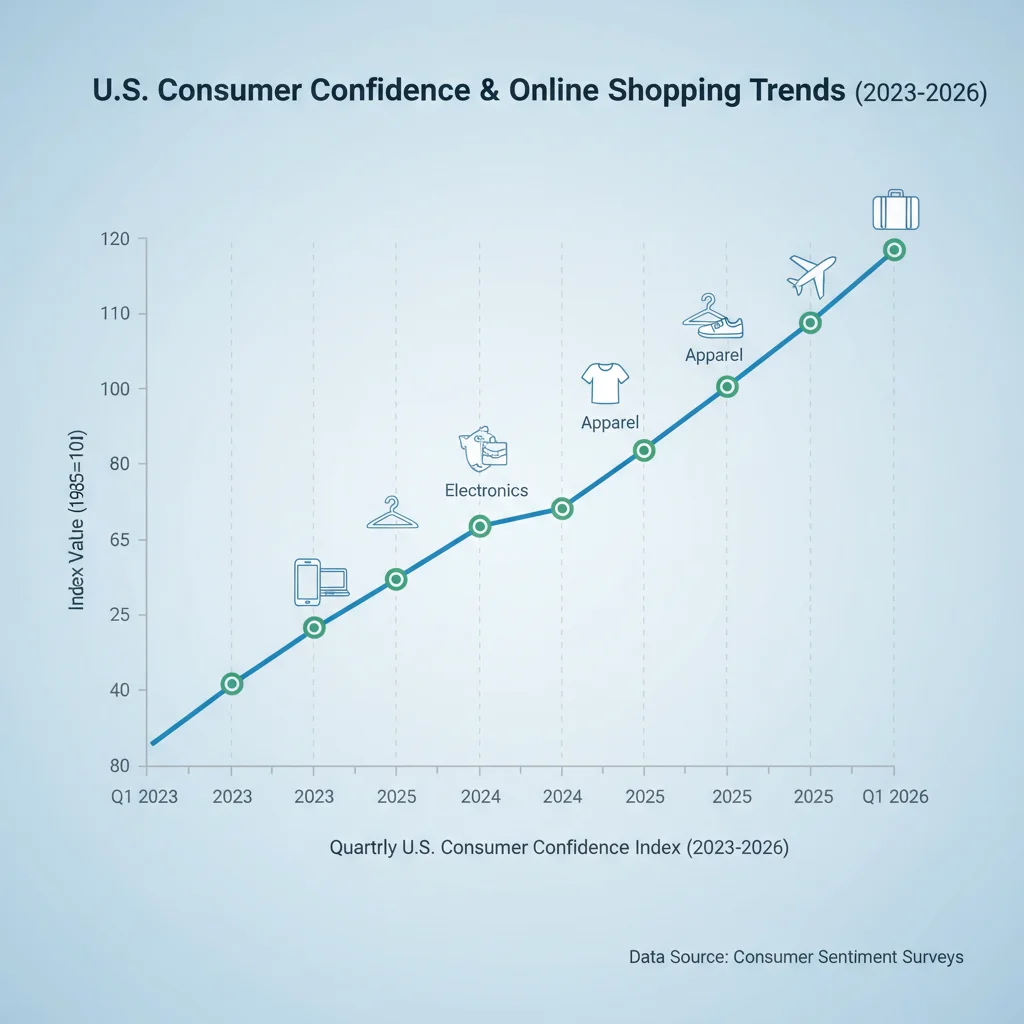
Based on current trajectories and expert consensus, the outlook for consumer confidence 2026 in Q1 appears cautiously optimistic. While challenges undoubtedly remain, several factors point towards a moderately favorable environment for discretionary online spending.
Anticipated Macroeconomic Stability
By early 2026, the U.S. economy is projected to have largely absorbed the shocks of recent years. Supply chains are expected to be more resilient, geopolitical tensions, while always present, might be less disruptive to global trade, and domestic policy frameworks are likely to be more predictable. This anticipated stability provides a strong foundation for sustained consumer confidence. When the economic future feels less uncertain, consumers are more willing to plan for and execute discretionary purchases, including those made with the convenience of online platforms.
However, it is crucial to acknowledge that unforeseen events can rapidly alter this outlook. Global health crises, major natural disasters, or significant shifts in international trade relations could introduce new volatilities. Consequently, businesses must build resilience into their models, enabling them to adapt quickly to changing consumer sentiment and market conditions. Monitoring leading economic indicators and consumer sentiment surveys on an ongoing basis will be paramount.
Technological Advancements and E-commerce Maturity
Beyond traditional economic indicators, the continued evolution of technology and the maturation of the e-commerce sector itself will play a role in shaping Q1 2026 consumer behavior. Enhanced user experience, faster delivery options, personalized recommendations driven by AI, and the integration of emerging technologies like augmented reality (AR) in online shopping can all contribute to a more positive and confident consumer journey. When online shopping is seamless, secure, and enjoyable, consumers are more likely to engage in discretionary spending through these channels, even if their overall confidence is only moderately high.
The proliferation of mobile commerce, social commerce, and new payment methods also lowers barriers to entry for many consumers, making discretionary online spending more accessible and convenient than ever before. This technological infrastructure acts as a critical enabler, ensuring that when consumer confidence 2026 is on an upswing, the digital marketplace is well-equipped to capture that increased spending.
Impact on Discretionary Online Spending in Q1 2026
The projected moderate to positive consumer confidence 2026 in Q1 is expected to translate into a noticeable, albeit possibly nuanced, impact on discretionary online spending. Businesses need to understand not just the overall trend, but also the specific categories and consumer segments that are likely to be most affected.
Growth in Key Discretionary Categories
With improved consumer confidence, several discretionary online spending categories are poised for growth. These include:
- Apparel and Accessories: As consumers feel more financially secure, they are more likely to update their wardrobes, purchase new jewelry, or invest in higher-end fashion items. Online retailers in this sector should prepare for increased demand, focusing on personalized experiences and efficient returns processes.
- Electronics and Gadgets: The allure of new technology remains strong. Enhanced confidence often leads to upgrades of smartphones, laptops, smart home devices, and gaming consoles. E-commerce platforms specializing in electronics can expect a boost, particularly with new product releases.
- Home Goods and Decor: As housing markets stabilize and disposable income rises, consumers often turn their attention to improving their living spaces. Online sales of furniture, home decor, kitchenware, and specialty appliances are likely to see an uptick.
- Travel and Experiences: While not purely online retail, booking travel, accommodations, and experiences through digital platforms is a significant component of discretionary online spending. Increased confidence often correlates with a greater willingness to spend on leisure and travel.
- Hobbies and Leisure: From sporting goods to craft supplies, musical instruments to specialized tools, consumers with greater financial security are more apt to invest in their passions and leisure activities, often sourcing these items online for convenience and variety.
It’s important for online businesses to segment their markets and tailor their offerings to these specific growth areas, leveraging data analytics to identify emerging trends and consumer preferences within each category.
Shifts in Consumer Behavior and Expectations
Even with rising confidence, consumer behaviors forged during periods of economic uncertainty are likely to persist. Value for money, transparency, and ethical considerations will remain important. Consumers will not simply spend more; they will spend more discerningly. This means online retailers must focus on:
- Sustainability and Ethical Sourcing: A growing segment of consumers, especially younger demographics, prioritize brands with strong environmental and social responsibility credentials.
- Personalization: Leveraging AI and data to offer highly relevant product recommendations and tailored shopping experiences will be crucial for capturing and retaining customer loyalty.
- Seamless Omnichannel Experience: The lines between online and offline shopping continue to blur. Retailers with a strong physical presence must integrate their online and in-store experiences, while pure-play e-commerce businesses need to consider pop-ups or partnerships to offer unique touchpoints.
- Efficient Logistics and Returns: Fast, reliable shipping and hassle-free returns are no longer just differentiators; they are table stakes for online retailers.
Understanding these evolving expectations is just as important as tracking overall consumer confidence 2026. Businesses that fail to adapt to these behavioral shifts risk being left behind, even in a buoyant economic climate.
Strategies for Online Businesses in a Confident Q1 2026
For online businesses looking to capitalize on potentially strong consumer confidence 2026 in Q1, strategic planning and agile execution will be key. This involves not only anticipating increased demand but also optimizing operations and marketing efforts to meet evolving consumer expectations.
Optimizing Marketing and Personalization
With consumers more willing to spend, targeted and personalized marketing campaigns will yield higher returns. Businesses should invest in advanced analytics to understand individual customer journeys and preferences. This allows for:
- Hyper-targeted Ads: Delivering relevant product recommendations and promotions based on past browsing history and purchase behavior.
- Email Marketing Segmentation: Crafting tailored email campaigns that resonate with specific customer segments, highlighting products or offers most likely to appeal to them.
- Content Marketing: Creating valuable content that addresses consumer needs and interests, subtly guiding them towards discretionary purchases. This could include buying guides, style tips, or how-to videos.
- Social Commerce Integration: Leveraging platforms where consumers spend significant time, making the path from discovery to purchase as smooth as possible directly within social media feeds.
The goal is to move beyond generic advertising and create a more engaging, one-to-one relationship with the customer, fostering trust and encouraging discretionary spending.
Enhancing User Experience and Technology
A superior online shopping experience is paramount. This includes:
- Website and Mobile Optimization: Ensuring fast loading times, intuitive navigation, and a seamless experience across all devices. Mobile-first design is no longer optional.
- Advanced Search and Filtering: Helping customers quickly find what they are looking for, especially in large inventories.
- High-Quality Visuals and Rich Media: Providing detailed product images, 360-degree views, and video demonstrations to help consumers make informed decisions.
- Secure and Diverse Payment Options: Offering a variety of trusted payment methods, including digital wallets and buy-now-pay-later (BNPL) services, to cater to different preferences.
- Customer Support: Investing in responsive and effective customer service, whether through live chat, email, or phone, to address queries and resolve issues promptly.
These technological and UX enhancements directly contribute to a positive shopping experience, reinforcing consumer confidence 2026 in the online purchasing process and reducing cart abandonment rates.
Supply Chain Resilience and Inventory Management
Anticipating increased demand requires a robust supply chain. Businesses must:
- Diversify Suppliers: Reduce reliance on single sources to mitigate risks from disruptions.
- Optimize Inventory Levels: Implement sophisticated inventory management systems to balance holding costs with the risk of stockouts, especially for popular discretionary items.
- Strengthen Logistics Partnerships: Work with reliable shipping and fulfillment partners to ensure timely and cost-effective delivery.
- Forecast Demand Accurately: Utilize data analytics and predictive modeling to anticipate shifts in consumer preferences and purchasing volumes.
A well-managed supply chain ensures that when consumers are confident and ready to spend, products are available and can be delivered efficiently, preventing frustration and lost sales.
Potential Headwinds and Risks to Consumer Confidence 2026
While the outlook for consumer confidence 2026 in Q1 appears generally positive, it is imperative to acknowledge potential headwinds that could dampen sentiment and impact discretionary online spending. Vigilance and contingency planning are essential for businesses operating in this dynamic environment.

Geopolitical Instability and Global Events
International conflicts, trade wars, or significant geopolitical shifts can have immediate and far-reaching effects on global economies, including the U.S. Such events can disrupt supply chains, increase commodity prices (especially energy), and introduce a sense of uncertainty that quickly erodes consumer confidence. Even if the U.S. economy remains relatively robust, a perception of global instability can cause consumers to become more cautious with their discretionary spending.
Businesses must monitor global developments closely and consider strategies like near-shoring or regionalizing supply chains to reduce exposure to international shocks. Maintaining diversified revenue streams and customer bases can also help mitigate risks associated with localized economic downturns stemming from global events.
Persistent Inflationary Pressures or Economic Slowdown
Despite projections for easing inflation, unexpected economic developments could lead to a resurgence of price pressures or a broader economic slowdown. Higher-than-anticipated energy costs, wage-price spirals, or a significant tightening of monetary policy could prolong inflationary challenges. Similarly, a sharper-than-expected economic contraction, potentially triggered by a global recession or a domestic policy misstep, would lead to job losses and reduced income, severely impacting consumer confidence 2026 and discretionary online spending.
Online retailers should have contingency plans in place for various economic scenarios, including strategies for adjusting pricing, promotional activities, and inventory levels in response to fluctuating consumer purchasing power. Flexibility in business models is key to weathering unexpected economic storms.
Cybersecurity Threats and Data Privacy Concerns
While not a traditional economic indicator, growing concerns over cybersecurity breaches and data privacy can significantly impact consumer trust in online platforms. A major data breach involving a prominent online retailer or payment processor could cause a widespread hesitancy to conduct transactions online, regardless of overall economic confidence. Consumers are increasingly aware of the risks associated with sharing personal and financial information, and any perceived vulnerability can deter discretionary online spending.
Online businesses must prioritize robust cybersecurity measures, transparent data privacy policies, and clear communication with customers about how their information is protected. Building and maintaining consumer trust is paramount for sustained growth in the digital marketplace, especially when encouraging discretionary purchases.
Conclusion: Navigating the Confident Consumer Landscape of Q1 2026
The outlook for U.S. consumer confidence 2026 in Q1 suggests a generally favorable environment for discretionary online spending. A stabilizing economy, potentially easing inflationary pressures, and a healthy job market are expected to provide consumers with the financial security and psychological comfort to engage more actively in online retail. This presents significant opportunities for e-commerce businesses to thrive, but it also demands a strategic and nuanced approach.
To fully capitalize on this anticipated positive sentiment, online retailers must not only monitor macroeconomic trends but also deeply understand evolving consumer behaviors and expectations. Investing in personalized marketing, enhancing the digital user experience, ensuring robust cybersecurity, and building resilient supply chains will be critical success factors. The modern consumer, even one with renewed confidence, is discerning and expects convenience, value, and ethical practices.
While optimism is warranted, vigilance against potential economic headwinds, geopolitical shifts, and technological threats remains essential. Businesses that can adapt quickly, innovate continuously, and prioritize the customer experience are best positioned to navigate the complexities of Q1 2026 and beyond. By focusing on these core principles, the digital marketplace can effectively harness the power of a confident consumer base, translating positive sentiment into sustained growth in discretionary online spending.