US Digital Ad Spend Q1 2026: E-commerce Impact & Strategy

Unpacking the 15% Surge in US Digital Ad Spend for Q1 2026: What It Means for Your E-commerce Strategy
The digital advertising landscape is a constantly evolving beast, characterized by rapid shifts in consumer behavior, technological advancements, and economic fluctuations. For e-commerce businesses, staying ahead of these trends isn’t just an advantage; it’s a necessity for survival and growth. Recent reports indicate a significant development that demands the immediate attention of every online retailer and marketer: a remarkable 15% surge in US digital ad spend for the first quarter of 2026. This isn’t just a number; it’s a powerful indicator of changing market dynamics, increased competition, and unparalleled opportunities. Understanding the nuances of this surge in digital ad spend is crucial for crafting an effective and profitable e-commerce strategy.
This comprehensive article will delve deep into the implications of this substantial increase. We will explore the driving forces behind this growth, analyze the financial impact across various sectors of e-commerce, and, most importantly, provide actionable insights and strategies for businesses to not only navigate but thrive in this intensified environment. From optimizing your ad placements to refining your targeting, and from measuring ROI with precision to embracing emerging technologies, we will cover the essential elements required to leverage this surge in digital ad spend to your advantage. Prepare to gain a strategic edge as we dissect these crucial updates and their profound financial ramifications for your e-commerce ventures.
The Macroeconomic Context: Why the 15% Surge in Digital Ad Spend?
To fully grasp the significance of a 15% increase in US digital ad spend for Q1 2026, it’s essential to first understand the broader macroeconomic forces at play. Several converging factors are contributing to this robust growth, painting a picture of increased business confidence and a strategic pivot towards digital channels. One primary driver is the continued digital transformation across industries. Businesses, having accelerated their digital adoption during recent global events, are now firmly committed to online engagement as a core component of their operations. This commitment translates directly into higher budgets allocated to reaching consumers where they spend most of their time: online.
Furthermore, technological advancements in advertising platforms themselves are making digital advertising more appealing and effective. Improvements in AI-driven targeting, sophisticated analytics, and automation are allowing marketers to achieve previously unattainable levels of precision and personalization. This enhanced efficacy justifies greater investment, as businesses see clearer pathways to measurable ROI. The rise of new advertising formats, such as shoppable content, interactive video ads, and immersive experiences in nascent metaverses, also presents fresh avenues for brands to connect with consumers, fueling the overall growth in digital ad spend.
Another significant factor is the evolving consumer purchasing journey. Modern consumers increasingly rely on multiple touchpoints, often starting their research online, engaging with social media, comparing products on e-commerce sites, and completing purchases either online or influenced by online interactions. This fragmented but digitally-centric journey necessitates a robust and pervasive digital advertising presence. Brands are recognizing that a holistic digital strategy, supported by substantial digital ad spend, is no longer optional but fundamental to capturing and retaining market share. The competitive landscape also plays a vital role; as more businesses vie for consumer attention in the digital realm, the cost of entry and sustained visibility naturally increases, pushing up overall ad expenditures.
Finally, sustained economic growth and a positive outlook for consumer spending power in early 2026 are likely contributing to businesses’ willingness to invest more heavily in advertising. When consumer confidence is high, and disposable income is stable or growing, brands are more inclined to expand their marketing efforts to capitalize on increased purchasing activity. This confluence of digital maturation, technological innovation, consumer behavior shifts, and economic optimism creates the perfect storm for a significant uptick in digital ad spend, setting the stage for a dynamic Q1 2026.
Dissecting the Financial Impact on E-commerce Businesses
A 15% surge in US digital ad spend is not just a statistical anomaly; it represents a seismic shift with profound financial implications for every e-commerce business, regardless of size or niche. The most immediate and noticeable impact will likely be an increase in the cost of advertising. As more capital flows into digital advertising platforms, competition for prime ad slots, keywords, and audience segments intensifies. This heightened demand typically leads to higher bids and, consequently, increased Cost Per Click (CPC), Cost Per Mille (CPM), and Cost Per Acquisition (CPA).
For smaller e-commerce businesses or those with tighter marketing budgets, this could pose a significant challenge. They might find it harder to compete with larger players who can afford higher bids, potentially leading to reduced visibility and higher customer acquisition costs. Therefore, optimizing ad spend and focusing on efficiency becomes paramount. Businesses will need to scrutinize every dollar spent, ensuring that their campaigns are highly targeted and deliver maximum ROI.
Conversely, for well-capitalized e-commerce companies or those with highly optimized advertising strategies, this surge presents an opportunity. Those who can effectively leverage their increased digital ad spend will be able to capture larger market shares, scale their operations, and reinforce their brand presence. The increased overall market activity also means there are more consumers actively engaging with digital ads, potentially leading to a larger pool of qualified leads and sales for businesses that can effectively reach them.
Beyond direct advertising costs, the surge will also impact profitability margins. If customer acquisition costs rise without a corresponding increase in customer lifetime value (CLTV) or average order value (AOV), profitability will inevitably suffer. E-commerce businesses will need to re-evaluate their pricing strategies, explore upselling and cross-selling opportunities, and focus on building strong customer relationships to enhance CLTV. Furthermore, the increased competition means that brands will need to differentiate themselves not just through their products but also through their advertising messaging and creative execution. Generic or uninspired ads will be quickly overlooked in a crowded digital marketplace, making effective creative development an even more critical investment.
The financial impact also extends to resource allocation. Businesses may need to invest more in skilled personnel for digital marketing, data analytics, and creative content production. The demand for expertise in areas like programmatic advertising, advanced audience segmentation, and performance marketing will likely intensify, potentially driving up talent acquisition costs. Ultimately, the 15% surge in digital ad spend for Q1 2026 necessitates a proactive and adaptive financial strategy for e-commerce businesses, emphasizing efficiency, differentiation, and a relentless focus on measurable returns.
Strategic Imperatives for E-commerce in a High-Spend Environment
Navigating an environment characterized by a 15% surge in digital ad spend requires more than just increasing your budget; it demands a sophisticated and strategic approach to every aspect of your e-commerce marketing. Here are the key imperatives:
1. Hyper-Focus on Audience Segmentation and Personalization
In a crowded ad space, generic messaging simply won’t cut through the noise. E-commerce businesses must leverage advanced data analytics to create highly granular audience segments. Go beyond basic demographics and delve into psychographics, behavioral patterns, purchase history, and intent signals. The more precisely you can define your target audience, the more effectively you can tailor your ad creatives and messaging. Personalization, in turn, drives higher engagement rates, better click-through rates (CTR), and ultimately, more conversions. Utilize AI-powered tools to dynamically adapt content and offers based on individual user profiles and real-time interactions. This isn’t just about addressing users by name; it’s about showing them products and messages that genuinely resonate with their needs and desires at that specific moment.
2. Optimize Ad Spend for Maximum ROI
With increased competition driving up costs, every dollar of your digital ad spend must work harder. This means a relentless focus on performance marketing and continuous optimization. Implement robust A/B testing for ad creatives, headlines, calls to action, and landing pages. Utilize attribution modeling to understand which touchpoints are truly driving conversions, moving beyond last-click attribution to a more holistic view of the customer journey. Explore programmatic advertising for more efficient ad buying and real-time bidding strategies. Regularly review your campaign performance metrics – not just clicks and impressions, but conversion rates, customer acquisition cost (CAC), and return on ad spend (ROAS). Be prepared to quickly reallocate budgets from underperforming campaigns to those delivering strong results. Data-driven decision-making is no longer a luxury; it’s a fundamental requirement.
3. Diversify Your Advertising Channels
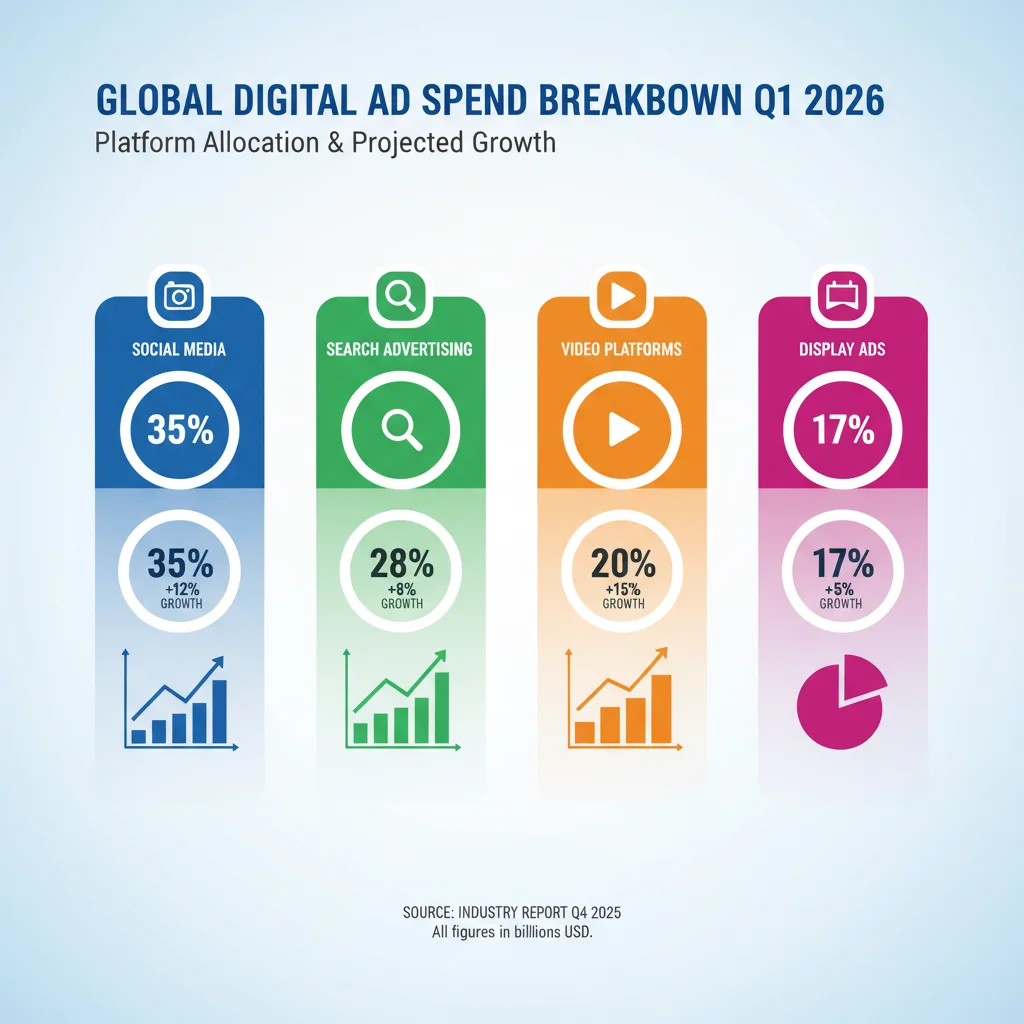
While established platforms like Google Ads and Meta (Facebook/Instagram) will likely see significant portions of the increased digital ad spend, relying solely on them can be risky due to rising costs and platform-specific algorithm changes. Explore a wider array of channels, including TikTok, Pinterest, LinkedIn (for B2B e-commerce), native advertising platforms, affiliate marketing, and emerging social commerce features. Consider investing in connected TV (CTV) advertising, audio ads, and even out-of-home (OOH) digital advertising if it aligns with your target audience. Diversification helps mitigate risk, potentially reduces overall CAC by finding less competitive channels, and allows you to reach different segments of your audience where they naturally congregate. This also means understanding the unique strengths of each platform and tailoring your content accordingly.
4. Invest in High-Quality Creative Content
In a visually saturated digital world, compelling creative content is your most powerful weapon. With a surge in digital ad spend, consumers will be exposed to an even greater volume of ads, making it harder to capture their attention. Invest in professional-grade photography, videography, graphic design, and copywriting. Your ads should not only be aesthetically pleasing but also tell a story, evoke emotion, and clearly communicate your value proposition. Experiment with interactive ad formats, user-generated content (UGC), and influencer collaborations to create authentic and engaging experiences. Remember that different platforms often require different creative approaches; a short, punchy video for TikTok will differ significantly from a detailed product carousel on Instagram or a search ad headline. Quality creative content ensures your increased ad spend translates into meaningful engagement and conversions.
5. Enhance Your Website and User Experience (UX)
All the digital ad spend in the world won’t matter if your landing pages and e-commerce website fail to convert visitors. A seamless and intuitive user experience is paramount. Ensure your website loads quickly, is mobile-responsive, and offers clear navigation. Optimize product pages with high-quality images, detailed descriptions, customer reviews, and clear calls to action. Streamline the checkout process to minimize friction and abandonments. Consider implementing AI-powered chatbots for instant customer support and personalized recommendations. A superior UX not only improves conversion rates but also enhances customer satisfaction and encourages repeat purchases, ultimately boosting your customer lifetime value and making your ad spend more effective.
6. Leverage First-Party Data and CRM Integration
As privacy regulations tighten and third-party cookies become obsolete, the value of first-party data is soaring. E-commerce businesses must prioritize collecting, analyzing, and activating their own customer data. Integrate your CRM system with your advertising platforms to create highly targeted custom audiences for retargeting and lookalike campaigns. Use purchase history, browsing behavior, and email engagement to inform your ad strategies. First-party data allows for more precise targeting, reduces reliance on less reliable third-party data, and helps build stronger, more personalized customer relationships. This strategic asset ensures your digital ad spend is directed towards the most promising prospects and existing customers.
7. Embrace Emerging Technologies (AI, AR, VR)
The future of digital advertising is intertwined with emerging technologies. Artificial intelligence (AI) is already revolutionizing ad optimization, predictive analytics, and content generation. Augmented reality (AR) and virtual reality (VR) offer immersive shopping experiences, allowing customers to virtually try on clothes, place furniture in their homes, or explore products in a 3D environment. E-commerce businesses should begin exploring how these technologies can be integrated into their advertising and shopping experiences. While not every business needs to jump into the metaverse immediately, understanding these trends and experimenting with accessible AR features (e.g., on social media platforms) can provide a significant competitive advantage and help future-proof your digital ad spend.
8. Focus on Customer Lifetime Value (CLTV) Over One-Off Sales
With rising acquisition costs, the paradigm must shift from solely focusing on initial conversions to maximizing customer lifetime value. Your digital ad spend should not just acquire new customers but also nurture existing ones. Implement robust post-purchase email sequences, loyalty programs, and personalized retargeting campaigns designed to encourage repeat purchases and build brand advocacy. A customer who makes multiple purchases over time is significantly more valuable than one who makes a single transaction, especially when CAC is increasing. By focusing on CLTV, you can justify higher initial ad expenditures and build a more sustainable and profitable customer base.
9. Continuous Monitoring and Adaptation
The digital advertising landscape is fluid. What works today might not work tomorrow. Therefore, continuous monitoring of campaign performance, market trends, and competitor strategies is non-negotiable. Utilize advanced analytics dashboards to track key performance indicators (KPIs) in real-time. Be agile and willing to adapt your strategies quickly based on performance data and emerging insights. Regular audits of your digital ad spend, creative assets, and targeting parameters will ensure you remain efficient and effective in a dynamic environment. Building a culture of experimentation and iterative improvement will be crucial for long-term success.
Implications for Specific E-commerce Verticals
While the 15% surge in digital ad spend impacts all e-commerce, its specific manifestations and strategic responses might vary across different verticals.
Fashion & Apparel
In this highly visual and trend-driven sector, the increased ad spend will likely intensify competition for attention on visual platforms like Instagram, TikTok, and Pinterest. Brands will need to double down on high-quality visual content, influencer marketing, and shoppable ads. The focus on personalization will be crucial, offering tailored recommendations based on style preferences, body type, and past purchases. AR try-on features could become a significant differentiator, justifying higher digital ad spend by improving conversion rates and reducing returns.
Electronics & Gadgets
For electronics, detailed product information, comparison tools, and review-driven content will remain vital. The surge in digital ad spend could lead to more sophisticated video advertising showcasing product features and benefits. Brands might invest more in search engine marketing (SEM) to capture high-intent buyers researching specific models. Educational content marketing will also play a larger role in building trust and explaining complex features, supporting direct response campaigns.
Home Goods & Furniture
This sector can significantly benefit from AR and VR technologies, allowing customers to visualize products in their own homes. Increased digital ad spend might be allocated to platforms that support rich media and interactive experiences. Content marketing focusing on home decor inspiration, DIY projects, and lifestyle integration will be effective. Retargeting campaigns based on browsing behavior (e.g., viewing specific furniture types) will be crucial for nurturing leads over longer sales cycles.
Health & Beauty
Trust and authenticity are paramount here. Influencer marketing, user-generated content, and educational video tutorials will be key. The surge in digital ad spend will likely see brands investing more in social media ads with strong visual appeal and testimonials. Subscription models and personalized product recommendations based on skin type or health goals will be important for driving CLTV and justifying higher acquisition costs.
Food & Beverage (E-commerce)
For online food and beverage retailers, the emphasis will be on striking visuals, appealing to taste and convenience. Increased digital ad spend could go into localized advertising, targeting consumers in specific delivery zones. Partnerships with food bloggers and recipe developers for sponsored content will also be effective. Subscription boxes and meal kit services will leverage personalized offers and strong community engagement to build loyalty.

Measuring Success in a High-Spend Environment
Simply throwing more digital ad spend at the problem is not a strategy; measuring the effectiveness of that spend is. In an environment where costs are rising and competition is fierce, precise measurement and attribution are more critical than ever. E-commerce businesses must move beyond vanity metrics and focus on key performance indicators (KPIs) that directly correlate with profitability.
Key metrics to track rigorously include:
- Return on Ad Spend (ROAS): This is arguably the most important metric, showing the revenue generated for every dollar spent on advertising. A higher ROAS indicates more efficient ad campaigns.
- Customer Acquisition Cost (CAC): As ad costs rise, monitoring CAC becomes vital. If CAC exceeds the customer lifetime value (CLTV), your business model is unsustainable.
- Customer Lifetime Value (CLTV): Understanding how much revenue a customer generates over their entire relationship with your business helps justify higher initial ad spends for valuable customers.
- Conversion Rate: The percentage of website visitors who complete a desired action (e.g., make a purchase). Optimizing this directly impacts the efficiency of your ad spend.
- Average Order Value (AOV): Increasing AOV helps offset rising CAC, making each acquired customer more profitable.
- Attribution Models: Move beyond last-click attribution. Explore multi-touch attribution models (e.g., linear, time decay, position-based) to understand the true impact of different ad channels across the customer journey.
- Engagement Metrics (CTR, Time on Page): While not direct conversion metrics, high engagement indicates that your ads are resonating with your audience, which can indirectly lead to better conversions.
Implementing robust analytics tools, such as Google Analytics 4, alongside your advertising platform dashboards, is essential. Regularly conduct deep dives into your data to identify trends, pinpoint inefficiencies, and discover new opportunities. A/B test everything – from ad copy and visuals to landing page layouts and call-to-action buttons. The smallest improvements in conversion rates or click-through rates can have a significant impact on your overall ROAS when dealing with substantial digital ad spend.
Furthermore, consider investing in predictive analytics. AI-powered tools can forecast future trends, identify potential customer segments, and optimize budget allocation in real-time. This proactive approach allows e-commerce businesses to stay one step ahead of the competition and maximize the effectiveness of their increased digital ad spend.
Conclusion: Adapting to the New Digital Ad Frontier
The 15% surge in US digital ad spend for Q1 2026 is more than just a momentary blip; it signifies a maturing and increasingly competitive digital advertising landscape. For e-commerce businesses, this trend presents both significant challenges and immense opportunities. The challenges stem from potentially higher customer acquisition costs and the need for greater strategic sophistication. The opportunities, however, lie in the expanded reach, advanced targeting capabilities, and the potential to capture a larger share of a digitally engaged consumer base.
To thrive in this new frontier, e-commerce businesses must embrace a multi-faceted approach. This includes a relentless focus on data-driven decision-making, hyper-personalization, channel diversification, and an unwavering commitment to delivering exceptional user experiences. Investing in high-quality creative content and leveraging first-party data will be crucial differentiators. Moreover, a forward-looking perspective that embraces emerging technologies and prioritizes customer lifetime value over short-term gains will separate the market leaders from those who struggle to keep pace.
The businesses that proactively adapt their e-commerce strategies to this increased digital ad spend environment will not only survive but will emerge stronger, more resilient, and ultimately, more profitable. Q1 2026 is set to be a pivotal quarter, demanding agility, innovation, and a strategic mastery of the digital advertising ecosystem. By understanding these dynamics and implementing the strategies outlined, your e-commerce business can confidently navigate this exciting and challenging period, transforming increased ad spend into sustained growth and success.