Maximize Holiday 2026 E-commerce Profit: 3-Month Strategy Guide
The 3-Month Window: Optimizing Your Holiday 2026 E-commerce Strategy for Maximum Profit in the US
The holiday season is undeniably the most lucrative period for e-commerce businesses in the United States. It’s a time of unprecedented consumer spending, heightened marketing activity, and intense competition. For many, the success or failure of their entire year hinges on their performance during these critical weeks. But what if we told you that the key to dominating the Holiday 2026 E-commerce landscape isn’t just about what you do in November and December, but rather what you meticulously plan and execute in the three months leading up to it?
This comprehensive guide is designed to equip you with a robust, actionable 3-month strategy to not only survive but thrive in the competitive US holiday e-commerce market of 2026. We’ll delve into the crucial phases of preparation, optimization, and execution, ensuring every aspect of your online store is primed for maximum profitability. From understanding evolving consumer behaviors to fine-tuning your logistics, this article will be your indispensable roadmap.
Month 1: The Strategic Blueprint & Foundational Preparation
The first month of your Holiday 2026 E-commerce preparation, ideally beginning in late August or early September 2026, is all about laying a solid foundation. This isn’t the time for last-minute tweaks; it’s the period for deep analysis, strategic planning, and foundational improvements that will support your entire holiday operation.
1. In-Depth Market Research and Trend Analysis
Understanding the market is paramount. What new trends emerged in late 2025 and early 2026 that could influence consumer behavior during the holidays? Are there shifts in preferred payment methods, delivery expectations, or product categories? Analyze competitor strategies from previous years – what worked, what didn’t? Look for emerging technologies or platforms that could give you an edge. For Holiday 2026 E-commerce, personalization and ethical sourcing are likely to continue as significant drivers.
- Consumer Behavior Research: Investigate purchasing patterns, preferred channels (mobile vs. desktop), and key decision-making factors. Are shoppers increasingly valuing convenience, sustainability, or unique experiences?
- Competitor Analysis: Identify key competitors. What are their strengths and weaknesses? What promotions did they run last year? How was their customer service? Use this intelligence to refine your own offerings.
- Product Trend Forecasting: What products are gaining traction? Are there specific niches or categories expected to explode for Holiday 2026 E-commerce? Leverage tools like Google Trends, social media analytics, and industry reports.
- Technological Shifts: Keep an eye on advancements in AI-driven personalization, augmented reality (AR) for product visualization, and improved voice search capabilities.
2. Website Audit and Performance Optimization
Your website is your storefront. It needs to be flawless. A slow, clunky, or non-responsive site will hemorrhage sales, especially during peak traffic. This month, conduct a thorough audit.
- Speed Optimization: Use tools like Google PageSpeed Insights. Optimize images, leverage browser caching, and consider a Content Delivery Network (CDN). Every millisecond counts for conversion rates.
- Mobile Responsiveness: A significant portion of Holiday 2026 E-commerce traffic will come from mobile devices. Ensure your site offers a seamless, intuitive experience across all screen sizes.
- User Experience (UX) Enhancements: Simplify navigation, optimize search functionality, and streamline the checkout process. Reduce the number of clicks required to make a purchase. Implement clear calls to action (CTAs).
- Technical SEO Audit: Check for broken links, crawl errors, duplicate content, and proper sitemap submission. Ensure your product pages are structured with rich snippets in mind for better search visibility.
- Security Review: Strengthen your website’s security protocols. An SSL certificate is non-negotiable. Reassure customers that their data is safe, especially during the busy Holiday 2026 E-commerce rush.
3. Inventory Management and Supply Chain Planning
Out-of-stock items are lost sales and frustrated customers. This is the time to finalize your inventory strategy.
- Demand Forecasting: Based on historical data, market trends, and current growth, project demand for your products. Be realistic but also prepare for unexpected surges.
- Supplier Relations: Confirm lead times, minimum order quantities, and contingency plans with your suppliers. Diversify suppliers if possible to mitigate risks.
- Warehouse & Fulfillment Capacity: Evaluate your current fulfillment capabilities. Do you need to hire temporary staff, invest in new equipment, or outsource part of your fulfillment? Ensure you can handle the increased volume for Holiday 2026 E-commerce.
- Returns Policy Review: A clear, customer-friendly returns policy is crucial during the holidays. Streamline the process and communicate it effectively.
Month 2: Optimization, Marketing & Pre-Launch Blitz
As you move into the second month (roughly October 2026), your focus shifts from foundational work to active optimization and the launch of your preliminary marketing campaigns. This is where you start building anticipation and driving early engagement for Holiday 2026 E-commerce.
1. Content Strategy and SEO Refinement
Content is king, especially when trying to capture early search interest. Update existing product descriptions, create gift guides, and plan blog posts that address holiday-specific needs.
- Keyword Research for Holiday Terms: Identify high-volume, low-competition keywords related to holiday shopping (e.g., "best gifts for [demographic] 2026," "holiday decor ideas," "Black Friday deals [product type]"). Integrate these naturally into your content.
- Product Page Optimization: Enhance product titles, descriptions, and meta descriptions with relevant keywords. Use high-quality images and videos. Encourage and display customer reviews.
- Gift Guides & Curated Collections: Create dedicated landing pages for gift guides (e.g., "Gifts for Her," "Tech Gifts 2026," "Sustainable Holiday Gifts"). These are excellent for SEO and user experience.
- Blog Content: Publish articles related to holiday planning, gift ideas, or how your products solve holiday-related problems. This drives organic traffic and establishes your brand as an authority.
- Local SEO: If you have a brick-and-mortar presence, ensure your Google My Business profile is updated and optimized for local searches, tying into a broader Holiday 2026 E-commerce strategy.
2. Email Marketing & Customer Segmentation
Your email list is one of your most valuable assets. Segment your audience and start nurturing them with targeted campaigns.
- List Segmentation: Divide your audience based on past purchases, browsing behavior, demographics, and engagement levels. This allows for highly personalized messaging.
- Lead Generation Campaigns: Implement pop-ups or banners offering early bird discounts or exclusive content in exchange for email sign-ups.
- Nurturing Sequences: Start sending out a series of emails building anticipation for the holiday season. Share sneak peeks, behind-the-scenes content, or early access to new products.
- Abandoned Cart Recovery: Refine your abandoned cart email sequences. Make them more compelling with limited-time offers or free shipping incentives during the Holiday 2026 E-commerce period.
- Loyalty Programs: Promote any loyalty programs or rewards to encourage repeat purchases during the holidays.
3. Advertising Strategy & Budget Allocation
This month, finalize your advertising channels and allocate your budget. Start running awareness campaigns that will warm up your audience.
- Platform Selection: Decide which platforms will yield the best ROI (Google Ads, Facebook/Instagram Ads, TikTok, Pinterest, etc.) based on your target audience and products.
- Creative Development: Design compelling ad creatives (images, videos, ad copy) that resonate with holiday shoppers. Test different variations to see what performs best.
- Audience Targeting: Define your target audiences for each campaign. Utilize retargeting strategies for past visitors and customers.
- Budget Planning: Allocate your budget strategically across different campaigns and phases (awareness, consideration, conversion). Be prepared to scale during peak events like Black Friday.
- Early Awareness Campaigns: Launch general brand awareness campaigns. Don’t push for direct sales yet; focus on building brand recognition and interest for Holiday 2026 E-commerce.
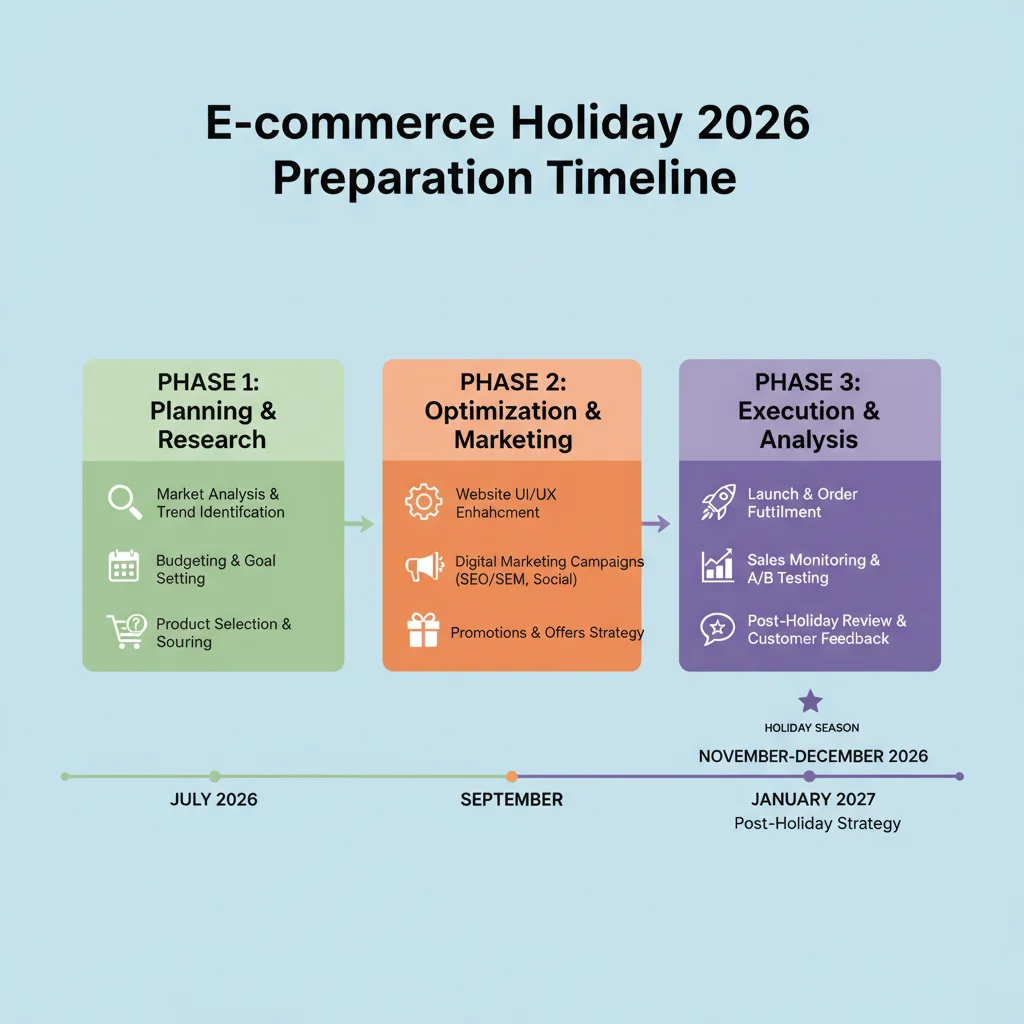
Month 3: Execution, Monitoring & Rapid Response
The final month (November 2026) is crunch time. This is where all your meticulous planning comes to fruition. It’s about flawless execution, vigilant monitoring, and the ability to adapt quickly to changing circumstances during the peak Holiday 2026 E-commerce period.
1. Launching Holiday Campaigns & Promotions
This is when your major holiday campaigns go live. Timing is everything.
- Black Friday/Cyber Monday (BFCM) Prep: Finalize all BFCM deals, landing pages, banners, and email schedules. Ensure your site can handle the traffic surge.
- Promotional Calendar: Have a detailed calendar of all holiday promotions, flash sales, and special offers leading up to Christmas and beyond.
- Cross-Channel Consistency: Ensure your messaging, branding, and promotions are consistent across all channels – website, email, social media, and ads.
- Influencer Marketing: If part of your strategy, launch influencer collaborations to maximize reach and credibility during the Holiday 2026 E-commerce rush.
- Gift Card Options: Promote gift cards as a convenient last-minute gifting solution.
2. Customer Service Excellence
Customer support can make or break your holiday season. Prepare for an influx of inquiries.
- Staffing & Training: Increase customer service staff and provide thorough training on common holiday queries, return policies, and troubleshooting.
- Omnichannel Support: Offer support across multiple channels (live chat, email, phone, social media). Ensure quick response times.
- Knowledge Base/FAQs: Update your FAQ section with holiday-specific questions (shipping deadlines, gift wrapping, returns).
- Proactive Communication: Send automated updates on order status, shipping, and delivery estimates to reduce inbound inquiries. This is critical for a smooth Holiday 2026 E-commerce experience.
3. Real-time Monitoring & Analytics
Be glued to your analytics. The ability to react quickly to data is a huge competitive advantage.
- Sales & Conversion Tracking: Monitor sales, conversion rates, average order value, and revenue daily, if not hourly, during peak periods.
- Website Performance: Keep an eye on site speed, uptime, and server load. Be ready to address any technical issues immediately.
- Ad Campaign Performance: Continuously optimize your ad campaigns based on real-time data. Adjust bids, pause underperforming ads, and scale up successful ones.
- Inventory Levels: Monitor inventory closely. Be prepared to reorder popular items or promote alternatives for those running low.
- Customer Feedback: Pay attention to social media mentions, reviews, and direct customer feedback. Address negative experiences swiftly and publicly where appropriate.
4. Post-Holiday Strategy (Early December – January)
The Holiday 2026 E-commerce season doesn’t end on December 25th. Post-holiday sales and managing returns are critical.
- After-Christmas Sales: Plan promotions for post-Christmas to clear excess inventory and capture gift card spending.
- Returns Management: Efficiently process returns and exchanges. A positive return experience can turn a one-time shopper into a loyal customer.
- Customer Retention: Engage new customers with welcome series, exclusive offers, and loyalty program invitations.
- Data Analysis: Conduct a thorough post-mortem analysis of your entire holiday performance. What worked? What didn’t? What lessons can you apply to future holiday seasons? This data is invaluable for your Holiday 2026 E-commerce retrospective and future planning.

Key Takeaways for Dominating Holiday 2026 E-commerce
Successfully navigating the Holiday 2026 E-commerce season in the US demands more than just a good product; it requires foresight, meticulous planning, and agile execution. By dedicating three months to strategic preparation, you can transform potential chaos into unprecedented opportunity. Here’s a recap of the most crucial elements:
The Power of Proactive Planning
Waiting until November to start your holiday strategy is a recipe for disaster. The earlier you begin, the more time you have to identify market trends, optimize your website, solidify your supply chain, and craft compelling marketing messages. Proactive planning allows you to anticipate challenges and implement solutions before they become crises. For Holiday 2026 E-commerce, this means having your tech stack ready, your inventory secured, and your customer service team trained well in advance.
Customer-Centricity is Non-Negotiable
At the heart of every successful Holiday 2026 E-commerce strategy must be the customer. From a seamless mobile shopping experience and personalized product recommendations to transparent shipping information and efficient customer support, every touchpoint should be designed with the customer in mind. Happy customers not only convert but also become brand advocates, crucial for long-term growth.
Data-Driven Decision Making
Throughout the entire 3-month window and especially during the peak selling period, rely on data to guide your decisions. Monitor website traffic, conversion rates, average order value, and revenue daily, if not hourly, during peak periods. The ability to quickly pivot ad spend, adjust promotions, or restock popular items based on analytics will be a significant differentiator in the competitive Holiday 2026 E-commerce market.
Agility and Adaptability
The e-commerce landscape is dynamic, and the holiday season amplifies this. Be prepared for unexpected challenges, such as shipping delays, sudden shifts in consumer demand, or competitor actions. Your team’s ability to adapt quickly, troubleshoot effectively, and implement contingency plans will be vital for maintaining momentum and profitability. A rigid plan, without room for flexibility, can be detrimental.
Beyond the Sale: Building Loyalty
While the immediate goal is to maximize sales during Holiday 2026 E-commerce, remember that the holiday season is also a prime opportunity to acquire new, valuable customers. Focus on delivering such an exceptional experience that these new customers become repeat buyers. Post-purchase engagement, loyalty programs, and excellent return policies are key to transforming seasonal shoppers into lifelong patrons.
By meticulously following this 3-month strategic framework, you are not just preparing for another holiday season; you are setting the stage for your most profitable Holiday 2026 E-commerce performance yet. The time to start is now. Don’t leave your holiday success to chance; plan, optimize, execute, and dominate.
Conclusion: Seize the Holiday 2026 E-commerce Opportunity
The Holiday 2026 E-commerce season in the US presents an unparalleled opportunity for growth and profitability. However, this opportunity comes with significant challenges, demanding a strategic, proactive, and data-driven approach. By embracing the 3-month planning window outlined in this guide, businesses can systematically prepare every facet of their operation – from website performance and inventory management to marketing campaigns and customer service.
Remember, success in this high-stakes period is not a matter of luck but of diligent preparation and flawless execution. By focusing on customer experience, leveraging robust analytics, and maintaining agility, your business can not only meet but exceed its Holiday 2026 E-commerce goals. Start today, and position your brand for an incredibly successful holiday season.