Future of Customer Support: Live Chat & AI Integration by Q3 2026

The Future of Customer Support: Integrating Live Chat and AI for 24/7 Assistance by Q3 2026
Recent Updates and Practical Solutions for a Seamless Customer Experience
In an increasingly digital and always-on world, customer expectations are soaring. Businesses are no longer just competing on product or price, but on the quality and responsiveness of their customer service. The demand for instant gratification, personalized interactions, and round-the-clock support has pushed organizations to rethink their strategies. This is where the integration of live chat and artificial intelligence (AI) comes into play, not as a futuristic concept, but as an immediate necessity. We are rapidly approaching a critical juncture, with many industry leaders projecting that by Q3 2026, a truly integrated AI customer support system will be the gold standard, offering 24/7 assistance that is both efficient and deeply satisfying for consumers.
This comprehensive guide will delve into the transformative power of blending live chat with AI, exploring the latest advancements, practical implementation strategies, and the tangible benefits businesses can expect. We’ll look at how this synergy is not just about automation, but about creating a more intelligent, empathetic, and scalable customer service ecosystem. From understanding the core components to navigating the challenges and celebrating the successes, prepare to equip your business with the knowledge to thrive in the evolving landscape of customer engagement.
The Evolving Landscape of Customer Expectations
Customer expectations have undergone a seismic shift over the past decade. Gone are the days when a simple email response within 24-48 hours was acceptable. Today’s customers, empowered by instant communication tools and a wealth of information at their fingertips, demand immediate answers, personalized experiences, and access to support across multiple channels. This elevated expectation is a direct consequence of technological advancements that have made instantaneity a norm in many aspects of daily life. The rise of social media, messaging apps, and always-on connectivity has conditioned consumers to expect similar levels of responsiveness from businesses.
Key Drivers of Change:
- Instant Gratification: Customers want answers now, not later. Delays can lead to frustration and churn.
- Personalization: Generic responses are no longer sufficient. Consumers expect businesses to know their history, preferences, and context.
- Omnichannel Access: Support should be available wherever the customer is – whether it’s via a website, mobile app, social media, or phone.
- 24/7 Availability: Business hours are becoming obsolete. Globalized markets and diverse customer bases require around-the-clock assistance.
Businesses that fail to adapt to these new realities risk losing market share to more agile competitors. The challenge lies in meeting these demands without exponentially increasing operational costs. This is precisely where the strategic integration of live chat and AI customer support offers a compelling solution, providing scalability, efficiency, and enhanced customer satisfaction.
Understanding the Synergy: Live Chat and AI
The true power of modern customer support emerges when live chat and AI are not viewed as competing forces, but as complementary components of a unified system. Live chat provides the human touch, empathy, and problem-solving capabilities that AI currently lacks, especially for complex or emotionally charged issues. AI, on the other hand, brings unparalleled efficiency, scalability, and data-driven insights to the table.
Live Chat: The Human Connection
Live chat offers real-time, text-based communication between customers and human agents. Its advantages include:
- Personalized Interaction: Agents can build rapport and tailor responses.
- Complex Problem Solving: Humans excel at understanding nuanced issues and providing creative solutions.
- Empathy and Assurance: Crucial for sensitive topics or frustrated customers.
- Sales Conversion: Agents can proactively assist customers during their buying journey.
AI: The Engine of Efficiency and Scale
AI, particularly in the form of chatbots and virtual assistants, automates routine tasks, provides instant answers, and learns from every interaction. Its strengths lie in:
- 24/7 Availability: AI never sleeps, offering continuous support.
- Instant Responses: No waiting times for common queries.
- Scalability: Handles a high volume of concurrent conversations without additional staffing.
- Data Analysis: Identifies trends, pain points, and areas for improvement.
- Cost Reduction: Significantly lowers operational costs by automating repetitive tasks.
When these two forces combine, the result is a formidable customer support system. AI can handle the bulk of initial inquiries, qualify leads, and provide self-service options, freeing up human agents to focus on high-value, complex interactions. This intelligent routing ensures that customers get the best of both worlds: instant, accurate answers for simple questions, and empathetic, personalized assistance for intricate problems. The goal is not to replace humans with machines, but to empower humans with AI, creating a superior customer experience and a more efficient workforce. This integrated approach is at the heart of effective AI customer support.
Recent Updates and Technological Advancements in AI Customer Support
The pace of innovation in AI is breathtaking, and its application in customer support is no exception. Recent updates have significantly enhanced the capabilities of AI-powered tools, making them more sophisticated, intuitive, and effective than ever before. These advancements are paving the way for the Q3 2026 vision of fully integrated AI customer support.
Generative AI and Large Language Models (LLMs)
The advent of generative AI, powered by large language models (LLMs) like GPT-4, has revolutionized how chatbots interact with customers. Traditional chatbots often relied on rigid rule-based scripts. Modern LLM-powered chatbots, however, can:
- Understand Nuance: Interpret complex queries, slang, and even emotions in natural language.
- Generate Human-like Responses: Provide articulate, contextually relevant, and personalized answers that sound remarkably human.
- Learn and Adapt: Continuously improve their understanding and response quality through machine learning.
- Summarize and Synthesize: Quickly process vast amounts of information to provide concise answers or summaries of customer interactions for agents.
Enhanced Sentiment Analysis
AI’s ability to detect and analyze customer sentiment has become incredibly accurate. This allows systems to:
- Identify Frustration: Flag customers who are becoming agitated, enabling proactive interventions by human agents.
- Prioritize Interactions: Route high-priority or distressed customers to live agents more quickly.
- Tailor Responses: Adjust the tone and content of automated responses based on the customer’s emotional state.
Voice AI and Conversational Interfaces
While live chat is text-based, the underlying AI technology is also advancing in voice recognition and synthesis. Voice AI is integrating seamlessly with chat platforms, allowing for:
- Voice-to-Text for Chat: Customers can speak their queries, which are transcribed for chat interaction.
- Proactive Voice Assistance: AI can offer to call a customer or provide voice-guided solutions.
Predictive Analytics and Proactive Support
AI is increasingly used to analyze customer data and predict potential issues before they arise. This enables businesses to:
- Offer Proactive Support: Reach out to customers with relevant information or solutions before they even realize they have a problem.
- Personalize Recommendations: Suggest products, services, or support articles based on past behavior and predicted needs.
These advancements mean that AI is no longer a simple automation tool but an intelligent partner that can significantly elevate the entire customer journey. The goal by Q3 2026 is to have these sophisticated AI capabilities woven into the fabric of every customer interaction, making AI customer support a truly intelligent and indispensable asset.
Practical Solutions for Integrating Live Chat and AI
Achieving a seamless integration of live chat and AI requires careful planning and strategic implementation. It’s not about throwing technology at a problem, but about designing a system that optimizes both efficiency and human connection. Here are practical solutions to guide your integration efforts:
1. Define Clear Use Cases for AI and Human Agents
The first step is to identify which types of queries are best handled by AI and which require human intervention. Generally:
- AI handles: FAQs, password resets, order status checks, basic troubleshooting, lead qualification, appointment scheduling, data collection.
- Human agents handle: Complex problem-solving, sensitive issues, complaints, sales negotiations, emotional support, unique or novel situations.
This clear demarcation ensures that AI optimizes efficiency for routine tasks, while human agents focus on high-value interactions where their skills are most impactful.
2. Implement Intelligent Routing
A sophisticated routing system is crucial. This involves AI acting as the first point of contact, assessing the customer’s intent and sentiment, and then:
- Resolving the issue autonomously if it falls within its capabilities.
- Escalating to the most appropriate human agent if the query is complex, sensitive, or requires empathy. This transfer should be seamless, with all previous chat history provided to the agent.
3. Leverage AI for Agent Assistance
AI shouldn’t just interact with customers; it should also empower human agents. This can be achieved through:
- Real-time Suggestions: AI can provide agents with relevant knowledge base articles, canned responses, or product information during a live chat.
- Conversation Summarization: When a chat is escalated from AI to a human, AI can provide a concise summary of the previous interaction, saving the customer from repeating themselves.
- Sentiment Analysis for Agents: Alerting agents to a customer’s frustration levels, allowing them to adjust their approach.
4. Build a Robust Knowledge Base
AI chatbots are only as good as the information they have access to. A well-organized, comprehensive, and regularly updated knowledge base is fundamental. This serves as the AI’s primary source of information for answering customer queries.
5. Continuous Training and Optimization
AI models require continuous training and monitoring. This involves:
- Analyzing Chat Transcripts: Identifying areas where AI struggled or provided incorrect information.
- Feedback Loops: Allowing human agents to provide feedback on AI interactions.
- A/B Testing: Experimenting with different AI responses and flows to optimize performance.
6. Choose the Right Technology Stack
Invest in a live chat platform that offers robust AI integration capabilities, API access, and analytics. Look for features like natural language processing (NLP), machine learning, and seamless CRM integration. The right platform will be a cornerstone of your AI customer support strategy.
Benefits of an Integrated Live Chat and AI System
The strategic integration of live chat and AI yields a multitude of benefits for both businesses and their customers. These advantages contribute directly to improved operational efficiency, enhanced customer satisfaction, and ultimately, stronger brand loyalty and growth. By Q3 2026, these benefits will be non-negotiable for competitive businesses.
For Customers:
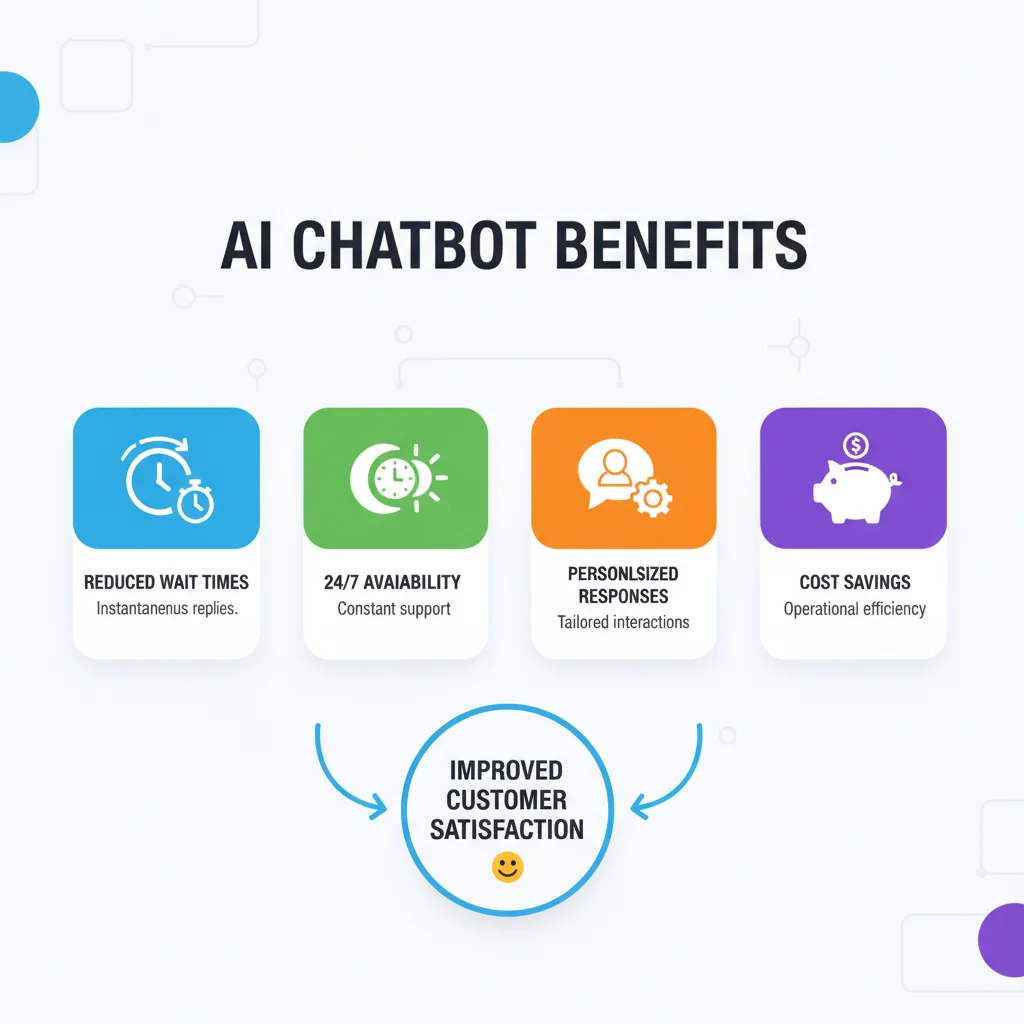
- 24/7 Availability: Customers can get help anytime, anywhere, regardless of business hours or time zones.
- Instant Responses: No more waiting on hold or for email replies. AI provides immediate answers to common questions.
- Personalized Experiences: AI can quickly access customer history and preferences, leading to more relevant and tailored interactions.
- Faster Resolution Times: AI handles simple queries quickly, and intelligent routing ensures complex issues reach the right human agent faster.
- Consistent Information: AI draws from a centralized knowledge base, ensuring uniform and accurate information delivery.
- Reduced Frustration: The ability to get instant answers and seamless escalation to human agents minimizes customer annoyance.
For Businesses:
- Reduced Operational Costs: AI automates routine tasks, significantly lowering the need for human resources for basic inquiries.
- Increased Agent Efficiency: Human agents are freed from repetitive tasks, allowing them to focus on complex, high-value interactions. AI also assists them with real-time information.
- Improved Customer Satisfaction (CSAT) Scores: Faster, more accurate, and more personalized support leads to happier customers.
- Scalability: AI can handle a massive increase in customer queries without a proportional increase in staffing, making it ideal for peak seasons or business growth.
- Data-Driven Insights: AI collects vast amounts of data on customer inquiries, pain points, and preferences, providing invaluable insights for product development, marketing, and service improvement.
- Higher Conversion Rates: Proactive AI assistance and instant query resolution during the buying journey can lead to increased sales.
- Enhanced Brand Reputation: Businesses known for excellent, responsive customer service often enjoy a stronger brand image and competitive advantage.
These combined benefits paint a clear picture of why investing in integrated AI customer support is not just an option, but a strategic imperative for businesses aiming for sustainable growth and customer loyalty in the coming years. The Q3 2026 deadline is approaching fast, and businesses need to act now.
Challenges and Considerations for Implementation
While the benefits of integrating live chat and AI are substantial, the implementation process is not without its challenges. Addressing these considerations proactively is key to a successful transition to advanced AI customer support.
1. Data Privacy and Security
AI systems rely heavily on data. Ensuring the privacy and security of customer information is paramount. Businesses must comply with regulations like GDPR and CCPA, implement robust encryption, and have clear data handling policies. Transparency with customers about how their data is used is also crucial for building trust.
2. Maintaining the Human Touch
The fear of losing the human element is a common concern. The goal is not to replace humans entirely but to augment them. Designing seamless handoffs from AI to human agents, training agents in empathy, and ensuring that complex or sensitive issues always reach a human are vital to maintaining a personalized experience.
3. AI Accuracy and Training
Initial AI models may not be perfect. They require extensive training with relevant data to be accurate and effective. Poorly trained AI can lead to incorrect answers, customer frustration, and a negative perception of the service. Continuous monitoring, feedback loops, and iterative improvements are essential.
4. Integration Complexity
Integrating new AI and live chat platforms with existing CRM systems, knowledge bases, and other business tools can be complex. It often requires significant technical expertise, API development, and careful planning to ensure all systems communicate effectively.
5. Cost of Implementation and Maintenance
While AI can reduce long-term operational costs, the initial investment in technology, development, training, and ongoing maintenance can be substantial. Businesses need to conduct a thorough cost-benefit analysis and secure adequate budget.
6. Employee Training and Adoption
Human agents need to be trained not just on how to use new tools, but also on how to work alongside AI. This includes understanding when to escalate, how to interpret AI-generated insights, and how to maintain a positive customer experience during transitions. Resistance to change from employees can also be a hurdle.
7. Scalability Planning
As your business grows, your AI customer support system must scale with it. This involves ensuring the infrastructure can handle increased traffic, and that the AI models can continue to learn and adapt to evolving customer needs and product offerings.
Addressing these challenges head-on with a clear strategy, adequate resources, and a commitment to continuous improvement will ensure a smoother and more successful integration of live chat and AI, propelling your customer support into the future.
Measuring Success and ROI
Implementing an integrated live chat and AI customer support system is a significant investment, and measuring its success is crucial to demonstrate return on investment (ROI) and justify ongoing optimization. By Q3 2026, businesses will have sophisticated metrics to track the performance of these systems.
Key Performance Indicators (KPIs) to Monitor:
- Customer Satisfaction (CSAT) Score: Directly ask customers about their satisfaction with the support interaction. Track CSAT for AI-only interactions, human-only interactions, and hybrid interactions.
- First Contact Resolution (FCR) Rate: The percentage of customer issues resolved on the first interaction. AI should significantly boost FCR for routine queries.
- Average Handling Time (AHT): The average time spent on a customer interaction. AI should reduce AHT for human agents by handling initial queries and providing context.
- Response Time: The speed at which a customer receives an initial response. AI provides near-instant responses.
- Resolution Time: The total time it takes to resolve a customer’s issue from start to finish.
- Agent Utilization Rate: How efficiently human agents are being used. AI should allow agents to focus on more complex tasks.
- Cost Per Interaction: Compare the cost of an AI-handled interaction versus a human-handled interaction. This is a direct measure of cost savings.
- Escalation Rate: The percentage of AI interactions that need to be escalated to a human agent. A lower escalation rate indicates more effective AI.
- Self-Service Adoption Rate: The percentage of customers who successfully resolve their issues using AI or self-service options without needing to speak to a human.
- Deflection Rate: The number of inquiries handled by AI that would otherwise have gone to a human agent.
Calculating ROI:
To calculate the ROI, businesses should compare the costs associated with the new AI and live chat system (software, development, training) against the savings and revenue gains generated (reduced operational costs, increased agent productivity, higher customer retention, improved sales conversions). A simplified formula might look like:
ROI = ( (Total Benefits - Total Costs) / Total Costs ) * 100%
Regularly reviewing these KPIs and ROI calculations allows businesses to identify areas for improvement, adjust their strategies, and ensure their AI customer support system is delivering maximum value. Data-driven decision-making is paramount for continuous optimization and for staying ahead in the competitive landscape.

The Road Ahead: What to Expect by Q3 2026
The journey towards fully integrated AI customer support is accelerating, and by Q3 2026, we anticipate a significant transformation in how businesses interact with their customers. This isn’t merely an incremental improvement; it’s a fundamental shift in the paradigm of service delivery.
Hyper-Personalization at Scale
AI will enable unprecedented levels of personalization. Systems will not only know a customer’s purchase history but also their preferred communication style, emotional state, and even anticipate their future needs. This will lead to proactive support and highly relevant recommendations, making every interaction feel uniquely tailored.
Predictive and Proactive Support Dominance
Instead of reacting to customer issues, businesses will increasingly use AI to predict problems before they arise. Think about a smart home system alerting you to a potential appliance malfunction and automatically initiating a service request, or a telecom provider notifying you of a potential service interruption before it impacts your experience. This proactive approach will redefine customer satisfaction.
Seamless Omnichannel Experiences
The distinction between channels will blur entirely. A customer might start a query on a website chatbot, transition to a live chat with a human agent, receive a follow-up email, and then get a notification on their mobile app, all while the underlying AI customer support system maintains a complete, unified context of the interaction. No more repeating information across different touchpoints.
Human Agents as Strategic Problem Solvers
The role of human agents will evolve from reactive problem solvers to strategic relationship managers and complex problem solvers. AI will handle the mundane, freeing up agents to focus on building deeper customer relationships, resolving highly nuanced issues, and providing an empathetic touch that only humans can offer. Their expertise will be leveraged for tasks that truly require human intelligence and emotional insight.
Ethical AI and Trust
As AI becomes more pervasive, the emphasis on ethical AI development and transparent practices will grow. Businesses will need to ensure their AI systems are fair, unbiased, and respect customer privacy. Building and maintaining customer trust in AI interactions will be a critical success factor.
AI as a Business Intelligence Hub
Beyond direct customer interaction, AI will become a powerful business intelligence hub, continuously analyzing customer data to identify market trends, product pain points, and opportunities for innovation. This feedback loop will drive continuous improvement across the entire organization.
By Q3 2026, businesses that have successfully embraced this integration will not only meet but exceed customer expectations, setting new benchmarks for service excellence. The future of AI customer support is not just about technology; it’s about creating a more intelligent, responsive, and ultimately more human-centric customer experience.
Conclusion: Embracing the Intelligent Service Revolution
The future of customer support is undeniably intertwined with the intelligent integration of live chat and artificial intelligence. As we hurtle towards Q3 2026, the businesses that will thrive are those proactively embracing this revolution, understanding that it’s not merely an upgrade but a fundamental redefinition of customer engagement. The blend of AI’s efficiency and scalability with live chat’s human empathy creates a powerful synergy, capable of delivering 24/7 assistance that is both immediate and deeply personalized.
We’ve explored the escalating customer expectations, the symbiotic relationship between AI and live chat, and the cutting-edge advancements driving this transformation. We’ve also provided practical solutions for implementation, highlighting the immense benefits for both customers and businesses, from reduced costs and increased efficiency to unparalleled customer satisfaction. Crucially, we’ve addressed the challenges, emphasizing the need for robust data privacy, continuous AI training, and the strategic preservation of the human touch.
The journey to fully optimized AI customer support is ongoing, requiring continuous learning, adaptation, and a commitment to leveraging technology responsibly. However, the rewards are clear: a more responsive, intelligent, and customer-centric service model that not only meets today’s demands but also anticipates tomorrow’s. By strategically investing in these integrated solutions now, businesses can solidify their competitive advantage, build lasting customer loyalty, and truly lead the way in the intelligent service era. The time to act is now, to ensure your business is not just participating in, but defining, the future of customer support by Q3 2026.