Leveraging CRM for Sales Enablement: 6 Advanced Tactics for Maximizing Data Utilization in 2026

In the rapidly evolving landscape of sales, staying ahead means constantly innovating and optimizing your strategies. For 2026 and beyond, the cornerstone of sales success lies in effectively leveraging your Customer Relationship Management (CRM) system for robust CRM Sales Enablement. It’s no longer enough to simply store customer data; the true competitive advantage comes from maximizing that data’s utilization to empower your sales team, predict market shifts, and personalize customer interactions at scale. This comprehensive guide will delve into six advanced tactics that will transform your CRM into a dynamic sales enablement powerhouse, ensuring your team is equipped, informed, and highly effective.
The concept of CRM Sales Enablement has matured significantly. What was once primarily a tool for contact management and pipeline tracking has now become the central nervous system of modern sales operations. With the proliferation of data, the advent of artificial intelligence (AI), and the increasing demand for personalized customer experiences, CRMs are evolving into sophisticated platforms capable of delivering actionable insights and automating complex workflows. By 2026, businesses that fail to fully exploit their CRM’s potential will find themselves at a severe disadvantage.
This article aims to provide a deep dive into practical, forward-thinking strategies. We’ll explore how to move beyond basic CRM functionalities and embrace advanced data utilization techniques that directly contribute to sales growth. From predictive analytics that anticipate customer needs to AI-driven coaching that refines sales pitches, these tactics are designed to future-proof your sales organization and ensure sustained success in a competitive market. Let’s unlock the power of your CRM and revolutionize your sales enablement efforts.
1. Implement Advanced Predictive Analytics for Proactive Opportunity Identification
The days of reacting to sales opportunities are rapidly fading. In 2026, successful sales teams will be proactive, identifying and nurturing opportunities long before they fully materialize. This shift is powered by advanced predictive analytics integrated directly into your CRM. Predictive analytics leverages historical data, behavioral patterns, and external market trends to forecast future outcomes, allowing your sales team to anticipate customer needs, identify high-potential leads, and predict churn risks.
Understanding Predictive Analytics in CRM Sales Enablement
At its core, predictive analytics uses statistical algorithms and machine learning techniques to analyze current and historical data to make predictions about future events. For CRM Sales Enablement, this means:
- Lead Scoring and Prioritization: Moving beyond simple demographic data, advanced lead scoring models incorporate engagement history, website activity, social media interactions, and even industry trends to assign a more accurate propensity-to-buy score. This ensures sales reps focus their efforts on leads most likely to convert, optimizing their time and improving conversion rates.
- Churn Prediction: Identifying customers at risk of churning before they do is crucial for retention. Predictive models can analyze customer usage patterns, support ticket history, and sentiment analysis from communications to flag at-risk accounts, allowing sales and customer success teams to intervene proactively with targeted solutions or special offers.
- Next Best Offer/Action: Based on a customer’s profile, past purchases, and browsing behavior, the CRM can suggest the “next best offer” or “next best action” to a sales rep. This could be a specific product recommendation, an invitation to a webinar, or a personalized content piece, all designed to move the customer further down the sales funnel.
- Sales Forecasting Accuracy: Traditional sales forecasting often relies on gut feelings and manual updates. Predictive analytics can vastly improve accuracy by analyzing historical sales data, pipeline stages, economic indicators, and even competitor activity to generate more reliable sales forecasts, enabling better resource allocation and strategic planning.
Actionable Steps for Implementation:
- Data Integration and Cleansing: Ensure all relevant data sources – CRM, marketing automation, customer support, website analytics, ERP – are integrated into a unified data platform accessible by your CRM. Crucially, invest in data cleansing to ensure accuracy and consistency. Garbage in, garbage out, especially with predictive models.
- Define Clear Objectives: What specific problems are you trying to solve with predictive analytics? Is it improving lead quality, reducing churn, or increasing cross-selling? Clear objectives will guide model development and evaluation.
- Choose the Right Tools: Many modern CRMs offer built-in predictive capabilities. For more advanced needs, consider integrating specialized predictive analytics platforms that can feed insights back into your CRM.
- Start Small and Iterate: Begin with a pilot program focusing on one specific use case, like lead scoring. Analyze the results, refine your models, and then expand to other areas.
- Train Your Sales Team: Provide comprehensive training on how to interpret and act on predictive insights. Sales reps need to understand the “why” behind the recommendations to effectively incorporate them into their workflows.
By embedding predictive analytics into your CRM Sales Enablement strategy, you empower your sales team to be highly strategic, focusing their energy on the most promising avenues and anticipating customer needs before they are even articulated. This leads to higher conversion rates, improved customer satisfaction, and ultimately, greater revenue.
2. Leverage AI-Powered Conversational Intelligence for Enhanced Coaching and Performance
Sales conversations are the lifeblood of any sales organization. Yet, traditionally, insights from these critical interactions have been anecdotal or limited to manual note-taking. Enter AI-powered conversational intelligence, a game-changer for CRM Sales Enablement in 2026. This technology analyzes recorded sales calls and meetings, transcribing them, identifying key themes, sentiment, talk-to-listen ratios, and even pinpointing specific keywords or phrases that correlate with successful outcomes.
How Conversational Intelligence Transforms CRM Sales Enablement:
Integrating conversational intelligence directly with your CRM allows for a holistic view of customer interactions and provides invaluable data for coaching and performance improvement:
- Automated Call Analysis: AI can automatically transcribe calls, identify topics discussed (e.g., pricing, competitor mentions, pain points), and even gauge customer sentiment. This saves reps hours of manual note-taking and ensures accurate data capture in the CRM.
- Personalized Sales Coaching: Managers can use these insights to provide hyper-personalized coaching. Instead of generic advice, they can pinpoint specific areas for improvement, such as “you talked for 70% of that call, try to ask more open-ended questions” or “the customer hesitated when you mentioned price X, let’s work on your value proposition.”
- Identification of Best Practices: By analyzing thousands of successful sales calls, the AI can identify patterns and behaviors that lead to closed deals. These “winning formulas” can then be disseminated across the sales team, standardizing excellence.
- Onboarding and Training Acceleration: New hires can learn faster by reviewing top performers’ calls, understanding effective objection handling, and mastering product positioning in real-world scenarios.
- Market Intelligence: Conversational intelligence can aggregate customer feedback, common objections, and emerging needs directly from sales calls, providing invaluable market intelligence to product development and marketing teams.
- Automated CRM Updates: Some advanced systems can even automatically update CRM fields based on call content, ensuring data accuracy and reducing administrative burden on sales reps.
Implementing AI-Powered Conversational Intelligence:
- Choose an Integrated Solution: Select a conversational intelligence platform that seamlessly integrates with your existing CRM. This allows for data flow and ensures insights are contextualized within the customer’s journey.
- Establish Recording Protocols: Ensure compliance with all legal and ethical guidelines regarding call recording. Inform participants and obtain consent where necessary.
- Define Key Metrics and Keywords: Work with sales leadership to identify the critical metrics you want to track (e.g., discovery questions asked, positive/negative sentiment, specific product mentions, competitor names).
- Train Managers and Reps: Managers need to be trained on how to use the platform for coaching, while reps need to understand how their calls are being analyzed and how to leverage the feedback for self-improvement.
- Foster a Culture of Learning: Emphasize that conversational intelligence is a tool for growth and development, not just surveillance. Encourage reps to review their own calls and learn from peers.
By embedding AI-powered conversational intelligence into your CRM Sales Enablement strategy, you transform every sales interaction into a learning opportunity, driving continuous improvement and significantly boosting sales performance.
3. Master Hyper-Personalization at Scale with CRM-Driven Content Delivery
In 2026, generic sales pitches and one-size-fits-all content are obsolete. Customers expect highly personalized interactions that demonstrate a deep understanding of their unique challenges and needs. Your CRM, when properly configured, becomes the engine for achieving hyper-personalization at scale within your CRM Sales Enablement framework.
The Power of CRM-Driven Personalized Content:
Hyper-personalization goes beyond merely using a customer’s name. It involves delivering the right message, at the right time, through the right channel, tailored to their specific industry, role, pain points, and stage in the buyer’s journey. Your CRM provides the data foundation for this:
- Segmented Content Libraries: Organize your sales content (case studies, whitepapers, product sheets, testimonials, videos) within your CRM or an integrated content management system, tagging each piece with relevant attributes like industry, product, pain point, and buyer persona.
- Automated Content Recommendations: Based on the data in the CRM (e.g., lead source, company size, recent interactions, email opens, website visits), the system can automatically recommend the most relevant content to a sales rep for a specific prospect.
- Dynamic Content Generation: Advanced CRMs, often with AI integration, can even dynamically assemble personalized proposals, presentations, or email sequences by pulling in relevant content blocks based on the prospect’s CRM profile.
- Personalized Communication Templates: Equip your sales team with a library of customizable email and message templates that automatically pull in prospect-specific data from the CRM, ensuring consistency while maintaining personalization.
- Behavioral Triggered Content: Set up automated workflows where specific prospect actions (e.g., downloading a particular whitepaper, visiting a pricing page, opening a specific email) trigger the delivery of follow-up content directly from the CRM, ensuring timely and relevant engagement.
Strategies for Maximizing Personalized Content Delivery:
- Centralized Content Repository: Implement a single source of truth for all sales and marketing content, ideally integrated with your CRM. This ensures reps always have access to the latest, approved materials.
- Robust Tagging and Metadata: Invest time in meticulously tagging all content with relevant keywords, industries, product lines, buyer stages, and pain points. The better your metadata, the more effective your personalization engine will be.
- Understand Your Buyer Personas: Develop detailed buyer personas that outline their demographics, psychographics, challenges, and information consumption habits. This informs content creation and personalization strategies.
- Train Sales Reps on Content Utilization: It’s not enough to have great content; reps need to know how to find it, when to use it, and how to personalize it effectively. Provide ongoing training and best practices.
- Measure Content Effectiveness: Track which content pieces are being used most, which ones lead to higher engagement, and ultimately, which contribute to closed deals. Use these insights to refine your content strategy.
By mastering hyper-personalization through CRM-driven content delivery, your sales team can build deeper relationships, address specific customer needs more effectively, and significantly accelerate the sales cycle, making it a cornerstone of effective CRM Sales Enablement.
4. Integrate Advanced AI for Automated Sales Workflow Optimization
The administrative burden on sales professionals has long been a challenge, diverting valuable time away from selling. In 2026, advanced AI integration within your CRM will virtually eliminate many of these tasks, freeing up your sales team to focus on high-value interactions. This shift represents a significant leap forward in CRM Sales Enablement, moving beyond simple automation to intelligent workflow optimization.
AI’s Role in Streamlining Sales Workflows:
AI can analyze patterns and make intelligent decisions to automate or significantly simplify repetitive and time-consuming tasks:
- Intelligent Data Entry and Enrichment: AI can automatically extract information from emails, meeting notes, and even business cards, populating CRM fields with accuracy. It can also enrich existing contact and company data by pulling information from public sources, ensuring your CRM records are always up-to-date.
- Automated Lead Routing and Assignment: Beyond basic round-robin or territory-based routing, AI can analyze lead characteristics (industry, company size, expressed needs) and sales rep strengths (past success with similar leads, current workload) to intelligently assign leads to the most appropriate rep, maximizing conversion potential.
- Smart Scheduling and Follow-up Reminders: AI-powered assistants can analyze calendars, suggest optimal meeting times, and even send automated follow-up reminders based on predefined rules and engagement patterns, ensuring no opportunity falls through the cracks.
- Email and Communication Assistance: AI can draft personalized email responses, suggest optimal send times, and even analyze email effectiveness, providing insights on subject lines and call-to-actions that resonate most with specific customer segments.
- Opportunity Management and Progression: AI can monitor opportunities in the pipeline, identify potential roadblocks, and suggest next steps or resources based on similar successful deals in the past. It can even flag opportunities that are stagnating, prompting sales managers to intervene.
- Automated Report Generation: Instead of manually compiling reports, AI can generate customized sales performance reports, pipeline analyses, and forecast summaries on demand, providing real-time insights without manual effort.
Key Considerations for AI Workflow Integration:
- Identify Bottlenecks: Conduct an audit of your current sales processes to identify which administrative tasks consume the most time and are ripe for AI automation.
- Choose AI-Native CRM or Integrations: Opt for CRMs that have strong native AI capabilities or integrate seamlessly with specialized AI automation platforms.
- Define Rules and Parameters: While AI is intelligent, it still needs initial guidance. Clearly define the rules for lead assignment, follow-up sequences, and other automated workflows.
- Monitor and Refine: AI models learn and improve over time. Continuously monitor the performance of automated workflows, gather feedback from your sales team, and refine the AI’s parameters for optimal results.
- Empower, Don’t Replace: Position AI as a tool that empowers sales reps by taking away mundane tasks, allowing them to focus on human connection and strategic selling, which are irreplaceable.
By strategically integrating advanced AI into your CRM, you can achieve unprecedented levels of workflow optimization, dramatically boosting the efficiency and effectiveness of your CRM Sales Enablement efforts and allowing your sales team to spend more time doing what they do best: selling.

5. Implement a Closed-Loop Feedback System for Continuous Improvement
Effective CRM Sales Enablement isn’t a one-time setup; it’s a continuous cycle of improvement. In 2026, successful organizations will establish robust closed-loop feedback systems that constantly gather insights from sales activities, analyze their impact, and feed those learnings back into the enablement program. This ensures your strategies are always relevant, effective, and responsive to market and team needs.
Components of a Closed-Loop Feedback System for CRM Sales Enablement:
A truly effective system leverages your CRM as the central hub for data collection and analysis:
- Sales Rep Feedback: Directly solicit feedback from sales reps on the usefulness of enablement resources (content, training, tools), the effectiveness of sales processes, and challenges they face in the field. This can be done through surveys within the CRM, dedicated feedback forms, or regular debriefing sessions.
- Performance Metrics Analysis: Continuously monitor key performance indicators (KPIs) tracked in your CRM, such as conversion rates at each pipeline stage, average deal size, sales cycle length, win rates by product/segment, and content utilization. Correlate these metrics with specific enablement initiatives.
- Customer Feedback Integration: Bring customer feedback (from surveys, support interactions, social media, and direct conversations logged in the CRM) into the enablement loop. Are customers finding value in your solutions? What are their common objections or unmet needs?
- Market and Competitor Intelligence: Regularly update your CRM with market trends, competitor activities, and industry news. This external data helps to contextualize sales performance and identify new enablement needs.
- Enablement Content Performance Tracking: Utilize CRM and integrated content platforms to track which sales assets are being used by reps, which are shared with prospects, and which ultimately contribute to deal progression or closure.
- Training Effectiveness Measurement: Link training completion rates and assessment scores to actual sales performance metrics within the CRM to understand the ROI of your training programs.
Steps to Establish a Closed-Loop System:
- Define Feedback Channels: Determine how and where feedback will be collected. This could include CRM forms, integrated survey tools, regular team meetings, and one-on-one coaching sessions.
- Establish Metrics for Success: Clearly define the KPIs that will indicate the success or failure of your enablement initiatives. Ensure these are accurately tracked within your CRM.
- Regular Data Analysis: Schedule regular reviews of all collected data – qualitative feedback and quantitative metrics. Identify trends, anomalies, and areas for improvement.
- Actionable Insights and Iteration: Translate data into actionable insights. For example, if a particular piece of content isn’t being used, investigate why. If a training module isn’t impacting performance, revise it.
- Communicate Changes: Transparently communicate how feedback is being used to improve CRM Sales Enablement resources and processes. This builds trust and encourages continued participation from the sales team.
- Automate Where Possible: Use CRM workflows to automate feedback requests, report generation, and even the dissemination of updated enablement materials.
A well-implemented closed-loop feedback system ensures that your CRM Sales Enablement strategy remains agile, responsive, and continuously optimized for maximum impact, driving sustained sales growth and team effectiveness.
6. Foster a Culture of Data Literacy and Continuous Learning
Even the most advanced CRM with sophisticated AI and predictive analytics is only as effective as the people using it. In 2026, a critical, often overlooked, aspect of CRM Sales Enablement is fostering a strong culture of data literacy and continuous learning within your sales team. This means empowering every sales professional to understand, interpret, and act upon the data available in their CRM.
Why Data Literacy is Crucial for CRM Sales Enablement:
A data-literate sales team can:
- Make Informed Decisions: Instead of relying on intuition, reps can use CRM data to prioritize leads, tailor pitches, identify cross-sell opportunities, and manage their pipeline more effectively.
- Personalize Interactions Deeper: Understanding customer data (purchase history, engagement, preferences) allows for truly personalized conversations that resonate and build stronger relationships.
- Self-Coach and Improve: When reps understand their own performance data (win rates, activity metrics, average deal size), they can identify their strengths and weaknesses and take proactive steps to improve.
- Contribute to Strategic Insights: Data-aware reps can provide more valuable qualitative feedback to sales leadership and marketing, enriching the overall strategic planning process.
- Adapt to New Technologies: As CRM capabilities evolve with new AI and analytics features, a data-literate team will be better equipped to adopt and leverage these tools quickly.
- Drive CRM Adoption: When sales reps see the tangible benefits of data in their daily work, CRM adoption rates naturally increase, leading to higher data quality and overall system effectiveness.
Strategies for Cultivating Data Literacy and Continuous Learning:
- Ongoing CRM Training: Move beyond initial onboarding. Provide regular, bite-sized training sessions on specific CRM features, data insights, and how to apply them in real-world selling scenarios.
- Focus on “Why” Over “How”: When training on CRM usage, emphasize the “why” – how using the CRM effectively will directly benefit the rep by helping them close more deals, save time, or earn more commission.
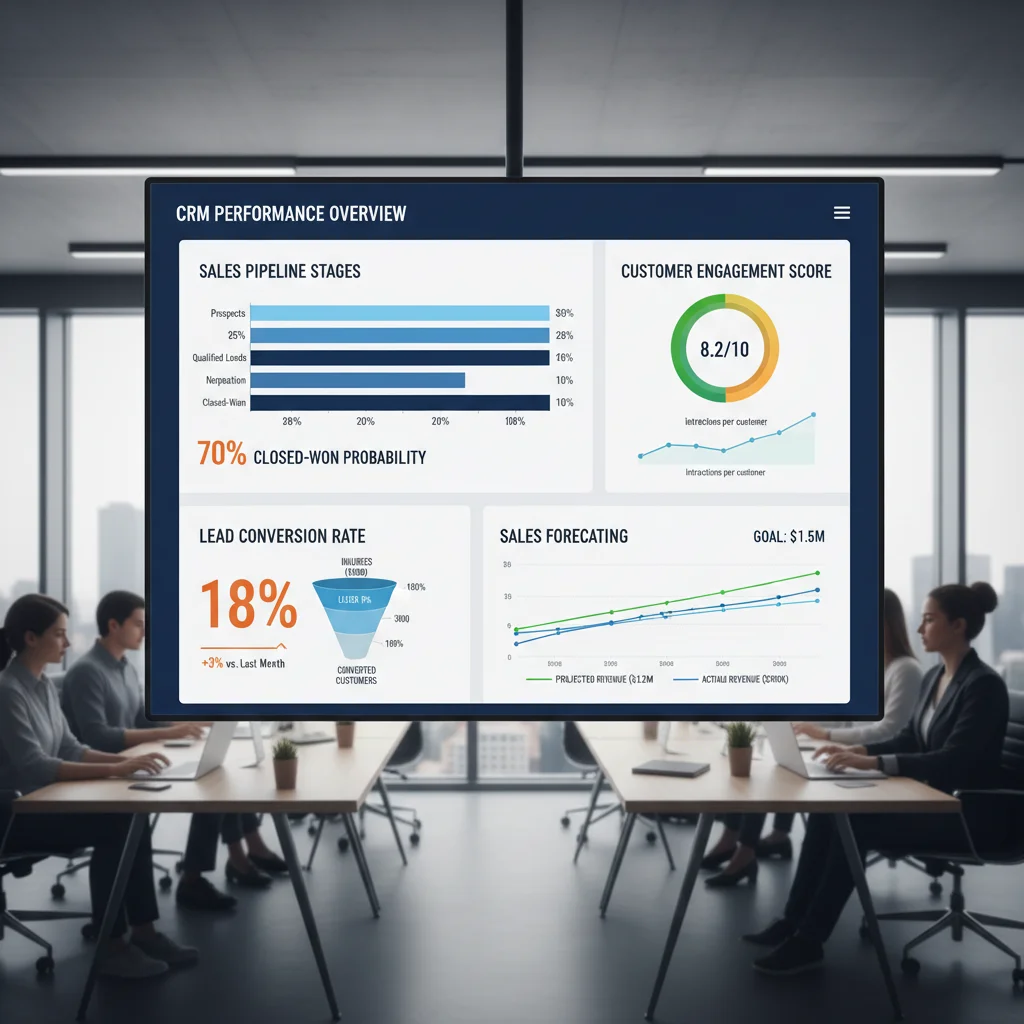
- Data Visualization and Dashboards: Present CRM data in easily digestible visual formats through customized dashboards. Make key metrics and insights readily accessible and understandable at a glance.
- Sales Manager as Data Champion: Train sales managers to be champions of data literacy. They should be able to interpret team and individual performance data, provide data-driven coaching, and encourage data-informed decision-making.
- Gamification and Recognition: Use gamification within the CRM to encourage data entry, data utilization, and achievement of data-driven goals. Recognize and reward reps who effectively leverage data for success.
- Cross-Functional Collaboration: Facilitate collaboration between sales, marketing, and customer success teams. Show how data shared across these functions creates a unified customer view and improves overall customer experience.
- Dedicated “Data Hours”: Set aside dedicated time for reps to explore their CRM data, ask questions, and share best practices on how they are using insights to their advantage.
By investing in data literacy and fostering a culture of continuous learning, you transform your sales team into a highly intelligent, adaptable, and self-improving unit. This human element, combined with advanced CRM technology, is the ultimate formula for unparalleled CRM Sales Enablement and sustained sales excellence in 2026 and beyond.
Conclusion: The Future of CRM Sales Enablement is Data-Driven and Intelligent
The year 2026 demands a sophisticated approach to sales that moves beyond traditional methods. The six advanced tactics outlined in this article – predictive analytics, AI-powered conversational intelligence, hyper-personalization, automated workflows, closed-loop feedback, and a culture of data literacy – are not merely enhancements; they are fundamental shifts in how organizations will achieve unparalleled success in sales. Each tactic, deeply rooted in maximizing data utilization within your CRM, contributes to a more efficient, effective, and ultimately, more human sales process.
Embracing these strategies for CRM Sales Enablement means transforming your sales team into an agile, informed, and highly responsive force. It means anticipating customer needs, personalizing every interaction, eliminating administrative burdens, and continuously refining your approach based on real-world performance. The CRM is no longer just a record-keeping system; it is the strategic brain of your sales operation, empowering every rep to perform at their peak.
The journey to advanced CRM Sales Enablement requires commitment, investment in technology, and a dedication to cultural change. However, the rewards – increased conversion rates, shorter sales cycles, improved customer satisfaction, and sustained revenue growth – are unequivocally worth the effort. Start integrating these advanced tactics today to ensure your sales team is not just prepared for the future, but actively shaping it.