Top A/B Testing Software Updates 2026: Optimize Landing Pages for 12% Better Performance
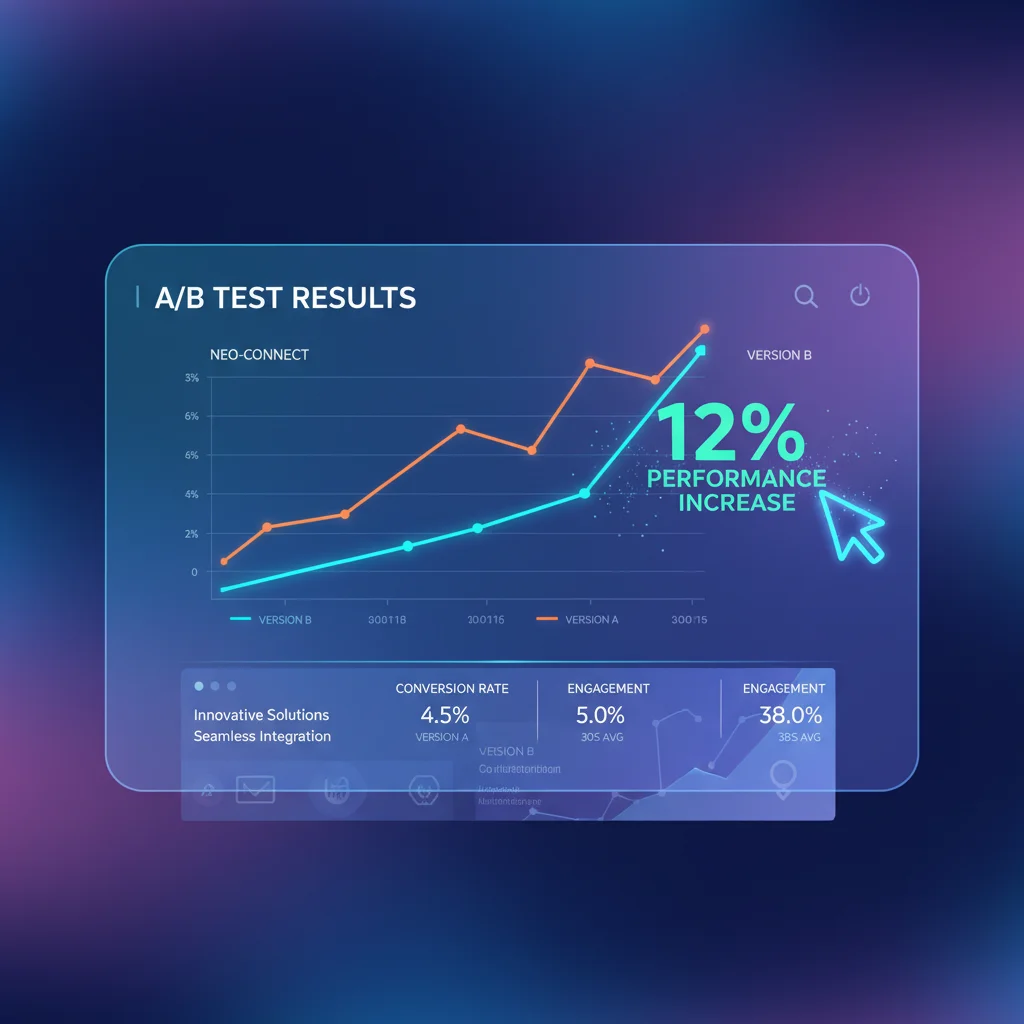
The Top 5 A/B Testing Software Updates to Optimize Your Landing Pages for a 12% Better Performance in 2026
In the dynamic world of digital marketing, staying ahead of the curve is not just an advantage; it’s a necessity. As we look towards 2026, the landscape of A/B testing software updates is evolving at an unprecedented pace, promising revolutionary tools and features designed to supercharge your landing page optimization efforts. Imagine boosting your conversion rates by a significant 12% simply by leveraging the latest advancements in experimentation. This isn’t a pipe dream; it’s the tangible reality that these upcoming software updates are set to deliver.
Landing pages are the digital storefronts of your campaigns, the critical touchpoints where potential leads transform into valuable customers. Their performance directly impacts your ROI, making continuous optimization paramount. Traditional A/B testing has long been the backbone of this process, but the next generation of A/B testing software updates is set to transcend simple split tests. We’re talking about intelligent, AI-driven platforms that not only identify winning variations but also predict user behavior, personalize experiences at scale, and integrate seamlessly with your entire marketing tech stack.
This comprehensive guide will delve into the top 5 A/B testing software updates expected to make the biggest impact in 2026. We will explore how these innovations will empower marketers, product managers, and UX designers to achieve unparalleled levels of optimization, leading to that coveted 12% performance improvement and beyond. Get ready to transform your approach to landing page optimization and unlock new levels of success.
The Evolving Landscape of A/B Testing: Beyond Basic Split Tests
For years, A/B testing has been a fundamental practice for optimizing web pages. The premise is simple: create two versions of a page (A and B), show them to different segments of your audience, and see which one performs better based on predefined metrics. While effective, this approach often required significant manual effort, time, and a degree of guesswork in formulating hypotheses.
The 2026 A/B testing software updates are poised to revolutionize this paradigm. The focus is shifting from reactive testing to proactive, predictive optimization. This means moving beyond merely identifying what worked in the past to understanding why it worked, and even more importantly, predicting what will work in the future for specific user segments. The integration of advanced analytics, machine learning, and artificial intelligence is at the core of this transformation.
Consider the limitations of traditional A/B testing: it can be time-consuming, especially for complex tests with multiple variations. It often requires a substantial amount of traffic to reach statistical significance, and it might not always account for the nuanced behaviors of different user segments. The upcoming A/B testing software updates directly address these challenges, offering solutions that are faster, more efficient, and far more intelligent.
This evolution is not just about new features; it’s about a fundamental shift in how we approach experimentation. It’s about empowering businesses to make data-driven decisions with greater confidence and speed, ultimately leading to superior user experiences and significantly improved conversion rates. The 12% performance bump isn’t an arbitrary number; it’s an achievable target when you harness the power of these next-gen tools.
1. AI-Powered Predictive Personalization and Optimization
The most significant of the A/B testing software updates for 2026 is undoubtedly the widespread adoption of AI-powered predictive personalization. Gone are the days of manually segmenting audiences and designing separate tests for each. Modern AI algorithms can now analyze vast datasets of user behavior, demographics, and preferences in real-time to predict which content, layout, or call-to-action will resonate most with an individual user.
This goes beyond simple dynamic content. We’re talking about sophisticated machine learning models that can adjust every element of a landing page – from headlines and images to form fields and social proof – on the fly, tailoring the experience to maximize the likelihood of conversion for each visitor. This level of personalization was once the exclusive domain of tech giants, but these A/B testing software updates are making it accessible to businesses of all sizes.
Key Features and Benefits:
- Real-time Adaptation: Landing pages will dynamically adjust based on a user’s current session behavior, previous interactions, and known attributes.
- Automated Hypothesis Generation: AI can suggest optimal test variations based on predicted performance, reducing the manual effort of test design.
- Micro-segmentation: Instead of broad segments, AI can identify and target extremely niche user groups with highly specific content, leading to higher relevance and conversion rates.
- Reduced Test Duration: By intelligently allocating traffic to winning variations faster, AI significantly speeds up the time to statistical significance, allowing for more experiments in less time.
- Holistic User Journey Optimization: Predictive personalization extends beyond the landing page, influencing subsequent interactions and creating a seamless, optimized user journey.
Imagine a scenario where a user arriving from a social media ad sees a landing page optimized with imagery and language reflecting that platform’s aesthetic, while a user from a search engine query sees a page focused on detailed product specifications. This granular level of optimization, driven by these A/B testing software updates, is a game-changer for achieving that 12% performance boost.
2. Enhanced Multivariant Testing (MVT) with AI-Driven Efficiency
While A/B testing compares two versions, Multivariant Testing (MVT) allows you to test multiple variations of several elements on a page simultaneously (e.g., different headlines, images, and call-to-action buttons). The challenge with traditional MVT has always been the exponential number of combinations, requiring immense traffic and time to reach conclusive results.
The 2026 A/B testing software updates bring a new era of MVT, powered by advanced AI and statistical models. These updates make MVT not only more manageable but also significantly more effective. Instead of testing every possible combination, AI algorithms intelligently sample variations, identify patterns, and extrapolate results, drastically reducing the required traffic and test duration.

How AI Transforms MVT:
- Smart Traffic Allocation: AI dynamically allocates traffic to the most promising combinations, quickly identifying and prioritizing high-performing variations.
- Interaction Analysis: Beyond individual element performance, AI can detect synergistic effects between different elements (e.g., a specific headline performing exceptionally well with a particular image).
- Reduced Resource Drain: By requiring less traffic and time, these A/B testing software updates make sophisticated MVT accessible to campaigns with smaller budgets and traffic volumes.
- Automated Insights: The software will not just tell you which combination won, but also provide deeper insights into why, suggesting underlying psychological or behavioral factors at play.
This leap in MVT capabilities means you can optimize entire landing pages, not just isolated elements, with unprecedented speed and precision. For businesses striving for a 12% improvement, harnessing AI-driven MVT is a non-negotiable strategy.
3. Seamless Integration with Marketing & Analytics Stacks
One of the persistent frustrations for marketers has been the siloed nature of various tools. Data from A/B testing platforms often needed to be manually exported and then imported into CRM, analytics, or advertising platforms. This disjointed workflow leads to inefficiencies, data discrepancies, and a fragmented view of the customer journey.
The 2026 A/B testing software updates are bringing about a new era of seamless, bidirectional integration. Expect native connectors and advanced APIs that allow your A/B testing platform to communicate effortlessly with your entire marketing and analytics ecosystem. This means real-time data flow, unified customer profiles, and a truly holistic approach to optimization.
Impact of Enhanced Integrations:
- Unified Customer View: Combine behavioral data from A/B tests with CRM data, purchase history, and ad campaign performance to create richer, more actionable customer profiles.
- Attribution Accuracy: More precise attribution models that can track the impact of A/B test variations across the entire customer journey, not just on the landing page itself.
- Automated Workflow Triggers: Test results can automatically trigger actions in other platforms, such as updating ad creatives, segmenting email lists, or personalizing future website visits.
- Reduced Data Silos: Eliminate manual data transfers and ensure all your tools are working with the most up-to-date information, leading to more consistent and effective campaigns.
- Enhanced Reporting: Centralized dashboards that pull data from all integrated platforms, providing a comprehensive overview of campaign performance and A/B test impact.
This level of integration is crucial for understanding the true ROI of your optimization efforts and for scaling your experimentation program. It allows you to move beyond isolated tests to a continuous cycle of learning and improvement across all your digital touchpoints, directly contributing to that 12% performance uplift.
4. Advanced Visualization and Reporting for Deeper Insights
Raw data, no matter how comprehensive, is only valuable if it can be easily understood and acted upon. Previous generations of A/B testing software often presented results in complex tables or basic graphs, requiring significant analytical skill to extract meaningful insights. The 2026 A/B testing software updates are setting a new standard for data visualization and reporting.
Anticipate interactive dashboards featuring intuitive heatmaps, scroll maps, click maps, and session recordings, all seamlessly integrated with your A/B test results. These tools will provide visual proof of how users interact with different variations, making it easier to pinpoint friction points and understand user intent. Furthermore, AI-driven narrative reporting will translate complex statistical findings into plain language, highlighting key takeaways and actionable recommendations.

What to Expect:
- Interactive Heatmaps & Eye-Tracking Simulations: Visualize where users look, click, and spend most of their time on different page variations, offering insights into design effectiveness.
- AI-Generated Recommendations: Beyond just reporting winners, the software will suggest specific changes and provide rationales based on observed behavior and predictive models.
- Customizable Dashboards: Create personalized dashboards that highlight the metrics most important to your team, presented in an easy-to-digest format.
- Comparative Performance Over Time: Easily track how different variations perform against each other and against a baseline over extended periods, revealing trends and seasonal impacts.
- Automated Anomaly Detection: AI will flag unusual performance spikes or dips, prompting further investigation and preventing misinterpretations of test results.
These advanced visualization and reporting features are crucial for democratizing data within organizations. They empower not just data scientists but also marketers, copywriters, and designers to understand the impact of their work and contribute to a culture of continuous optimization. This clarity in understanding is a direct path to achieving that 12% performance gain.
5. Ethical AI and Privacy-Preserving Experimentation
As AI becomes more integral to A/B testing software updates, the importance of ethical considerations and user privacy cannot be overstated. With increasing regulatory scrutiny (like GDPR and CCPA) and growing consumer awareness, the next generation of A/B testing tools will place a strong emphasis on privacy-preserving techniques and transparent AI practices.
Expect features that allow for robust experimentation without compromising user data. This includes advanced anonymization techniques, differential privacy, and federated learning approaches where models are trained on decentralized data without individual data ever leaving its source. The goal is to maximize optimization potential while minimizing privacy risks and maintaining user trust.
Key Ethical & Privacy Features:
- Built-in Compliance Tools: Software will offer features to ensure A/B tests adhere to regional data privacy regulations, simplifying compliance for businesses.
- Anonymized Data Processing: Enhanced techniques for processing user data in a way that makes re-identification impossible, protecting individual privacy.
- User Consent Management Integration: Seamless integration with consent management platforms, ensuring that experimentation only occurs with explicit user permission where required.
- Explainable AI (XAI): While AI provides predictions, XAI features will offer insights into how decisions are made, building trust and allowing for human oversight and ethical auditing.
- Fairness and Bias Detection: Tools to detect and mitigate potential biases in AI models that could lead to unfair or discriminatory experiences for certain user groups.
Embracing ethical AI and privacy-preserving experimentation is not just about compliance; it’s about building long-term trust with your audience. When users feel their data is respected, they are more likely to engage with your brand, which indirectly contributes to better conversion rates and sustainable growth. These A/B testing software updates ensure that your pursuit of a 12% performance increase is both effective and responsible.
Implementing These A/B Testing Software Updates for a 12% Performance Boost
Adopting these advanced A/B testing software updates requires more than just purchasing new tools; it demands a strategic shift in your optimization mindset. To truly achieve a 12% or even greater performance improvement on your landing pages, consider the following implementation strategies:
1. Invest in Training and Skill Development
The new generation of A/B testing tools, while more intuitive, will still require a deeper understanding of data science principles, AI capabilities, and advanced statistical analysis. Invest in training your marketing, product, and UX teams to effectively leverage these powerful features. Workshops on AI-driven experimentation, predictive analytics, and ethical data practices will be invaluable.
2. Foster a Culture of Continuous Experimentation
These A/B testing software updates are designed for ongoing, iterative optimization. Move away from one-off tests and embrace a culture where experimentation is an integral part of every campaign and product launch. Encourage hypothesis generation from all team members and celebrate learnings, even from failed tests.
3. Prioritize Data Quality and Integration
AI models are only as good as the data they’re fed. Ensure your data collection processes are robust, accurate, and consistent across all platforms. Prioritize the seamless integration of your A/B testing software with your CRM, analytics, and advertising platforms to create a unified and reliable data ecosystem.
4. Start Small, Scale Gradually
While the potential of these new tools is immense, it’s wise to start with smaller, more manageable experiments. Get comfortable with the AI-driven features, understand their recommendations, and build confidence in the platform’s capabilities. As your team gains expertise, gradually scale up to more complex multivariant tests and broader personalization initiatives.
5. Focus on User Experience (UX) Beyond Conversions
Remember that the ultimate goal is to create exceptional user experiences. While a 12% conversion uplift is a fantastic metric, ensure that your optimization efforts also contribute to a smoother, more enjoyable, and trustworthy experience for your users. AI-powered tools can help identify not just what converts, but also what delights and retains users.
The Future is Optimized: Your Path to a 12% Performance Boost
The 2026 A/B testing software updates represent a monumental leap forward in the field of digital optimization. By embracing AI-powered predictive personalization, enhanced multivariant testing, seamless integrations, advanced visualization, and ethical AI practices, businesses are now equipped with the tools to achieve unprecedented levels of landing page performance.
That 12% performance boost isn’t just a number; it translates into tangible business growth – more leads, higher sales, increased customer lifetime value, and a stronger competitive edge. The future of marketing is intelligent, personalized, and data-driven, and these software updates are paving the way. Don’t be left behind. Start preparing today to integrate these cutting-edge tools into your strategy and unlock the full potential of your landing pages.
The journey to superior conversion rates is a continuous one, but with the right tools and a forward-thinking approach, 2026 promises to be the year you redefine what’s possible in landing page optimization. Embrace these A/B testing software updates and watch your performance soar.