CX Automation: Saving US E-commerce Businesses 20 Hours Per Week by 2026

CX Automation: Saving US E-commerce Businesses 20 Hours Per Week by 2026
The landscape of US e-commerce is in constant flux, driven by evolving customer expectations and technological advancements. In this dynamic environment, businesses are constantly seeking innovative ways to optimize operations, enhance customer satisfaction, and ultimately, drive growth. One of the most significant game-changers emerging on the horizon is CX automation. This isn’t just a buzzword; it’s a strategic imperative that promises to redefine efficiency and customer engagement. By 2026, it’s projected that US e-commerce businesses leveraging CX automation effectively will save an average of 20 hours per week. This substantial time saving translates directly into increased productivity, reduced operational costs, and a more agile response to market demands. But what exactly is CX automation, and how is it poised to deliver such significant benefits?
Understanding CX Automation in E-commerce
At its core, CX automation involves the use of technology to streamline and enhance various aspects of the customer experience. This encompasses everything from initial customer inquiry to post-purchase support, and even proactive engagement. In the context of e-commerce, this means automating repetitive tasks, personalizing interactions at scale, and providing instant support, all without sacrificing the human touch that customers often crave. The goal is not to replace human interaction entirely, but rather to free up valuable human resources to focus on more complex, high-value tasks that require empathy, critical thinking, and strategic decision-making. Think of it as a force multiplier for your customer service team and your entire e-commerce operation.
The Foundation of CX Automation: AI and Machine Learning
The backbone of effective CX automation is undoubtedly artificial intelligence (AI) and machine learning (ML). These technologies enable systems to learn from vast amounts of data, understand natural language, predict customer needs, and even automate decision-making processes. For instance, AI-powered chatbots can handle a significant percentage of routine customer inquiries, providing immediate answers to frequently asked questions, tracking orders, and even assisting with product recommendations. This immediate resolution dramatically improves customer satisfaction, as customers no longer have to wait on hold or for an email response. Furthermore, ML algorithms can analyze customer behavior patterns to personalize marketing campaigns, product recommendations, and even website layouts, creating a highly tailored and engaging shopping experience for each individual.
Beyond Chatbots: A Holistic Approach
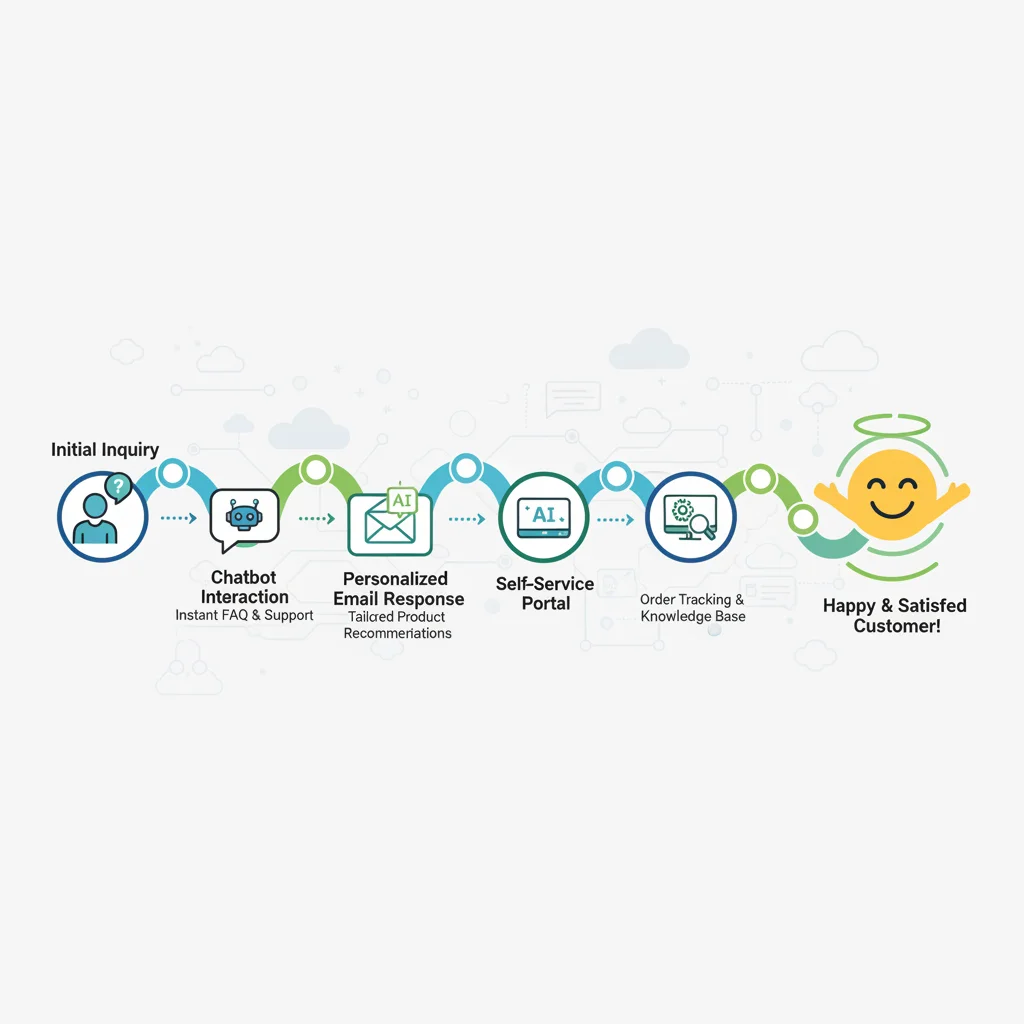
While chatbots are often the most visible aspect of CX automation, the scope extends far beyond simple conversational AI. It includes automated email marketing sequences triggered by specific customer actions, self-service portals that empower customers to find solutions independently, predictive analytics that anticipate customer issues before they arise, and even robotic process automation (RPA) for backend tasks like order processing and inventory management. The integration of these various automated tools creates a seamless and efficient ecosystem that benefits both the customer and the business. The beauty of a holistic CX automation strategy is its ability to create a consistent, high-quality customer experience across all touchpoints, regardless of how or when a customer chooses to interact with your brand.
The 20-Hour Weekly Saving: Unpacking the Efficiency Gains
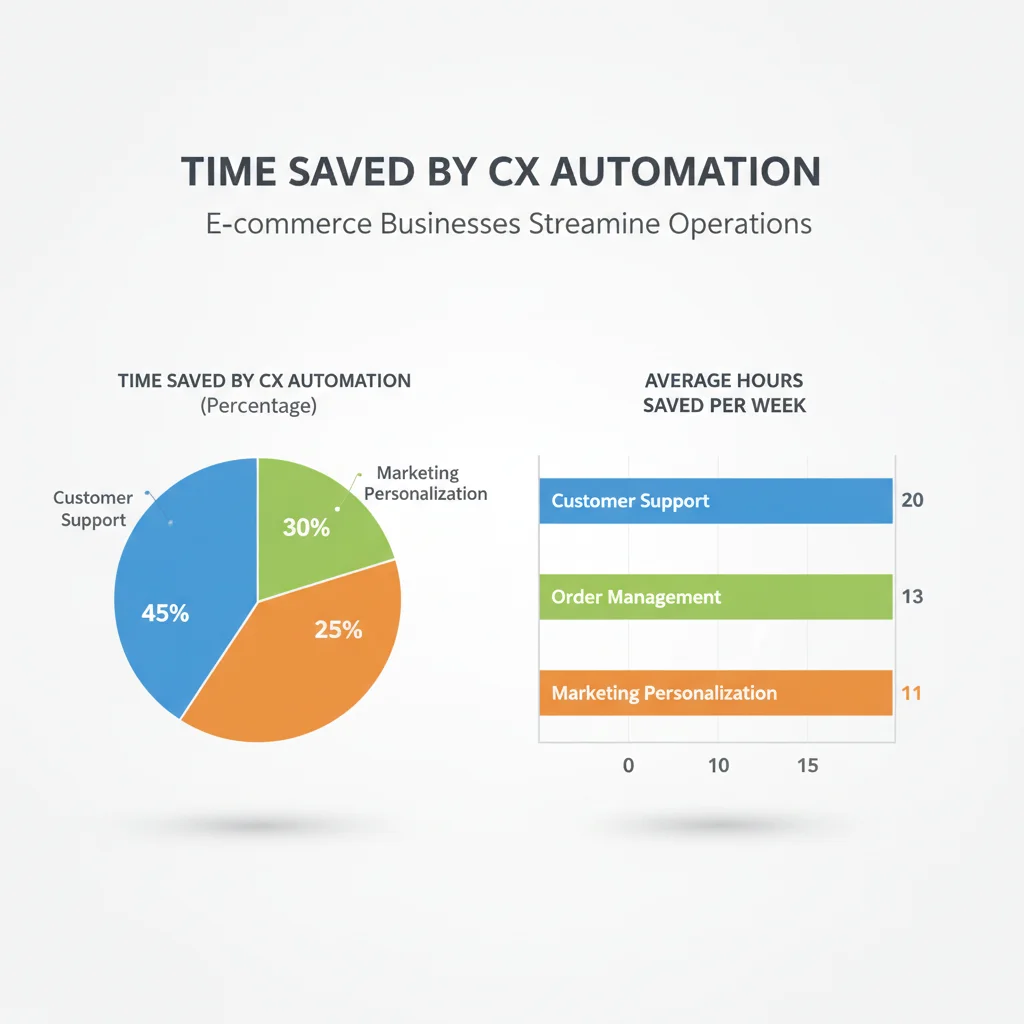
The projection of saving 20 hours per week for US e-commerce businesses by 2026 is not an arbitrary figure. It’s a conservative estimate based on the cumulative impact of various automation strategies across different departments. Let’s break down where these significant time savings come from:
Customer Support Automation
Historically, customer support has been a major time sink for e-commerce businesses. Repetitive queries about order status, returns, product information, and shipping details consume countless hours of agent time. With CX automation, a significant portion of these inquiries can be handled by AI-powered chatbots and self-service knowledge bases. Imagine a scenario where 60-70% of inbound customer queries are resolved instantly by a bot, freeing up human agents to tackle complex issues that require empathy and nuanced problem-solving. This shift alone can account for a substantial portion of the 20-hour saving. Moreover, automated routing ensures that when a human agent is needed, the customer is directed to the most appropriate representative with all relevant context readily available, further reducing resolution times.
Personalized Marketing and Sales Automation
Crafting personalized marketing campaigns and sales outreach can be incredibly time-consuming. CX automation, however, allows for hyper-personalization at scale. AI can analyze purchase history, browsing behavior, and demographic data to segment customers and trigger highly relevant email campaigns, product recommendations, and promotional offers. Abandoned cart recovery emails, personalized upsell and cross-sell suggestions, and automated follow-ups are just a few examples of how automation can drive sales while minimizing manual effort. This not only saves marketing and sales teams hours of manual segmentation and content creation but also leads to higher conversion rates and increased customer lifetime value. The ability to automatically deliver the right message to the right person at the right time is a powerful time-saver and revenue driver.
Order Management and Fulfillment Optimization
Beyond customer-facing interactions, CX automation also extends to backend operations that directly impact the customer experience. Automated order processing, inventory management, and shipping notifications contribute significantly to efficiency. When an order is placed, automation can trigger inventory updates, generate shipping labels, send tracking information to the customer, and even flag potential delays. This reduces manual data entry, minimizes errors, and ensures a smoother fulfillment process, which in turn reduces customer inquiries related to order status. The ripple effect of these efficiencies means fewer customer complaints and less time spent by support staff resolving issues stemming from operational bottlenecks.
Key Technologies Driving CX Automation in E-commerce
To achieve the projected 20-hour weekly savings, US e-commerce businesses will need to strategically integrate and leverage a suite of advanced technologies. Understanding these tools is crucial for successful implementation of CX automation.
AI-Powered Chatbots and Virtual Assistants
As mentioned, chatbots are at the forefront of CX automation. Modern chatbots, powered by natural language processing (NLP) and machine learning, are far more sophisticated than their rule-based predecessors. They can understand complex queries, engage in natural conversations, and even handle sentiment analysis to gauge customer mood. This allows them to provide empathetic responses and escalate interactions to human agents when necessary, ensuring a seamless transition. Virtual assistants can also be integrated into various platforms, including websites, mobile apps, and even social media, offering pervasive support. The continuous learning capabilities of these AI systems mean they become more efficient and accurate over time, further enhancing their ability to resolve customer issues quickly and effectively.
CRM Integration and Data Analytics
A robust Customer Relationship Management (CRM) system is the central nervous system of any effective CX automation strategy. When integrated with automation tools, the CRM becomes a powerful hub for customer data. Automation platforms can pull information from the CRM to personalize interactions and update customer profiles with every new touchpoint. Data analytics, powered by AI, can then process this wealth of information to identify trends, predict customer churn, and pinpoint areas for improvement in the customer journey. This data-driven approach allows businesses to make informed decisions, optimize their automation strategies, and continually refine the customer experience. The ability to have a 360-degree view of the customer, updated in real-time, is invaluable for delivering truly personalized and proactive support.
Self-Service Portals and Knowledge Bases
Empowering customers to find answers independently is a cornerstone of efficient CX automation. Comprehensive self-service portals and well-organized knowledge bases reduce the burden on customer support teams significantly. These platforms can host FAQs, troubleshooting guides, product manuals, and video tutorials, allowing customers to resolve common issues at their own pace and on their own schedule. The integration of AI can even suggest relevant articles based on a customer’s search query, making the self-service experience even more intuitive and effective. By providing readily accessible information, businesses not only save time but also foster a sense of independence and satisfaction among their customers.
Marketing Automation Platforms
Modern marketing automation platforms go beyond simple email scheduling. They leverage AI and machine learning to create highly targeted and dynamic customer journeys. From onboarding new customers with personalized welcome sequences to re-engaging dormant users with tailored offers, these platforms automate the entire marketing funnel. They can track customer behavior across various channels, segment audiences based on specific criteria, and trigger automated actions like sending SMS alerts for delivery updates or recommending complementary products. This level of automation ensures that marketing efforts are always relevant and timely, maximizing impact while minimizing manual intervention by marketing teams.
Beyond Time Savings: The Broader Impact on E-commerce
While saving 20 hours per week is a compelling benefit, the advantages of CX automation extend far beyond mere efficiency. Its implementation has a profound impact on various critical aspects of an e-commerce business.
Enhanced Customer Satisfaction and Loyalty
Customers today expect instant gratification and personalized experiences. CX automation delivers on these expectations by providing immediate support, relevant recommendations, and seamless interactions across all touchpoints. When customers feel understood, valued, and efficiently served, their satisfaction levels soar. This, in turn, fosters greater loyalty, leading to repeat purchases and positive word-of-mouth referrals. A satisfied customer is not just a one-time transaction; they are a long-term asset, and automation plays a crucial role in cultivating that relationship. The consistent quality of service provided by automated systems builds trust and reinforces brand perception.
Increased Sales and Revenue
The direct correlation between improved customer experience and increased sales is undeniable. By personalizing product recommendations, streamlining the checkout process, and offering proactive support, CX automation directly contributes to higher conversion rates. Automated upsell and cross-sell opportunities, triggered by customer behavior, further boost average order value. Moreover, by reducing customer churn through enhanced satisfaction, businesses retain more customers, leading to a more stable and predictable revenue stream. The saved time from operational efficiencies can also be reinvested into growth initiatives, such as product development or market expansion, further fueling revenue growth.
Reduced Operational Costs
The 20-hour weekly saving directly translates into significant cost reductions. By automating repetitive tasks, businesses can optimize staffing levels, reducing the need for extensive customer support teams to handle routine inquiries. The reduction in errors through automation also minimizes the costs associated with rectifying mistakes, such as re-shipping incorrect orders or processing returns due to misinformation. Furthermore, the efficiency gains in marketing and sales automation mean that campaigns can be executed with greater impact at a lower cost per acquisition. These accumulated savings contribute directly to a healthier bottom line, allowing businesses to allocate resources more strategically.
Improved Employee Morale and Productivity
When customer service agents are freed from mundane, repetitive tasks, they can focus on more challenging and rewarding work. This shift not only improves their job satisfaction but also allows them to develop higher-level skills in problem-solving and customer relationship management. Empowered employees who feel their skills are being utilized effectively are more engaged and productive. The reduction in stress from handling an overwhelming volume of simple queries also contributes to a more positive work environment. This ripple effect of improved morale can lead to lower employee turnover and a more motivated workforce, which ultimately benefits the customer experience.
Implementing CX Automation: Best Practices for US E-commerce
Successfully integrating CX automation requires careful planning and strategic execution. Here are some best practices for US e-commerce businesses looking to harness its power:
Start Small and Scale Gradually
Don’t try to automate everything at once. Begin by identifying the most repetitive and time-consuming tasks within your customer journey. This might be answering FAQs, managing order status inquiries, or sending post-purchase follow-ups. Implement automation solutions for these specific areas first, gather data, and refine your approach. Once you see positive results, you can gradually expand your automation efforts to more complex processes. This iterative approach minimizes disruption and allows your team to adapt to the new technologies effectively.
Prioritize Customer Experience
The primary goal of CX automation should always be to enhance the customer experience, not just to cut costs. Automation should feel seamless and helpful, not impersonal or frustrating. Ensure that your automated systems are designed with the customer’s needs in mind, providing clear, concise, and accurate information. Always offer an easy escalation path to a human agent for complex or sensitive issues. The human touch remains vital, and automation should augment, not detract from, its value.
Integrate Your Systems
For CX automation to be truly effective, all your systems – CRM, e-commerce platform, marketing automation, and customer support tools – must be seamlessly integrated. This ensures a unified view of the customer and allows data to flow freely between platforms. Siloed systems will hinder your automation efforts and lead to fragmented customer experiences. Invest in platforms that offer robust integration capabilities or consider middleware solutions to connect disparate systems.
Continuously Monitor and Optimize
CX automation is not a set-it-and-forget-it solution. It requires continuous monitoring, analysis, and optimization. Regularly review performance metrics such as resolution times, customer satisfaction scores, and agent productivity. Use data analytics to identify bottlenecks, improve chatbot responses, and refine your automated workflows. Customer feedback is invaluable in this process, so actively solicit it and use it to inform your optimization efforts. The e-commerce landscape is dynamic, and your automation strategies must evolve with it.
Train Your Team
Even with advanced automation, human agents remain a crucial part of the customer experience. Provide comprehensive training to your team on how to work alongside automated systems. They need to understand when to intervene, how to leverage automation tools, and how to handle escalated issues effectively. Empower them with the knowledge and skills to focus on high-value interactions that truly differentiate your brand. A well-trained team is essential for maximizing the benefits of CX automation and ensuring a positive customer experience.
The Future of CX Automation in US E-commerce
Looking ahead to 2026 and beyond, the role of CX automation in US e-commerce is only set to grow more pervasive and sophisticated. We can anticipate even greater integration of AI and ML, leading to more predictive and proactive customer experiences. Imagine systems that not only respond to customer needs but anticipate them, offering solutions before a problem even arises. This could involve predictive maintenance for products, proactive outreach based on usage patterns, or highly personalized recommendations based on emotional intelligence derived from past interactions.
Hyper-Personalization and Predictive Analytics
The next frontier in CX automation will be hyper-personalization, driven by advanced predictive analytics. AI will analyze vast datasets to create individual customer profiles that are incredibly detailed, allowing for truly one-to-one interactions at scale. This means not just recommending products based on past purchases, but understanding a customer’s lifestyle, preferences, and even emotional state to offer perfectly timed and relevant suggestions. Businesses will move from reacting to customer needs to proactively shaping their experiences, leading to unprecedented levels of customer satisfaction and loyalty.
Voice and Conversational AI Dominance
As voice commerce continues to grow, conversational AI will become even more sophisticated. Customers will increasingly interact with e-commerce brands through voice assistants, and automated systems will need to handle these interactions seamlessly. This includes understanding nuanced commands, processing complex requests, and even completing transactions through voice. The ability to provide natural, intuitive conversational experiences will be a key differentiator for e-commerce businesses.
Ethical AI and Trust Building
As automation becomes more advanced, ethical considerations will come to the forefront. Businesses will need to ensure transparency in their use of AI, protect customer data, and design systems that are fair and unbiased. Building trust in automated interactions will be paramount. Customers need to feel confident that their data is secure and that the automated systems are acting in their best interest. This will involve clear communication about how AI is used and robust security measures to protect personal information. Responsible AI development will be crucial for widespread adoption and continued success of CX automation.
Conclusion
The promise of CX automation saving US e-commerce businesses 20 hours per week by 2026 is not a fantasy; it’s a tangible reality achievable through strategic implementation and continuous optimization. By embracing AI-powered chatbots, integrating CRM systems, leveraging self-service portals, and deploying intelligent marketing automation, businesses can unlock unprecedented levels of efficiency and customer satisfaction. The benefits extend beyond mere time savings, encompassing increased sales, reduced operational costs, and improved employee morale. As the e-commerce landscape continues to evolve, those who strategically invest in CX automation will not only gain a significant competitive advantage but will also build stronger, more resilient relationships with their customers. The future of e-commerce is automated, personalized, and exceptionally efficient, and the time to embrace this transformation is now.