E-commerce Privacy Compliance: Navigating New US Regulations by 2026

The digital economy is a double-edged sword: it offers unprecedented opportunities for growth and global reach, but also presents complex challenges, particularly concerning consumer data privacy. For e-commerce businesses operating in the United States, the regulatory landscape is shifting dramatically. With new state-level privacy laws emerging and existing ones evolving, the imperative for robust e-commerce privacy compliance has never been more critical. The looming deadline of June 2026 for many of these regulations means that proactive planning and implementation are not just advisable, but essential for survival and sustained success in the online marketplace.
This comprehensive guide is designed to equip e-commerce businesses with the knowledge and practical strategies needed to navigate the intricate web of new U.S. privacy regulations. We will delve into the key aspects of these laws, highlight their impact on your operations, and provide actionable steps to ensure your business achieves and maintains full e-commerce privacy compliance well before the deadlines. From understanding data processing requirements to implementing effective consent mechanisms, we cover the critical areas that demand your immediate attention.
The Evolving Landscape of U.S. Privacy Regulations
Historically, the U.S. has taken a sector-specific approach to data privacy, contrasting with the more comprehensive, omnibus laws seen in Europe (like GDPR). However, this is rapidly changing. States are increasingly enacting their own broad privacy statutes, creating a patchwork of regulations that e-commerce businesses must contend with. Understanding the nuances of these laws is the first step towards achieving robust e-commerce privacy compliance.
Key State-Level Privacy Laws Impacting E-commerce
- California Consumer Privacy Act (CCPA) / California Privacy Rights Act (CPRA): The trailblazer in U.S. state privacy laws, the CCPA, significantly expanded consumer rights. The CPRA, effective January 1, 2023, and fully enforceable from July 1, 2023, further strengthened these protections, introducing concepts like sensitive personal information, data minimization, and the California Privacy Protection Agency (CPPA). E-commerce businesses handling personal data of California residents must be intimately familiar with these regulations.
- Virginia Consumer Data Protection Act (VCDPA): Effective January 1, 2023, the VCDPA grants Virginia consumers rights similar to those under CCPA/CPRA, including access, deletion, and opt-out rights. It applies to businesses that conduct business in Virginia or produce products or services targeted to Virginia residents and meet certain data processing thresholds.
- Colorado Privacy Act (CPA): Also effective July 1, 2023, the CPA provides Colorado residents with data rights and imposes obligations on controllers and processors. It emphasizes consent for sensitive data and requires data protection assessments.
- Utah Consumer Privacy Act (UCPA): Effective December 31, 2023, the UCPA is generally considered more business-friendly than its counterparts but still imposes significant requirements on data controllers, including transparency and consumer rights.
- Connecticut Data Privacy Act (CTDPA): Effective July 1, 2023, the CTDPA offers comprehensive consumer rights and controller obligations, including requirements for data protection assessments and universal opt-out mechanisms.
- New & Upcoming State Laws: Beyond these, states like Iowa (ICDPA, effective Jan 1, 2025), Indiana (IEPDA, effective Jan 1, 2026), Tennessee (TIPA, effective July 1, 2025), Montana (MCDPA, effective Oct 1, 2024), Delaware (DCDPA, effective Jan 1, 2025 for most, Jan 1, 2026 for some), and others are enacting their own privacy laws. The trend is clear: a growing number of states are establishing their own privacy frameworks, making e-commerce privacy compliance a multi-faceted challenge.
The critical takeaway here is that while these laws share common principles, their specific definitions, thresholds, and enforcement mechanisms can vary. This creates a complex compliance environment, particularly for e-commerce businesses that serve customers across multiple states. The deadline of June 2026 is a general marker for when many of these newer laws will be fully operational or have significant enforcement provisions in place, making it a crucial planning horizon.
Understanding the Impact on E-commerce Businesses
These new regulations fundamentally alter how e-commerce businesses collect, use, store, and share customer data. Non-compliance can lead to substantial financial penalties, reputational damage, and loss of consumer trust. Here’s a breakdown of the key areas impacted:
Data Collection and Consent
Many new laws require explicit, informed consent before collecting certain types of personal data, especially sensitive personal information (e.g., health data, precise geolocation, racial or ethnic origin). For e-commerce, this means:
- Clearer Privacy Policies: Your privacy policy must be easily accessible, understandable, and clearly articulate what data you collect, why you collect it, how it’s used, and with whom it’s shared. Generic templates are no longer sufficient for robust e-commerce privacy compliance.
- Granular Consent Mechanisms: Moving beyond simple “I accept” checkboxes, businesses may need to offer more granular options for consumers to consent to specific data processing activities, particularly for marketing or third-party sharing.
- Opt-Out Rights: Consumers must have clear and easy-to-exercise rights to opt-out of the sale or sharing of their personal data, and in some cases, opt-out of targeted advertising.
Consumer Rights and Data Access
The new regulations empower consumers with significant rights over their personal data, including:
- Right to Know: Consumers can request to know what personal data a business has collected about them, the sources of that data, the purposes for its collection, and the categories of third parties with whom it’s shared.
- Right to Access: Consumers can request access to their specific pieces of personal data.
- Right to Delete: Consumers can request the deletion of their personal data, subject to certain exceptions.
- Right to Correct/Rectify: Consumers can request corrections to inaccurate personal data.
- Right to Opt-Out: As mentioned, the right to opt-out of the sale or sharing of personal data, and often targeted advertising, is a cornerstone of these laws.
- Right to Data Portability: Consumers can request their data in a portable, machine-readable format.
E-commerce businesses must establish robust processes and systems to efficiently handle these consumer requests within specified timeframes (typically 30-45 days), a critical component of e-commerce privacy compliance.
Data Security and Accountability
While not purely privacy laws, these regulations often mandate reasonable security measures to protect personal data. Furthermore, they emphasize accountability, requiring businesses to demonstrate their compliance efforts.
- Data Protection Assessments (DPAs): Many laws require businesses to conduct DPAs for processing activities that present a heightened risk to consumer privacy, such as targeted advertising or processing sensitive data.
- Vendor Management: E-commerce businesses often rely on numerous third-party vendors (e.g., payment processors, shipping partners, marketing platforms). These regulations extend obligations to contracts with these vendors, requiring specific data protection clauses.
- Data Minimization: The principle of collecting only the data absolutely necessary for a stated purpose is becoming more prominent.
Practical Steps for E-commerce Privacy Compliance by June 2026
Achieving and maintaining e-commerce privacy compliance is an ongoing process, not a one-time fix. Here’s a strategic roadmap to guide your efforts:
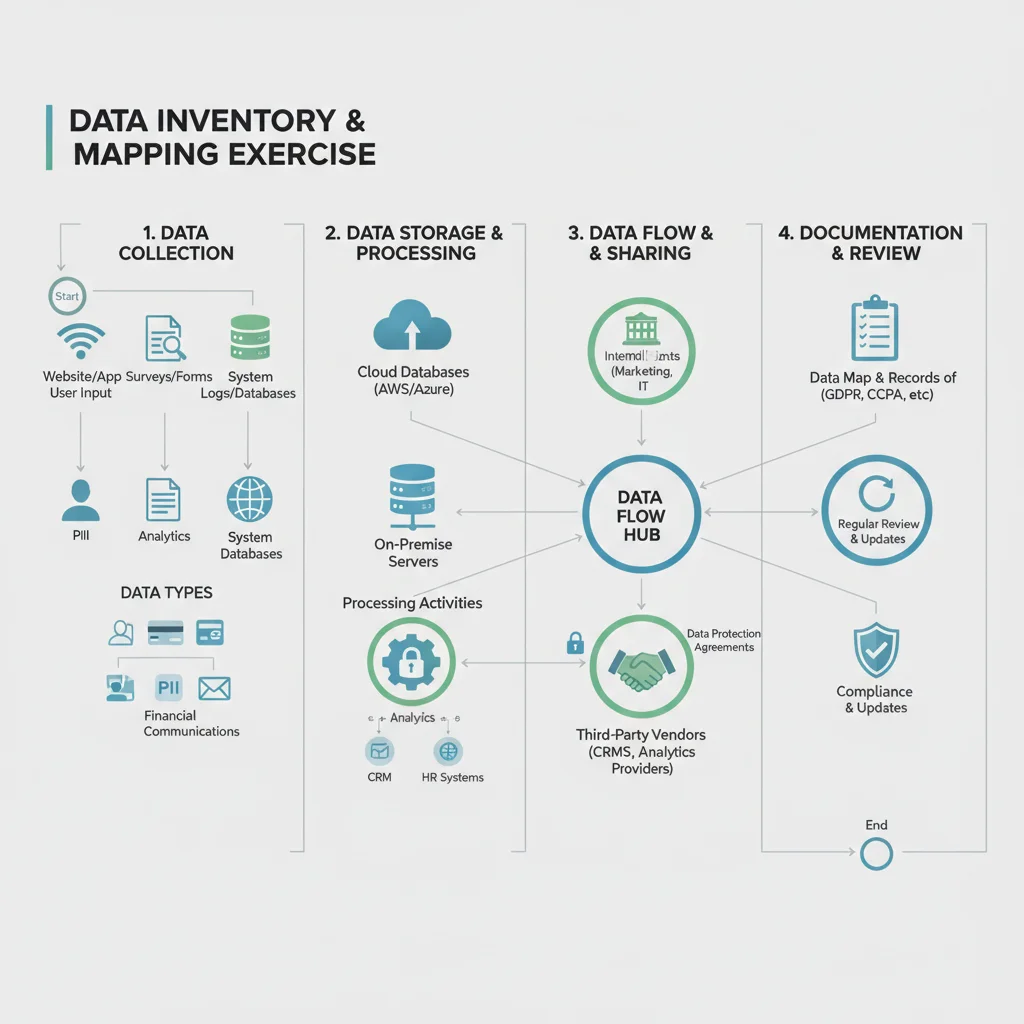
1. Conduct a Comprehensive Data Inventory and Mapping
You can’t protect what you don’t know you have. This foundational step involves identifying all personal data your business collects, processes, stores, and shares. For effective e-commerce privacy compliance, ask:
- What personal data do you collect (e.g., names, addresses, emails, purchase history, IP addresses, browsing behavior, payment information)?
- Where is this data stored (e.g., databases, CRM, cloud services, spreadsheets)?
- How is it collected (e.g., website forms, cookies, third-party integrations, customer service interactions)?
- Who has access to it internally and externally (e.g., employees, marketing agencies, payment processors, shipping companies)?
- For what purposes is it used (e.g., order fulfillment, marketing, analytics, customer support)?
- How long is it retained?
Documenting this information creates a clear picture of your data flows and helps identify areas of risk or non-compliance.
2. Update Your Privacy Policy and Website Disclosures
Your privacy policy is your public commitment to data privacy. It must be updated to reflect the requirements of all applicable state laws. Ensure it is:
- Clear and Concise: Avoid legal jargon. Use plain language that customers can easily understand.
- Comprehensive: Detail all data collection practices, purposes, data sharing, retention periods, and consumer rights.
- Accessible: Prominently display a link to your privacy policy on your website, ideally in the footer and during checkout processes.
- State-Specific Information: Consider adding sections or appendices that address specific state law requirements, especially for California residents.
- “Do Not Sell or Share My Personal Information” Link: Mandated by CCPA/CPRA, this link must be clearly visible on your homepage. Similar opt-out mechanisms are required by other state laws.
3. Implement Robust Consent Management Platforms (CMPs)
For many e-commerce businesses, cookies and trackers are essential for analytics, personalization, and advertising. New privacy laws often require explicit consent for non-essential cookies. A CMP can help you:
- Obtain and Record Consent: Present clear options for users to accept or decline different categories of cookies and trackers.
- Manage User Preferences: Allow users to easily change their consent preferences at any time.
- Integrate with Your Website: Ensure the CMP integrates seamlessly with your website and respects user choices across sessions.
- Demonstrate Compliance: Maintain records of consent for auditing purposes.
4. Establish Processes for Handling Consumer Data Requests (DSRs)
Consumers will exercise their rights to access, delete, or correct their data. Your business needs a streamlined process for this:
- Dedicated Request Channels: Provide clear instructions on your privacy policy page for submitting DSRs (e.g., a dedicated email address, a web form, or a toll-free number).
- Identity Verification: Implement secure methods to verify the identity of the requester to prevent unauthorized data disclosure.
- Internal Workflow: Define clear internal procedures for receiving, tracking, fulfilling, and documenting DSRs within the legally mandated timeframes.
- Data Retrieval and Deletion Capabilities: Ensure your systems can efficiently locate, retrieve, and securely delete personal data across all relevant databases and third-party services.
5. Enhance Data Security Measures
While not exclusively privacy laws, these regulations underscore the importance of data security. A data breach can lead to severe penalties and a loss of trust. Strengthen your security posture by:
- Encryption: Encrypt personal data both in transit and at rest.
- Access Controls: Implement strong access controls (e.g., multi-factor authentication, least privilege access) to limit who can access sensitive data.
- Regular Security Audits: Conduct periodic security assessments and penetration testing to identify and address vulnerabilities.
- Employee Training: Train all employees on data privacy best practices and your company’s privacy policies.
- Incident Response Plan: Develop and regularly test a robust data breach incident response plan.
6. Vet Third-Party Vendors and Update Contracts
Many e-commerce businesses share data with vendors for analytics, advertising, payment processing, and shipping. You are often responsible for your vendors’ compliance. For effective e-commerce privacy compliance with third parties:
- Due Diligence: Thoroughly vet all third-party vendors to ensure they have adequate data protection practices in place.
- Data Processing Agreements (DPAs): Update contracts with vendors to include specific data protection clauses, outlining their obligations regarding data handling, security, and compliance with applicable privacy laws.
- Limit Data Sharing: Only share the minimum necessary data with third parties required for their service.
7. Conduct Data Protection Assessments (DPAs)
For certain high-risk data processing activities (e.g., targeted advertising, selling personal data, processing sensitive data), many state laws require businesses to conduct DPAs. These assessments help you:
- Identify and Mitigate Risks: Analyze the potential privacy risks associated with a processing activity.
- Evaluate Safeguards: Assess the effectiveness of existing safeguards and identify areas for improvement.
- Document Compliance: Provide a record of your efforts to comply with privacy regulations.
8. Appoint a Privacy Officer or Designate a Responsible Party
Having a dedicated individual or team responsible for overseeing e-commerce privacy compliance can be invaluable. This role involves:
- Staying Updated: Monitoring changes in privacy laws and regulations.
- Policy Development: Developing and implementing internal privacy policies and procedures.
- Training: Ensuring employees are properly trained on privacy best practices.
- DSR Management: Overseeing the handling of consumer data requests.
- Risk Management: Identifying and mitigating privacy risks.
- Liaison: Acting as a point of contact for regulatory inquiries.

Understanding the “Sale” and “Sharing” of Personal Information
A significant aspect of many U.S. privacy laws, particularly CCPA/CPRA, revolves around the definitions of “sale” and “sharing” of personal information. For e-commerce privacy compliance, understanding these terms is crucial as they trigger specific consumer rights, such as the right to opt-out.
- Sale: Generally defined as the selling, renting, releasing, disclosing, disseminating, making available, transferring, or otherwise communicating orally, in writing, or by electronic or other means, a consumer’s personal information by the business to another business or a third party for monetary or other valuable consideration. This can include common e-commerce practices like providing customer lists to marketing partners in exchange for a benefit.
- Sharing: Introduced by CPRA, this refers to disclosing personal information to a third party for cross-context behavioral advertising, whether or not for monetary or other valuable consideration. This broadens the scope beyond traditional “sales” to include common practices like using third-party cookies for targeted ads based on browsing history across different websites.
E-commerce businesses must meticulously review their data practices to identify if they are engaged in “selling” or “sharing” personal information under these definitions. If so, they must implement clear “Do Not Sell or Share My Personal Information” links and honor opt-out requests. This often requires integration with Consent Management Platforms (CMPs) and careful configuration of advertising and analytics tools.
The Role of Data Minimization and Purpose Limitation
Two fundamental principles gaining traction in U.S. privacy laws, mirroring GDPR, are data minimization and purpose limitation. Adhering to these principles is a proactive measure for strong e-commerce privacy compliance:
- Data Minimization: Only collect the personal information that is directly relevant and necessary to accomplish a specified, explicit, and legitimate purpose. For e-commerce, this means critically evaluating every data point you collect and asking if it’s truly essential for fulfilling an order, providing customer service, or a stated business function. Avoid collecting data “just in case” you might need it later.
- Purpose Limitation: Personal information collected for one specific purpose should not be used for a new, incompatible purpose without obtaining fresh consent from the consumer, or unless otherwise permitted by law. For example, if you collect an email for order confirmations, you generally cannot use it for marketing newsletters without separate, explicit consent.
Implementing these principles reduces your data footprint, thereby lowering the risk of breaches and simplifying compliance efforts related to consumer requests and data retention. It’s a proactive strategy for long-term e-commerce privacy compliance.
Future-Proofing Your E-commerce Privacy Strategy
The privacy landscape is dynamic. While focusing on the June 2026 deadline for current and upcoming state laws is critical, a forward-looking approach is essential for sustainable e-commerce privacy compliance. Consider these additional strategies:
- Monitor Legislative Changes: Stay informed about new privacy bills introduced at both state and federal levels. Subscribing to legal updates and industry newsletters can be beneficial.
- Adopt Privacy-by-Design Principles: Integrate privacy considerations into the design and architecture of your e-commerce systems, products, and services from the outset, rather than as an afterthought.
- Regular Audits and Reviews: Periodically audit your data processing activities, privacy policies, and security measures to ensure ongoing compliance and identify any new risks.
- Invest in Training: Ongoing training for all employees who handle personal data is crucial. This ensures everyone understands their role in protecting customer privacy.
- Seek Expert Legal Counsel: Given the complexity and evolving nature of these laws, consulting with legal professionals specializing in data privacy is highly recommended, especially for interpreting nuanced requirements and drafting compliant policies.
Conclusion: The Imperative of Proactive E-commerce Privacy Compliance
The June 2026 timeframe serves as a significant milestone for e-commerce privacy compliance in the U.S. The proliferation of state-level privacy laws demands a sophisticated and adaptable strategy from online businesses. Ignoring these regulations is not an option; the potential fines, legal costs, and irreparable damage to brand reputation far outweigh the investment in compliance.
By taking proactive steps – conducting thorough data inventories, updating policies, implementing robust consent mechanisms, empowering consumer rights, enhancing security, and fostering a culture of privacy – e-commerce businesses can not only meet their legal obligations but also build stronger trust with their customers. In an era where data privacy is paramount to consumer confidence, a commitment to strong e-commerce privacy compliance is a competitive advantage, signaling to your customers that their personal information is valued and protected. Start your compliance journey now to secure your business’s future in the evolving digital marketplace.