E-commerce Cybersecurity 2026: Essential Tools & Strategies for Digital Store Protection

E-commerce Cybersecurity 2026: Essential Digital Tools to Protect Your Store and Data
The digital marketplace is a bustling hub of commerce, convenience, and innovation. However, with every transaction and every customer interaction, e-commerce businesses face an ever-growing array of cyber threats. As we look towards 2026, the landscape of online security continues to evolve at an unprecedented pace. Cybercriminals are becoming more sophisticated, employing advanced tactics to breach defenses, steal data, and disrupt operations. For any e-commerce venture, safeguarding customer information, maintaining trust, and ensuring business continuity are paramount. This comprehensive guide delves into the essential e-commerce cybersecurity tools and strategies that will be critical for protecting your digital store and data in the coming years.
The stakes have never been higher. A single data breach can lead to devastating financial losses, irreparable damage to brand reputation, and significant legal repercussions. Consumers are increasingly aware of the risks and demand that businesses take their privacy and security seriously. Therefore, investing in robust e-commerce cybersecurity tools is not just a best practice; it’s a fundamental requirement for survival and growth in the competitive online retail environment.
The Evolving Threat Landscape: Why 2026 Demands Advanced Protection
Before we explore specific e-commerce cybersecurity tools, it’s crucial to understand the nature of the threats we’re up against. The year 2026 is projected to see an intensification of several key cyberattack vectors:
- Sophisticated Phishing and Social Engineering: Attackers will continue to refine their phishing techniques, making it harder for employees and customers to distinguish legitimate communications from malicious ones. AI-powered tools will likely be used to craft highly personalized and convincing attacks.
- Ransomware as a Service (RaaS) and Supply Chain Attacks: RaaS models will make ransomware more accessible to a wider range of attackers, increasing the frequency and severity of these attacks. Supply chain attacks, targeting vulnerabilities in third-party vendors and software, will pose significant risks, as a breach in one component can compromise an entire e-commerce ecosystem.
- IoT Vulnerabilities: As more devices become interconnected, the Internet of Things (IoT) will present new entry points for attackers. E-commerce businesses utilizing IoT for inventory management, smart warehousing, or customer experience will need to secure these devices rigorously.
- AI and Machine Learning Exploitation: While AI is a powerful tool for defense, it can also be weaponized. Attackers may use AI to automate attacks, identify vulnerabilities faster, and even bypass traditional security measures.
- Data Privacy Regulations: The global push for stronger data privacy regulations (like GDPR, CCPA, and new emerging laws) means that non-compliance can result in hefty fines, making robust data protection an absolute necessity.
Given this complex and dynamic threat landscape, a multi-layered security approach, underpinned by the right e-commerce cybersecurity tools, is no longer optional but essential.
Foundational E-commerce Cybersecurity Tools for 2026
Building a resilient cybersecurity posture begins with a strong foundation. These are the core e-commerce cybersecurity tools every online store should have in place:
1. Web Application Firewalls (WAFs)
A WAF acts as a shield between your e-commerce application and the internet, filtering and monitoring HTTP traffic. It protects against common web vulnerabilities such as SQL injection, cross-site scripting (XSS), and other OWASP Top 10 threats. In 2026, WAFs will need to be increasingly intelligent, leveraging AI and machine learning to detect and block new and evolving attack patterns in real-time.
- Key Features: Real-time threat detection, bot protection, DDoS mitigation, API security, custom rule sets.
- Why it’s crucial: Prevents unauthorized access to your website’s backend, protects customer data, and ensures website availability.
2. Intrusion Detection/Prevention Systems (IDPS)
IDPS solutions continuously monitor network traffic for suspicious activity and known attack signatures. An Intrusion Detection System (IDS) alerts administrators to potential threats, while an Intrusion Prevention System (IPS) actively blocks malicious traffic. For e-commerce, an IDPS is vital for detecting and stopping attacks before they can compromise your systems or data.
- Key Features: Signature-based detection, anomaly-based detection, protocol analysis, automated response.
- Why it’s crucial: Provides an early warning system and active defense against network-level attacks.
3. Endpoint Detection and Response (EDR) / Extended Detection and Response (XDR)
Traditional antivirus software is no longer sufficient. EDR solutions monitor and collect data from endpoint devices (servers, workstations, POS systems) to detect and investigate suspicious activities. XDR takes this a step further by integrating security data from endpoints, networks, cloud environments, and applications, providing a more holistic view of threats and enabling faster response times. For e-commerce businesses with multiple access points and remote workers, EDR/XDR is indispensable.
- Key Features: Continuous monitoring, threat hunting, incident response automation, behavioral analysis.
- Why it’s crucial: Protects individual devices and provides comprehensive visibility across your entire IT infrastructure.
4. Multi-Factor Authentication (MFA)
MFA adds an extra layer of security beyond just a password, requiring users to verify their identity through a second factor, such as a code from a mobile app, a fingerprint, or a hardware token. Implementing MFA for all administrative accounts, customer logins, and sensitive internal systems is non-negotiable for 2026. This is one of the simplest yet most effective e-commerce cybersecurity tools to prevent unauthorized access.
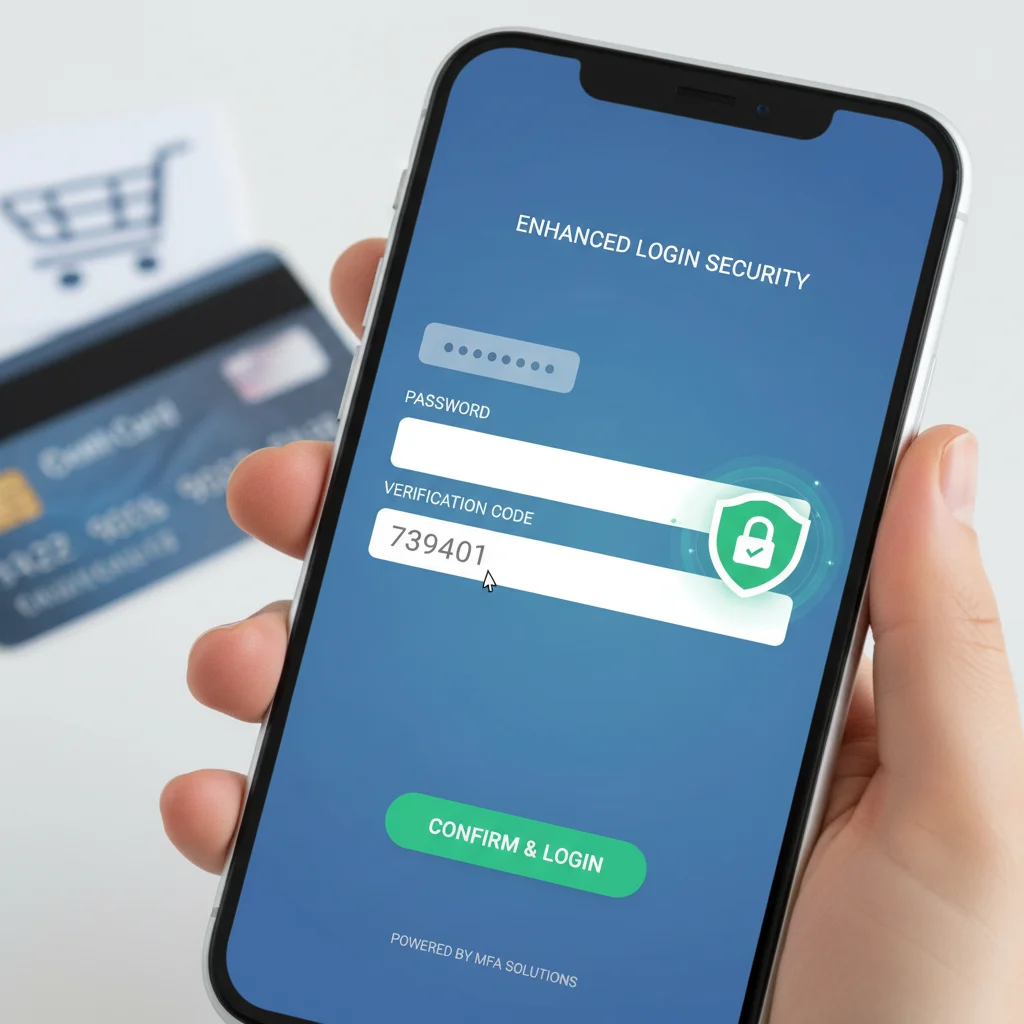
- Key Features: Supports various authentication methods (TOTP, push notifications, biometrics), adaptable to different user roles.
- Why it’s crucial: Significantly reduces the risk of account compromise due to stolen or weak passwords.
5. Data Encryption Tools
Encryption is the cornerstone of data protection. All sensitive data, both in transit (e.g., customer payment information during checkout) and at rest (e.g., customer databases, backup files), must be encrypted. This includes using SSL/TLS certificates for website communication, encrypting databases, and securing cloud storage. Even if a breach occurs, encrypted data remains unreadable and useless to attackers.
- Key Features: SSL/TLS certificates, database encryption, file and disk encryption, secure key management.
- Why it’s crucial: Protects sensitive customer and business data from unauthorized disclosure.
Advanced E-commerce Cybersecurity Tools for Proactive Defense in 2026
Beyond the foundational elements, proactive defense requires more advanced e-commerce cybersecurity tools that leverage automation, intelligence, and a holistic view of your security posture.
1. Security Information and Event Management (SIEM) / Security Orchestration, Automation, and Response (SOAR)
SIEM solutions aggregate and analyze log data from various sources across your IT environment, providing a centralized view of security events. They help identify patterns and anomalies that might indicate a sophisticated attack. SOAR platforms build upon SIEM by orchestrating and automating security tasks and incident response workflows. For e-commerce businesses, a combined SIEM/SOAR approach enables rapid detection, investigation, and response to security incidents, minimizing their impact.
- Key Features: Log management, real-time analytics, threat intelligence integration, automated playbooks, incident management.
- Why it’s crucial: Provides comprehensive visibility, streamlines incident response, and reduces manual effort in security operations.
2. Vulnerability Management and Penetration Testing Tools
Regularly identifying and patching vulnerabilities is critical. Vulnerability management tools automate the scanning of your e-commerce platform, servers, and applications for known weaknesses. Penetration testing, conducted by ethical hackers, simulates real-world attacks to uncover exploitable vulnerabilities. Together, these e-commerce cybersecurity tools help you proactively strengthen your defenses before attackers can exploit them.
- Key Features: Automated vulnerability scanning, patch management integration, compliance reporting, detailed pen-test reports.
- Why it’s crucial: Proactively identifies and remediates security gaps, reducing your attack surface.
3. Cloud Security Posture Management (CSPM) and Cloud Workload Protection Platforms (CWPP)
As more e-commerce operations migrate to the cloud, securing these environments becomes paramount. CSPM tools continuously monitor cloud configurations for misconfigurations and compliance violations, which are common sources of cloud breaches. CWPPs provide workload-centric security for virtual machines, containers, and serverless functions, protecting them from threats throughout their lifecycle. For cloud-native or hybrid e-commerce setups, these are indispensable e-commerce cybersecurity tools.
- Key Features: Cloud environment visibility, compliance auditing, misconfiguration detection, runtime protection for workloads.
- Why it’s crucial: Ensures secure cloud deployments and protects critical cloud-based e-commerce infrastructure.
4. Fraud Detection and Prevention Systems
Beyond traditional cybersecurity, e-commerce businesses face significant threats from payment fraud, account takeover (ATO) fraud, and chargebacks. Advanced fraud detection systems use machine learning and behavioral analytics to identify suspicious transactions and user behavior in real-time, preventing financial losses and protecting customers. These specialized e-commerce cybersecurity tools are vital for maintaining profitability and trust.
- Key Features: Real-time transaction monitoring, behavioral biometrics, device fingerprinting, chargeback management.
- Why it’s crucial: Minimizes financial losses from fraudulent transactions and protects customer accounts.
5. Identity and Access Management (IAM)
IAM solutions manage and secure digital identities and control user access to resources. This includes single sign-on (SSO), user provisioning, and privileged access management (PAM). By implementing robust IAM, e-commerce businesses can ensure that only authorized individuals have access to critical systems and data, and that their access is appropriate for their role.
- Key Features: User lifecycle management, role-based access control (RBAC), least privilege enforcement, audit trails.
- Why it’s crucial: Controls who can access what, reducing the risk of insider threats and unauthorized access.
Implementing and Managing Your E-commerce Cybersecurity Tools
Acquiring the right e-commerce cybersecurity tools is only half the battle. Effective implementation and ongoing management are equally critical. Here are key considerations:
1. Develop a Comprehensive Cybersecurity Strategy
Your security tools should not operate in silos. Develop a holistic cybersecurity strategy that integrates all your solutions, defines clear policies, and outlines incident response plans. This strategy should be regularly reviewed and updated to reflect new threats and technologies.
2. Regular Training and Awareness
Even the most advanced e-commerce cybersecurity tools can be circumvented by human error. Regular cybersecurity training for all employees – from IT staff to customer service – is crucial. Topics should include phishing awareness, password hygiene, data handling best practices, and recognizing social engineering attempts.
3. Incident Response Planning
No system is 100% impenetrable. A well-defined and regularly tested incident response plan is essential. This plan should detail the steps to take before, during, and after a security incident, including communication protocols, data recovery procedures, and legal obligations. Knowing how to react swiftly can significantly mitigate the damage of a breach.
4. Regular Audits and Compliance Checks
Conduct regular security audits and ensure continuous compliance with relevant data protection regulations (e.g., GDPR, CCPA, PCI DSS for payment processing). These checks help identify gaps in your security posture and ensure your e-commerce cybersecurity tools are configured correctly and operating effectively.
5. Partner with Security Experts
For many e-commerce businesses, especially SMEs, managing a comprehensive cybersecurity program can be overwhelming. Partnering with managed security service providers (MSSPs) or cybersecurity consultants can provide access to specialized expertise, advanced e-commerce cybersecurity tools, and 24/7 monitoring, often at a more cost-effective rate than building an in-house team.

The Future of E-commerce Cybersecurity: AI and Automation
Looking ahead to 2026 and beyond, Artificial Intelligence (AI) and machine learning (ML) will play an increasingly pivotal role in e-commerce cybersecurity tools. AI-powered solutions will enhance threat detection capabilities by identifying subtle anomalies and predicting potential attacks. Automation will streamline incident response, allowing security teams to react at machine speed.
- Predictive Analytics: AI will analyze vast datasets to predict future attack patterns and vulnerabilities, enabling proactive defense.
- Automated Remediation: ML-driven systems will be able to automatically quarantine infected systems, block malicious IP addresses, and roll back changes, significantly reducing the time to recovery.
- Behavioral Biometrics: For fraud detection and user authentication, behavioral biometrics (analyzing how a user types, moves their mouse, or interacts with a device) will add another layer of security, making it harder for attackers to impersonate legitimate users.
- Generative AI for Threat Intelligence: Generative AI could be used to synthesize threat intelligence, creating more comprehensive and actionable insights for security teams.
Embracing these emerging technologies will be key for e-commerce businesses looking to stay ahead of the curve and maintain a strong security posture in an increasingly complex digital world.
Conclusion: A Secure Future for E-commerce
The success of any e-commerce business in 2026 will be inextricably linked to its ability to protect its digital assets and customer data. The threat landscape is formidable, but with the right combination of foundational and advanced e-commerce cybersecurity tools, coupled with a proactive strategy and a culture of security, online stores can thrive securely.
From robust WAFs and IDPS to intelligent EDR/XDR, comprehensive IAM, and AI-powered fraud detection, the array of available solutions provides a powerful defense. However, technology alone is not enough. Continuous vigilance, regular training, meticulous incident planning, and strategic partnerships are all vital components of a resilient cybersecurity framework. By prioritizing these elements, e-commerce businesses can build trust with their customers, safeguard their operations, and ensure a secure and prosperous future in the digital marketplace.