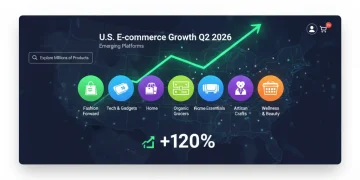
Emerging E-commerce Platforms U.S. Q2 2026: Market Share Analysis
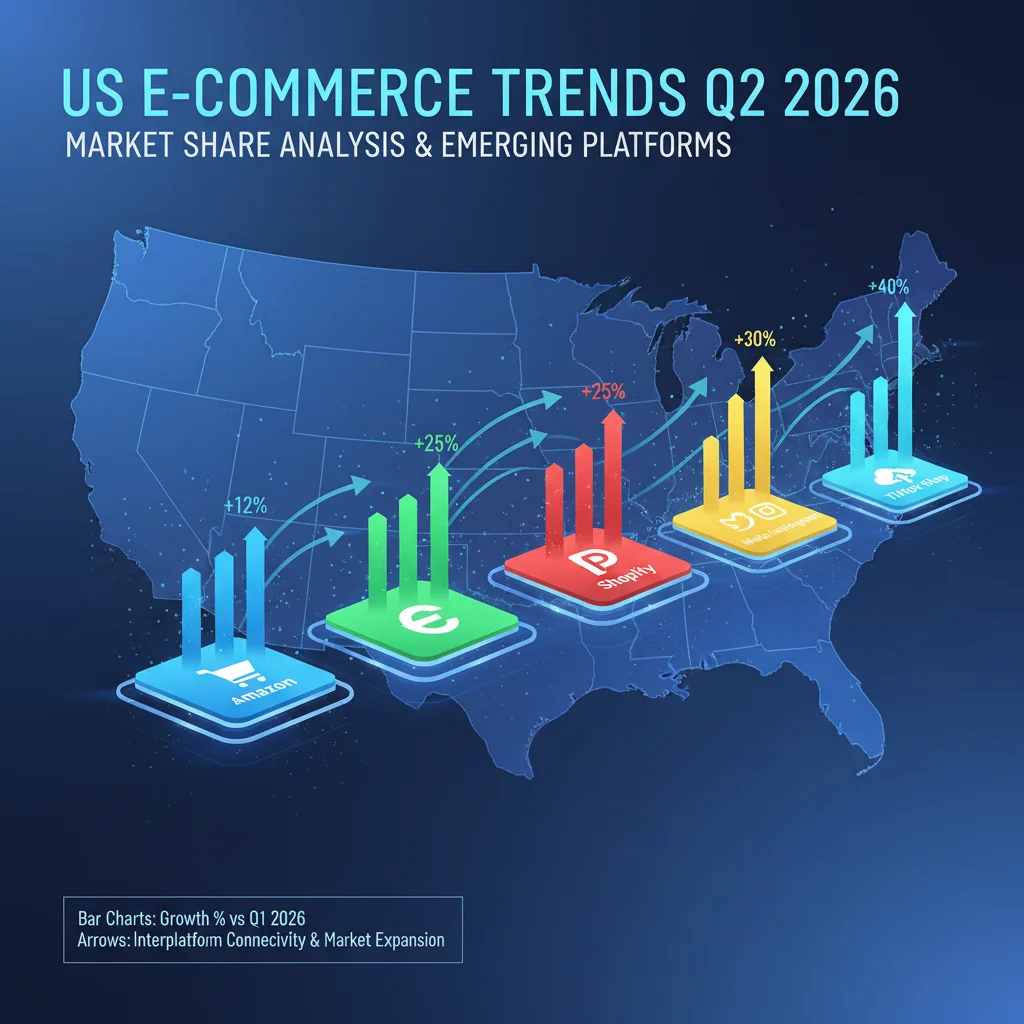
Emerging E-commerce Platforms in the U.S.: A Q2 2026 Market Share Analysis
The landscape of online retail is in a perpetual state of flux, driven by technological advancements, evolving consumer behaviors, and fierce competition. As we delve into Q2 2026, the United States e-commerce sector continues to be a hotbed of innovation, with several emerging e-commerce platforms making significant inroads and reshaping the established order. This comprehensive analysis aims to provide an in-depth look at these new contenders, their strategies, and their impact on the broader market.
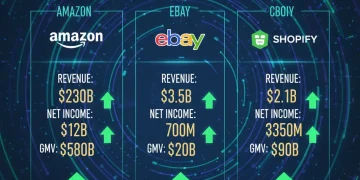
The past few years have seen an unprecedented acceleration in digital transformation, pushing businesses of all sizes to enhance their online presence. While giants like Amazon, Shopify, and eBay still command substantial market shares, a new generation of platforms is leveraging specialized niches, advanced AI, enhanced user experiences, and unique business models to carve out their own territories. Understanding these shifts is crucial for retailers, investors, and consumers alike.
Our Q2 2026 market share analysis reveals fascinating trends, indicating a move towards more integrated, personalized, and community-driven e-commerce experiences. The focus is no longer just on transactions, but on building lasting relationships and providing value beyond the product itself. This article will dissect the key factors contributing to the rise of these emerging e-commerce platforms, offering insights into their operational frameworks, technological differentiators, and future growth trajectories.
The Shifting Sands: Why New Platforms Are Gaining Traction
The dominance of established e-commerce players has been a defining characteristic of the online retail world for years. However, the market is vast and diverse, leaving ample room for innovation and specialization. Several factors are contributing to the success of emerging e-commerce platforms:
Niche Specialization and Vertical Integration
Many new platforms are not attempting to be everything to everyone. Instead, they are focusing on specific niches, such as sustainable fashion, artisanal crafts, gourmet food, or specialized B2B services. By catering to a highly targeted audience, these platforms can offer a more curated product selection, tailored marketing, and a deeper understanding of their customer base. This vertical integration allows them to build stronger communities and foster greater loyalty.
Advanced AI and Personalization
Artificial Intelligence (AI) is no longer a buzzword; it’s a fundamental component of modern e-commerce. Emerging e-commerce platforms are leveraging AI for hyper-personalization, from dynamic product recommendations and intelligent search functions to predictive analytics for inventory management and customer service chatbots. This results in a more intuitive and satisfying shopping experience, driving engagement and conversions.
Seamless Omnichannel Experiences
The line between online and offline retail continues to blur. New platforms are excelling at providing seamless omnichannel experiences, integrating physical stores, social media, and online marketplaces into a cohesive customer journey. Features like buy online, pick up in-store (BOPIS), augmented reality (AR) try-ons, and in-app social shopping are becoming standard, enhancing convenience and interactivity.
Focus on Creator and Community Economies
The rise of the creator economy has opened new avenues for e-commerce. Many emerging e-commerce platforms are built around empowering individual creators, influencers, and small businesses to sell directly to their audience. This often involves robust tools for content creation, community building, and direct fan engagement, transforming passive consumers into active participants and brand advocates.
Subscription Models and Recurring Revenue
Subscription boxes and recurring service models have proven to be highly effective in fostering customer loyalty and ensuring predictable revenue streams. Newer platforms are integrating sophisticated subscription management tools, allowing businesses to offer curated product assortments or exclusive access to services on a recurring basis, enhancing customer lifetime value.
Key Players and Their Strategies in Q2 2026
Let’s examine some of the notable emerging e-commerce platforms that have captured significant attention and market share in the U.S. during Q2 2026. While specific market share percentages are dynamic and proprietary, we can identify their strategic approaches and impact.
1. "ArtisanHub": The Craft & Creator Marketplace
Strategy: ArtisanHub has rapidly gained ground by focusing exclusively on handmade goods, independent artists, and small-batch producers. Unlike broader marketplaces, ArtisanHub emphasizes storytelling, ethical sourcing, and direct connection between creators and consumers. Their platform offers advanced customization options for sellers’ storefronts and robust marketing tools tailored for unique, handcrafted items.
Impact: They have successfully tapped into the growing demand for authentic, unique products, challenging the mass-produced market. Their strong community features and integrated social sharing tools have fostered a loyal user base, making them a go-to for conscious consumers.
2. "EcoMart": Sustainable & Ethical Consumerism
Strategy: EcoMart is positioned as the premier platform for environmentally friendly and ethically produced goods. They employ stringent vetting processes for vendors, ensuring products meet specific sustainability criteria. Their platform features transparent supply chain information, carbon footprint calculators for purchases, and educational content on sustainable living.
Impact: As consumer awareness of environmental issues grows, EcoMart has seen exponential growth. They are not just a marketplace but a movement, appealing to a demographic willing to pay a premium for products aligned with their values. This focus on values-driven commerce sets them apart.
3. "SkillBridge": Services & Digital Products Marketplace
Strategy: Moving beyond physical goods, SkillBridge specializes in digital products and professional services. This includes online courses, freelance services (design, writing, coding), digital templates, and software subscriptions. Their platform offers secure payment processing, robust project management tools, and integrated communication features designed for service-based transactions.
Impact: SkillBridge has capitalized on the gig economy and the increasing demand for digital skills and resources. They provide a streamlined, trusted environment for both service providers and clients, filling a crucial gap that traditional e-commerce platforms often overlook.

4. "LocalLink": Hyperlocal E-commerce Solution
Strategy: LocalLink focuses on connecting local businesses with local consumers, offering same-day delivery and pickup options for a wide range of products, from groceries to boutique fashion. Their platform emphasizes community support and reduces the logistical complexities for small, independent retailers.
Impact: This platform has thrived by offering convenience and fostering local economies, particularly appealing to consumers who prioritize supporting businesses in their immediate vicinity. They compete effectively with larger retailers by leveraging proximity and personalized service.
5. "MetaMarket": Web3 & Metaverse Commerce
Strategy: MetaMarket is at the forefront of Web3 e-commerce, integrating blockchain technology, NFTs (Non-Fungible Tokens), and metaverse experiences. It allows brands and creators to sell digital assets, virtual goods for metaverse environments, and even physical products linked to NFTs for authenticity and ownership verification. Their platform supports cryptocurrency payments and offers immersive shopping experiences within virtual worlds.
Impact: While still nascent, MetaMarket represents the bleeding edge of e-commerce. It’s attracting early adopters and forward-thinking brands, demonstrating the potential for entirely new forms of digital commerce and ownership in the metaverse. Their growth, though smaller in Q2 2026, is indicative of future trends.
Technological Innovations Driving Growth
The success of these emerging e-commerce platforms is deeply intertwined with their adoption of cutting-edge technologies. Here are some of the most significant:
Artificial Intelligence and Machine Learning (AI/ML)
AI/ML powers everything from personalized product recommendations and dynamic pricing to fraud detection and customer service chatbots. These technologies allow platforms to analyze vast amounts of data, understand consumer behavior, and automate complex processes, leading to more efficient operations and superior customer experiences.
Augmented Reality (AR) and Virtual Reality (VR)
AR and VR are transforming how consumers interact with products online. "Try before you buy" features using AR for clothing, furniture, or cosmetics are becoming commonplace. VR shopping experiences, particularly within metaverse platforms, offer immersive environments where customers can "walk" through virtual stores and interact with 3D product models.
Blockchain and NFTs
Beyond cryptocurrencies, blockchain technology is being used to enhance transparency, security, and authenticity in e-commerce. NFTs are enabling new business models around digital ownership, verifiable scarcity, and even loyalty programs, creating unique value propositions for both sellers and buyers.
Headless Commerce Architectures
Many new platforms are built on headless commerce principles, separating the front-end customer experience from the back-end commerce engine. This provides unparalleled flexibility for brands to customize their storefronts, integrate with various third-party services, and deliver consistent experiences across multiple channels without being constrained by a monolithic platform structure.
Voice Commerce and Conversational AI
The rise of smart speakers and voice assistants is paving the way for voice commerce. Emerging e-commerce platforms are optimizing their interfaces for voice commands, allowing customers to search for products, place orders, and track deliveries using natural language, making shopping more accessible and convenient.
Challenges and Competitive Landscape
While the growth of emerging e-commerce platforms is impressive, they face significant challenges. The e-commerce market is intensely competitive, with established giants continually innovating and adapting. Key challenges include:
- Scalability: Rapid growth can strain infrastructure and customer support, requiring significant investment.
- Funding: Securing sufficient capital to compete with well-funded incumbents is a constant hurdle.
- Customer Acquisition Costs (CAC): Standing out in a crowded market and acquiring new customers can be very expensive.
- Trust and Security: Building consumer trust, especially for platforms dealing with novel technologies like Web3, is paramount.
- Regulatory Compliance: Navigating complex and evolving e-commerce regulations, particularly across different states and internationally, can be challenging.
The competitive landscape in Q2 2026 is characterized by a mix of direct competition within specific niches and indirect competition from larger, more generalized platforms. For instance, while ArtisanHub competes with Etsy, it also indirectly competes with Amazon Handmade. Similarly, EcoMart faces competition from mainstream retailers who are increasingly adding "green" product lines.

Future Outlook: What’s Next for Emerging E-commerce Platforms?
The trajectory for emerging e-commerce platforms in the U.S. remains positive, fueled by continuous innovation and shifting consumer preferences. Looking ahead, several trends are likely to shape their evolution:
Increased Consolidation and Partnerships
As the market matures, we can expect to see more consolidation, with successful niche platforms being acquired by larger players or forming strategic partnerships to expand their reach and capabilities. This could lead to a more integrated e-commerce ecosystem.
Hyper-Niche Specialization
The trend towards specialization will likely intensify, with platforms emerging for even more specific product categories or consumer demographics. This "long tail" strategy allows platforms to dominate smaller, yet highly engaged, markets.
Ethical and Sustainable Commerce at the Forefront
Consumer demand for ethical sourcing, transparency, and environmental responsibility will continue to grow. Platforms that can authentically embed these values into their core operations and product offerings will gain a significant competitive advantage.
Integration of AI-Powered "Smart" Features
AI will become even more sophisticated, moving beyond recommendations to proactive assistance, predictive purchasing, and fully autonomous shopping agents that manage routine purchases for consumers.
The Maturation of Web3 Commerce
While still in its early stages, Web3 e-commerce, including NFTs and metaverse shopping, will likely mature significantly. As underlying technologies become more user-friendly and accessible, these platforms could unlock entirely new revenue streams and customer engagement models.
Emphasis on Community and Content Commerce
Platforms that successfully integrate social features, user-generated content, and influencer marketing will continue to thrive. The blend of entertainment, education, and commerce will become increasingly seamless, making shopping a more engaging and less transactional experience.
Conclusion
Q2 2026 has been a pivotal period for emerging e-commerce platforms in the U.S., showcasing a dynamic shift in the online retail landscape. These platforms are not merely incremental improvements on existing models; they represent a fundamental rethinking of how commerce is conducted online. By focusing on niche markets, leveraging advanced technologies like AI and blockchain, and prioritizing unique customer experiences, they are challenging the status quo and creating new opportunities for businesses and consumers alike.
For retailers, ignoring these emerging e-commerce platforms would be a strategic misstep. Understanding their growth drivers and technological innovations is essential for staying competitive and identifying future trends. For consumers, these platforms offer more choice, more personalized experiences, and the ability to align their purchases with their values.
The e-commerce journey is far from over. As we move further into 2026 and beyond, the ongoing evolution of these innovative platforms will undoubtedly continue to redefine the boundaries of online commerce, making it a more diverse, dynamic, and engaging space for everyone involved.