Measuring CX ROI: Demonstrating a 5x Return on Investment by 2026
Measuring CX ROI: Demonstrating a 5x Return on Investment by 2026
In today’s hyper-competitive business landscape, customer experience (CX) is no longer just a buzzword; it’s a critical differentiator and a significant driver of business success. Organizations are increasingly investing in CX initiatives, from personalized customer journeys to advanced support systems. However, a common challenge persists: how do you effectively measure the return on investment (ROI) of these efforts? How do you move beyond anecdotal evidence and present a concrete case for CX as a profit center, not just a cost center? This comprehensive guide will delve into the intricacies of CX ROI Measurement, providing a strategic roadmap to not only quantify your CX investments but also to demonstrate a compelling 5x return by 2026.
The imperative to measure CX ROI has never been stronger. As budgets tighten and scrutiny on every dollar spent increases, CX leaders are under pressure to justify their initiatives with tangible financial outcomes. This article will equip you with the knowledge, methodologies, and actionable strategies to articulate the financial value of superior customer experiences, ensuring your CX programs are not just sustained but amplified.
The Strategic Imperative of CX ROI Measurement
Before we dive into the ‘how,’ let’s firmly establish the ‘why.’ Why is CX ROI Measurement so crucial for modern businesses? The answer lies in the direct correlation between exceptional customer experiences and improved business performance. Companies that prioritize CX consistently outperform their competitors in terms of revenue growth, profitability, and market share. Yet, many struggle to connect the dots between specific CX initiatives and these broader financial gains.
The strategic imperative of CX ROI Measurement stems from several key factors:
- Budget Justification: CX initiatives often require significant investment in technology, training, and process redesign. Demonstrating a clear ROI is essential for securing and increasing budget allocations.
- Stakeholder Buy-in: C-suite executives, especially CFOs, speak the language of numbers. Presenting a robust ROI case builds confidence and secures executive sponsorship for CX programs.
- Prioritization of Initiatives: By understanding which CX improvements yield the highest returns, organizations can strategically prioritize their efforts, ensuring resources are allocated to the most impactful projects.
- Continuous Improvement: Measuring ROI provides a feedback loop, allowing teams to identify what works, what doesn’t, and how to optimize future CX investments for even greater returns.
- Competitive Advantage: Companies that can effectively link CX to financial outcomes gain a significant competitive edge, as they can consistently invest in and refine experiences that drive growth.
Our goal for 2026 is ambitious: to demonstrate a 5x return on CX investments. This isn’t just wishful thinking; it’s an achievable target with a structured approach to CX ROI Measurement.
Defining Your CX Investment and Expected Returns
The first step in any effective CX ROI Measurement strategy is to clearly define what constitutes your CX investment and what specific returns you expect to see. This requires a granular understanding of both your costs and the potential benefits.
Identifying CX Investments
CX investments are not always straightforward. They encompass a wide range of expenditures, including:
- Technology: CRM systems, customer data platforms (CDPs), analytics tools, AI-powered chatbots, personalization engines, journey orchestration platforms.
- Personnel: Salaries for CX teams, customer service representatives, training programs, consultants.
- Process Redesign: Investments in mapping customer journeys, optimizing workflows, and improving internal communication.
- Marketing & Communication: Costs associated with personalized outreach, feedback surveys, and brand building focused on customer experience.
- Infrastructure: Upgrades to call centers, self-service portals, or physical retail environments designed to enhance customer interactions.
It’s crucial to meticulously track all these direct and indirect costs associated with your CX initiatives. This forms the ‘investment’ side of your ROI equation.
Forecasting Expected Returns: The 5x Vision for 2026
Articulating expected returns requires a blend of historical data, industry benchmarks, and strategic foresight. For our 2026 goal of a 5x return, we need to identify specific areas where CX improvements translate into financial gains. These typically fall into several categories:
- Increased Revenue:
- Higher Customer Lifetime Value (CLTV): Satisfied customers stay longer and spend more over time.
- Increased Upsell/Cross-sell: Positive experiences make customers more receptive to additional products or services.
- Improved Conversion Rates: Seamless customer journeys lead to more completed purchases.
- Referrals & Word-of-Mouth: Happy customers become brand advocates, driving new business at a lower acquisition cost.
- Reduced Costs:
- Lower Churn Rate: Retaining existing customers is significantly cheaper than acquiring new ones.
- Reduced Service Costs: Effective self-service options and proactive problem resolution decrease the volume and complexity of support interactions.
- Fewer Returns/Complaints: Clear communication and accurate product information reduce post-purchase issues.
- Improved Operational Efficiency: Streamlined processes benefit both customers and internal teams.
- Enhanced Brand Value:
- Stronger Market Position: A reputation for excellent CX attracts premium customers and talent.
- Increased Brand Loyalty: Customers become more resilient to competitive offers.
Quantifying these benefits in monetary terms is the core of CX ROI Measurement. For example, a 1% reduction in churn for a company with 100,000 customers and an average CLTV of $500 translates to an immediate saving of $500,000. Scaling these calculations across multiple impact areas will help build the case for a 5x ROI by 2026.
Key Metrics for Effective CX ROI Measurement
To accurately measure CX ROI, you need a robust set of metrics that bridge the gap between customer sentiment and financial performance. These metrics can be broadly categorized into CX metrics and financial metrics, with the ultimate goal of linking them together.
Core CX Metrics
These metrics provide insights into customer perceptions and behaviors:
- Net Promoter Score (NPS): Measures customer loyalty and willingness to recommend.
- Customer Satisfaction (CSAT): Gauges satisfaction with specific interactions or overall experience.
- Customer Effort Score (CES): Measures the ease of an interaction or resolution.
- First Contact Resolution (FCR): Indicates efficiency in resolving issues on the first attempt.
- Customer Churn Rate: Percentage of customers who stop using your service over a period.
- Customer Retention Rate: Percentage of customers who continue to do business with you.
- Customer Journey Completion Rate: Measures how many customers successfully navigate key stages of a journey (e.g., onboarding, purchase).
Linking CX Metrics to Financial Outcomes
This is where the true power of CX ROI Measurement lies. We need to establish clear correlations between improvements in CX metrics and tangible financial gains. Consider these linkages:
- NPS & Revenue: Higher NPS often correlates with increased CLTV, higher spend, and more referrals. Track revenue per promoter vs. detractor.
- CSAT & Retention: Customers with high CSAT are less likely to churn. Quantify the revenue saved by retaining satisfied customers.
- CES & Cost Reduction: Lower effort experiences can reduce support calls, leading to lower operational costs. Calculate the average cost per interaction and project savings from reduced contact volume.
- FCR & Operational Efficiency: Improved FCR reduces repeat calls and agent handle time, directly impacting service costs.
- Churn Rate & CLTV: A reduction in churn directly boosts overall CLTV for your customer base.
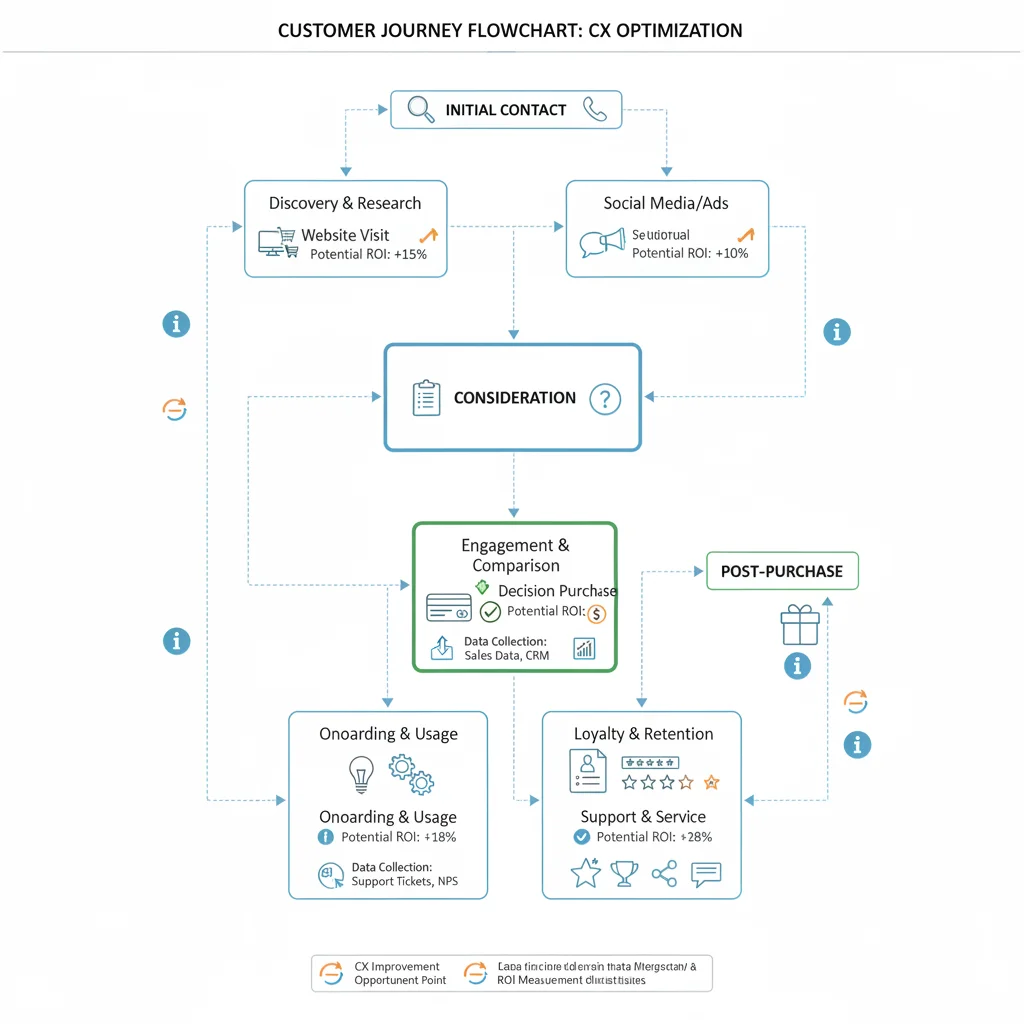
Building Your CX ROI Model for 2026
To achieve a 5x ROI by 2026, you need a structured model for CX ROI Measurement. This involves several stages, from data collection to predictive analysis.
1. Baseline Measurement
Before implementing any new CX initiatives, establish a clear baseline for all relevant CX and financial metrics. This provides a starting point against which you can measure progress.
2. Identify Key CX Initiatives and Hypothesize Impact
List all planned CX investments. For each initiative, hypothesize its expected impact on specific CX metrics and, consequently, on financial outcomes. For example:
- Initiative: Implementing an AI-powered chatbot for FAQ.
- Hypothesized CX Impact: Increase in CES for simple queries, reduction in call volume to human agents.
- Hypothesized Financial Impact: Reduced operational costs per customer interaction, improved agent capacity for complex issues.
3. Data Collection and Integration
This is arguably the most critical step. You need a robust system for collecting and integrating data from various sources:
- CRM Data: Customer demographics, purchase history, interaction logs.
- Survey Data: NPS, CSAT, CES results.
- Web Analytics: Website behavior, conversion funnels, bounce rates.
- Contact Center Data: Call volume, average handle time, FCR, wait times.
- Financial Data: Revenue, profit margins, acquisition costs, retention costs.
Leverage customer data platforms (CDPs) or robust analytics tools to consolidate this information, creating a unified view of the customer and their financial value. This data foundation is paramount for accurate CX ROI Measurement.
4. Conduct A/B Testing and Pilot Programs
Whenever possible, test CX initiatives on a smaller scale through A/B testing or pilot programs. This allows you to isolate the impact of specific changes and validate your hypotheses before a full-scale rollout. For instance, introduce a new onboarding flow to a segment of new customers and compare their retention rates and CLTV against a control group.
5. Quantify Financial Impact
This is where you translate CX improvements into monetary terms. Use formulas and models to calculate:
- Revenue Increase from Retention: (Reduction in churn rate) x (Average CLTV) x (Number of customers).
- Revenue Increase from Upsell/Cross-sell: (Increase in upsell/cross-sell rate) x (Average value of upsell/cross-sell) x (Number of customers).
- Cost Savings from Reduced Service Interactions: (Reduction in contact volume) x (Average cost per interaction).
- Cost Savings from Increased Efficiency: (Reduction in average handle time) x (Hourly agent cost) x (Number of interactions).
Consistently applying these calculations across all initiatives will build your comprehensive CX ROI Measurement report.
Advanced Strategies for Maximizing CX ROI by 2026
Achieving a 5x ROI requires more than just basic measurement; it demands a proactive and strategic approach to CX. Here are advanced strategies to supercharge your efforts:
Personalization at Scale
Leverage AI and machine learning to deliver highly personalized experiences across all touchpoints. Tailor recommendations, communications, and offers based on individual customer behavior and preferences. Personalized experiences significantly boost engagement, loyalty, and ultimately, CLTV.
Proactive Problem Resolution
Shift from reactive customer service to proactive problem identification and resolution. Use data analytics to predict potential issues before they impact customers (e.g., anticipating delivery delays, identifying product usage patterns that might lead to frustration). Proactive engagement reduces customer effort, prevents churn, and enhances satisfaction.
Employee Experience (EX) as a CX Multiplier
Happy and engaged employees deliver better customer experiences. Invest in your employee experience through training, empowerment, recognition, and providing them with the right tools. Measure EX metrics (e.g., employee satisfaction, engagement scores) and correlate them with CX outcomes. A strong EX is a powerful multiplier for CX ROI Measurement.
Closed-Loop Feedback Systems
Implement systems that not only collect customer feedback but also act on it. Ensure feedback is routed to the relevant teams, actions are taken, and customers are informed of the resolution. This demonstrates that you value their input, fostering trust and loyalty. This continuous feedback loop is vital for optimizing CX and therefore, CX ROI Measurement.
Journey Orchestration and Optimization
Go beyond journey mapping to actively orchestrate and optimize customer journeys in real-time. Use technology to guide customers seamlessly through their interactions, anticipating needs and proactively removing friction points. Continuously analyze journey data to identify bottlenecks and areas for improvement, directly impacting conversion rates and customer satisfaction.
Presenting Your CX ROI Case to Stakeholders
Even the most meticulously calculated ROI is useless if it cannot be effectively communicated. When presenting your CX ROI Measurement findings, especially with a 5x target by 2026, keep the following in mind:
- Speak Their Language: Tailor your presentation to your audience. For finance teams, focus on hard numbers, NPV, IRR, and payback periods. For marketing, emphasize brand loyalty and CLTV.
- Tell a Story: Use real-world examples and customer anecdotes to illustrate the impact of CX on individuals, then connect it back to the aggregate financial results.
- Visualize Data: Use clear, concise charts, graphs, and dashboards to present complex data in an easily digestible format.
- Focus on the Future: While showing past performance, always pivot to future projections and how continued investment will lead to even greater returns, reinforcing the 5x ROI goal for 2026.
- Be Transparent: Acknowledge assumptions and potential risks, demonstrating a credible and well-thought-out analysis.
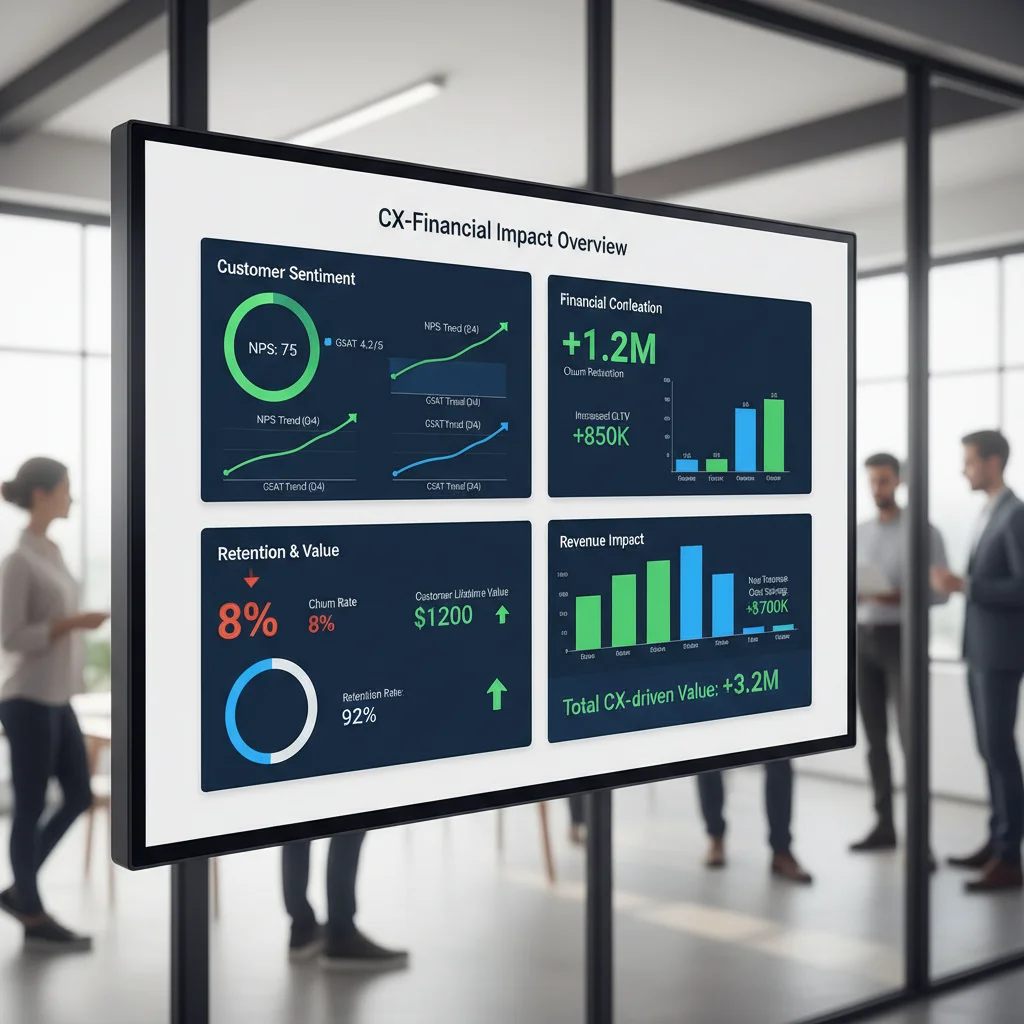
Challenges and Considerations in CX ROI Measurement
While the benefits of CX ROI Measurement are clear, there are inherent challenges to navigate:
- Attribution Complexity: Isolating the precise impact of a single CX initiative from other business factors can be difficult. Use control groups, A/B testing, and advanced statistical analysis to minimize confounding variables.
- Long-Term vs. Short-Term Gains: Some CX benefits, like brand loyalty, accrue over a longer period. It’s important to balance short-term wins with long-term strategic value in your ROI calculations.
- Data Silos: Disparate data systems can hinder a holistic view of the customer and make comprehensive ROI measurement challenging. Investing in data integration is crucial.
- Defining ‘Good’ CX: What constitutes a ‘good’ customer experience can be subjective. Use customer feedback and behavioral data to objectively define and measure desired outcomes.
- Dynamic Customer Expectations: Customer expectations are constantly evolving. Your CX strategy and CX ROI Measurement framework must be agile enough to adapt.
Overcoming these challenges requires a commitment to data-driven decision-making, cross-functional collaboration, and a continuous improvement mindset. By addressing these considerations head-on, your organization can build a more robust and credible case for CX investment and confidently work towards that 5x ROI by 2026.
Conclusion: Achieving a 5x CX ROI by 2026
The journey to demonstrating a 5x return on your customer experience investments by 2026 is an ambitious yet entirely achievable undertaking. It requires a strategic shift from viewing CX as an abstract concept to recognizing it as a powerful engine for financial growth. By meticulously defining your investments, selecting the right metrics, building a robust CX ROI Measurement model, and continuously optimizing your strategies, you can unlock the full potential of your CX initiatives.
Remember, superior customer experiences are not just about making customers happy; they are about fostering loyalty, driving repeat business, reducing costs, and ultimately, growing your bottom line. By embracing the principles outlined in this guide, your organization can confidently quantify the value of CX, secure executive buy-in, and position itself for unparalleled success in the coming years. The future of business belongs to those who master CX ROI Measurement and consistently deliver exceptional value to their customers.