AI Revolutionizing US CX: 30% Resolution Rate Boost by 2026

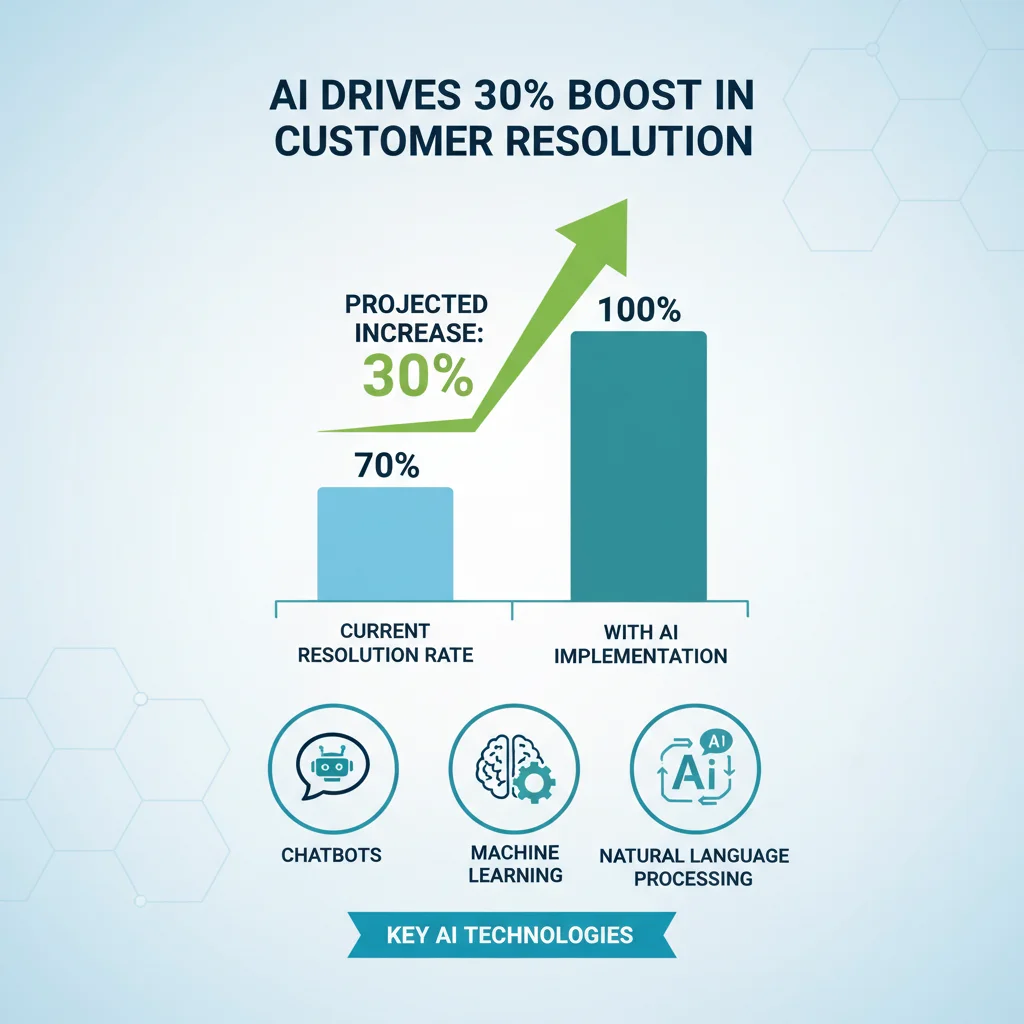
In an increasingly competitive global landscape, customer experience (CX) has emerged as the paramount differentiator for businesses across the United States. No longer merely a buzzword, CX is the bedrock upon which customer loyalty, brand reputation, and ultimately, profitability are built. As we hurtle towards the middle of the decade, the integration of artificial intelligence (AI) into CX strategies is not just an advantage; it’s a necessity. Industry experts and forward-thinking organizations are projecting a staggering 30% increase in customer resolution rates by 2026, directly attributable to the intelligent deployment of AI technologies. This isn’t a futuristic fantasy; it’s a tangible reality that US businesses are actively shaping. The transformative power of AI customer experience is undeniable, offering unprecedented opportunities to streamline operations, personalize interactions, and deliver consistently superior service.
The modern customer is more empowered and discerning than ever before. They expect instant gratification, seamless interactions across multiple channels, and personalized solutions to their problems. Traditional customer service models, often reliant on manual processes and human agents handling repetitive queries, are struggling to keep pace with these evolving demands. This is where AI steps in, not as a replacement for human interaction, but as a powerful augmentation that elevates the entire customer journey. By automating routine tasks, providing agents with real-time insights, and enabling proactive engagement, AI is fundamentally reshaping how US businesses approach and deliver CX.
This comprehensive article will delve deep into the multifaceted impact of AI on customer experience within the US business ecosystem. We will explore the key drivers behind the projected 30% increase in resolution rates, dissect the various AI technologies at play, and provide actionable insights for businesses looking to leverage AI to achieve their CX goals. From intelligent chatbots and virtual assistants to advanced sentiment analysis and predictive analytics, the spectrum of AI applications in CX is vast and continually expanding. Understanding these tools and their strategic implementation is crucial for any organization aiming to stay ahead of the curve and cultivate enduring customer relationships.
The Imperative of AI Customer Experience in the Modern Era
The shift towards an AI-driven customer experience is not a whimsical trend but a strategic imperative. Several factors underscore the urgency for US businesses to embrace AI in their CX initiatives. Firstly, customer expectations are at an all-time high. A study by Salesforce revealed that 80% of customers consider the experience a company provides to be as important as its products or services. This means that a subpar CX can quickly erode brand loyalty, regardless of the quality of offerings. Businesses that fail to meet these elevated expectations risk losing market share to more agile, AI-powered competitors.
Secondly, the sheer volume and complexity of customer interactions are increasing. With the proliferation of digital channels – email, chat, social media, apps – customers expect to engage with businesses on their preferred platform, at any time. Managing this multi-channel influx manually is unsustainable and often leads to long wait times, inconsistent responses, and frustrated customers. AI customer experience solutions, such as intelligent routing and automated responses, can efficiently manage this volume, ensuring timely and relevant support.
Thirdly, the cost of poor CX is substantial. Dissatisfied customers are more likely to churn, spread negative word-of-mouth, and require more resources to resolve their issues. Conversely, a positive CX fosters loyalty, drives repeat business, and can even turn customers into brand advocates. Investing in AI for CX is therefore not just about cost reduction, but about value creation and long-term business growth. The projected 30% increase in resolution rates is a direct indicator of the efficiency gains and customer satisfaction improvements that AI can deliver.
Furthermore, the competitive landscape demands innovation. Businesses that are early adopters of AI in CX gain a significant edge, setting new benchmarks for service quality and operational efficiency. They can gather deeper insights into customer behavior, personalize interactions on an unprecedented scale, and proactively address potential issues before they escalate. This proactive approach, powered by AI, transforms customer service from a reactive cost center into a strategic value driver.
Unpacking the 30% Resolution Rate Boost: How AI Makes it Possible
The ambitious target of a 30% increase in resolution rates by 2026 for US businesses is not plucked from thin air. It’s a realistic projection based on the proven capabilities of various AI technologies when strategically integrated into CX operations. Let’s break down the key mechanisms through which AI contributes to this significant improvement.
Intelligent Chatbots and Virtual Assistants: First-Line Resolution
One of the most visible applications of AI in customer experience is the deployment of intelligent chatbots and virtual assistants. These AI-powered entities are capable of understanding natural language (NLP), processing customer queries, and providing instant, accurate responses to a wide range of common questions. By handling routine inquiries, they deflect a significant portion of the workload from human agents, allowing them to focus on more complex, high-value issues. This not only reduces wait times but also ensures a consistent and immediate response, drastically improving the first-contact resolution rate.
Advanced chatbots can even guide customers through troubleshooting steps, complete transactions, or provide personalized recommendations, effectively resolving issues without any human intervention. Their 24/7 availability means customers can get help whenever they need it, irrespective of business hours, further contributing to higher resolution rates and enhanced satisfaction.
AI-Powered Agent Assist Tools: Empowering Human Agents
While chatbots handle the simpler queries, AI also plays a crucial role in empowering human agents to resolve complex issues more efficiently. AI-powered agent assist tools provide real-time support to human customer service representatives. These tools can:
- Provide Instant Information: By rapidly searching vast knowledge bases, AI can pull up relevant articles, policy documents, and customer history in seconds, eliminating the need for agents to search manually.
- Suggest Best Actions: Based on the customer’s query and sentiment, AI can recommend the next best action, guiding agents towards the most effective solution.
- Analyze Sentiment: AI can analyze a customer’s tone and language to gauge their sentiment, alerting agents to potentially frustrated or angry customers, allowing for a more empathetic and tailored response.
- Automate Data Entry: AI can automatically log call summaries, update CRM systems, and complete post-interaction tasks, freeing up agents’ time for actual problem-solving.
This augmentation significantly reduces average handling time (AHT) and dramatically increases the likelihood of resolving the issue on the first call, directly impacting the resolution rate.
Predictive Analytics and Proactive Service: Preventing Issues Before They Arise
Perhaps one of the most impactful contributions of AI customer experience to resolution rates is its ability to enable proactive customer service. Through predictive analytics, AI can analyze vast datasets of customer behavior, purchase history, interaction logs, and even external factors to identify potential issues before they even arise. For example, AI can predict when a customer might be at risk of churning, when a product might fail, or when a service interruption is likely.
Equipped with these insights, businesses can then proactively reach out to customers with relevant information, offers, or solutions, often preventing the need for a customer to contact support in the first place. This ‘zero-contact resolution’ is the ultimate form of efficient customer service and significantly contributes to overall resolution rates by reducing the volume of incoming issues. For instance, an internet provider could use AI to detect network anomalies in a specific area and proactively send out notifications to affected customers, informing them of the issue and expected resolution time, thereby preventing a flood of support calls.
Personalization at Scale: Tailored Solutions for Faster Resolution
AI enables businesses to deliver highly personalized customer experiences at scale, which directly contributes to faster and more satisfying resolutions. By analyzing individual customer data, AI can understand preferences, past interactions, and specific needs. This allows for:
- Tailored Recommendations: Offering products or services that are genuinely relevant to the customer.
- Personalized Communication: Crafting messages and responses that resonate with the individual.
- Anticipating Needs: Understanding what a customer might need next and pre-emptively providing solutions.
When customers feel understood and receive relevant, tailored support, their issues are often resolved more quickly and effectively, leading to higher satisfaction and a boosted resolution rate. This level of personalization, previously only achievable through extensive manual effort, is now democratized by AI customer experience technologies.
Key AI Technologies Driving CX Transformation
The journey towards a 30% increase in resolution rates is powered by a suite of sophisticated AI technologies. Understanding these tools is essential for US businesses looking to make informed decisions about their AI investments.
Natural Language Processing (NLP) and Natural Language Understanding (NLU)
NLP and NLU are the backbone of conversational AI. NLP allows machines to read, understand, and interpret human language, while NLU focuses on comprehending the intent and meaning behind the words. These technologies are crucial for chatbots, virtual assistants, and agent assist tools to accurately interpret customer queries, regardless of how they are phrased. The better an AI system understands customer intent, the more effectively it can route queries, provide answers, and assist agents, thereby improving resolution rates.
Machine Learning (ML)
Machine learning is the engine that allows AI systems to learn from data without being explicitly programmed. In CX, ML algorithms are used for:
- Predictive Analytics: Identifying patterns in past data to forecast future customer behavior or potential issues.
- Sentiment Analysis: Training models to detect emotions and tones in customer communications (text, voice).
- Recommendation Engines: Learning customer preferences to suggest relevant products, services, or solutions.
- Dynamic Knowledge Bases: Continuously updating and improving the accuracy of information based on new interactions and resolutions.
The continuous learning capability of ML ensures that AI customer experience solutions become smarter and more effective over time, leading to increasingly higher resolution rates.
Speech Recognition and Synthesis
For voice-based customer interactions, speech recognition (converting spoken language to text) and speech synthesis (converting text to spoken language) are critical. These technologies enable AI-powered interactive voice response (IVR) systems and virtual agents to understand and respond to customers naturally. Improved accuracy in speech recognition directly translates to fewer misunderstandings and faster resolution of voice-based queries.
Robotic Process Automation (RPA)
While not strictly AI, RPA often works in conjunction with AI to automate repetitive, rule-based tasks that typically involve structured data. In CX, RPA bots can automate tasks like data entry, order processing, account updates, and information retrieval from disparate systems. By automating these backend processes, RPA frees up human agents and AI systems to focus on more complex problem-solving, contributing to overall efficiency and resolution rates.
Implementing AI for Optimal CX: A Strategic Roadmap
Achieving a 30% increase in resolution rates through AI requires more than just deploying technology; it demands a strategic, phased approach. US businesses must consider several key steps to ensure successful AI integration into their CX operations.
1. Define Clear Objectives and KPIs
Before embarking on any AI initiative, clearly define what you aim to achieve. What specific resolution rate improvements are you targeting? What other CX metrics (e.g., CSAT, NPS, AHT) do you want to impact? Having measurable key performance indicators (KPIs) will help track progress and demonstrate ROI.
2. Start Small, Scale Smart
Instead of attempting a massive, organization-wide AI overhaul, start with pilot projects in specific areas or for particular use cases where AI can deliver immediate, tangible value. For example, begin by automating responses to frequently asked questions (FAQs) with a chatbot, or implementing an agent assist tool for a specific product line. Learn from these initial deployments, refine your approach, and then incrementally scale your AI customer experience solutions.
3. Data is King: Ensure Data Quality and Accessibility
AI systems are only as good as the data they are trained on. Ensure that your customer data is clean, accurate, complete, and easily accessible. This includes customer interaction history, purchase data, demographic information, and feedback. Investing in data governance and integration strategies is paramount for effective AI deployment.
4. Integrate AI Seamlessly into Existing Workflows
AI should augment, not disrupt, existing customer service workflows. Ensure that AI tools integrate seamlessly with your CRM systems, helpdesk platforms, and other business applications. A disjointed implementation can create more friction than it resolves, hindering the adoption of AI customer experience solutions.
5. Empower and Train Your Human Agents
AI is not about replacing human agents but empowering them. Provide comprehensive training to your customer service team on how to effectively use AI tools, interpret AI-generated insights, and collaborate with virtual assistants. Foster a culture where AI is seen as a valuable partner, not a threat, to maximize its benefits and ensure a smooth transition.

6. Prioritize Ethical AI and Data Privacy
As AI becomes more pervasive, ethical considerations and data privacy become critical. Ensure that your AI customer experience solutions are designed with privacy by design principles, are transparent in their operations, and comply with all relevant data protection regulations (e.g., CCPA, GDPR). Building customer trust is paramount for the long-term success of any AI strategy.
7. Continuously Monitor, Evaluate, and Optimize
AI is not a set-it-and-forget-it solution. Continuously monitor the performance of your AI systems, analyze key metrics, and gather feedback from both customers and agents. Use these insights to iteratively refine your AI models, optimize workflows, and explore new use cases. The goal is continuous improvement, ensuring that your AI customer experience strategy evolves with customer needs and technological advancements.
Challenges and Considerations for US Businesses
While the promise of AI in CX is immense, US businesses must also be prepared to navigate potential challenges. One significant hurdle is the initial investment cost, which can be substantial for advanced AI solutions. However, the long-term ROI in terms of improved resolution rates, customer loyalty, and operational efficiency often outweighs these upfront costs.
Another consideration is the complexity of integrating AI with legacy systems. Many older business infrastructures may not be readily compatible with modern AI platforms, requiring significant integration efforts or system upgrades. Data privacy and security are also paramount, especially when dealing with sensitive customer information. Businesses must ensure robust security measures and compliance with data protection regulations.
Finally, managing the human element is crucial. Some employees may fear job displacement, leading to resistance to AI adoption. Effective change management strategies, transparent communication, and retraining programs are essential to ensure that human agents see AI as an enabler, not a threat, fostering a collaborative environment where AI customer experience thrives.
The Future of AI Customer Experience in the US
The journey towards a 30% increase in resolution rates by 2026 is just the beginning for AI customer experience in the US. Looking further ahead, we can anticipate even more sophisticated applications. Hyper-personalization, where AI anticipates individual customer needs with uncanny accuracy, will become the norm. AI will power proactive service with greater predictive capabilities, preventing issues before customers even realize they exist.
The convergence of AI with other emerging technologies, such as virtual reality (VR) and augmented reality (AR), will create immersive and intuitive customer support experiences. Imagine a customer receiving AR-guided troubleshooting for a complex product or interacting with a virtual agent in a VR environment. Furthermore, AI will continue to optimize the entire customer journey, from initial discovery to post-purchase support, creating a truly seamless and delightful experience across all touchpoints.
The role of human agents will also evolve, shifting from handling routine queries to becoming ‘super agents’ – leveraging AI insights to tackle complex, emotional, and high-value customer interactions. This symbiotic relationship between human intelligence and artificial intelligence will define the future of CX, ensuring that US businesses not only meet but consistently exceed customer expectations.
Conclusion: Embracing the AI-Powered CX Revolution
The promise of AI to transform customer experience for US businesses is not merely a theoretical concept; it is a tangible opportunity for significant growth and competitive differentiation. The projected 30% increase in resolution rates by 2026 is a testament to the power of AI to streamline operations, personalize interactions, and deliver consistently superior service. By strategically adopting intelligent chatbots, agent assist tools, predictive analytics, and other AI-driven solutions, businesses can not only meet but exceed the evolving demands of modern customers.
Embracing AI customer experience is no longer optional; it’s a critical investment in the future. Organizations that commit to a thoughtful, data-driven, and human-centric approach to AI implementation will be the ones that thrive, building stronger customer relationships, fostering unwavering loyalty, and ultimately achieving sustainable success in the dynamic digital economy. The time to act is now, to unlock the full potential of AI and redefine what’s possible in customer experience.