Actionable Customer Data Insights: Boost CX & Engagement by 7% in 2026

In today’s hyper-competitive marketplace, businesses are constantly seeking an edge. The most successful organizations understand that this edge isn’t found in new product launches alone, but in the profound understanding of their most valuable asset: their customers. This understanding, derived from actionable customer data insights, is the bedrock upon which superior Customer Experience (CX) and sustained engagement are built. Our aim in this comprehensive guide is to illuminate the path to leveraging these insights, targeting an ambitious yet achievable 7% boost in customer engagement by 2026 through smarter CX strategies. This isn’t just about collecting data; it’s about transforming raw information into a strategic advantage that drives real financial impact.
The Power of Actionable Customer Data Insights: Driving Engagement and CX
The digital age has ushered in an unprecedented era of data availability. From website clicks and social media interactions to purchase histories and support tickets, every customer touchpoint leaves a digital footprint. However, the sheer volume of this data can be overwhelming. The challenge isn’t merely in collecting it, but in extracting meaningful, actionable customer data insights that inform strategic decisions and foster stronger customer relationships. Organizations that master this art are not just surviving; they are thriving, building loyalty, and outperforming competitors. Focusing on actionable customer data insights is no longer a luxury; it’s a necessity for any business aspiring to significant growth and a leading position in their industry.
Imagine a scenario where you can predict customer churn before it happens, personalize every interaction to perfection, and proactively address pain points before they escalate. This isn’t science fiction; it’s the reality enabled by sophisticated analysis of customer data insights. The financial implications are staggering: reduced customer acquisition costs, increased customer lifetime value, and a robust, loyal customer base that champions your brand. Our goal by 2026 is to see a tangible 7% increase in customer engagement, a metric directly tied to improved CX and, consequently, revenue growth. This ambitious target is well within reach for businesses committed to a data-driven approach.
Understanding Customer Data: Beyond the Basics
Before we delve into extracting actionable customer data insights, it’s crucial to understand the different types of customer data available. This foundational knowledge is the first step in building a robust data strategy. Customer data can broadly be categorized into four main types:
- Demographic Data: This includes basic information like age, gender, location, income, education, and occupation. While seemingly simple, this data provides a broad understanding of your customer base and helps in market segmentation.
- Behavioral Data: Perhaps the most crucial for generating actionable customer data insights, this encompasses how customers interact with your brand. This includes website visits, clicks, purchase history, app usage, email opens, social media engagement, and interactions with customer service. Behavioral data reveals patterns and preferences.
- Attitudinal Data: This type of data captures customer opinions, beliefs, motivations, and satisfaction levels. Surveys, feedback forms, reviews, and social listening are primary sources. Attitudinal data explains the ‘why’ behind customer behavior.
- Transactional Data: Records of all customer purchases, returns, and payment methods fall under this category. It’s fundamental for understanding purchasing habits, average order value, and identifying high-value customers.
Collecting and integrating these diverse data sets is the initial hurdle. Many organizations struggle with data silos, where different departments hold their own pieces of the customer puzzle. A unified customer view, often achieved through a Customer Relationship Management (CRM) system or a Customer Data Platform (CDP), is essential for comprehensive analysis and generating truly actionable customer data insights. Without a holistic view, your insights will be fragmented and potentially misleading, hindering your efforts to improve CX and engagement effectively.
The Journey from Raw Data to Actionable Insights
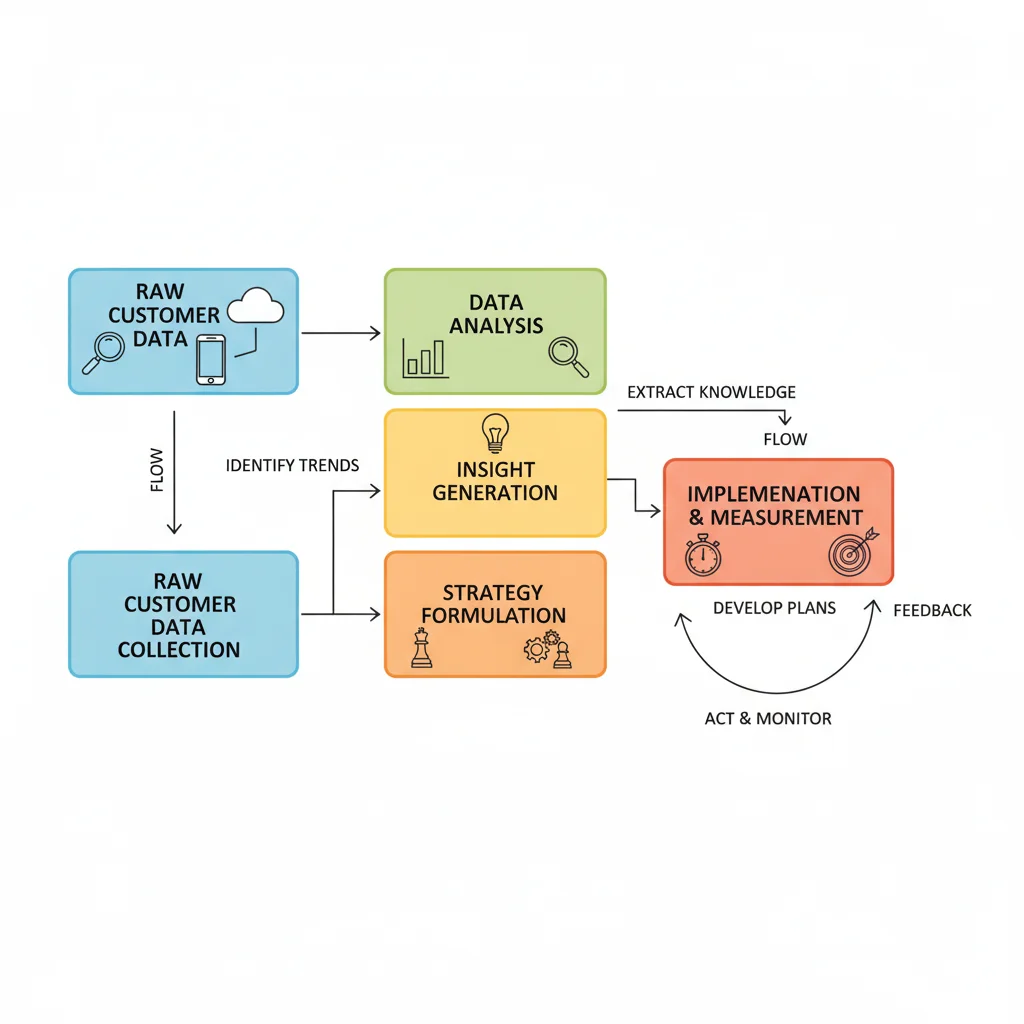
Transforming raw data into actionable customer data insights is a multi-step process that requires a combination of technology, expertise, and a strategic mindset. It’s not a one-time event but an ongoing cycle of collection, analysis, interpretation, and application.
1. Data Collection and Integration: Building the Foundation
The first step is to establish robust data collection mechanisms. This involves implementing analytics tools on your website and app, setting up CRM systems, leveraging social media monitoring tools, and designing effective survey instruments. Crucially, all this data needs to be integrated into a single, accessible platform. This eliminates silos and creates a ‘single source of truth’ for customer information, enabling a 360-degree view. Without this foundational integration, deriving comprehensive customer data insights becomes an arduous, if not impossible, task. The quality of your insights directly correlates with the quality and completeness of your underlying data.
2. Data Cleaning and Preparation: Ensuring Accuracy
Raw data is often messy, containing duplicates, errors, and inconsistencies. Data cleaning is a critical, albeit often overlooked, step. This involves identifying and rectifying inaccuracies, standardizing formats, and removing irrelevant information. ‘Garbage in, garbage out’ is a truism that applies perfectly here. Flawed data will inevitably lead to flawed customer data insights and, consequently, ineffective strategies. Investing time and resources in data quality ensures that your insights are reliable and trustworthy, paving the way for impactful CX improvements and engagement boosts.
3. Data Analysis: Uncovering Patterns and Trends
Once the data is clean and integrated, the real work of analysis begins. This is where data scientists and analysts employ various techniques to uncover patterns, trends, and correlations. Common analytical methods include:
- Descriptive Analytics: What happened? (e.g., how many purchases were made last month?)
- Diagnostic Analytics: Why did it happen? (e.g., why did website traffic drop last week?)
- Predictive Analytics: What will happen? (e.g., which customers are likely to churn in the next quarter?)
- Prescriptive Analytics: What should we do? (e.g., what specific offer should we provide to prevent churn?)
Advanced techniques like machine learning and artificial intelligence are increasingly being used to automate and enhance this process, identifying subtle patterns that human analysts might miss. The goal is to move beyond mere reporting of what happened to understanding why it happened and, most importantly, what can be done about it. This level of analysis is crucial for generating truly actionable customer data insights that can drive significant improvements in CX and engagement.
4. Insight Generation: Translating Data into Understanding
This is the pivotal step where data is transformed into meaningful insights. An insight is not just a data point; it’s a discovery that provides a deeper understanding of your customers and their relationship with your brand. For example, knowing that 20% of customers abandon their carts is a data point. The insight is understanding *why* they abandon their carts (e.g., unexpected shipping costs, complex checkout process, lack of preferred payment options). These insights are the fuel for strategic decision-making and are what allow businesses to craft targeted interventions. Without clear, concise insights, the data remains just numbers, offering no clear path forward for enhancing CX or boosting engagement.
Leveraging Customer Data Insights for Enhanced CX
With actionable customer data insights in hand, businesses can embark on a transformative journey to elevate their Customer Experience. The direct link between superior CX and increased engagement is undeniable. Here’s how to apply these insights:
Personalization at Scale
One of the most powerful applications of customer data insights is hyper-personalization. Customers today expect brands to understand their individual needs and preferences. Generic experiences are no longer sufficient. Insights into browsing history, purchase patterns, demographic information, and even real-time behavior allow businesses to:
- Tailor Product Recommendations: Suggesting relevant products or services based on past purchases or viewed items significantly increases conversion rates.
- Customize Marketing Messages: Crafting emails, ads, and offers that resonate with individual customer segments improves open rates, click-through rates, and overall campaign effectiveness.
- Personalize Website and App Experiences: Dynamic content that adapts to a user’s known preferences or past interactions creates a more intuitive and engaging experience.
This level of personalization, driven by precise customer data insights, doesn’t just make customers feel valued; it makes their interactions more efficient and enjoyable, directly contributing to a better CX and fostering deeper engagement. The goal is to make every customer feel like they are interacting with a brand that truly understands them.
Optimizing Customer Journeys
Mapping the customer journey is a crucial exercise, but optimizing it requires deep customer data insights. By analyzing data at each touchpoint, businesses can identify bottlenecks, pain points, and moments of delight. For instance:
- Identifying Churn Triggers: Behavioral data can reveal patterns that precede customer churn, allowing for proactive interventions.
- Streamlining Onboarding: Insights from new customer behavior can highlight areas where the onboarding process is confusing or inefficient, leading to higher early-stage abandonment.
- Improving Support Interactions: Analyzing support ticket data can uncover common issues, allowing for self-service options or better agent training, reducing resolution times and improving satisfaction.
Optimizing the customer journey based on these actionable customer data insights creates a smoother, more satisfying experience, reducing friction and building trust. This leads directly to increased customer satisfaction and loyalty, critical components for boosting engagement by 7% by 2026.
Proactive Problem Solving
The ability to anticipate and solve problems before customers even realize they exist is a hallmark of exceptional CX. Predictive analytics, fueled by comprehensive customer data insights, makes this possible. For example:
- Predictive Maintenance: For service-based businesses, anticipating equipment failures based on usage data and scheduling maintenance proactively can prevent service disruptions.
- Fraud Detection: Identifying suspicious transaction patterns can protect customers from fraud.
- Resource Allocation: Predicting peak demand times for customer support can ensure adequate staffing, minimizing wait times and frustration.
By using customer data insights to be proactive, businesses can prevent negative experiences, significantly enhancing CX and reinforcing positive perceptions of the brand. This foresight is a powerful driver of customer trust and engagement.
Boosting Engagement by 7% by 2026: A Strategic Roadmap
Achieving a 7% increase in customer engagement by 2026 is an ambitious but entirely feasible goal when armed with a robust strategy for leveraging customer data insights. Here’s a roadmap to guide your efforts:
1. Invest in a Robust Customer Data Platform (CDP)
A CDP is essential for unifying all your customer data from various sources into a single, comprehensive profile for each customer. This unified view is the foundation for generating accurate and actionable customer data insights. Without it, personalized experiences and optimized journeys remain fragmented and less effective. A CDP allows for real-time data collection and activation, which is critical in today’s fast-paced digital environment, making it a cornerstone for achieving your engagement goals.
2. Foster a Data-Driven Culture
Technology alone isn’t enough. Every department, from marketing and sales to product development and customer service, must embrace a data-driven mindset. Training employees to understand and utilize customer data insights in their daily roles ensures that these insights are consistently applied across all customer touchpoints. Regular workshops, internal communication, and celebrating data-driven successes can help embed this culture. When everyone understands the value of data, the entire organization benefits from improved CX and engagement.
3. Implement Advanced Analytics and AI
To move beyond surface-level observations, invest in advanced analytics tools and artificial intelligence capabilities. Machine learning algorithms can identify complex patterns, predict future behaviors, and even recommend optimal actions that human analysts might miss. These tools are instrumental in uncovering the deeper customer data insights required to truly personalize experiences and anticipate needs, driving the targeted 7% engagement increase.
4. Prioritize Personalization and Proactive Outreach
Based on your customer data insights, develop highly personalized communication strategies. This includes dynamic content on your website, tailored email campaigns, customized product recommendations, and even personalized customer service interactions. Furthermore, use predictive insights to proactively reach out to customers with relevant offers, solutions to potential problems, or just to check in, demonstrating that you understand and care about their needs. Proactive engagement, rooted in understanding, is a powerful loyalty builder.

5. Continuously Monitor and Optimize CX
CX is not a static state; it’s an ongoing journey. Regularly collect feedback through surveys (NPS, CSAT, CES), monitor social media sentiment, and analyze behavioral data to identify areas for improvement. Use A/B testing to experiment with different approaches and measure their impact on engagement metrics. The insights gained from continuous monitoring will feed back into your data strategy, creating a virtuous cycle of improvement. This iterative process, driven by fresh customer data insights, is key to sustaining and exceeding your engagement goals.
6. Focus on Customer Lifetime Value (CLV)
While increasing engagement is a key metric, always tie your efforts back to customer lifetime value. High engagement often correlates with higher CLV. Use customer data insights to identify your most valuable customers and understand what makes them loyal. Then, replicate those positive experiences for other segments. Strategies that increase CLV naturally contribute to stronger engagement and overall business profitability, providing a clear financial incentive for your data-driven CX initiatives.
Measuring Success: Key Metrics for Engagement
To track your progress towards the 7% engagement boost, it’s essential to monitor the right metrics. While the specific metrics may vary by industry and business model, these are some universal indicators of customer engagement, all of which can be deeply informed by customer data insights:
- Customer Retention Rate: The percentage of customers who continue to do business with you over a period. A higher retention rate indicates stronger engagement.
- Repeat Purchase Rate/Frequency: How often customers buy from you. Increased frequency suggests deeper engagement and satisfaction.
- Customer Lifetime Value (CLV): The total revenue a business can reasonably expect from a single customer account throughout their relationship. Higher CLV is a direct outcome of strong engagement.
- Net Promoter Score (NPS): Measures customer loyalty and willingness to recommend your product or service. Promoters are highly engaged customers.
- Customer Satisfaction Score (CSAT): Measures short-term satisfaction with a specific interaction or product.
- Active User Rate (for digital products): The percentage of users who actively use your app or website daily, weekly, or monthly.
- Time Spent on Site/App: Indicates how immersed customers are in your digital properties.
- Social Media Engagement: Likes, shares, comments, and mentions of your brand on social platforms.
- Email Open and Click-Through Rates: Reflect the relevance and appeal of your communications.
By consistently tracking these metrics and correlating them with your customer data insights, you can accurately assess the impact of your CX initiatives and make data-driven adjustments to ensure you hit your 7% engagement target by 2026.
Challenges and Considerations
While the benefits of leveraging customer data insights are clear, there are challenges to navigate:
- Data Privacy and Security: Compliance with regulations like GDPR and CCPA is paramount. Customers must trust you with their data. Transparency and robust security measures are not just legal requirements but also fundamental to maintaining customer trust and engagement.
- Data Silos: As mentioned, fragmented data across different departments can hinder a holistic view. Breaking down these silos requires organizational commitment and appropriate technology.
- Talent Gap: Finding and retaining skilled data scientists and analysts who can effectively extract actionable customer data insights can be challenging.
- Implementation Lag: Insights are only valuable if they are acted upon. Ensuring that insights lead to concrete changes in CX requires effective communication and cross-functional collaboration.
Addressing these challenges head-on is crucial for any organization serious about transforming its CX and achieving significant engagement growth through customer data insights.
The Future of Customer Data Insights
Looking towards 2026 and beyond, the role of customer data insights will only intensify. We can expect further advancements in:
- Real-time Analytics: The ability to process and act on data instantaneously will become even more critical, enabling hyper-responsive CX.
- Predictive and Prescriptive AI: AI will move beyond simple predictions to offering precise, automated recommendations for improving CX and driving engagement.
- Ethical AI and Data Usage: As AI becomes more prevalent, ethical considerations and transparent data practices will be at the forefront, building greater customer trust.
- Voice and Conversational AI: Insights from natural language processing of customer interactions will provide deeper qualitative understanding of customer sentiment and needs.
Businesses that proactively embrace these trends and continue to refine their approach to generating and utilizing customer data insights will be the ones that dominate their markets and build enduring relationships with their customers.
Conclusion: Your Path to a 7% Engagement Boost
The journey to boosting customer engagement by 7% by 2026 through smarter CX is an exciting and rewarding one, fundamentally driven by actionable customer data insights. It requires a commitment to collecting, analyzing, and applying data strategically across every facet of your business. By understanding your customers at a deeper level, personalizing their experiences, optimizing their journeys, and proactively addressing their needs, you not only improve your CX but also cultivate a loyal and highly engaged customer base.
The financial rewards of this approach are substantial, extending far beyond the 7% engagement increase to include greater customer lifetime value, reduced churn, and enhanced brand advocacy. Embrace the power of customer data insights today, and position your business for sustained success and unparalleled customer relationships in the years to come. The future of CX is data-driven, and the time to act is now.