AI in US Customer Service: 40% Cost Reduction by 2026 – Practical Solutions & Financial Impact

The Rise of AI in Customer Service: A 2026 US Market Outlook for 40% Cost Reduction (Practical Solutions, Financial Impact)
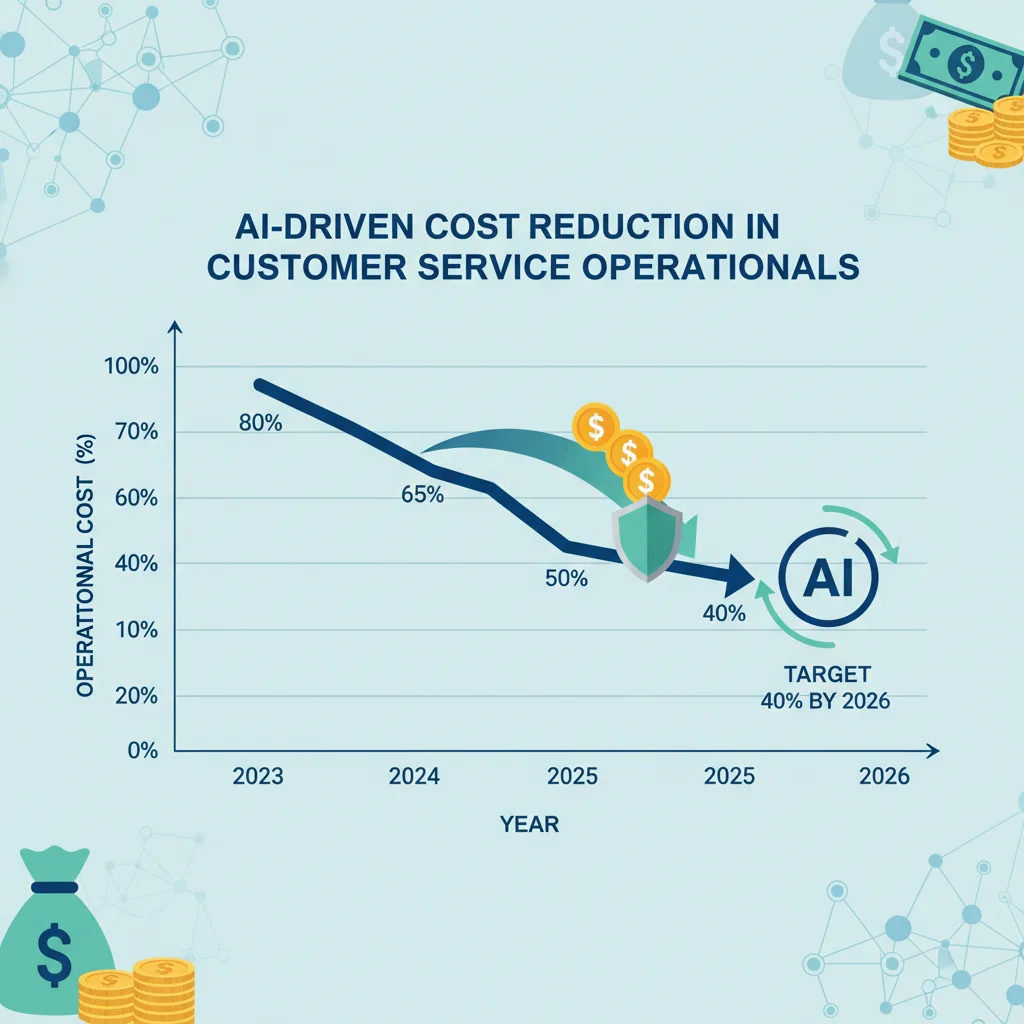
The landscape of customer service is undergoing a profound transformation, driven by the relentless march of artificial intelligence. In the United States, businesses are increasingly recognizing the immense potential of AI not just to enhance customer experience, but also to deliver substantial operational efficiencies. This article delves into the burgeoning role of AI in US customer service, providing a forward-looking perspective on how it can achieve an ambitious 40% cost reduction by 2026. We will explore the practical solutions AI offers and meticulously analyze their financial impact, offering a roadmap for organizations seeking to leverage this powerful technology.
The traditional model of customer service, often characterized by high operational costs, agent turnover, and inconsistent service quality, is ripe for disruption. AI, with its capacity for automation, data analysis, and predictive capabilities, presents a compelling alternative. From intelligent chatbots handling routine inquiries to sophisticated AI-driven analytics optimizing agent performance, the applications are vast and growing. The focus here is not merely on technological adoption, but on the strategic implementation of AI to unlock tangible financial benefits, particularly in the competitive US market.
Understanding the nuances of AI in customer service is crucial for any business aiming to stay competitive. It’s not just about deploying a chatbot; it’s about integrating AI seamlessly into the entire customer journey, from initial contact to post-service follow-up. This comprehensive approach is what will ultimately lead to the significant cost savings projected for 2026. Our exploration will cover the various facets of this integration, offering insights into how businesses can strategically invest in AI to achieve both enhanced customer satisfaction and a healthier bottom line.
The Current State of US Customer Service and the Need for AI
Before we project into the future, it’s essential to understand the current challenges facing customer service in the US. High labor costs, particularly in a tight job market, represent a significant overhead. Training and retaining qualified customer service representatives (CSRs) is an ongoing expense, and the demand for 24/7 support across multiple channels places immense pressure on resources. Customer expectations are also at an all-time high; consumers expect instant, personalized, and consistent service, regardless of the channel they choose.
These challenges create a compelling argument for the adoption of AI. Traditional contact centers often struggle with long wait times, frustrated customers, and overworked agents. The repetitive nature of many customer inquiries leads to agent burnout and high turnover, further escalating operational costs. Moreover, the inability to quickly analyze vast amounts of customer data hinders proactive problem-solving and personalized engagement. This is where AI steps in as a game-changer.
AI’s ability to automate routine tasks, provide instant responses, and analyze customer sentiment in real-time offers a lifeline to struggling customer service operations. By offloading mundane queries to AI-powered solutions, human agents can focus on more complex, high-value interactions, leading to greater job satisfaction and improved service quality. This shift is not just about cutting costs; it’s about fundamentally rethinking how customer service is delivered and experienced.
The competitive landscape in the US market further amplifies the need for AI. Businesses that fail to adapt risk falling behind competitors who are already leveraging AI to deliver superior customer experiences at a lower cost. The early adopters of AI in customer service are already seeing significant returns on investment, setting a new benchmark for efficiency and effectiveness. The imperative for businesses is clear: embrace AI or risk obsolescence.
Practical AI Solutions for Cost Reduction in Customer Service
Achieving a 40% cost reduction by 2026 through AI in US customer service requires a multi-faceted approach, integrating various AI technologies strategically. Here are some of the most impactful practical solutions:
1. Intelligent Chatbots and Virtual Assistants
Perhaps the most visible application of AI in customer service, intelligent chatbots and virtual assistants are revolutionizing how businesses interact with their customers. These AI-powered tools can handle a vast array of common inquiries, from answering FAQs and providing product information to processing simple transactions and guiding users through troubleshooting steps. By automating these interactions, businesses significantly reduce the need for human intervention for routine tasks.
For example, a US e-commerce company could deploy a chatbot to handle order status inquiries, return requests, and basic product questions. This frees up human agents to address more complex issues like technical support or personalized product recommendations, leading to a more efficient and effective customer service team. The scalability of chatbots also means that businesses can handle spikes in customer inquiries without needing to proportionally increase their human workforce.
2. AI-Powered Self-Service Portals
Beyond chatbots, AI can supercharge self-service options. AI-driven knowledge bases and portals can intelligently guide customers to the information they need, often before they even consider contacting a human agent. These systems use AI to analyze user queries, suggest relevant articles, and even personalize content based on past interactions or browsing history. The goal is to empower customers to find solutions independently, thereby reducing the burden on customer service teams.
Imagine a telecommunications company utilizing AI to power its online support section. A customer experiencing internet issues could type their problem into a search bar, and AI would not only pull up relevant troubleshooting guides but also analyze their account data to suggest specific solutions tailored to their service plan and location. This proactive self-service significantly reduces inbound calls and improves first-contact resolution rates, directly contributing to cost savings.
The financial impact of robust self-service is substantial. Every customer who resolves their issue through self-service is a customer who doesn’t require a human agent, translating into direct savings on labor and infrastructure. Furthermore, customers often prefer self-service for its convenience and speed, leading to increased satisfaction and loyalty.
3. Predictive Analytics and Proactive Support
AI’s strength in analyzing vast datasets allows for predictive analytics, enabling businesses to anticipate customer issues before they arise. By identifying patterns in customer behavior, product usage, or system performance, AI can flag potential problems and trigger proactive outreach. This could involve sending automated alerts, offering preventative maintenance tips, or even initiating a personalized communication from a human agent.
Consider a financial institution using AI to monitor customer accounts for unusual activity that might indicate fraud or a potential financial hardship. Instead of waiting for the customer to call with a problem, AI could flag the account and prompt a proactive phone call or message, offering assistance. This not only prevents larger issues from developing but also demonstrates a high level of care and personalized service, strengthening customer relationships.
The cost savings from predictive analytics are indirect but powerful. By preventing issues, businesses avoid the much higher costs associated with reactive problem-solving, such as handling complaints, processing returns, or dealing with churn. Proactive support also significantly improves customer satisfaction and loyalty, reducing the need for costly customer acquisition efforts.
4. AI-Powered Agent Assist Tools
While AI automates many tasks, it also significantly enhances the efficiency of human agents. AI-powered agent assist tools provide real-time support to CSRs during customer interactions. This can include suggesting relevant knowledge base articles, providing sentiment analysis of the customer’s tone, offering pre-written responses, or even pulling up customer history and product information instantly.
Imagine a call center agent assisting a customer with a complex technical issue. An AI agent assist system could listen to the conversation, identify keywords, and immediately display relevant troubleshooting steps or product manuals on the agent’s screen. This reduces average handling time (AHT), improves first-call resolution rates, and decreases the need for extensive agent training, all contributing to significant cost reductions.
The financial benefits here are multifaceted: lower AHT means agents can handle more inquiries per shift, reducing overall staffing needs. Improved first-call resolution minimizes costly follow-up interactions. And by empowering agents with better tools, businesses can reduce agent burnout and turnover, significantly cutting recruitment and training expenses. This is a critical component of achieving the 40% cost reduction in US customer service.
5. Automated Quality Assurance and Performance Monitoring
Traditional quality assurance (QA) in customer service is often a manual, time-consuming process. AI can automate the monitoring and analysis of customer interactions (calls, chats, emails) for quality, compliance, and agent performance. AI-powered speech analytics can transcribe calls, identify keywords, detect sentiment, and even pinpoint areas where agents might need additional training.
For instance, an AI system could analyze thousands of customer calls to identify common pain points, assess agent adherence to scripts, and flag instances where a customer expressed dissatisfaction. This provides invaluable insights for improving service quality and agent coaching, far more efficiently than manual review processes. This also helps in identifying best practices and replicating them across the team.
The cost savings derived from AI-powered QA are substantial. It reduces the need for large QA teams, automates compliance checks, and provides targeted feedback for agent training, leading to faster skill development and improved performance. This directly impacts operational efficiency and contributes to the overall goal of reducing AI customer service cost by 40%.
The Financial Impact: Quantifying the 40% Cost Reduction
Achieving a 40% cost reduction in US customer service by 2026 through AI is an ambitious but attainable goal. The financial impact is realized through a combination of direct and indirect savings, driven by increased efficiency, automation, and improved customer outcomes. Let’s break down how these savings materialize:
Direct Cost Savings
- Reduced Labor Costs: This is the most significant contributor. By automating routine inquiries with chatbots and self-service, businesses can reduce the number of human agents required, especially for tier-1 support. AI-powered agent assist tools also increase agent efficiency, meaning fewer agents can handle the same or even higher volumes of interactions.
- Lower Training and Onboarding Costs: With AI handling more basic inquiries and agent assist tools providing real-time guidance, the initial training period for new agents can be shortened, and ongoing training needs are reduced.
- Decreased Infrastructure Costs: A smaller human workforce translates to reduced need for physical contact center space, equipment, and associated utilities.
- Reduced Call Volume: Effective self-service and proactive AI solutions significantly reduce the number of inbound calls and chats, directly lowering the operational burden.
- Improved First Contact Resolution (FCR): AI-powered tools help agents resolve issues faster and more effectively on the first try, eliminating costly follow-up interactions.
Indirect Cost Savings and Revenue Generation
- Reduced Churn: Enhanced customer experience through instant, personalized AI support leads to higher customer satisfaction and loyalty, significantly reducing customer churn. Acquiring new customers is far more expensive than retaining existing ones.
- Increased Agent Productivity: By offloading mundane tasks and providing real-time assistance, AI allows human agents to focus on complex, high-value interactions, leading to higher productivity and job satisfaction.
- Better Data Insights: AI’s ability to analyze customer interactions provides invaluable insights into customer needs, pain points, and preferences. This data can inform product development, marketing strategies, and service improvements, leading to increased revenue.
- Fraud Detection and Prevention: AI can identify fraudulent activities more effectively, preventing financial losses for businesses.
- Optimized Resource Allocation: AI-driven analytics can help businesses forecast demand more accurately, allowing for better staffing and resource allocation, avoiding overstaffing or understaffing.
- Enhanced Brand Reputation: Delivering consistently excellent customer service through AI builds a strong brand reputation, attracting more customers and fostering long-term relationships.
The cumulative effect of these direct and indirect savings is what underpins the projected 40% cost reduction. It’s not a single silver bullet but a strategic integration of multiple AI components working in concert to optimize every aspect of the customer service operation. The initial investment in AI technology is quickly recouped through these efficiencies, leading to a strong return on investment within a relatively short timeframe.
Implementation Strategies for US Businesses
Successfully integrating AI into customer service to achieve substantial cost savings requires a well-thought-out strategy. Here are key considerations for US businesses:
1. Start Small and Scale
Instead of attempting a massive overhaul, begin with pilot programs. Identify specific areas where AI can deliver immediate value, such as automating FAQs with a chatbot or implementing an AI-powered knowledge base for a particular product line. Gather data, analyze performance, and learn from these initial deployments before scaling up. This iterative approach minimizes risk and allows for continuous optimization.
2. Focus on Customer Journey Mapping
Understand your entire customer journey. Identify touchpoints where AI can provide the most value and alleviate bottlenecks. Where do customers typically get stuck? What are the most common inquiries? Mapping these interactions will help prioritize AI implementations that have the greatest impact on both customer experience and operational efficiency.
3. Data is King: Invest in Data Infrastructure
AI models are only as good as the data they are trained on. US businesses must invest in robust data collection, storage, and analysis capabilities. Ensure that customer interaction data (calls, chats, emails, website behavior) is consolidated and structured in a way that AI can effectively process and learn from. Data privacy and security are paramount, especially given stringent US regulations.

4. Empower Human Agents, Don’t Replace Them Entirely
The goal of AI in customer service is not to eliminate human agents but to augment their capabilities. Position AI as a tool that frees agents from mundane tasks, allowing them to focus on complex, empathetic, and high-value interactions. Provide comprehensive training to agents on how to effectively use AI tools, ensuring they see AI as an assistant, not a threat. This ‘human-in-the-loop’ approach is crucial for maintaining service quality and agent morale.
5. Choose the Right AI Partners and Technologies
The AI market is vast and rapidly evolving. Businesses need to carefully evaluate AI vendors and solutions, ensuring they align with their specific needs, budget, and existing technology stack. Consider factors like scalability, integration capabilities, security features, and the vendor’s expertise in your industry. Customization and ongoing support are also critical for long-term success.
6. Measure and Optimize Continuously
AI implementation is not a one-time project. Continuously monitor key performance indicators (KPIs) such as average handling time, first-contact resolution, customer satisfaction scores (CSAT), net promoter score (NPS), and, crucially, operational costs. Use these metrics to identify areas for improvement and further optimize your AI solutions. The 40% cost reduction is achieved through ongoing refinement and adaptation.
Challenges and Considerations
While the benefits of AI in US customer service are clear, there are challenges that businesses must address:
- Initial Investment: Implementing AI solutions can require a significant upfront investment in technology, infrastructure, and talent. However, the long-term ROI typically justifies this expenditure.
- Data Privacy and Security: Handling sensitive customer data with AI requires strict adherence to privacy regulations like CCPA and robust cybersecurity measures to prevent breaches.
- Integration Complexities: Integrating new AI systems with existing legacy systems can be complex and time-consuming.
- Maintaining the Human Touch: While automation is key for cost reduction, it’s vital to ensure that the customer experience doesn’t become impersonal. AI should complement human interaction, not entirely replace it, especially for complex or emotionally charged issues.
- AI Bias: AI models can inherit biases from the data they are trained on, leading to unfair or inaccurate outcomes. Businesses must implement strategies to detect and mitigate bias in their AI systems.
- Talent Gap: There is a growing demand for AI specialists, data scientists, and engineers who can develop, deploy, and manage AI solutions. Attracting and retaining this talent can be a challenge.
Addressing these challenges proactively is crucial for the successful adoption of AI and for realizing the projected cost efficiencies. A thoughtful approach that balances technological innovation with ethical considerations and human oversight will be key.
The Future Outlook: Beyond 2026
The journey of AI in US customer service won’t stop at a 40% cost reduction by 2026. This milestone will merely be an indicator of the foundational changes that have taken place. Looking beyond, we can anticipate even more sophisticated AI applications:
- Hyper-Personalization: AI will enable truly individualized customer experiences, anticipating needs and preferences with unparalleled accuracy, leading to stronger brand loyalty.
- Emotional AI: Systems will become more adept at understanding and responding to human emotions, allowing for more empathetic and nuanced interactions, even from virtual agents.
- Generative AI for Content Creation: AI will increasingly assist in generating personalized responses, marketing content, and even proactive solutions, further enhancing efficiency.
- Seamless Omnichannel Experience: AI will create truly seamless transitions between channels, remembering context and preferences across every interaction point, whether it’s a chatbot, email, or human agent.
- Augmented Reality (AR) & Virtual Reality (VR) Support: AI combined with AR/VR could offer immersive self-service or guided support experiences, particularly for complex products or services.
The continuous evolution of AI will ensure that customer service remains a dynamic and increasingly efficient function within businesses. The focus will shift from merely resolving issues to proactively enhancing the entire customer relationship, transforming customer service from a cost center into a strategic differentiator and a revenue driver.
Conclusion
The promise of AI in US customer service extends far beyond technological novelty; it represents a fundamental shift in how businesses operate and interact with their clientele. The projection of a 40% cost reduction by 2026 is not an arbitrary figure but a realistic outcome achievable through the strategic adoption and integration of practical AI solutions such as intelligent chatbots, robust self-service portals, predictive analytics, and AI-powered agent assist tools. These innovations are not just about cutting expenses; they are about fostering greater efficiency, enhancing customer satisfaction, and ultimately driving business growth.
For US businesses navigating the complexities of a competitive market and escalating customer expectations, embracing AI is no longer an option but a strategic imperative. By understanding the practical applications, quantifying the financial impact, and implementing AI with a clear strategy and an emphasis on human-AI collaboration, organizations can unlock unprecedented levels of operational efficiency and customer engagement. The future of customer service is intelligent, efficient, and deeply integrated with AI, promising a transformative era for businesses and consumers alike. The time to invest in AI customer service cost reduction is now, paving the way for a more profitable and customer-centric future.