AI in Sales Enablement 2026: Boost Rep Performance 20%

Leveraging AI in Sales Enablement: A 2026 Guide to Boosting Rep Performance by 20% (RECENT UPDATES)
The landscape of sales is perpetually evolving, driven by technological advancements and shifting customer expectations. In this dynamic environment, AI sales enablement has emerged not just as a buzzword, but as a critical strategic imperative for organizations aiming to stay competitive. As we look towards 2026, the integration of Artificial Intelligence into sales enablement strategies is projected to deliver unprecedented gains, with a realistic target of boosting rep performance by a remarkable 20%. This guide delves deep into the mechanisms, recent updates, and future outlook of AI in empowering sales teams.
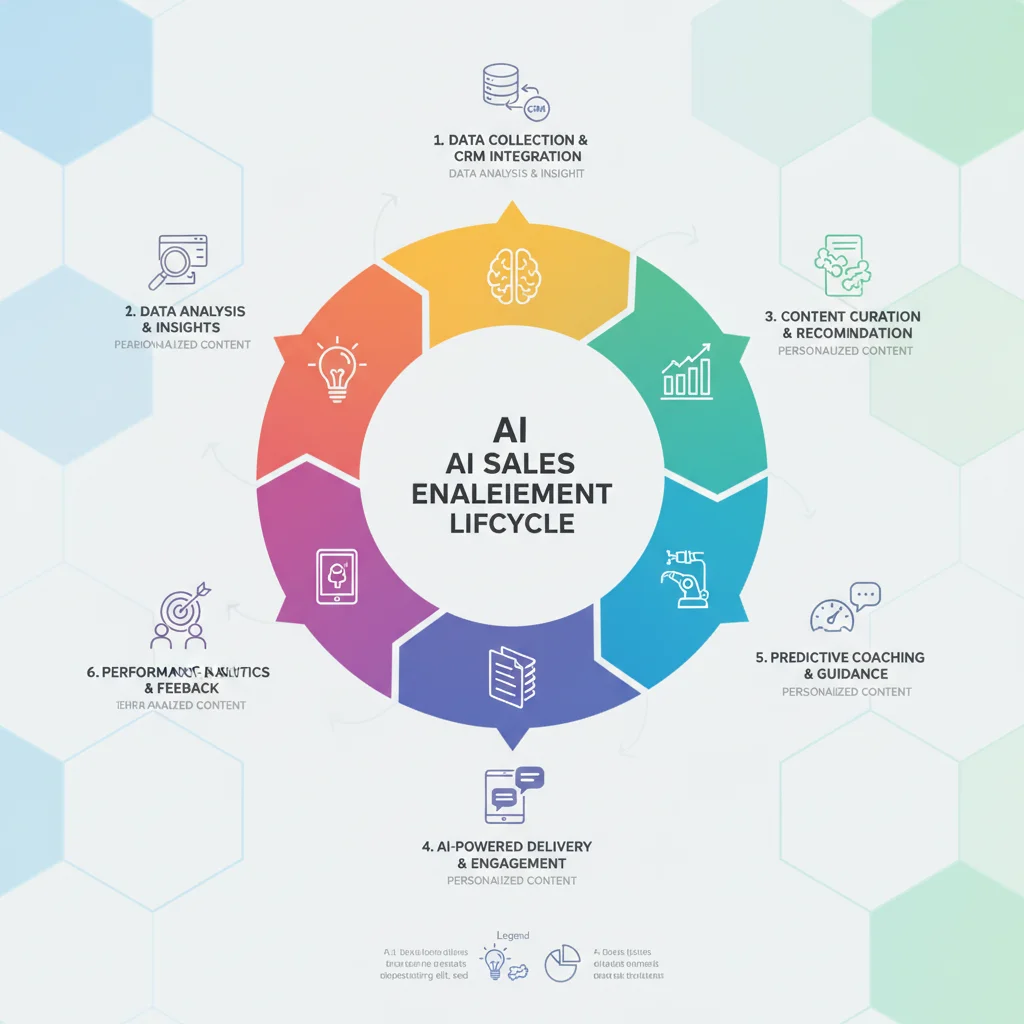
The core promise of AI sales enablement lies in its ability to transform raw data into actionable insights, automate mundane tasks, and personalize interactions at scale. Historically, sales enablement focused on providing reps with the right content, training, and tools. While these fundamentals remain crucial, AI amplifies their impact by making them smarter, more targeted, and significantly more efficient. Imagine a world where every sales rep has a virtual co-pilot, guiding them through every stage of the sales cycle with data-backed recommendations and predictive intelligence. This isn’t a futuristic fantasy; it’s the reality rapidly unfolding.
For sales leaders, the question is no longer "if" to adopt AI, but "how" to strategically implement it to maximize returns. The 20% performance boost by 2026 is an ambitious yet achievable goal, rooted in the exponential growth of AI capabilities and its increasingly sophisticated application within sales workflows. This article will unpack the essential components of an AI-driven sales enablement strategy, highlight recent innovations, and provide a roadmap for organizations to harness the full potential of AI.
The Foundation of AI Sales Enablement: Understanding the Core Pillars
At its heart, AI sales enablement is built upon several foundational pillars that collectively drive enhanced performance. Understanding these pillars is crucial for designing and implementing an effective strategy.
Data-Driven Insights and Predictive Analytics
The ability of AI to process vast quantities of data far surpasses human capacity. In sales, this translates into identifying patterns, predicting customer behavior, and forecasting sales outcomes with remarkable accuracy. AI algorithms can analyze historical sales data, customer interactions, market trends, and even competitor activities to provide reps with insights into:
- Prospect Prioritization: AI can score leads based on their likelihood to convert, helping reps focus their efforts on the most promising opportunities. This moves beyond basic lead scoring to dynamic, real-time assessments.
- Next Best Actions: Based on the current stage of a deal and the prospect’s engagement, AI can recommend the most effective next steps, whether it’s a specific email, a follow-up call, or a piece of content.
- Churn Prediction: For existing customers, AI can identify early warning signs of potential churn, allowing account managers to proactively intervene and strengthen relationships.
The predictive power of AI significantly reduces guesswork, enabling reps to make more informed decisions and allocate their time more strategically. This is a direct contributor to the projected 20% performance increase.
Intelligent Content Management and Personalization
Content is the lifeblood of sales enablement, but finding the right content at the right time can be a significant challenge for reps. AI revolutionizes content management by:
- Dynamic Content Recommendations: AI platforms can analyze the context of a sales conversation, the prospect’s industry, role, and expressed interests to recommend the most relevant sales collateral, case studies, or whitepapers. This ensures reps always have access to the most impactful materials.
- Personalized Content Creation: Advanced AI tools can assist in personalizing existing content templates, tailoring messages and visuals to resonate specifically with individual prospects, improving engagement rates.
- Content Performance Analytics: AI tracks which content performs best at different stages of the sales cycle, providing valuable feedback to marketing and enablement teams for continuous optimization.
By making content more accessible, relevant, and personalized, AI empowers reps to deliver compelling messages that truly connect with prospects, accelerating the sales cycle.
Automated Coaching and Training
Coaching is paramount for rep development, but traditional methods are often time-consuming and difficult to scale. AI offers innovative solutions for automated and personalized coaching:
- Conversation Intelligence: AI analyzes sales calls and meetings, identifying keywords, sentiment, talk-to-listen ratios, and adherence to sales scripts. It then provides reps with immediate feedback on their performance and suggestions for improvement.
- Personalized Learning Paths: Based on a rep’s performance data and identified skill gaps, AI can recommend specific training modules, courses, or practice exercises to address weaknesses.
- Role-Playing Simulations: AI-powered virtual role-playing allows reps to practice their pitches and objection handling in a safe environment, receiving instant, objective feedback.
This intelligent coaching mechanism ensures continuous improvement for every rep, fostering a culture of learning and refinement that directly impacts sales outcomes.
Recent Updates and Innovations in AI Sales Enablement (2024-2025)
The pace of innovation in AI is blistering, and the sales enablement sector is a prime beneficiary. The period leading up to 2026 has seen significant advancements that are shaping the current and future landscape.
Generative AI for Content Creation and Personalization
The rise of generative AI models (like GPT-4 and beyond) has been a game-changer. These models are now being integrated into sales enablement platforms to:
- Draft Personalized Emails and Messages: AI can generate highly personalized outreach emails, follow-up messages, and even LinkedIn connection requests, saving reps significant time and ensuring consistent messaging.
- Summarize Meetings and Key Takeaways: After a sales call, AI can automatically transcribe, summarize, and extract key action items, ensuring no crucial information is lost and follow-ups are prompt.
- Create Dynamic Sales Presentations: AI can help reps quickly assemble customized presentations by pulling relevant slides and data points based on prospect profiles and discussion points.
This capability dramatically reduces the manual effort involved in content creation and personalization, allowing reps to focus more on strategic selling activities.
Enhanced CRM Integration and Workflow Automation
AI’s value is maximized when it seamlessly integrates with existing sales tools, especially CRM systems. Recent updates focus on deeper integration and more sophisticated workflow automation:
- Automated Data Entry and CRM Updates: AI can automatically log call details, update contact information, and progress deals through the pipeline based on email interactions and meeting outcomes, minimizing administrative burden.
- Intelligent Task Prioritization: AI can analyze the urgency and impact of various tasks in a rep’s queue, helping them prioritize activities that will have the biggest impact on their pipeline.
- Seamless Handoffs: From marketing to sales, or sales to customer success, AI ensures that all relevant context and data are transferred efficiently, preventing information silos and improving customer experience.
These integrations make AI sales enablement an invisible yet powerful force, streamlining operations and freeing up reps to sell.
Advanced Sales Forecasting and Pipeline Management
While predictive analytics has been a part of sales for some time, AI is taking it to new heights. By 2026, expect even more sophisticated models that factor in a wider array of variables:
- Hyper-accurate Forecasts: AI models can now incorporate macroeconomic indicators, competitor activities, and even social media sentiment into their forecasts, leading to more reliable revenue predictions.
- Risk Assessment for Deals: AI can identify potential roadblocks or risks within specific deals, providing early warnings and suggesting strategies to mitigate them.
- Optimal Resource Allocation: Based on pipeline health and forecasts, AI can help sales leaders allocate resources (e.g., additional coaching, specialized support) to deals or reps where they will have the greatest impact.
This level of foresight allows sales organizations to be more agile and proactive in managing their pipelines, directly contributing to hitting and exceeding sales targets.
Strategies for Implementing AI in Sales Enablement for a 20% Performance Boost by 2026
Achieving a 20% boost in rep performance through AI sales enablement requires a strategic, phased approach. It’s not about deploying a single tool, but rather integrating AI across the entire sales ecosystem.
1. Start with a Clear Vision and Defined KPIs
Before implementing any AI solution, define what success looks like. What specific aspects of rep performance do you want to improve? Is it conversion rates, average deal size, sales cycle length, or rep ramp-up time? Establish clear, measurable Key Performance Indicators (KPIs) that directly link to your 20% performance goal. For example:
- Increase lead-to-opportunity conversion by X%
- Reduce sales cycle length by Y days
- Improve average deal size by Z%
This clarity will guide your AI investments and allow you to accurately measure ROI.
2. Prioritize Data Quality and Integration
AI is only as good as the data it’s fed. Invest in cleaning, structuring, and integrating your sales data across all platforms (CRM, marketing automation, customer service). Ensure data consistency and accuracy. A unified data source is critical for AI algorithms to generate reliable insights and recommendations.
3. Phased Implementation and Pilot Programs
Don’t try to implement everything at once. Start with pilot programs focusing on specific pain points or areas where AI can deliver immediate, measurable impact. For example:
- Pilot an AI-powered content recommendation engine with a small team.
- Test conversation intelligence tools for sales call analysis with a group of new hires.
Learn from these pilots, gather feedback, and iterate before scaling to the entire organization.
4. Focus on Rep Adoption and Training
Technology adoption is often the biggest hurdle. Ensure your sales reps understand the "why" behind AI tools – how they will make their jobs easier, more efficient, and ultimately more successful. Provide comprehensive training, ongoing support, and clearly demonstrate the benefits. AI should augment, not replace, the human element of sales.
5. Continuous Optimization and Feedback Loops
AI models require continuous training and refinement. Establish feedback loops where sales reps can provide input on the accuracy and usefulness of AI recommendations. Regularly review AI-generated insights against actual sales outcomes and adjust algorithms as needed. The 20% performance boost isn’t a one-time achievement but an ongoing journey of optimization.
The Human Element: How AI Empowers, Not Replaces, Sales Reps
A common misconception is that AI will replace sales reps. In reality, AI sales enablement is designed to empower reps, freeing them from mundane tasks and allowing them to focus on what they do best: building relationships, understanding complex customer needs, and closing deals. By automating administrative work, providing intelligent insights, and personalizing interactions, AI elevates the role of the sales professional.
- More Time for Selling: Reps spend less time on data entry, searching for content, or crafting generic emails, and more time engaging with prospects.
- Smarter Conversations: Armed with AI-driven insights, reps can have more relevant, value-driven conversations that address specific customer pain points.
- Improved Confidence: Knowing they have AI backing their decisions and providing the best resources boosts rep confidence and effectiveness.
- Faster Skill Development: Personalized AI coaching accelerates the learning curve for new reps and helps experienced reps hone their skills.
The synergy between human intuition and AI intelligence is the key to achieving and exceeding the 20% performance increase.

Challenges and Considerations for 2026
While the benefits of AI sales enablement are immense, organizations must also be aware of potential challenges and considerations as they plan for 2026.
Data Privacy and Security
The use of AI involves extensive data collection and analysis. Ensuring compliance with data privacy regulations (e.g., GDPR, CCPA) and maintaining robust cybersecurity measures is paramount. Transparency with customers about data usage is also crucial for building trust.
Ethical AI and Bias
AI algorithms can inherit biases present in the training data, leading to potentially unfair or discriminatory outcomes. Organizations must actively work to identify and mitigate biases in their AI models, ensuring fair and equitable treatment of all prospects and customers.
Integration Complexity
Integrating various AI tools with existing CRM, marketing automation, and other sales tech stack components can be complex. Choosing platforms that offer robust APIs and seamless integration capabilities is essential to avoid fragmented systems.
Talent Gap
While AI empowers existing reps, there will be a growing need for sales enablement professionals who understand AI, data science, and change management. Investing in upskilling existing teams and attracting new talent with these specialized skills will be critical.
The Future Outlook: Beyond 2026
The journey of AI sales enablement doesn’t stop at 2026. Looking further into the future, we can anticipate even more transformative developments:
- Autonomous Sales Agents: While human reps will always be crucial for complex deals, AI might handle more transactional sales autonomously, from lead qualification to closing simple deals.
- Hyper-Personalized Buying Experiences: AI will enable companies to create truly bespoke buying journeys, anticipating needs and delivering solutions before customers even articulate them.
- Emotional AI for Sales: Advanced AI could analyze emotional cues in conversations (through voice and facial recognition) to help reps tailor their approach in real-time.
- Predictive Market Intelligence: AI will move beyond just individual sales to provide broader market intelligence, helping organizations identify new opportunities and adapt to market shifts with unprecedented speed.
The continuous evolution of AI promises an even more dynamic and efficient sales environment, pushing the boundaries of what’s possible in sales effectiveness.
Conclusion: Embracing AI for a Competitive Edge in Sales
The imperative to leverage AI sales enablement for a significant boost in rep performance by 2026 is clear. Organizations that strategically adopt and integrate AI into their sales processes will gain a decisive competitive advantage, not just in efficiency but in their ability to understand and serve customers at a deeper level.
By focusing on data-driven insights, intelligent content, automated coaching, and seamless integration, sales leaders can equip their teams with the tools necessary to achieve and surpass the ambitious goal of a 20% performance increase. The future of sales is intelligent, personalized, and highly efficient, and AI is the engine driving this transformation. Embrace it, and empower your sales team to reach new heights of success.
The path to 2026 is paved with innovation. By understanding the core pillars of AI sales enablement, staying abreast of recent updates, and implementing a strategic roadmap, businesses can ensure their sales force is not just ready for the future, but actively shaping it.