
The 3 Latest AI Tools Transforming Digital Sales & Customer Service in the US: Recent Updates, Comparison, and Analysis
In today’s hyper-competitive and ever-evolving business landscape, particularly within the dynamic US market, leveraging cutting-edge technology is no longer an option but a necessity. Artificial Intelligence (AI) has emerged as a game-changer, fundamentally reshaping how businesses approach digital sales and customer service. The integration of AI tools digital sales strategies and customer support operations has led to unprecedented levels of efficiency, personalization, and customer satisfaction. This comprehensive article delves into the three latest and most impactful AI tools that are currently revolutionizing these critical business functions across the United States. We will explore their recent updates, conduct a detailed comparison of their features and benefits, and provide an in-depth analysis to help businesses make informed decisions.
The acceleration of digital transformation, spurred by global events and changing consumer behaviors, has placed immense pressure on companies to deliver seamless, instant, and personalized experiences. Traditional sales and customer service models often struggle to keep pace with these demands. This is where AI steps in, offering scalable, intelligent solutions that can automate routine tasks, analyze vast amounts of data, predict customer needs, and even facilitate complex interactions. From enhancing lead generation and qualification to providing 24/7 personalized support, AI tools digital sales and customer service platforms are becoming indispensable assets for businesses aiming to thrive in the modern economy.
Our focus today is on identifying and dissecting the top three AI innovations that are making significant waves in the US market. These tools represent the pinnacle of AI development in this sector, each bringing unique strengths and functionalities. We’ll look at how they’ve evolved recently, what sets them apart, and ultimately, how they can empower your organization to achieve superior sales performance and unparalleled customer loyalty.
The AI Revolution in Digital Sales and Customer Service
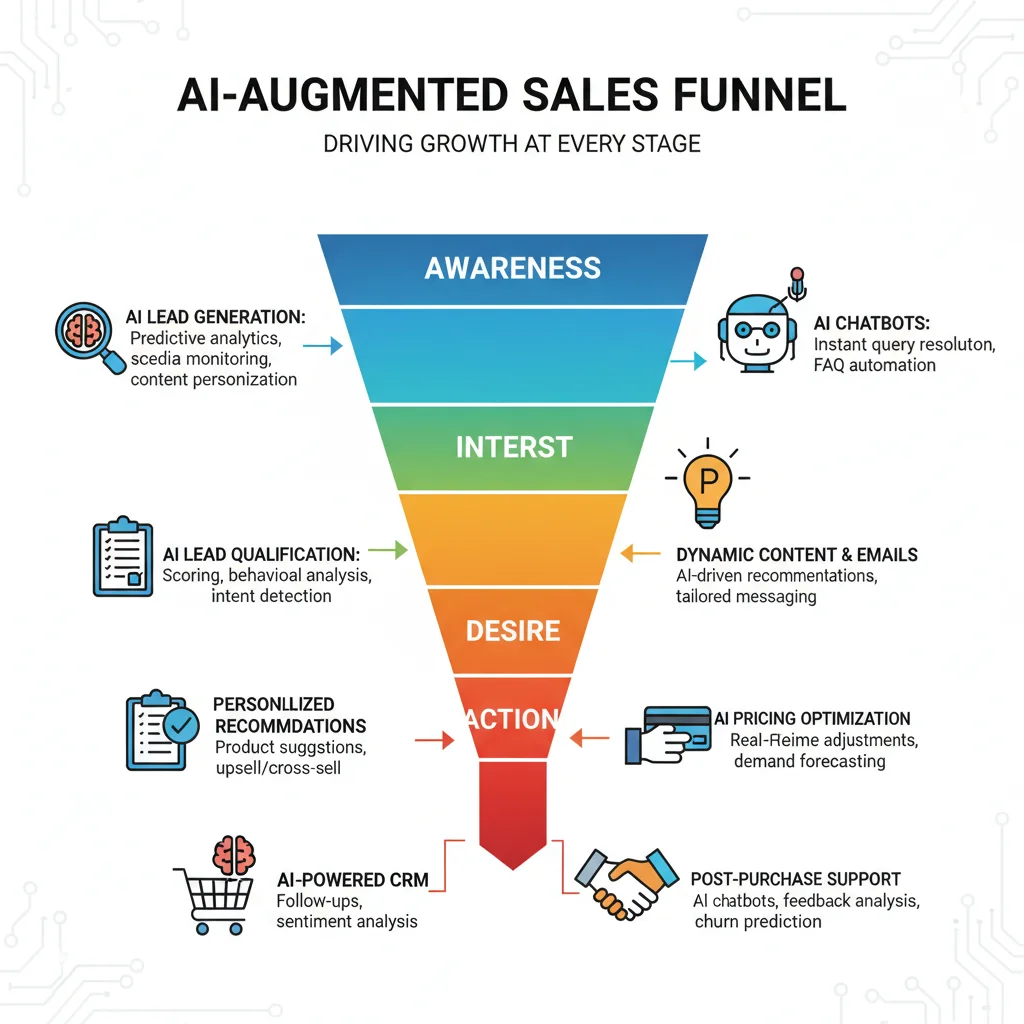
Before we dive into the specifics of each tool, it’s crucial to understand the broader impact of AI on digital sales and customer service. AI is not merely about automation; it’s about intelligent automation, predictive analytics, and hyper-personalization. For digital sales, AI can transform the entire sales funnel, from identifying high-potential leads to optimizing pricing strategies and closing deals more efficiently. In customer service, AI-powered solutions can handle a massive volume of inquiries, provide instant resolutions, and even proactively address potential issues, thereby freeing up human agents to focus on more complex and empathetic interactions.
Key Areas Where AI Excels:
- Lead Generation and Qualification: AI algorithms can analyze vast datasets to identify potential leads, score them based on propensity to convert, and even predict the best time to engage.
- Personalized Marketing and Sales: By understanding individual customer preferences and behaviors, AI enables highly targeted marketing campaigns and personalized product recommendations, significantly increasing conversion rates.
- Automated Customer Support: Chatbots and virtual assistants powered by natural language processing (NLP) can answer common questions, guide customers through processes, and resolve issues 24/7.
- Predictive Analytics: AI can forecast customer churn, anticipate product demand, and identify upselling or cross-selling opportunities, allowing businesses to act proactively.
- Sentiment Analysis: AI tools can gauge customer emotions from text and speech, enabling businesses to respond appropriately and improve overall customer experience.
- Sales Forecasting and Optimization: AI provides more accurate sales forecasts by analyzing historical data, market trends, and external factors, leading to better resource allocation and strategy development.
The US market, with its diverse consumer base and advanced technological infrastructure, is particularly ripe for AI adoption in these domains. Businesses that embrace these AI tools digital sales and customer service solutions are not just gaining a competitive edge; they are fundamentally redefining their operational paradigms.
Tool 1: Salesforce Einstein AI – The Intelligent CRM Companion
Salesforce Einstein AI stands as a formidable leader in the realm of intelligent CRM, seamlessly integrating AI capabilities across the entire Salesforce platform. It’s designed to make every customer interaction smarter and more personalized, empowering sales, service, and marketing teams with actionable insights. Einstein AI leverages machine learning, natural language processing, and predictive analytics to automate tasks, discover insights, and recommend next best actions.
Recent Updates and Enhancements:
- Einstein GPT: A significant recent update introduces generative AI capabilities, allowing users to automatically generate personalized content for sales emails, service responses, and marketing copy. This dramatically reduces manual effort and ensures consistent brand messaging.
- Enhanced Predictive Lead Scoring: Latest iterations offer more accurate lead scoring models by incorporating a wider array of data points, helping sales teams prioritize leads with the highest conversion potential.
- Service Cloud Voice with Einstein: Improved integration with voice channels, enabling real-time transcription, sentiment analysis during calls, and automated knowledge article suggestions for service agents, leading to faster resolution times.
- Personalized Product Recommendations: For e-commerce and sales, Einstein continues to refine its recommendation engine, offering highly relevant product suggestions based on browsing history, purchase patterns, and similar customer behavior.
- Automated Data Discovery: New features allow Einstein to automatically identify key trends and anomalies within large datasets, presenting them in an easy-to-understand format for business users.
How it Transforms Digital Sales and Customer Service:
For digital sales, Einstein AI acts as a virtual assistant, automating data entry, providing insights into customer behavior, and suggesting optimal sales paths. It helps sales reps focus on selling by taking over administrative tasks and offering data-driven recommendations. Imagine a salesperson receiving an alert that a specific lead is highly likely to convert today, along with a suggested email template tailored to their recent interactions – that’s Einstein at work.
In customer service, Einstein elevates the agent experience by providing them with a 360-degree view of the customer, predicting issues before they arise, and offering real-time solutions. Chatbots powered by Einstein can handle routine inquiries, escalating complex cases to human agents with all necessary context. This ensures customers receive consistent, efficient, and personalized support, significantly boosting satisfaction and loyalty. The ability of AI tools digital sales and service platforms like Einstein to learn and adapt makes them incredibly powerful.
Tool 2: HubSpot Service Hub with AI – Unified CX Excellence
HubSpot’s Service Hub has long been a favorite for businesses looking to centralize their customer service operations. With recent AI integrations, it has evolved into a powerhouse for delivering exceptional customer experiences (CX). HubSpot’s AI focuses on streamlining support processes, empowering agents, and providing self-service options, all while maintaining a human touch.
Recent Updates and Enhancements:
- AI-Powered Chatbots and Live Chat: HubSpot has significantly enhanced its chatbot capabilities, allowing for more sophisticated conversation flows, seamless handoffs to human agents, and personalized responses based on CRM data.
- Knowledge Base AI: Improved AI algorithms help in automatically suggesting relevant knowledge base articles to customers and agents, reducing resolution times and encouraging self-service.
- Service Analytics and Reporting: AI-driven insights provide deeper understanding into service performance, identifying common issues, agent efficiency, and customer satisfaction trends.
- Ticket Automation with AI: New features enable intelligent routing of tickets to the most appropriate agent or team, and automated responses for frequently asked questions, drastically improving response times.
- Customer Feedback Analysis: AI tools within Service Hub can now analyze customer feedback from surveys and interactions to identify key themes and areas for improvement, turning raw data into actionable insights for enhancing the customer journey.
How it Transforms Digital Sales and Customer Service:
While Service Hub primarily focuses on customer service, its seamless integration with HubSpot’s Sales Hub and Marketing Hub means its AI enhancements indirectly boost digital sales. By providing superior customer service, businesses cultivate loyalty, which in turn leads to repeat purchases and positive word-of-mouth – powerful drivers of digital sales. The ability to quickly resolve customer issues and provide proactive support ensures that customers remain engaged and satisfied throughout their journey.

For customer service teams, HubSpot’s AI acts as a force multiplier. It automates repetitive tasks, allowing agents to dedicate more time to complex and empathetic customer interactions. The AI-powered knowledge base reduces the need for agents to constantly search for information, while intelligent routing ensures customers are connected with the right expert immediately. This holistic approach to CX, powered by AI tools digital sales and service integration, fosters a positive brand image and strengthens customer relationships.
Tool 3: Drift – Conversational AI for Sales and Marketing
Drift specializes in conversational AI, focusing on providing real-time, personalized experiences for website visitors and customers. It’s a powerful platform that blurs the lines between sales, marketing, and service by engaging prospects and customers through intelligent chatbots and live chat, often acting as the first point of contact for many businesses in the US.
Recent Updates and Enhancements:
- Generative AI for Conversation Design: Drift has incorporated generative AI to help businesses quickly create more natural and effective chatbot conversation flows, reducing the time and effort required for setup and optimization.
- Enhanced Account-Based Marketing (ABM) Capabilities: New AI features allow Drift to recognize key accounts and tailor conversations specifically for them, providing a VIP experience for high-value prospects.
- Proactive Engagement Triggers: Improved AI-driven triggers enable chatbots to proactively engage website visitors based on their behavior, such as time spent on a page or specific actions taken, leading to more timely and relevant interactions.
- Integrations with CRM and Sales Tools: Deeper and more seamless integrations with popular CRM systems (like Salesforce and HubSpot) and sales engagement platforms ensure that all conversational data enriches existing customer records and sales workflows.
- Voice AI for Sales Meetings: While primarily chat-based, Drift has been exploring and integrating voice AI capabilities to analyze sales calls, identify key moments, and provide coaching insights, further enhancing the sales process.
How it Transforms Digital Sales and Customer Service:
Drift’s strength lies in its ability to qualify leads and book meetings almost autonomously, significantly speeding up the sales cycle. Its chatbots can engage website visitors 24/7, answer questions, identify their needs, and even schedule demos with sales reps, all without human intervention until absolutely necessary. This ‘always-on’ sales assistant model is incredibly effective for businesses operating in the fast-paced US market.
For customer service, Drift provides immediate support, answering frequently asked questions and guiding customers to relevant resources. If an issue requires human intervention, the chatbot seamlessly hands off the conversation to a live agent, providing them with the full chat history. This ensures a smooth and efficient support experience, reducing customer frustration and improving resolution times. The focus on real-time, personalized conversations makes Drift a standout among AI tools digital sales and support solutions.
Comparison and Analysis: Salesforce Einstein vs. HubSpot Service Hub vs. Drift
While all three tools leverage AI to enhance digital sales and customer service, they each have distinct strengths and target audiences. Understanding these differences is key to selecting the right solution for your business.
Salesforce Einstein AI: The Enterprise Powerhouse
- Strengths: Deep integration across the entire Salesforce ecosystem (Sales, Service, Marketing Clouds), highly customizable, robust predictive analytics, strong for large enterprises with complex needs. Its generative AI capabilities are cutting-edge.
- Best For: Large enterprises and businesses already heavily invested in the Salesforce platform that require a comprehensive, integrated AI solution across all customer-facing functions.
- Considerations: Can be complex to implement and manage for smaller businesses; pricing can be significant.
HubSpot Service Hub with AI: The Integrated CX Champion
- Strengths: User-friendly interface, excellent integration within the HubSpot ecosystem (CRM, Sales, Marketing), strong focus on unified customer experience, good for businesses scaling their service operations.
- Best For: Mid-sized businesses and growing companies that value an all-in-one platform for sales, marketing, and customer service, and prefer a more intuitive user experience.
- Considerations: While powerful, its AI might not be as deeply specialized in certain areas as dedicated AI platforms; scalability for extremely large enterprises might require custom solutions.
Drift: The Conversational AI Specialist
- Strengths: Unparalleled conversational AI for lead qualification and sales enablement, excellent for real-time website engagement, strong ABM capabilities, highly effective at booking meetings.
- Best For: Businesses focused on accelerating their sales cycle, improving lead conversion from website traffic, and providing instant, personalized engagement for prospects and customers. Ideal for B2B companies.
- Considerations: Primarily focused on conversational interfaces; while it integrates with CRMs, it’s not a full-suite CRM itself.
Key Differentiators in the US Market:
In the US market, where customer expectations are high and competition is fierce, the nuances of these tools become even more important:
- Scalability and Integration: Salesforce Einstein excels in catering to large, complex organizations that need AI across multiple departments and have significant integration requirements. HubSpot provides a more streamlined, integrated experience for growing businesses. Drift shines in its focused, real-time conversational engagement.
- Focus Area: While all touch on sales and service, Einstein is an AI layer across a broad CRM, HubSpot integrates AI into its unified CX platform, and Drift is a specialized conversational AI platform primarily for sales and marketing acceleration.
- Ease of Use vs. Customization: HubSpot generally offers a more out-of-the-box, user-friendly experience. Salesforce Einstein, while powerful, often requires more configuration and expertise. Drift balances ease of setup with powerful customization for conversations.
The Future of Digital Sales and Customer Service with AI
The trajectory of AI tools digital sales and customer service is one of continuous innovation. We can expect even more sophisticated AI capabilities in the near future:
- Hyper-Personalization at Scale: AI will enable businesses to deliver truly one-to-one experiences for millions of customers simultaneously, making every interaction feel unique and highly relevant.
- Proactive and Predictive Service: AI will move beyond reactive support to proactively identify and resolve potential customer issues before they even arise, leading to a new era of ‘no-touch’ customer service.
- Emotional Intelligence: Future AI systems will likely be better at understanding and responding to human emotions, allowing for more empathetic and nuanced interactions, especially in customer service.
- Augmented Human Intelligence: AI will increasingly serve as a co-pilot for sales reps and service agents, providing real-time insights, suggestions, and automation that amplify human capabilities rather than replacing them entirely.
- Ethical AI and Trust: As AI becomes more pervasive, there will be a greater emphasis on developing ethical AI frameworks, ensuring transparency, fairness, and data privacy, which will be crucial for building customer trust in the US market.
Implementing AI Tools in Your US Business
For US businesses considering the adoption of these AI tools digital sales and customer service solutions, a strategic approach is essential:
- Assess Your Needs: Clearly define your pain points in sales and customer service. Are you struggling with lead qualification, slow response times, or agent burnout?
- Set Clear Objectives: What do you hope to achieve with AI? (e.g., ‘reduce customer churn by 15%’, ‘increase lead conversion by 10%’, ‘improve agent efficiency by 20%’).
- Start Small, Scale Big: Begin with a pilot program or implement AI in a specific area to test its effectiveness and gather insights before a full-scale rollout.
- Train Your Team: Ensure your sales and service teams are adequately trained to work alongside AI tools. Emphasize how AI will augment their roles, not replace them.
- Monitor and Optimize: AI is not a ‘set it and forget it’ solution. Continuously monitor its performance, gather feedback, and make adjustments to optimize its effectiveness.
- Data Quality is Key: The performance of AI tools is highly dependent on the quality of data they are fed. Invest in clean, accurate, and comprehensive data management.
The US market is particularly competitive, and businesses that fail to embrace these technological advancements risk falling behind. The judicious selection and implementation of the right AI tools digital sales and customer service platforms can be a significant differentiator.
Conclusion
The landscape of digital sales and customer service in the US is being profoundly transformed by AI. Salesforce Einstein AI, HubSpot Service Hub with AI, and Drift represent three of the most advanced and impactful tools driving this change. Each offers unique strengths, catering to different business sizes and strategic priorities, yet all share the common goal of enhancing efficiency, personalization, and customer satisfaction.
By understanding their recent updates, comparing their core functionalities, and analyzing their potential impact, businesses can make informed decisions about integrating these powerful technologies. The future of customer engagement and revenue generation lies in intelligent automation and data-driven insights that only AI can provide. Embracing these AI tools digital sales and customer service solutions is not just an investment in technology; it’s an investment in the future success and resilience of your business in the dynamic US market.
The journey towards an AI-powered future is continuous. Businesses that remain agile, adaptable, and committed to leveraging these innovations will be the ones that thrive, building stronger customer relationships and achieving unprecedented growth in the years to come.