Boost US Customer Satisfaction: Behavioral Economics CX Strategies

Unlocking 90% US Customer Satisfaction by 2026: The Power of Behavioral Economics in CX
In the fiercely competitive landscape of the United States market, achieving and sustaining high customer satisfaction is not merely a goal; it’s a strategic imperative. Businesses are constantly seeking innovative methodologies to understand, engage, and ultimately delight their customers. While traditional customer experience (CX) strategies have their merits, a deeper, more nuanced approach is emerging as a game-changer: the application of behavioral economics in CX. This powerful interdisciplinary field, blending psychology and economics, offers profound insights into how and why customers make decisions, enabling businesses to ‘nudge’ them towards more satisfying interactions and outcomes. Our ambitious target? To help US businesses reach an unparalleled 90% customer satisfaction rate by 2026 through the strategic deployment of behavioral economics principles.
The journey to 90% customer satisfaction is paved with understanding human irrationality, cognitive biases, and the subtle triggers that shape customer perceptions and behaviors. It’s about moving beyond simply meeting expectations to proactively shaping them, creating experiences that resonate on a deeper, often subconscious, level. This comprehensive guide will delve into the core tenets of behavioral economics, elucidate its direct applications in enhancing CX for the US demographic, and provide actionable strategies to implement these insights effectively.
What is Behavioral Economics and Why is it Crucial for US CX?
At its heart, behavioral economics challenges the traditional economic assumption that individuals are always rational decision-makers. Instead, it posits that human choices are often influenced by cognitive biases, heuristics, emotions, and social contexts. For businesses operating in the diverse and dynamic US market, understanding these underlying psychological mechanisms is not just an academic exercise; it’s a critical tool for crafting superior customer experiences.
Consider the typical US customer journey: from initial awareness and consideration to purchase, usage, and post-purchase support. At every touchpoint, customers are making decisions, forming perceptions, and evaluating their experience. These evaluations are rarely purely logical. They are colored by their previous experiences, their current emotional state, the way information is presented, and even the choices of others around them. This is where behavioral economics in CX truly shines, offering a scientific framework to predict and influence these behaviors ethically and effectively.
The US market is unique due to its vast size, cultural nuances, and high consumer expectations. American consumers are often characterized by their demand for convenience, personalization, and seamless interactions. They are also highly susceptible to social proof, urgency, and the desire for instant gratification. By leveraging behavioral economics, companies can design CX strategies that tap into these inherent tendencies, creating experiences that feel intuitive, rewarding, and ultimately, highly satisfying.
Key Behavioral Economics Principles for Elevating Customer Satisfaction
To effectively apply behavioral economics in CX, it’s essential to grasp some of its fundamental principles:
1. Nudging and Choice Architecture
Coined by Richard Thaler and Cass Sunstein, ‘nudging’ refers to subtle interventions that steer people towards certain choices without restricting their freedom. In CX, this means designing the environment in which customers make decisions (choice architecture) to encourage desired behaviors. For instance, pre-selecting the most popular or environmentally friendly option, or strategically placing calls to action, can significantly influence customer choices and satisfaction.
For US customers, who often value efficiency and clear paths, effective choice architecture can reduce decision fatigue and guide them to optimal solutions more quickly. Think of the default settings on a software product that anticipate user needs, or the ‘recommended for you’ sections that leverage past behavior to streamline discovery.
2. Loss Aversion
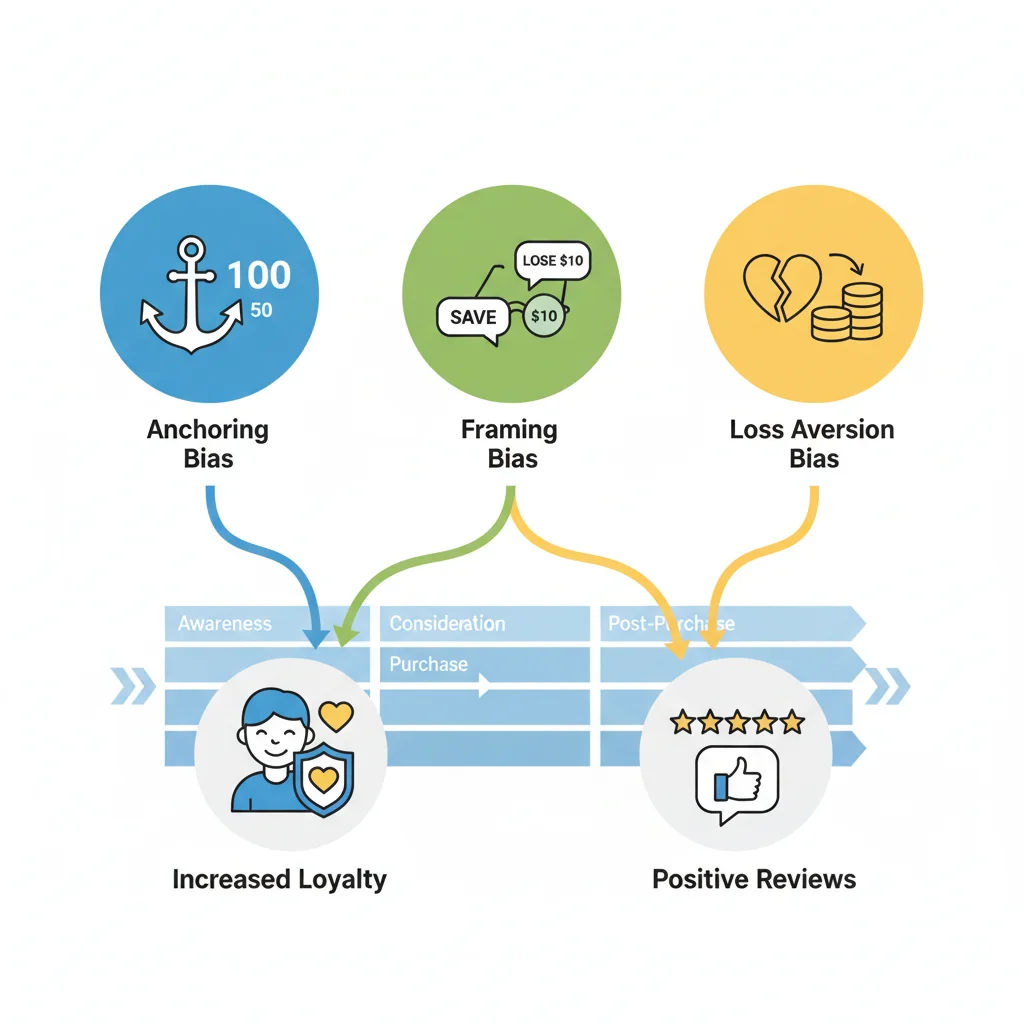
People tend to prefer avoiding losses over acquiring equivalent gains. This powerful bias means that the pain of losing $100 is psychologically more impactful than the pleasure of gaining $100. In CX, this can be leveraged by emphasizing what customers might lose by not taking a particular action (e.g., missing out on a limited-time offer, losing accumulated loyalty points) rather than solely focusing on the gains.
In the US, where consumer culture often emphasizes value and getting the most for one’s money, highlighting potential losses, such as expiring benefits or opportunities, can be a strong motivator for engagement and retention. This principle is particularly effective in loyalty programs and subscription models.
3. Anchoring and Framing
Anchoring refers to our tendency to rely heavily on the first piece of information offered (the ‘anchor’) when making decisions. Framing, on the other hand, is how information is presented, which can significantly impact perception. For example, presenting a product as ‘95% fat-free’ sounds more appealing than ‘5% fat,’ even though they convey the same information.
For US consumers, who are constantly bombarded with information, the initial anchor and the way an offer is framed can be critical. Highlighting an original, higher price before a discount (anchoring) makes the deal seem more attractive. Similarly, framing a premium service in terms of the value it adds rather than just its cost can justify a higher price point.
4. Social Proof
Humans are social creatures and often look to the actions and opinions of others to guide their own. This is the essence of social proof. In CX, this translates to leveraging testimonials, reviews, ratings, and endorsements to build trust and encourage purchases or engagement.
Given the prevalence of online reviews and social media in the US, social proof is an incredibly potent tool. Displaying high ratings, featuring customer success stories, or showing how many others have purchased an item can significantly boost confidence and satisfaction among potential customers. This collective validation is a cornerstone of digital commerce.
5. Reciprocity
The principle of reciprocity dictates that when someone does something for us, we feel an obligation to return the favor. In a CX context, this means offering value, assistance, or a pleasant surprise to customers can foster a sense of obligation and encourage loyalty or positive actions.
This could involve providing unexpected free samples, offering personalized recommendations without immediate purchase pressure, or going above and beyond in customer service. Such acts of goodwill can profoundly impact US customer sentiment, leading to increased satisfaction and a willingness to reciprocate with continued business or positive reviews.
6. Scarcity and Urgency
When something is perceived as scarce or available for a limited time, its perceived value increases. This psychological trigger can motivate immediate action. ‘Only 3 left in stock!’ or ‘Offer ends tonight!’ are classic examples.
In the fast-paced US consumer environment, scarcity and urgency can be highly effective in driving conversions and reducing procrastination. However, it’s crucial to use these ethically and genuinely to maintain trust, as overuse or false scarcity can backfire and harm long-term customer relationships.
Implementing Behavioral Economics for a 90% CX Satisfaction Rate in the US by 2026
Achieving a 90% customer satisfaction rate by 2026 requires a systematic, data-driven approach to integrating behavioral economics in CX. Here’s a roadmap:
1. Comprehensive Customer Journey Mapping with a Behavioral Lens
Begin by meticulously mapping out every touchpoint in the US customer journey. For each stage, identify the decisions customers make, their emotional states, and potential cognitive biases at play. Where might loss aversion influence a subscription renewal? How might anchoring affect perception of value? Where can social proof be introduced to build confidence?
This process should involve qualitative research (interviews, focus groups) to understand the ‘why’ behind customer behaviors, combined with quantitative data (web analytics, CRM data) to pinpoint ‘what’ is happening. Pay special attention to moments of friction or decision paralysis, as these are prime opportunities for behavioral interventions.
2. Personalization and Customization Driven by Behavioral Insights
US customers expect personalization. Behavioral economics takes this a step further by tailoring experiences based on predicted psychological responses. Instead of generic recommendations, use insights from past behavior to offer choices framed in a way that resonates with individual preferences and biases.
For example, customers who frequently abandon carts might be nudged with a limited-time discount (scarcity/urgency) or a reminder of items they might ‘lose’ by not completing the purchase (loss aversion). Personalization should feel helpful and intuitive, not intrusive.
3. Optimize Onboarding and First-Use Experiences
The initial experience heavily influences long-term satisfaction. Use behavioral principles to make onboarding seamless and rewarding. The endowment effect (valuing something more once you own it) suggests that getting customers to actively engage with a product or service early on can increase their perceived ownership and commitment.
Break down complex onboarding into smaller, manageable steps (chunking), provide immediate small wins (gamification), and use defaults that guide users toward success. For US users, clear instructions and a perception of quick value are paramount.
4. Strategic Communication and Messaging
The words and visuals used in communication are powerful nudges. Frame benefits positively, highlight what customers gain, but also subtly hint at what they might miss out on. Use social proof in marketing messages, such as ‘Join over a million satisfied US customers.’
Employ clear, concise language, and avoid jargon. For the US market, directness combined with a friendly, helpful tone often works best. Test different message framings to see which resonate most effectively with your target segments.
5. Proactive Problem Solving and Service Recovery
Even with the best intentions, issues arise. How a company handles these moments can profoundly impact satisfaction. The peak-end rule suggests that people remember the peak (most intense) and end of an experience most vividly. Therefore, resolving problems efficiently and ending interactions on a positive note is critical.
Leverage reciprocity by offering unexpected gestures of goodwill during service recovery. Use transparency and clear communication (framing) to manage expectations during delays or issues. Empowering customer service representatives to offer solutions that go above and beyond can turn a negative experience into a positive one, significantly boosting overall satisfaction.
6. Gamification and Rewards for Engagement
Introduce elements of game design into non-game contexts to drive engagement and satisfaction. This could involve points, badges, leaderboards, or progress bars. These leverage principles like immediate gratification, achievement, and social comparison.
For US consumers, who are often receptive to reward systems, gamification can make mundane tasks more enjoyable and encourage desired behaviors, such as completing profiles, referring friends, or trying new features. Ensure rewards are meaningful and align with customer values.
7. Leverage Defaults and Pre-selection Ethically
Defaults are incredibly powerful because they require no action. Pre-selecting options that are generally beneficial for the majority of US customers can increase satisfaction by simplifying choices and reducing effort. However, this must be done ethically, ensuring customers can easily opt-out if they prefer.
Examples include pre-ticking a box for email updates on relevant products (if beneficial to the customer) or pre-selecting a standard shipping option that balances speed and cost. The goal is to make the path of least resistance also the path of most satisfaction.
8. Continuous A/B Testing and Iteration
Behavioral economics is not a one-size-fits-all solution. What works for one segment or product might not work for another. Continuous A/B testing of different nudges, framings, and choice architectures is essential. Measure the impact of each intervention on key CX metrics like satisfaction scores, conversion rates, and retention.
The US market is dynamic, and consumer preferences evolve. Regular experimentation ensures that your behavioral CX strategies remain relevant and effective, propelling you towards the 90% satisfaction target.

Challenges and Ethical Considerations in Applying Behavioral Economics
While the potential of behavioral economics in CX is immense, businesses must navigate several challenges and ethical considerations:
1. Avoiding Manipulation
The line between nudging and manipulation can be thin. The goal of behavioral economics in CX should always be to guide customers towards choices that are genuinely beneficial for them and enhance their experience, not to trick them into actions that primarily benefit the company at the customer’s expense. Transparency and respect for customer autonomy are paramount.
2. Data Privacy and Trust
Applying behavioral insights often relies on understanding customer data. Businesses must be transparent about data collection and usage, adhering to all privacy regulations (e.g., CCPA, state-specific laws) and building trust. Any perception of misuse of data can quickly erode satisfaction and loyalty.
3. Cultural Nuances within the US Market
While we discuss the ‘US customer’ broadly, the United States is a melting pot of diverse cultures, regions, and demographics. What constitutes an effective nudge in one region or for one demographic might not work for another. Segmentation and localized testing are crucial to ensure behavioral interventions are culturally appropriate and effective across the diverse US landscape.
4. Measuring Impact Accurately
Attributing changes in satisfaction solely to behavioral interventions can be complex. It requires robust analytics, controlled experiments, and a deep understanding of other influencing factors. Clearly defined KPIs and a rigorous measurement framework are essential to prove the ROI of behavioral CX strategies.
The Road Ahead: Sustaining 90% Satisfaction with Behavioral Economics
Achieving a 90% customer satisfaction rate by 2026 for US customers is an ambitious yet attainable goal when grounded in the scientific principles of behavioral economics in CX. It requires a paradigm shift from simply reacting to customer needs to proactively shaping their experiences in psychologically informed ways. By understanding cognitive biases, leveraging nudges, and designing choice architectures that prioritize customer well-being and ease, businesses can create deeply satisfying and memorable interactions.
The future of customer experience in the US will undoubtedly be defined by those who master the subtle art and science of behavioral economics. Companies that invest in understanding the ‘why’ behind customer decisions, and then ethically apply these insights, will not only meet but exceed customer expectations, fostering unparalleled loyalty and driving sustainable growth. The journey to 90% satisfaction is not just about making customers happy; it’s about helping them make choices that lead to their own greater satisfaction, one intelligent nudge at a time.
Embrace behavioral economics, conduct rigorous testing, prioritize ethical application, and watch your US customer satisfaction metrics soar. The 2026 target is within reach for those willing to innovate and understand the human element at the core of every customer interaction.