Boost Q1 2026 Sales: 5 Sales Enablement Strategies for 15% Rep Productivity

As we approach the critical planning phase for Q1 2026, the imperative to not just meet but exceed sales targets becomes paramount. In today’s highly competitive landscape, simply working harder is often not enough; sales teams need to work smarter, armed with the right tools, knowledge, and support. This is where robust sales enablement strategies come into play. A well-executed sales enablement program can be the catalyst that transforms average performance into exceptional results, directly impacting your bottom line. Our goal for Q1 2026 is ambitious yet achievable: to increase sales rep productivity by a remarkable 15%. This article will delve into five core sales enablement strategies that are proven to drive such significant improvements.
Sales enablement is more than just providing sales materials; it’s a holistic approach to equipping sales professionals with everything they need to successfully engage buyers throughout the sales process. This includes content, training, coaching, processes, and technology. When these elements are strategically aligned and continuously optimized, the impact on sales productivity, revenue generation, and overall business growth is profound. Let’s explore how to achieve this ambitious 15% productivity boost.
Understanding the Core of Sales Enablement for Q1 2026 Success
Before diving into specific strategies, it’s crucial to solidify our understanding of what sales enablement truly entails. It’s not a one-time project but an ongoing organizational function designed to improve the effectiveness and efficiency of sales teams. For Q1 2026, our focus on sales enablement strategies must be laser-sharp, targeting areas that yield the highest return on investment in terms of rep productivity. This means moving beyond generic training to highly personalized and data-driven approaches.
Why a 15% Productivity Boost Matters
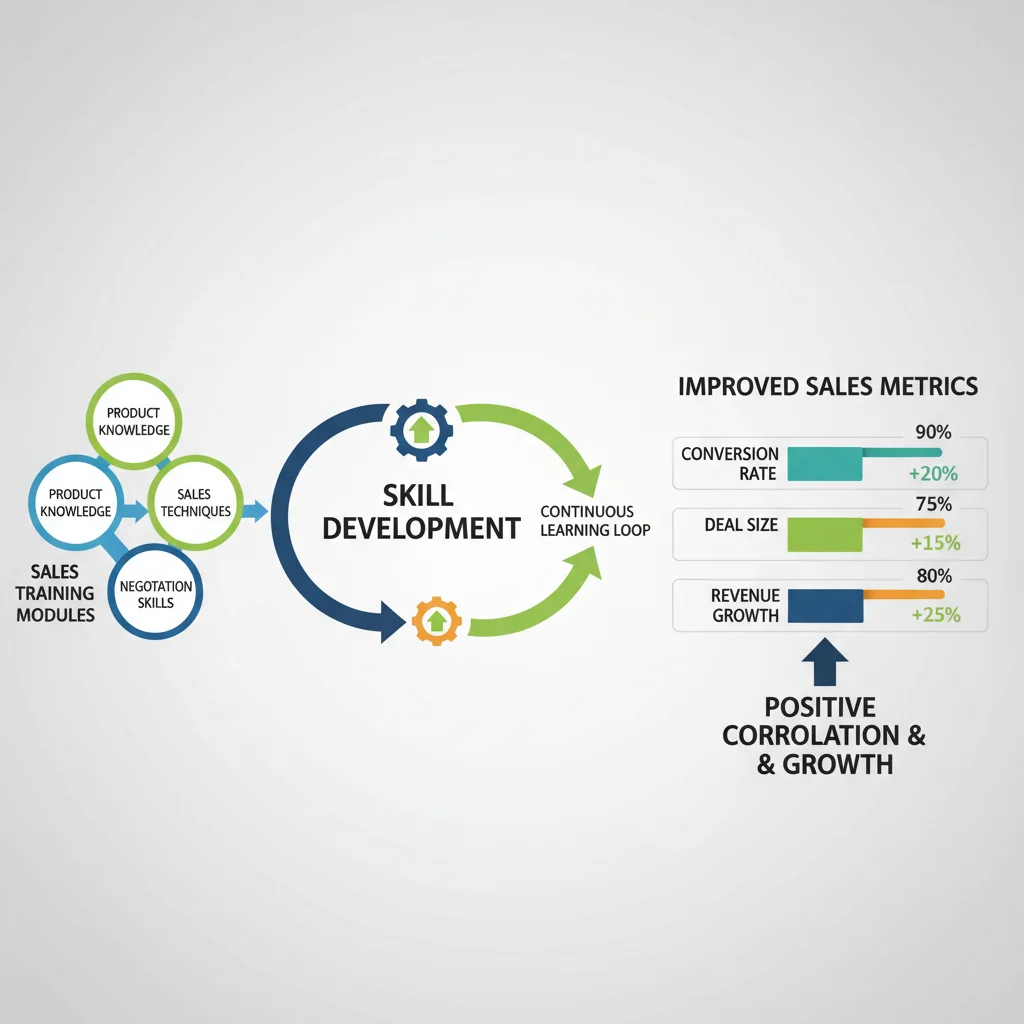
A 15% increase in sales rep productivity might seem like an aggressive target, but its impact on Q1 2026 revenue can be transformative. Imagine each salesperson closing 15% more deals, or reducing their sales cycle by 15%, or increasing their average deal size by 15%. These improvements compound rapidly, leading to substantial gains. This isn’t just about hitting a number; it’s about fostering a culture of continuous improvement, empowering your sales force, and ultimately, securing a stronger market position. Effective sales enablement strategies are the bedrock of achieving such ambitious goals.
The Evolving Sales Landscape and the Need for Adaptation
The sales environment is constantly evolving. Buyers are more informed than ever, sales cycles are becoming more complex, and competition is fierce. To thrive, sales organizations must continually adapt. Static sales processes and outdated materials are no longer sufficient. Modern sales enablement strategies must be agile, responsive, and predictive, anticipating buyer needs and equipping reps with the capabilities to meet them head-on. For Q1 2026, this means leveraging technology, data, and personalized approaches more than ever before.
Strategy 1: Hyper-Personalized Training and Continuous Coaching
One of the most impactful sales enablement strategies is moving beyond generic, one-size-fits-all training programs. To achieve a 15% productivity boost for Q1 2026, training must be hyper-personalized and supported by continuous, data-driven coaching. Each sales rep has unique strengths, weaknesses, and learning styles. A personalized approach acknowledges this diversity and tailors development plans accordingly.
Assessing Individual Needs and Skill Gaps
Start by conducting a thorough assessment of each sales rep’s current skills, knowledge, and performance metrics. Utilize tools like CRM data, call recordings, and one-on-one performance reviews to identify specific areas for improvement. Is a rep struggling with objection handling? Do they need to improve their product knowledge in a particular area? Are they effectively leveraging your CRM? These insights are crucial for developing targeted training modules.
Tailored Learning Paths and Content
Based on the assessments, create tailored learning paths. This could involve assigning specific online courses, recommending relevant content (e.g., case studies, whitepapers, competitive battlecards), or pairing reps with mentors who excel in their areas of weakness. The content should be easily accessible, bite-sized, and relevant to their daily activities. For Q1 2026, consider micro-learning modules that reps can complete quickly, reinforcing key concepts without disrupting their selling time.
The Power of Continuous Coaching
Training is effective only when reinforced by consistent coaching. Sales managers play a pivotal role here. They should be equipped with coaching frameworks and tools to provide constructive feedback, role-play challenging scenarios, and celebrate successes. Regular one-on-one coaching sessions, focused on specific performance metrics and skill development, are non-negotiable. Leverage call recording and AI-powered sales coaching tools to identify patterns and provide objective feedback. This continuous feedback loop is a cornerstone of effective sales enablement strategies.
Strategy 2: Optimized Sales Content and Asset Management
Sales reps spend a significant amount of time searching for or creating content. This is a major drain on productivity. One of the most effective sales enablement strategies to counter this is to optimize your sales content and implement a robust asset management system. For Q1 2026, our goal is to ensure reps have instant access to the right content, at the right time, for the right buyer, reducing non-selling activities and increasing engagement.
Auditing and Streamlining Existing Content
Begin by auditing all existing sales content. Identify what’s being used, what’s effective, and what’s outdated or redundant. Retire irrelevant content and update pieces that still hold value. Categorize content by buyer persona, sales stage, industry, and product. This structured approach makes content much easier to find and utilize. Focus on creating high-value content that addresses specific buyer pain points and showcases your unique value proposition.
Centralized, AI-Powered Content Repository
Implement a centralized content management system (CMS) or sales enablement platform that serves as a single source of truth for all sales assets. This platform should be easily searchable and ideally powered by AI to recommend relevant content based on CRM data (e.g., prospect industry, sales stage, previous interactions). This eliminates the need for reps to sift through countless folders and ensures they are always using the most up-to-date and effective materials. This is a critical component of modern sales enablement strategies.
Dynamic and Personalized Content Creation
Beyond static documents, consider investing in tools that allow for dynamic and personalized content creation. This could include interactive presentations, customizable proposals, or video testimonials tailored to specific prospects. Personalized content resonates more deeply with buyers, leading to higher engagement rates and faster deal progression. For Q1 2026, empower your reps to quickly adapt content to individual buyer needs without needing extensive design or marketing support.

Strategy 3: Leveraging Technology and Automation
Technology is a force multiplier in sales. To achieve a 15% boost in productivity for Q1 2026, integrating and optimizing sales technology is non-negotiable. The right tools can automate mundane tasks, provide valuable insights, and free up reps to focus on high-value selling activities. These technological advancements are at the heart of effective sales enablement strategies.
CRM Optimization and Integration
Your Customer Relationship Management (CRM) system is the central nervous system of your sales operation. Ensure it’s fully optimized and integrated with other sales tools (e.g., marketing automation, sales engagement platforms, content management systems). A well-maintained CRM provides a 360-degree view of the customer, streamlines workflows, and offers critical data for forecasting and performance analysis. Train reps thoroughly on how to leverage the CRM effectively, minimizing manual data entry and maximizing its analytical capabilities.
Sales Engagement Platforms (SEPs)
Sales Engagement Platforms (SEPs) are powerful tools for automating outreach, tracking engagement, and personalizing communications at scale. They allow reps to build multi-channel sequences (email, calls, social touches) and automate follow-ups, ensuring no lead falls through the cracks. SEPs also provide valuable analytics on email open rates, click-through rates, and reply rates, allowing reps to refine their messaging and improve their outreach effectiveness. Implementing and optimizing an SEP is a key pillar of modern sales enablement strategies.
AI-Powered Sales Tools
Artificial intelligence is rapidly transforming sales. AI can assist with lead scoring, predicting buyer behavior, transcribing and analyzing sales calls, and even generating personalized email drafts. By offloading repetitive or analytical tasks to AI, sales reps can dedicate more time to strategic thinking, relationship building, and closing deals. Explore AI tools that can provide real-time coaching during calls, identify key conversation topics, and suggest next best actions. For Q1 2026, embracing AI will be a significant differentiator in achieving higher productivity.
Strategy 4: Data-Driven Performance Analysis and Feedback Loops
You can’t improve what you don’t measure. To achieve a 15% productivity increase, sales enablement strategies must be rooted in rigorous data analysis and supported by continuous feedback loops. This involves tracking key performance indicators (KPIs), analyzing trends, and using these insights to refine processes and provide targeted support.
Identifying Key Performance Indicators (KPIs)
Beyond just revenue and closed deals, identify granular KPIs that directly correlate with sales rep productivity. These might include: call volume, email response rates, meeting scheduled rates, conversion rates at each sales stage, average deal size, sales cycle length, and content utilization. Track these metrics consistently and make them visible to reps and managers.
Regular Performance Reviews and Benchmarking
Conduct regular, data-driven performance reviews. Compare individual rep performance against benchmarks and identify areas where they are excelling or falling short. Use these reviews as opportunities for constructive feedback, goal setting, and identifying specific enablement needs. Benchmarking against top performers can also reveal best practices that can be replicated across the team.
Establishing Feedback Loops with Sales and Marketing
Effective sales enablement strategies require close collaboration between sales, marketing, and product teams. Establish formal feedback loops where sales reps can provide insights on content effectiveness, lead quality, product features, and market trends. This feedback is invaluable for marketing to create more relevant content, for product to develop features that address customer needs, and for enablement to refine training programs. This continuous cycle of feedback and improvement is vital for sustained productivity gains.
Strategy 5: Fostering a Culture of Collaboration and Knowledge Sharing
Individual productivity is amplified when reps operate within a supportive and collaborative environment. One often-overlooked yet incredibly powerful aspect of sales enablement strategies is fostering a culture of collaboration and knowledge sharing. For Q1 2026, we want to create an environment where reps learn from each other, share best practices, and collectively elevate the team’s performance.
Peer-to-Peer Learning and Mentorship Programs
Encourage peer-to-peer learning by creating opportunities for reps to share their successes, challenges, and innovative tactics. This could be through regular team meetings, dedicated internal forums, or even formal mentorship programs where experienced reps guide newer team members. Learning from peers often feels more authentic and immediately applicable than top-down training. This informal enablement is incredibly effective.
Establishing Internal Knowledge Bases and Forums
Beyond formal content repositories, create an internal knowledge base or forum where reps can ask questions, share insights, and find answers quickly. This could include FAQs, competitive intelligence updates, success stories, or tips and tricks for using sales tools. A vibrant internal community reduces reliance on managers for every query, empowering reps to find solutions independently and quickly.
Cross-Functional Alignment and Communication
Break down silos between sales, marketing, and customer success. Regular cross-functional meetings and shared goals can ensure everyone is working towards the same objectives. When marketing understands sales’ needs, and sales understands customer success’s challenges, the entire customer journey becomes smoother, leading to higher customer satisfaction and ultimately, more sales. This alignment is a foundational aspect of comprehensive sales enablement strategies.
Measuring the 15% Productivity Boost for Q1 2026
Achieving a 15% productivity increase isn’t just about implementing these strategies; it’s also about rigorously measuring their impact. Before Q1 2026 begins, establish baseline metrics for each sales rep and the team as a whole. These baselines will serve as your starting point for comparison. Throughout Q1, continuously monitor the KPIs identified in Strategy 4.
Key Metrics to Track
- Sales Cycle Length: Has the time it takes to close a deal decreased?
- Conversion Rates: Are reps converting more leads at each stage of the funnel?
- Average Deal Size: Are they closing larger deals?
- Number of Activities: Are reps engaging in more high-value activities (calls, meetings)?
- Quota Attainment: A direct measure of overall success.
- Ramp-Up Time for New Hires: Are new reps becoming productive faster?
- Content Engagement: Are reps utilizing enablement content more effectively?
Attributing Success to Enablement Efforts
It’s important to correlate improvements in these metrics with your specific sales enablement strategies. For example, if you implemented a new training module on objection handling, track if conversion rates for specific objections improved. If you launched an AI-powered content recommendation tool, monitor if reps are spending less time searching for content and if their proposals are more personalized and effective. This attribution helps justify your enablement investments and informs future strategy adjustments.
Iterate and Optimize
Sales enablement is an iterative process. Based on your Q1 2026 results, be prepared to adjust your strategies. What worked well? What didn’t? Where are there still bottlenecks? Use the data to continuously refine your training, content, technology, and processes. The goal is not just to hit the 15% mark but to sustain and build upon that success quarter after quarter.
Overcoming Potential Challenges in Implementing Sales Enablement Strategies
While the benefits of robust sales enablement strategies are clear, implementation can come with its own set of challenges. Anticipating and addressing these can significantly improve your chances of success for Q1 2026.
Gaining Sales Leadership Buy-In
Without the full support of sales leadership, enablement initiatives can falter. Present a clear business case, highlighting the ROI of increased productivity. Show them how these strategies directly contribute to revenue goals and operational efficiency. Involve them in the planning process to foster a sense of ownership.
Ensuring Rep Adoption of New Tools and Processes
Resistance to change is common. To ensure high adoption rates for new tools, training, or processes, focus on clear communication of benefits to the reps themselves. How will this make their jobs easier? How will it help them close more deals? Provide comprehensive training, ongoing support, and celebrate early adopters. Make the new ways of working as seamless and intuitive as possible.
Resource Constraints (Time, Budget, Personnel)
Implementing comprehensive sales enablement strategies requires resources. Prioritize initiatives that promise the highest impact for Q1 2026. Start small, prove the concept, and then scale. Leverage existing personnel where possible, and explore cost-effective technologies. Remember, the investment in enablement typically pays for itself many times over in increased sales.
Maintaining Consistency Across a Diverse Sales Team
Sales teams are often diverse in terms of experience, location, and preferred selling styles. Maintaining consistency in enablement can be challenging. Standardize core processes and content, but allow for flexibility in application. Utilize technology that can deliver personalized content and training at scale, ensuring every rep receives the support they need regardless of their specific context.
Conclusion: Empowering Your Sales Force for Q1 2026 and Beyond
Achieving a 15% increase in sales rep productivity for Q1 2026 is an ambitious yet entirely attainable goal when underpinned by strategic and well-executed sales enablement strategies. By focusing on hyper-personalized training and continuous coaching, optimizing sales content and asset management, leveraging cutting-edge technology and automation, employing data-driven performance analysis, and fostering a collaborative culture, your sales team will be equipped to excel.
These five strategies are not isolated initiatives but interconnected components of a holistic enablement ecosystem. Their combined power will not only drive significant short-term gains in Q1 2026 but also lay the groundwork for sustained growth and competitive advantage in the long run. Invest in your sales team’s success, empower them with the right resources and support, and watch your revenue targets become realities. The future of sales productivity is enabled, intelligent, and relentlessly focused on the success of every individual rep.