Sales Enablement and CRM Integration: 2026 Best Practices for U.S. Sales

Sales Enablement and CRM Integration: 2026 Best Practices to Streamline U.S. Sales Workflows and Save 5 Hours Per Week
In the rapidly evolving landscape of U.S. sales, efficiency and productivity are paramount. As we look towards 2026, the synergy between sales enablement and robust CRM integration is no longer a luxury but a fundamental requirement for success. This comprehensive guide will delve into the best practices that empower sales teams to not only meet but exceed their targets, reclaim valuable time, and foster a more dynamic, customer-centric approach. Our focus: how to leverage advanced CRM integration sales strategies to save an average of 5 hours per salesperson per week, significantly impacting your bottom line and team morale.
The Imperative of CRM Integration Sales in 2026
The modern sales environment is characterized by an abundance of data, complex customer journeys, and heightened expectations. Sales professionals are often bogged down by administrative tasks, fragmented information, and the constant struggle to find the right content at the right time. This is where the power of CRM integration sales becomes undeniably clear. By 2026, organizations that have seamlessly integrated their CRM with other essential sales enablement tools will possess a distinct competitive advantage in the U.S. market.
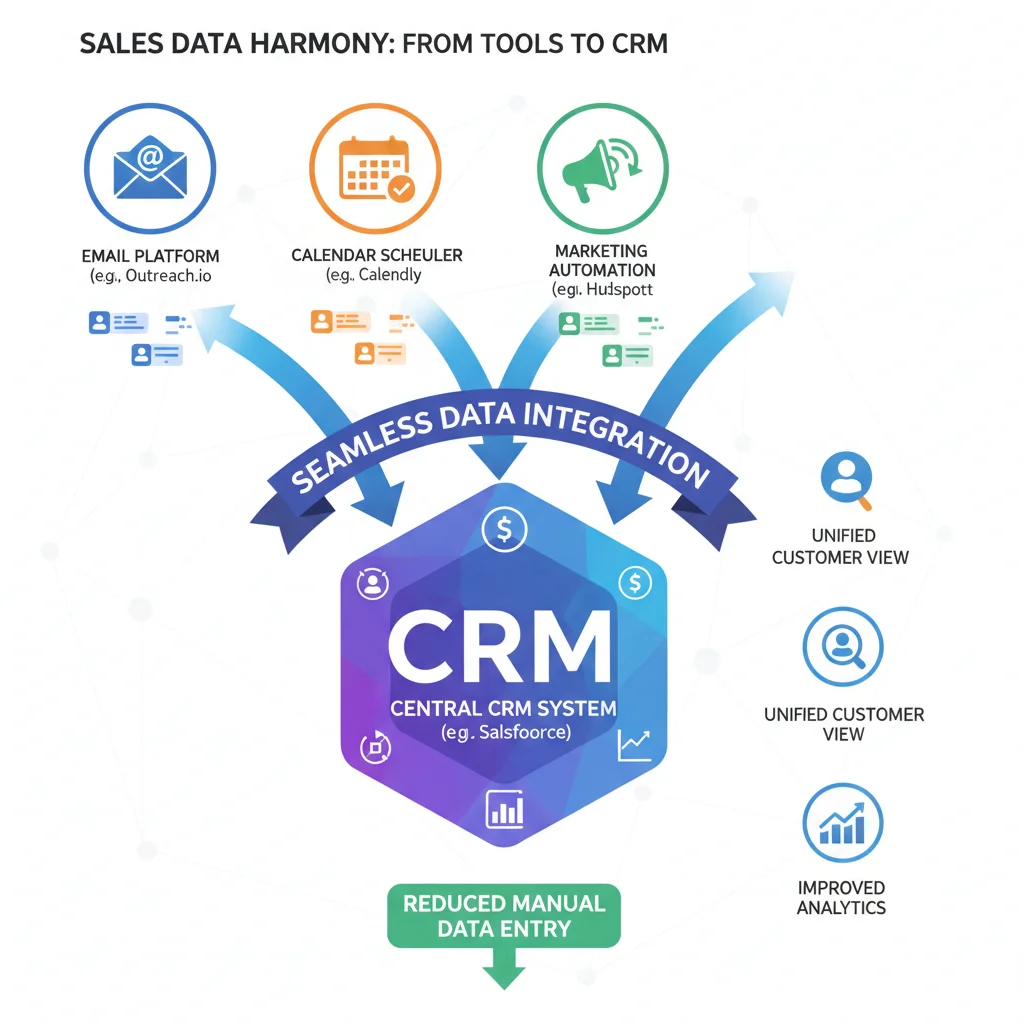
Imagine a world where your sales team spends less time on manual data entry and more time engaging with prospects. Picture a scenario where every piece of customer interaction, from initial marketing touchpoints to post-sale support, is consolidated in one accessible platform. This isn’t a futuristic dream; it’s the reality enabled by strategic CRM integration. This integration streamlines workflows, provides a holistic view of the customer, and empowers sales representatives with the insights and tools they need to perform at their peak. The goal is simple yet profound: optimize every step of the sales process to maximize effectiveness and minimize wasted effort.
For U.S. businesses, the stakes are particularly high. The competitive landscape demands agility, precision, and a deep understanding of customer needs. Without a unified system, sales teams risk inconsistent messaging, missed opportunities, and a frustratingly slow sales cycle. The integration of CRM with sales enablement platforms ensures that sales collateral, training materials, communication tools, and analytical insights are all working in concert, creating a powerful ecosystem that drives growth.
Understanding Sales Enablement in the Integrated Ecosystem
Sales enablement is the strategic, ongoing process of equipping all client-facing employees with the ability to consistently and systematically have a valuable conversation with the right set of customer stakeholders at each stage of the customer’s solution journey to optimize the return on investment of the firm’s sales strategies and assets. In an integrated ecosystem, sales enablement is supercharged. It moves beyond just providing content; it’s about delivering the right content, to the right person, at the right time, through the right channel, all tracked and optimized within the CRM.
Key Components of 2026 Sales Enablement:
- Content Management: Centralized, easily searchable repositories for all sales collateral, ensuring reps use approved, up-to-date materials.
- Training & Coaching: Personalized learning paths, AI-driven coaching, and performance analytics directly linked to CRM data.
- Sales Playbooks: Dynamic, interactive guides that adapt to specific customer scenarios, product lines, and sales stages.
- Communication Tools: Integrated email templates, call scripts, and meeting schedulers that automatically log activities in the CRM.
- Analytics & Insights: Dashboards that provide real-time performance metrics, pipeline visibility, and forecasting capabilities.
When these components are deeply integrated with the CRM, sales reps gain a significant advantage. They spend less time searching for information, less time creating custom content, and more time focusing on what they do best: selling. This holistic approach not only boosts individual productivity but also fosters a more consistent and professional sales experience for customers, ultimately leading to higher conversion rates and stronger customer relationships.
Best Practices for Seamless CRM Integration Sales in 2026
Achieving truly seamless CRM integration sales requires a strategic, multi-faceted approach. Here are the best practices U.S. companies should adopt by 2026 to ensure maximum efficiency and ROI:
1. Define Clear Integration Goals and KPIs
Before embarking on any integration project, clearly articulate what you want to achieve. Are you aiming to reduce data entry time, improve forecast accuracy, or enhance customer satisfaction? Define specific, measurable, achievable, relevant, and time-bound (SMART) goals. For example, ‘reduce manual data entry by 30% within six months’ or ‘improve lead conversion rates by 15% through better content utilization.’ Establish key performance indicators (KPIs) to track progress and measure success. Without clear objectives, your integration efforts may lack direction and fail to deliver tangible benefits.
2. Choose the Right CRM and Enablement Platforms
The foundation of successful integration lies in selecting compatible and robust platforms. Opt for a CRM that offers extensive API capabilities and a track record of successful integrations with popular sales enablement tools. Evaluate sales enablement platforms based on their ability to centralize content, automate workflows, provide analytics, and seamlessly connect with your chosen CRM. Consider scalability, user-friendliness, and vendor support. Investing in the right technology stack from the outset will prevent headaches down the line.
3. Implement a Phased Integration Strategy
Avoid the ‘big bang’ approach. Instead, adopt a phased integration strategy. Start with critical integrations that offer immediate value and fewer complexities. For example, integrate your CRM with your email client and calendar first. Once successful, move on to more complex integrations like marketing automation, CPQ (Configure, Price, Quote), or customer service platforms. This approach allows your team to adapt gradually, provides opportunities for testing and refinement, and minimizes disruption to daily operations.
4. Ensure Data Hygiene and Migration Planning
Garbage in, garbage out. Before integrating systems, clean your existing data. Remove duplicates, correct inaccuracies, and standardize formats. Develop a meticulous data migration plan, identifying what data needs to be moved, how it will be mapped between systems, and who is responsible for validation. Poor data quality can derail even the most sophisticated integration, leading to distrust in the system and wasted time for your sales team.
5. Standardize Workflows and Processes
Integration is not just about connecting software; it’s about optimizing the processes that run through them. Map out your current sales workflows and identify bottlenecks or inefficiencies. Redesign these workflows to leverage the integrated capabilities of your CRM and sales enablement tools. Standardized processes ensure consistency, reduce errors, and make it easier for new team members to get up to speed. This clarity is crucial for maximizing the time-saving potential of integration.
6. Prioritize User Adoption Through Training and Support
Even the most advanced integrated system is useless if your sales team doesn’t adopt it. Invest heavily in comprehensive training programs that demonstrate the ‘why’ behind the integration – how it will make their jobs easier and more effective. Provide ongoing support, create easily accessible knowledge bases, and designate internal champions who can assist colleagues. Gather feedback regularly and iterate on training and system improvements. High user adoption is directly correlated with the success of your CRM integration sales efforts.
7. Leverage AI and Automation
By 2026, AI and automation will be integral to successful CRM integration. Utilize AI-powered features for lead scoring, predictive analytics, personalized content recommendations, and automated task assignments. Automate routine administrative tasks such as logging calls, updating contact records, and scheduling follow-ups. This frees up sales reps to focus on high-value activities, contributing significantly to the goal of saving 5 hours per week per salesperson. AI can also analyze sales conversations and provide real-time coaching, further enhancing sales effectiveness.
8. Implement Robust Security and Compliance Measures
With increased data flow comes increased responsibility for data security and privacy. Ensure your integrated systems comply with all relevant U.S. data protection regulations (e.g., CCPA, state-specific privacy laws). Implement strong access controls, encryption, and regular security audits. Train your team on data handling best practices to prevent breaches and maintain customer trust. A single security lapse can undermine all the benefits of integration.
9. Monitor, Analyze, and Optimize Continuously
Integration is not a one-time project; it’s an ongoing process. Continuously monitor the performance of your integrated systems using the KPIs established in step one. Analyze sales data, identify areas for improvement, and optimize your workflows and integrations accordingly. Use A/B testing for different sales enablement content or messaging strategies. Regular review meetings with sales, marketing, and IT stakeholders will ensure that the integrated ecosystem remains aligned with business objectives and continues to deliver value.
The Tangible Benefits: Saving 5 Hours Per Week
The promise of saving 5 hours per week per salesperson is not an exaggeration; it’s a realistic outcome of well-executed CRM integration sales and sales enablement strategies. Let’s break down where these savings come from:
- Reduced Administrative Overhead (2 hours): Automated data entry, call logging, and task management eliminate significant manual effort. Reps no longer have to switch between multiple applications or manually update records.
- Faster Content Retrieval (1 hour): Centralized content repositories with intelligent search and recommendation engines mean reps find the right collateral instantly, without wasting time sifting through shared drives or asking colleagues.
- Streamlined Communication (1 hour): Integrated email templates, automated follow-up sequences, and seamless meeting scheduling reduce the time spent on crafting individual messages and coordinating schedules.
- Eliminated Context Switching (0.5 hours): A unified view of the customer within the CRM means reps don’t lose time jumping between different platforms to gather information, maintaining focus and efficiency.
- Enhanced Preparation & Personalization (0.5 hours): Quick access to comprehensive customer data and AI-driven insights allows for more effective call preparation and highly personalized outreach, leading to more productive conversations.
These cumulative time savings translate directly into increased selling time, more meaningful customer interactions, and ultimately, higher revenue. For a team of 10 salespeople, this means an extra 50 hours of productive selling time per week – equivalent to more than one full-time employee dedicated solely to sales activities, without the additional hiring costs.
Case Study Snapshot: U.S. Tech Company Boosts Efficiency
A mid-sized U.S. tech company specializing in SaaS solutions faced significant challenges with fragmented sales data and inefficient content delivery. Their sales team spent an average of 8-10 hours per week on administrative tasks and searching for relevant sales materials. Recognizing the need for change, they implemented a comprehensive CRM integration sales strategy, connecting their Salesforce CRM with a leading sales enablement platform.
The integration focused on:
- Automating lead assignment and follow-up tasks.
- Centralizing all sales collateral with AI-powered search.
- Integrating email and calendar functionalities directly into the CRM.
- Providing personalized training modules based on sales performance.
Within six months, the company reported a remarkable transformation. Salespeople reduced their administrative burden by an average of 6 hours per week, surpassing the initial goal. Lead response times improved by 40%, and the win rate for new business increased by 12%. The integrated system not only saved time but also empowered the sales team with better tools and insights, leading to a significant boost in overall productivity and morale.
Overcoming Common Challenges in CRM Integration Sales
While the benefits are clear, integrating CRM and sales enablement tools is not without its hurdles. U.S. businesses should be prepared to address common challenges:
1. Data Silos and Legacy Systems:
Many organizations operate with disparate systems that don’t communicate effectively. Legacy systems can be particularly challenging to integrate. Acknowledge these limitations early, prioritize which data needs to be integrated, and consider middleware solutions or custom API development if direct integration isn’t feasible.
2. Resistance to Change:
Sales teams are often accustomed to their existing workflows. Introducing new tools and processes can be met with resistance. Emphasize the benefits to individual reps, involve them in the planning process, and provide ample training and support to ease the transition.
3. Complexity of Integration:
Integrating multiple platforms can be technically complex, requiring expertise in APIs, data mapping, and system architecture. Consider hiring experienced integration specialists or working with a reputable consulting firm to navigate these complexities.
4. Cost and Resource Constraints:
Implementing and maintaining integrated systems requires significant investment in terms of both finances and human resources. Clearly articulate the ROI of the integration to secure necessary budget and allocate dedicated project teams.
5. Maintaining Data Quality:
Ongoing data hygiene is crucial. Establish clear data governance policies, implement automated data validation rules, and conduct regular audits to ensure the accuracy and consistency of information across all integrated systems.
By proactively addressing these challenges, U.S. companies can pave a smoother path to successful CRM integration sales, unlocking its full potential.

The Future of Sales: Hyper-Personalization and Predictive Insights
Looking ahead to 2026 and beyond, the evolution of CRM integration sales will be driven by even greater sophistication in AI and machine learning. We will see a shift towards hyper-personalization, where every customer interaction is tailored based on a deep, real-time understanding of their needs, preferences, and journey stage. Predictive analytics will move from being a valuable tool to an indispensable guide, helping sales teams anticipate customer behavior, identify at-risk accounts, and pinpoint the most promising opportunities.
Furthermore, the integration of conversational AI and natural language processing (NLP) will enhance sales enablement, providing reps with instant access to information during live calls, automating follow-up emails with personalized content, and even drafting proposals. The focus will be on creating a truly intelligent sales assistant embedded within the CRM, constantly learning and adapting to optimize every facet of the sales process.
For U.S. sales organizations, this means a continued investment in advanced technologies and a commitment to fostering a data-driven sales culture. Those who embrace these innovations will not only save time but will also build stronger, more profitable relationships with their customers, staying ahead in an increasingly competitive market.