Digital Accessibility Mandate: Inclusive US Customer Experiences 2026

The digital landscape is an ever-evolving frontier, transforming how businesses interact with their customers, deliver services, and build brand loyalty. In the United States, a significant shift is underway, driven by a growing recognition of the importance of inclusivity and equal access. This shift is crystallizing into a critical benchmark: the digital accessibility mandate for US customer experiences by 2026. This isn’t merely a suggestion; it’s a rapidly approaching imperative that will redefine how digital products and services are designed, developed, and delivered across industries.
For too long, digital experiences have inadvertently excluded millions of individuals with disabilities. From visually impaired users struggling with unlabelled images to hearing-impaired users missing out on video content without captions, the barriers have been numerous and frustrating. The digital accessibility mandate by 2026 aims to dismantle these barriers, ensuring that everyone, regardless of their abilities, can seamlessly navigate, interact with, and benefit from online platforms and services. This comprehensive article will delve into the nuances of this mandate, its implications for businesses, the ethical and legal frameworks underpinning it, and the strategic steps organizations must take to not only comply but to thrive in an an inclusive digital future.
Understanding the Digital Accessibility Mandate: What It Means for Businesses
At its core, the digital accessibility mandate for 2026 signifies a legal and ethical obligation for businesses to make their digital content and services usable by people with a wide range of disabilities. This includes individuals with visual impairments, hearing impairments, cognitive disabilities, motor disabilities, and more. While specific legislative details are still evolving, the overarching principle is clear: digital experiences must be designed to be perceivable, operable, understandable, and robust (POUR), aligning with internationally recognized standards like the Web Content Accessibility Guidelines (WCAG).
The Legal Landscape: ADA and Beyond
The Americans with Disabilities Act (ADA), enacted in 1990, has long been the cornerstone of disability rights in the US. While initially focused on physical spaces, its application has steadily expanded to the digital realm. Recent years have seen a surge in lawsuits citing ADA violations for inaccessible websites and mobile applications. The 2026 mandate serves as a clear signal that regulatory bodies and courts will increasingly expect digital properties to be fully accessible. This isn’t just about avoiding lawsuits; it’s about adhering to a fundamental civil right.
Beyond the ADA, Section 508 of the Rehabilitation Act applies to federal agencies and those receiving federal funding, setting a high bar for digital accessibility. While not directly applicable to all private businesses, Section 508 often influences best practices and sets a precedent for what is considered accessible. Furthermore, various state-level accessibility laws and initiatives are emerging, creating a complex but unified push towards a more inclusive digital environment. Businesses must be proactive in understanding this evolving legal landscape to ensure their compliance with the digital accessibility mandate.
Ethical Imperatives: The Business Case for Inclusion
While legal compliance is a powerful driver, the ethical imperative for digital accessibility is equally compelling. Approximately one in four adults in the US lives with some form of disability. This represents a significant segment of the population that, if excluded, translates to lost market share and diminished brand reputation. By embracing the digital accessibility mandate, businesses demonstrate a commitment to social responsibility and inclusion, fostering goodwill and strengthening their brand image.
An accessible digital experience isn’t just a convenience; it’s a necessity for millions. It allows individuals to apply for jobs, access healthcare information, shop online, engage with government services, and participate fully in society. Companies that prioritize accessibility are often seen as more trustworthy and customer-centric, leading to increased loyalty and positive word-of-mouth. The moral argument for inclusivity is undeniable, and the upcoming mandate reinforces its importance.
Strategic Implementation: Navigating the Path to Compliance
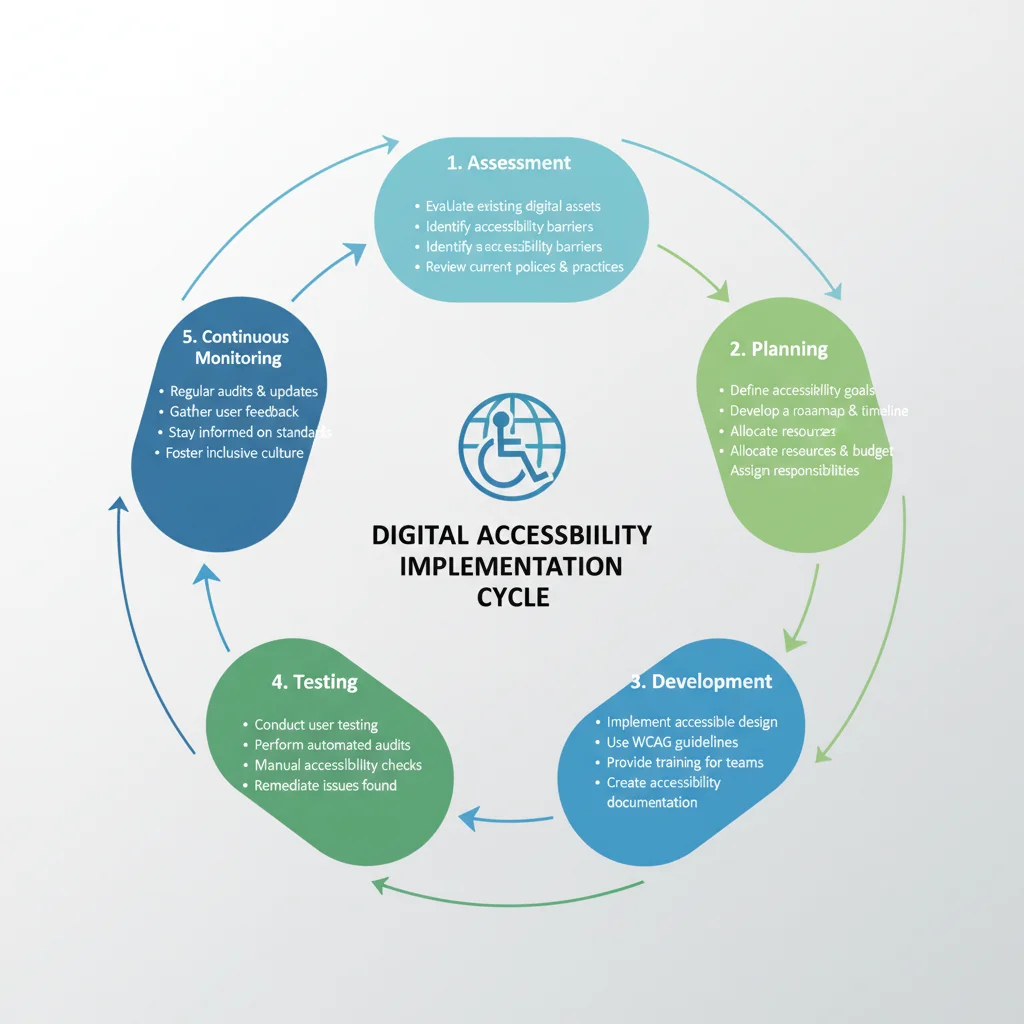
Achieving compliance with the digital accessibility mandate by 2026 requires a strategic, multi-faceted approach. It’s not a one-time fix but an ongoing commitment to inclusive design and development. Businesses need to integrate accessibility into every stage of their digital product lifecycle, from conception to maintenance.
Conducting a Comprehensive Accessibility Audit
The first step towards compliance is understanding your current accessibility posture. A thorough accessibility audit involves evaluating your existing websites, mobile apps, and other digital platforms against established standards, primarily WCAG (Web Content Accessibility Guidelines) 2.1 or 2.2 at AA level. This audit should identify specific accessibility barriers, such as lack of alt text for images, insufficient color contrast, keyboard navigation issues, or missing captions for videos. Professional accessibility auditors can provide detailed reports and recommendations, forming the baseline for your remediation efforts. This initial assessment is crucial for any organization looking to meet the digital accessibility mandate effectively.
Integrating Accessibility into Design and Development Workflows
Retrofitting accessibility is often more costly and time-consuming than building it in from the start. Therefore, businesses should embed accessibility principles into their design and development workflows. This means:
- Accessible Design Guidelines: Designers should be trained on WCAG principles and incorporate them into wireframes, mockups, and prototypes. This includes considerations for color contrast, font readability, clear navigation, and logical content structure.
- Developer Training: Developers need to understand how to write accessible code, using semantic HTML, ARIA attributes when necessary, and ensuring keyboard operability.
- Content Creation Best Practices: Content creators must be educated on writing clear, concise language, using proper headings, providing descriptive alt text for images, and offering transcripts or captions for multimedia.
By making accessibility a core component of your digital strategy, you ensure that new features and updates are inclusive from day one, significantly simplifying the journey towards meeting the digital accessibility mandate.
Leveraging Accessibility Tools and Technologies
A plethora of tools and technologies can assist businesses in their accessibility efforts. These include automated accessibility checkers, which can identify common errors, as well as manual testing tools. However, it’s crucial to remember that automated tools can only catch a fraction of accessibility issues. Human testing, particularly by individuals with disabilities, is indispensable for a truly accessible experience. Screen readers, voice recognition software, and keyboard-only navigation are vital for comprehensive testing. Investing in these resources and training your teams to use them will be critical for adherence to the digital accessibility mandate.
Prioritizing User Feedback and Usability Testing
The ultimate test of accessibility lies with the users themselves. Engaging individuals with disabilities in usability testing provides invaluable insights into real-world challenges and helps identify areas for improvement that automated tools might miss. Establishing channels for user feedback, such as dedicated accessibility contact forms or email addresses, demonstrates a commitment to continuous improvement and allows businesses to address issues proactively. This user-centric approach is fundamental to creating truly inclusive experiences and fulfilling the spirit of the digital accessibility mandate.
Beyond Compliance: The Benefits of an Inclusive Digital Experience
While the digital accessibility mandate provides a compelling reason to act, the benefits of creating inclusive digital experiences extend far beyond mere compliance. Businesses that embrace accessibility often find themselves reaping rewards in various areas.
Expanded Market Reach and Customer Loyalty
By making digital content accessible, businesses open their doors to a vast demographic previously underserved. This includes not only individuals with permanent disabilities but also those with temporary disabilities (e.g., a broken arm) or situational disabilities (e.g., trying to use a phone in bright sunlight). An accessible website or app translates to a larger potential customer base. When these customers find a platform that caters to their needs, they are more likely to become loyal patrons, leading to increased conversions and repeat business. Meeting the digital accessibility mandate is, therefore, a strategic business growth initiative.
Enhanced SEO and Improved User Experience for All
Many accessibility best practices align directly with good SEO principles. For instance, providing descriptive alt text for images not only benefits visually impaired users but also helps search engines understand the image content, boosting search rankings. Clear heading structures, logical navigation, and well-organized content, all crucial for accessibility, also contribute to a better overall user experience for everyone. A site that is easy to navigate for a screen reader user is often easier for any user. Thus, adhering to the digital accessibility mandate can indirectly improve your search engine visibility and general user satisfaction.
Reduced Legal Risk and Reputational Protection
Proactive compliance with the digital accessibility mandate significantly mitigates the risk of costly lawsuits and legal challenges. Beyond legal fees, accessibility lawsuits can severely damage a brand’s reputation, leading to negative publicity and loss of customer trust. By investing in accessibility now, businesses safeguard their financial stability and protect their public image, demonstrating a commitment to ethical business practices.
Innovation and Employee Engagement
Focusing on accessibility can spur innovation. Designing for the broadest possible audience often leads to creative solutions that benefit everyone. For example, voice control features initially developed for users with motor impairments are now widely used by the general public. Furthermore, companies that prioritize accessibility often foster a more inclusive workplace culture, attracting and retaining diverse talent. Employees are more engaged when they feel their organization is committed to social responsibility and equality, making the digital accessibility mandate a catalyst for internal positive change.
The Road Ahead: Preparing for 2026 and Beyond
The 2026 deadline for the digital accessibility mandate is not a finish line but a significant milestone in an ongoing journey towards a truly inclusive digital world. Businesses that view accessibility as a continuous process, rather than a one-off project, will be best positioned for long-term success.
Establishing an Accessibility Culture
True accessibility is achieved when it becomes an integral part of an organization’s culture. This means fostering awareness and understanding across all departments, from leadership to customer service. Regular training, clear communication of accessibility goals, and celebrating accessibility achievements can help embed this culture. Appointing an accessibility champion or team can also provide dedicated leadership and expertise to drive initiatives and ensure ongoing adherence to the digital accessibility mandate.
Continuous Monitoring and Maintenance
Digital platforms are dynamic; they are constantly updated with new content, features, and integrations. This means accessibility is not a set-it-and-forget-it task. Regular monitoring, re-audits, and ongoing maintenance are essential to ensure that new additions do not introduce new barriers. Automated monitoring tools can help track compliance over time, alerting teams to potential issues as they arise. This continuous vigilance is crucial for sustained compliance with the digital accessibility mandate.

Embracing Future Accessibility Technologies
The field of assistive technology is constantly evolving. From advanced AI-powered screen readers to innovative input methods, new tools are emerging that can further enhance digital accessibility. Businesses should stay abreast of these developments and consider how they can leverage new technologies to improve their inclusive offerings. Anticipating future trends and integrating them into your strategy will ensure your organization remains at the forefront of digital inclusion, well beyond the 2026 digital accessibility mandate.
Conclusion
The digital accessibility mandate for US customer experiences by 2026 is a pivotal moment for businesses across the nation. It represents a clear call to action, urging organizations to prioritize inclusivity in their digital strategies. While the path to full compliance requires dedication and resources, the benefits — from expanded market reach and enhanced brand reputation to reduced legal risk and improved user experience for all — are undeniable and far-reaching.
By proactively conducting audits, integrating accessibility into design and development, leveraging appropriate tools, and prioritizing user feedback, businesses can not only meet the upcoming mandate but also establish themselves as leaders in the inclusive digital economy. The deadline is approaching rapidly, and the time to act is now. Embracing the digital accessibility mandate is not just about ticking a regulatory box; it’s about building a more equitable, accessible, and ultimately more successful digital future for everyone.