Digital Tools for Lead Scoring: A 2026 Blueprint for Improving Lead Quality by 35% in US Markets

In the fiercely competitive landscape of US markets, the ability to accurately identify and nurture high-quality leads is not just an advantage; it’s a necessity. As we look towards 2026, businesses are increasingly turning to advanced digital lead scoring tools to refine their sales processes and achieve unprecedented levels of efficiency. This comprehensive guide will delve into a strategic blueprint designed to help organizations improve their lead quality by a remarkable 35% within the next two years, leveraging the power of cutting-edge digital technologies.
The traditional approach to lead qualification, often reliant on subjective assessments and manual processes, is no longer sufficient. The sheer volume of data generated by modern marketing efforts demands a more sophisticated, data-driven methodology. This is where digital lead scoring comes into play, offering a systematic way to assign values to leads based on their engagement, demographics, behavior, and various other attributes. By quantifying a lead’s potential, businesses can prioritize their efforts, allocate resources more effectively, and ultimately drive higher conversion rates.
Our journey will explore the foundational concepts of digital lead scoring, examine the essential tools and technologies that are shaping its future, and outline actionable strategies for implementation and optimization specifically tailored for the dynamic US market. We will also address common challenges and provide insights into how to overcome them, ensuring your lead scoring initiatives are not only successful but also sustainable.
The Imperative of Digital Lead Scoring in Today’s Market
The digital age has fundamentally transformed the way businesses acquire and engage with customers. With an abundance of information readily available, consumers are more informed and discerning than ever before. This shift necessitates a proactive and intelligent approach to lead management. Simply generating a large volume of leads is no longer a viable strategy if a significant portion of those leads are unqualified or unlikely to convert. This is precisely why digital lead scoring has become an indispensable component of any successful sales and marketing strategy.
In the US market, where competition is fierce and customer expectations are high, the ability to quickly identify and nurture high-potential leads can be the difference between thriving and merely surviving. Businesses that effectively implement digital lead scoring can:
- Increase Sales Efficiency: By prioritizing leads with the highest scores, sales teams can focus their efforts on prospects most likely to convert, reducing wasted time and resources on unqualified leads.
- Improve Marketing ROI: Marketing campaigns can be optimized to attract leads that align more closely with the ideal customer profile, leading to better campaign performance and a higher return on investment.
- Shorten Sales Cycles: Armed with insights from lead scoring, sales representatives can tailor their pitches and address specific pain points more effectively, accelerating the sales process.
- Enhance Customer Experience: Engaging with prospects at the right time with relevant information based on their score fosters a more positive and personalized customer journey.
- Boost Revenue Growth: Ultimately, all these benefits converge to drive higher conversion rates and, consequently, significant revenue growth.
The 2026 blueprint for improving lead quality by 35% is built on the premise that a robust digital lead scoring system is the cornerstone of future sales and marketing success. It’s about working smarter, not just harder, to achieve ambitious growth targets.
Understanding the Core Components of Digital Lead Scoring
At its heart, digital lead scoring involves assigning numerical values to leads based on a predefined set of criteria. These criteria typically fall into two main categories: explicit and implicit data.
Explicit Data: Demographics and Firmographics
Explicit data refers to information directly provided by the lead or readily available about them. This includes:
- Demographics: For B2C, this might include age, gender, location, income level, and interests.
- Firmographics: For B2B, this often includes company size, industry, revenue, job title, and geographic location.
For example, a lead from a company with 500+ employees in the tech industry, holding a Director-level position, might receive a higher score than a lead from a small startup with an entry-level employee, assuming the former aligns better with your ideal customer profile.
Implicit Data: Behavioral Insights
Implicit data is gathered through a lead’s interactions with your brand across various digital touchpoints. This behavioral data provides valuable insights into their level of interest and intent. Examples include:
- Website Activity: Pages visited, time spent on pages, number of visits, downloads of whitepapers or ebooks.
- Email Engagement: Opened emails, clicked links, unsubscribes.
- Content Consumption: Videos watched, webinars attended, blog posts read.
- Social Media Interactions: Likes, shares, comments, direct messages.
- Form Submissions: Types of forms filled out, information provided.
A lead who repeatedly visits your pricing page, downloads a product demo, and opens all your marketing emails is likely much hotter than one who only visited your homepage once. Digital lead scoring systems automate the tracking and scoring of these interactions, providing a dynamic and real-time view of lead potential.
Key Digital Tools and Technologies for Lead Scoring in 2026
Achieving a 35% improvement in lead quality by 2026 demands more than just a well-defined scoring model; it requires the right technological infrastructure. The following digital tools are foundational for any ambitious digital lead scoring strategy in the US market:
1. Customer Relationship Management (CRM) Systems
A robust CRM system is the central hub for all your lead data. Platforms like Salesforce, HubSpot CRM, and Zoho CRM integrate with various marketing and sales tools, providing a unified view of each lead’s journey. They store explicit data, track interactions, and often have built-in or integrable lead scoring functionalities. A well-configured CRM ensures that all departments have access to the most up-to-date lead information, facilitating seamless handoffs between marketing and sales.
2. Marketing Automation Platforms (MAPs)
MAPs such as HubSpot Marketing Hub, Marketo (Adobe Experience Cloud), and Pardot (Salesforce) are crucial for automating lead nurturing and scoring processes. These platforms can:
- Track lead behavior across your website, emails, and other digital channels.
- Assign scores based on predefined rules and lead activities.
- Trigger automated workflows, such as sending personalized emails or notifying sales reps when a lead reaches a certain score threshold.
- Segment leads based on their scores and other attributes for targeted campaigns.
The synergy between CRM and MAPs is critical. MAPs feed behavioral data into the CRM, enriching lead profiles and enabling more intelligent sales engagements.
3. Artificial Intelligence (AI) and Machine Learning (ML)
AI and ML are rapidly transforming digital lead scoring. Unlike rule-based scoring, AI-driven models can:
- Identify Hidden Patterns: ML algorithms can uncover complex relationships between lead behaviors and conversion outcomes that human analysts might miss.
- Predictive Scoring: Instead of just assigning scores, AI can predict the likelihood of a lead converting, providing a more nuanced understanding of lead potential.
- Dynamic Adjustments: AI models can continuously learn and adapt to new data, refining scoring criteria over time for greater accuracy.
- Automated Lead Prioritization: AI can automatically prioritize leads, ensuring that sales teams always focus on the hottest prospects.
Tools like Infer, SalesWings, and even advanced features within larger CRM/MAP platforms are leveraging AI to provide more sophisticated lead scoring capabilities. By 2026, AI will be an indispensable component of any high-performing digital lead scoring system.
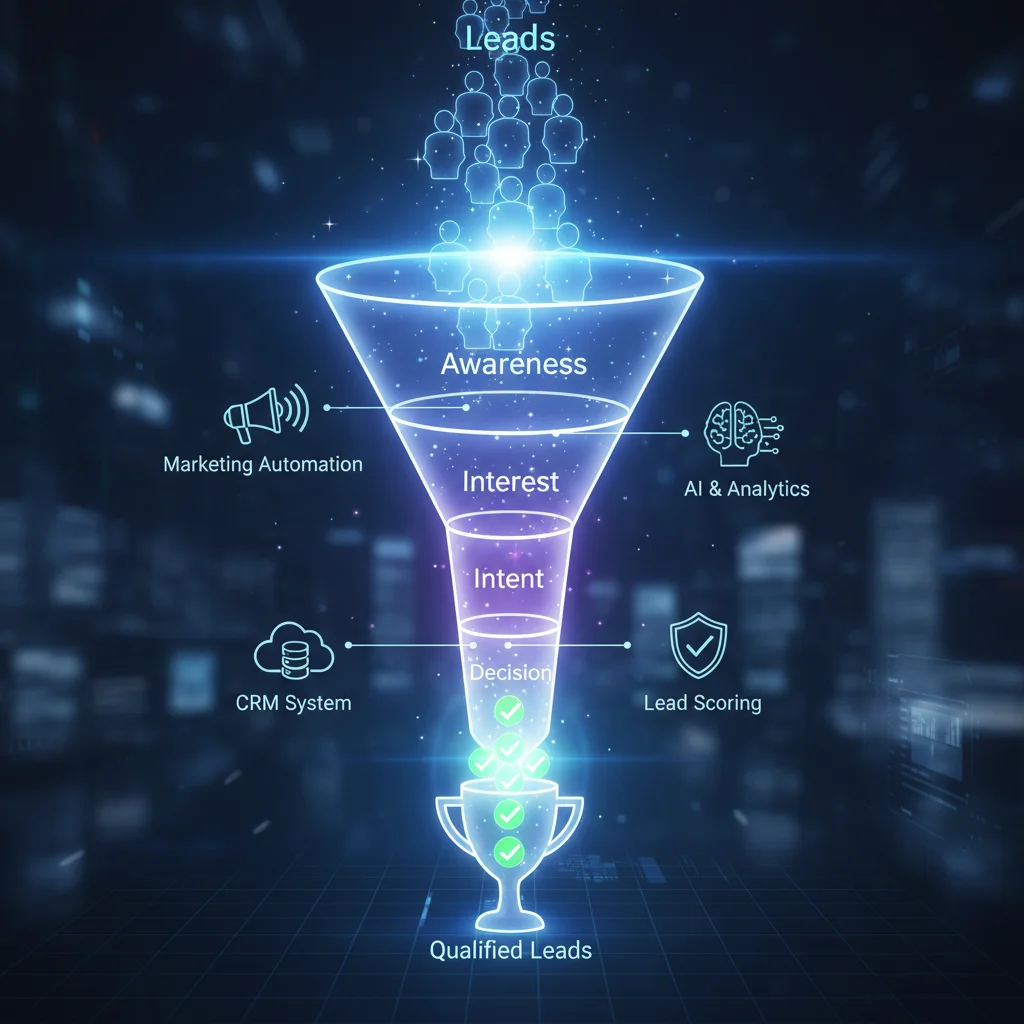
4. Data Analytics and Business Intelligence (BI) Tools
Platforms like Google Analytics, Tableau, and Power BI are essential for analyzing the performance of your lead scoring model. They allow you to:
- Visualize lead scoring trends and identify bottlenecks.
- Track conversion rates at different stages of the funnel.
- Measure the impact of scoring changes on lead quality and sales outcomes.
- Gain deeper insights into customer behavior and identify areas for improvement.
Robust data analytics ensures that your digital lead scoring system is not a static entity but a continuously evolving and improving process.
5. Intent Data Platforms
Tools like Bombora, G2, and ZoomInfo provide valuable insights into a prospect’s research behavior across the web, even before they interact directly with your brand. This ‘intent data’ can indicate a lead’s interest in specific topics or products, allowing you to proactively engage them. Integrating intent data into your digital lead scoring model can significantly enhance its predictive power, especially for B2B organizations in the US market.
A 2026 Blueprint: Strategies for a 35% Improvement in Lead Quality
Achieving a significant uplift in lead quality requires a structured and iterative approach. Here’s a blueprint for US businesses aiming for a 35% improvement by 2026:
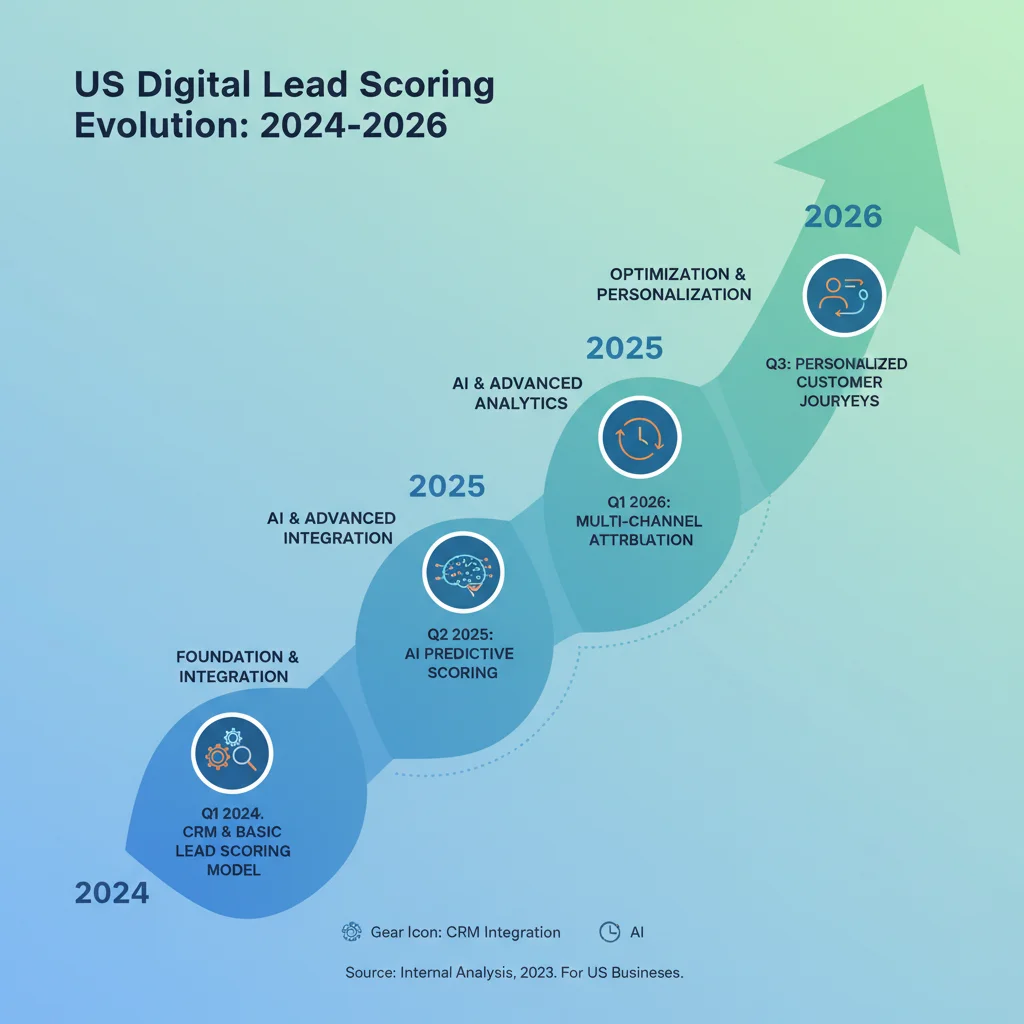
Phase 1: Foundation and Initial Setup (2024)
1. Define Your Ideal Customer Profile (ICP) and Buyer Personas:
Before you can score leads, you need to know what a ‘good’ lead looks like. Collaborate extensively with your sales team to create highly detailed ICPs for B2B and buyer personas for B2C. This includes demographic, firmographic, behavioral, and psychographic attributes. For the US market, consider regional nuances and industry-specific characteristics.
2. Establish Clear Scoring Criteria:
Based on your ICPs/personas, define which explicit and implicit attributes will contribute to a lead’s score. Assign positive points for desirable actions (e.g., downloading a case study, visiting the pricing page) and negative points for undesirable ones (e.g., visiting career pages, unsubscribing from emails). Start with a simple model and iterate.
3. Integrate Your Core Digital Tools:
Ensure your CRM and Marketing Automation Platform are fully integrated and communicating effectively. This is non-negotiable for seamless data flow and automated scoring. Invest in proper setup and training for both marketing and sales teams.
4. Set Up Initial Scoring Rules:
Configure your MAP to automatically apply scores based on the defined criteria. Establish lead stages (e.g., Marketing Qualified Lead – MQL, Sales Qualified Lead – SQL) and define the score thresholds for each stage. Crucially, define the criteria for when a lead is ‘sales-ready’ and automatically assign it to a sales representative.
Phase 2: Optimization and Enhancement (2025)
1. Data Analysis and Performance Review:
Regularly analyze the performance of your digital lead scoring model. Use your BI tools to track key metrics: conversion rates by lead score, sales cycle length for high vs. low scores, and marketing ROI. Identify which scoring attributes are truly predictive of conversion and which are not.
2. Refine Scoring Weights and Thresholds:
Based on your performance review, adjust the points assigned to different actions and attributes. For instance, if leads who download a specific whitepaper convert at a higher rate, increase the points for that action. Similarly, refine the MQL/SQL thresholds to ensure sales is receiving genuinely qualified leads.
3. Incorporate Advanced Data Sources:
Begin integrating third-party intent data platforms or enrich your lead data with external sources (e.g., D&B Hoovers for B2B firmographics). This provides a more holistic view of lead potential and boosts the accuracy of your scores.
4. Implement Lead Nurturing Workflows:
Develop sophisticated, score-based lead nurturing campaigns. Leads with lower scores might enter a long-term educational nurture track, while those with higher scores receive more direct, sales-oriented content. Personalize these journeys based on lead behavior and explicit data.
Phase 3: Predictive Power and Continuous Improvement (2026)
1. Introduce AI and Machine Learning:
By 2026, integrate AI-driven lead scoring solutions. Move beyond rule-based scoring to leverage predictive analytics. AI can automatically identify the most influential factors in conversion and dynamically adjust scoring models, leading to a significant leap in lead quality.
2. Implement Multi-Channel Scoring:
Expand your digital lead scoring to encompass interactions across all channels, including social media, chatbots, and offline events (if applicable). A truly comprehensive model captures every touchpoint.
3. Establish a Feedback Loop with Sales:
Crucially, maintain a continuous feedback loop between marketing and sales. Sales teams are on the front lines and can provide invaluable insights into the quality of leads they receive. Use this feedback to further refine your scoring model and ICPs. Regular joint meetings should be standard practice.
4. A/B Testing and Experimentation:
Continuously A/B test different scoring rules, content offers, and nurturing paths to identify what yields the best results. The market is dynamic, and your digital lead scoring strategy should be too.
Challenges and How to Overcome Them
While the benefits of digital lead scoring are clear, implementation can come with its challenges. Here’s how to navigate them:
- Data Silos: Disconnected systems (CRM, MAP, website analytics) can hinder a holistic view of leads. Solution: Prioritize integration. Invest in platforms that offer robust native integrations or use integration platforms as a service (iPaaS) to connect disparate systems.
- Lack of Sales and Marketing Alignment: Disagreement on what constitutes a ‘qualified’ lead can derail efforts. Solution: Foster strong communication and collaboration. Develop a Service Level Agreement (SLA) between sales and marketing that clearly defines lead stages, responsibilities, and feedback mechanisms.
- Overly Complex Scoring Models: Starting with too many rules can make the system difficult to manage and optimize. Solution: Begin simply. Implement a basic scoring model and gradually add complexity as you gather data and insights.
- Poor Data Quality: Inaccurate or incomplete lead data will lead to flawed scoring. Solution: Implement data validation processes, enrich existing data with third-party sources, and regularly cleanse your database.
- Resistance to Change: Teams accustomed to traditional methods may resist new processes. Solution: Provide comprehensive training, highlight the benefits (e.g., less wasted time for sales, better quality leads for marketing), and celebrate early successes to build buy-in.
Measuring Success: Key Metrics for 2026
To confirm your 35% improvement in lead quality, you need to track the right metrics. Beyond the obvious increase in conversion rates, consider:
- Lead-to-Opportunity Conversion Rate: How many MQLs convert into legitimate sales opportunities? An increase here indicates better lead quality.
- Opportunity-to-Win Rate: Of the opportunities created, how many close as deals? Higher win rates for scored leads signify better qualification.
- Sales Cycle Length: Are high-scored leads moving through the sales funnel faster than low-scored leads?
- Average Deal Size: Are higher-scored leads resulting in larger deals?
- Sales Productivity: Are sales reps spending more time on selling and less time on qualifying?
- Customer Lifetime Value (CLTV): Do customers acquired through highly scored leads have a higher CLTV? This indicates not just better leads, but better customers.
Regularly review these metrics and use them to continuously refine your digital lead scoring model. The goal is not just to hit the 35% target but to maintain and exceed it, fostering a culture of continuous improvement.
The Future of Digital Lead Scoring in US Markets
Looking beyond 2026, the evolution of digital lead scoring will be heavily influenced by advancements in AI, hyper-personalization, and the increasing demand for real-time insights. We can expect:
- Even More Sophisticated AI: AI will move beyond predictive scoring to prescriptive analytics, recommending specific actions or content for individual leads based on their unique profiles and behaviors.
- Real-Time Scoring and Engagement: The ability to score and react to lead behavior in real-time will become standard, enabling instant, personalized engagement.
- Voice and Conversational AI Integration: Lead scoring will integrate with conversational AI (chatbots, voice assistants) to gather deeper insights from natural language interactions.
- Ethical AI and Data Privacy: As AI becomes more prevalent, ethical considerations and data privacy regulations (like CCPA in California) will play an even more significant role in how lead data is collected, processed, and scored. Businesses will need to ensure transparency and compliance.
- Account-Based Scoring: For B2B, a shift towards account-based scoring, where entire accounts are scored based on the collective behavior of multiple contacts within that organization, will gain traction.
The US market, being at the forefront of technological adoption, will undoubtedly lead these innovations. Businesses that embrace these future trends will be best positioned for sustained growth and market leadership.
Conclusion
The journey to improving lead quality by 35% by 2026 using digital lead scoring is ambitious but entirely achievable. It requires a commitment to data-driven decision-making, strategic investment in the right technologies, and a culture of continuous optimization and collaboration between sales and marketing teams. By meticulously defining your ideal customer, leveraging the power of CRM, MAPs, AI, and robust analytics, and establishing a consistent feedback loop, your organization can transform its lead generation and conversion processes.
Embrace this blueprint, adapt it to your unique business needs, and prepare to unlock a new era of efficiency, revenue growth, and competitive advantage in the dynamic US market. The future of sales and marketing is intelligent, personalized, and powered by effective digital lead scoring.