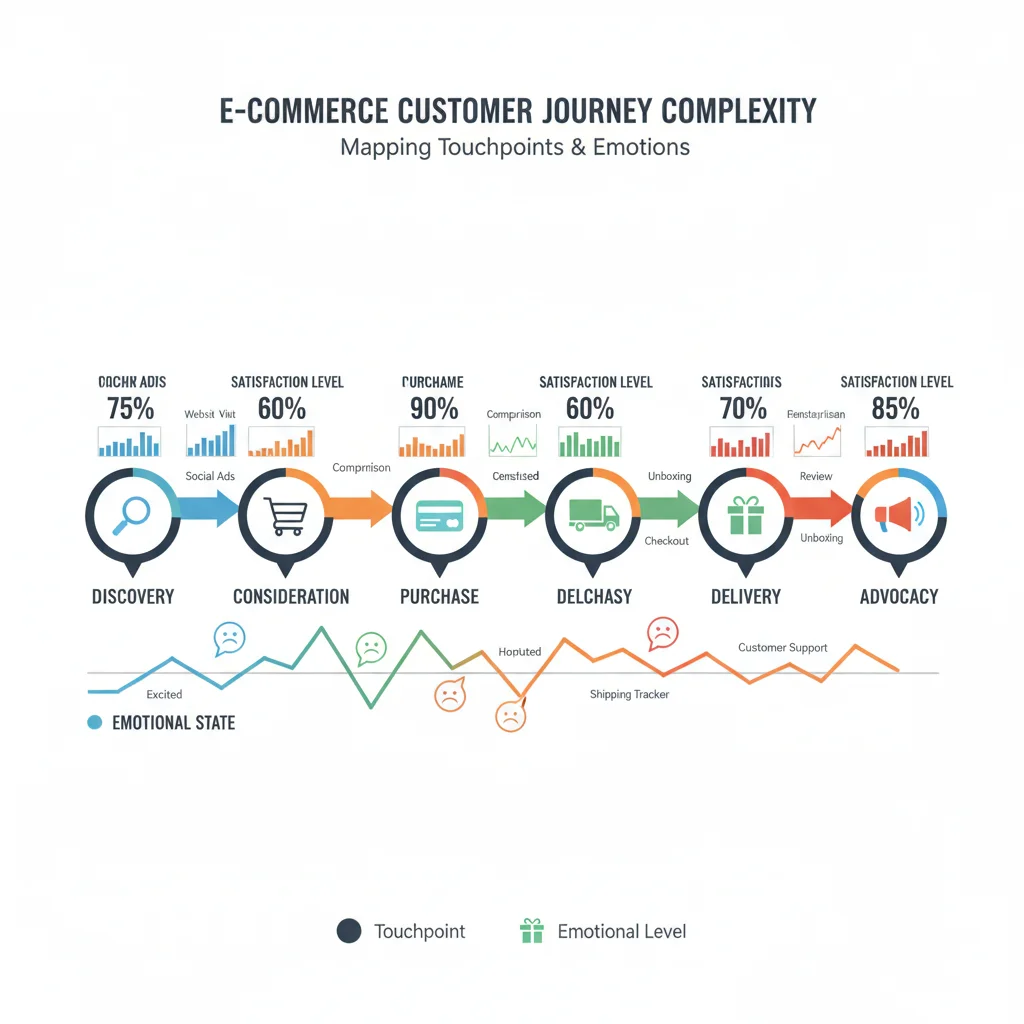
The 3 Critical CX Metrics US E-commerce Businesses Must Track for Growth in 2026

The 3 Critical CX Metrics US E-commerce Businesses Must Track for Growth in 2026
In the rapidly evolving digital landscape, customer experience (CX) has transcended from a mere buzzword to the bedrock of sustainable business growth, especially within the fiercely competitive US e-commerce sector. As we hurtle towards 2026, the stakes are higher than ever. E-commerce businesses are no longer just selling products; they are selling experiences. A seamless, delightful, and personalized customer journey is what differentiates market leaders from the rest. But how do you measure the effectiveness of your customer experience strategies? This is where critical e-commerce CX metrics come into play.
Understanding and meticulously tracking the right e-commerce CX metrics is not just good practice; it’s a strategic imperative. These metrics provide invaluable insights into customer satisfaction, loyalty, and the overall health of your customer relationships. They serve as a compass, guiding your efforts to optimize every touchpoint and ensure your business remains agile and responsive to customer needs. Ignoring these signals is akin to navigating a ship without a rudder in turbulent waters – a sure path to stagnation, if not outright failure.
This comprehensive guide will delve into the three most critical e-commerce CX metrics that every US e-commerce business must prioritize in 2026. We will explore what each metric entails, why it’s crucial for your growth trajectory, and how you can effectively measure and leverage it to foster unwavering customer loyalty and drive significant revenue growth. Prepare to transform your approach to customer experience and secure your position at the forefront of the e-commerce revolution.
Why E-commerce CX Metrics are More Important Than Ever in 2026
The US e-commerce market is a dynamic beast, characterized by increasing consumer expectations, hyper-personalization demands, and a low barrier to entry for competitors. In this environment, product quality and pricing, while important, are often seen as table stakes. What truly sets a brand apart and fosters long-term customer relationships is the experience it delivers. A superior customer experience can lead to higher customer retention, increased lifetime value, and powerful word-of-mouth marketing – all of which directly impact your bottom line.
By 2026, the digital native generation will command even greater purchasing power, and their expectations for instant gratification, seamless interactions, and authentic brand engagement will be non-negotiable. Businesses that fail to adapt their CX strategies and, more importantly, fail to measure their effectiveness through robust e-commerce CX metrics, will struggle to compete. The ability to accurately gauge customer sentiment, identify pain points, and proactively address them will be a significant competitive advantage.
Furthermore, the proliferation of data analytics tools has made it easier than ever to collect and analyze customer data. However, the sheer volume of data can be overwhelming. The challenge lies not just in collecting data, but in identifying the right e-commerce CX metrics that provide actionable insights. This article aims to cut through the noise and highlight the most impactful metrics that will directly contribute to your strategic goals in the coming years.
Metric 1: Net Promoter Score (NPS) – The Ultimate Loyalty Barometer
The Net Promoter Score (NPS) is arguably one of the most widely recognized and powerful e-commerce CX metrics for gauging customer loyalty and predicting business growth. It’s elegantly simple yet profoundly insightful. NPS measures customer loyalty by asking a single, straightforward question: ‘On a scale of 0 to 10, how likely are you to recommend [Company/Product/Service] to a friend or colleague?’
Understanding NPS: Promoters, Passives, and Detractors
- Promoters (9-10): These are your loyal enthusiasts who will continue to buy and refer others, fueling your growth. They are satisfied customers who have had a positive experience and are likely to advocate for your brand.
- Passives (7-8): These customers are satisfied but unenthusiastic. They are vulnerable to competitive offerings and are not likely to spread positive word-of-mouth. They are on the fence and can be swayed either way.
- Detractors (0-6): These are unhappy customers who can damage your brand through negative word-of-mouth. They have had a poor experience and are likely to churn and discourage others from purchasing from you.
Calculating NPS
The NPS is calculated by subtracting the percentage of Detractors from the percentage of Promoters: NPS = % Promoters – % Detractors. The score can range from -100 (if every customer is a Detractor) to +100 (if every customer is a Promoter).
Why NPS is Critical for US E-commerce in 2026
For US e-commerce businesses, NPS provides a clear, high-level indicator of customer sentiment and loyalty. A high NPS signifies a strong customer base that is likely to repurchase and act as brand advocates, driving organic growth through referrals. In a market saturated with options, customer recommendations are gold. Furthermore, tracking NPS over time allows businesses to assess the impact of their CX initiatives and identify areas for improvement.
A low or declining NPS, on the other hand, is a red flag. It indicates systemic issues within the customer journey that need immediate attention. By delving into the qualitative feedback often collected alongside the NPS score (e.g., ‘Why did you give that score?’), businesses can uncover specific pain points, from cumbersome checkout processes to unsatisfactory post-purchase support. Addressing these issues not only prevents churn but also transforms potential detractors into satisfied customers.
In 2026, as personalization and community building become even more central to e-commerce, a strong NPS will be a direct reflection of a brand’s ability to connect with its customers on a deeper level. It’s not just about selling; it’s about fostering a community of loyal advocates.
Metric 2: Customer Satisfaction Score (CSAT) – Measuring Immediate Happiness
While NPS measures overall loyalty, the Customer Satisfaction Score (CSAT) focuses on immediate satisfaction with a specific interaction, product, or service. It’s another indispensable e-commerce CX metric that provides granular insights into the quality of individual touchpoints within the customer journey. CSAT is typically measured by asking customers: ‘How satisfied are you with [your recent purchase/customer service interaction/delivery]?’
How CSAT is Measured
Customers usually respond on a scale, such as: ‘Very Unsatisfied,’ ‘Unsatisfied,’ ‘Neutral,’ ‘Satisfied,’ ‘Very Satisfied,’ or a numerical scale (e.g., 1-5). The CSAT score is then calculated by taking the number of satisfied customers (typically those who chose ‘Satisfied’ or ‘Very Satisfied,’ or the top two boxes on a numerical scale) and dividing it by the total number of respondents, then multiplying by 100 to get a percentage.
The Importance of CSAT in E-commerce
CSAT is critical for US e-commerce businesses because it offers real-time feedback on specific interactions. Unlike NPS, which is a broader measure of loyalty, CSAT helps pinpoint the exact moments of delight or frustration in the customer journey. For example, you can deploy a CSAT survey immediately after a customer service interaction, a product delivery, or a successful checkout. This allows you to quickly identify and rectify issues at specific touchpoints before they escalate and impact overall loyalty.
A high CSAT score indicates that your current processes and services are meeting or exceeding customer expectations at that particular moment. This is vital for maintaining a positive brand image and encouraging repeat purchases. Conversely, a low CSAT score in a particular area, such as ‘website navigation’ or ‘return process,’ signals a clear need for optimization. By focusing on these specific areas, businesses can make targeted improvements that directly enhance the customer experience and, by extension, other key e-commerce CX metrics.
In 2026, where the speed and efficiency of online interactions are paramount, CSAT helps ensure that every micro-interaction contributes positively to the overall brand perception. It’s about perfecting the details that collectively build a superior customer journey.

Metric 3: Customer Effort Score (CES) – Simplifying the Customer Journey
The Customer Effort Score (CES) is gaining significant traction as a crucial e-commerce CX metric, particularly as businesses recognize the profound impact of ease of interaction on customer loyalty. CES measures how much effort a customer has to exert to resolve an issue, fulfill a request, or complete a transaction. The core premise is simple: the less effort a customer expends, the more positive their experience and the higher their loyalty.
Measuring CES
CES is typically measured by asking customers: ‘How easy was it to handle your issue/complete your purchase/find the information you needed?’ Customers respond on a scale, often from ‘Very Difficult’ to ‘Very Easy,’ or a numerical scale (e.g., 1-7).
Why CES is a Game-Changer for US E-commerce in 2026
For US e-commerce businesses, CES is a powerful predictor of customer loyalty and repurchase intent. Research consistently shows that reducing customer effort is one of the most effective ways to increase loyalty. In an online environment where customers can easily switch to a competitor with just a few clicks, minimizing friction in the customer journey is paramount.
A high CES (indicating low effort) suggests that your processes are streamlined and user-friendly. This applies to various aspects of the e-commerce experience, including:
- Website navigation and product discovery
- Checkout process and payment options
- Customer service interactions (e.g., finding answers in FAQs, contacting support)
- Returns and exchange procedures
- Account management
By focusing on improving CES, businesses can identify bottlenecks and frustrating touchpoints that lead to customer abandonment. For instance, if customers find it difficult to complete a purchase due to a complicated checkout, a low CES will highlight this issue, prompting immediate corrective action. Simplifying these processes not only improves customer satisfaction but also boosts conversion rates and reduces operational costs associated with customer support.
In 2026, as AI and automation continue to enhance self-service options, CES will become even more critical. Ensuring that these self-service channels are genuinely effortless will be key to preventing customer frustration and maintaining a positive brand perception. CES helps e-commerce brands design intuitive, efficient, and ultimately delightful customer journeys.
Integrating These E-commerce CX Metrics for Holistic Growth
While each of these e-commerce CX metrics provides unique insights, their true power is unleashed when they are tracked and analyzed in conjunction. NPS, CSAT, and CES form a formidable trio that offers a holistic view of your customer experience. NPS gives you the big picture of overall loyalty, CSAT provides granular feedback on specific interactions, and CES reveals the ease (or difficulty) of those interactions.
Creating a CX Measurement Framework
To effectively leverage these metrics, US e-commerce businesses should establish a robust CX measurement framework. This involves:
- Defining clear objectives: What are you hoping to achieve by tracking these metrics? (e.g., reduce churn, increase repeat purchases, improve conversion rates).
- Implementing appropriate tools: Utilize survey platforms, CRM systems, and analytics tools that can seamlessly collect and report on these metrics.
- Regular monitoring and reporting: Track these metrics consistently over time to identify trends and measure the impact of your CX initiatives.
- Closing the loop: Act on the feedback. Use insights from NPS comments, low CSAT scores, and high CES scores to make tangible improvements to your products, services, and processes.
- Benchmarking: Compare your scores against industry averages and competitors to understand your relative performance and identify areas for competitive advantage.
For instance, a low NPS might prompt you to investigate specific customer journey touchpoints using CSAT and CES. If CSAT scores for post-purchase support are low, and CES indicates high effort in resolving issues, you have identified a clear area for improvement. By enhancing your support processes, you can expect to see an uplift in both CSAT and CES, which will, in turn, positively influence your overall NPS.
Moreover, integrating these e-commerce CX metrics with operational data, such as conversion rates, average order value, and customer lifetime value (CLTV), can provide an even deeper understanding of the financial impact of your CX efforts. A higher NPS, CSAT, and lower CES are often directly correlated with improved business outcomes.
Challenges and Best Practices for E-commerce CX Metric Tracking
While the benefits of tracking e-commerce CX metrics are clear, businesses often face challenges in their implementation and utilization. Understanding these challenges and adopting best practices can help maximize the value derived from these vital measurements.
Common Challenges:
- Survey fatigue: Bombarding customers with too many surveys can lead to low response rates and skewed data.
- Lack of actionable insights: Collecting data without a clear strategy for analysis and action can render the metrics useless.
- Siloed data: CX data often resides in different systems, making it difficult to get a unified view of the customer.
- Resistance to change: Internal teams may resist acting on negative feedback or implementing new processes.
- Inconsistent measurement: Varying methodologies or inconsistent timing for surveys can lead to unreliable data.
Best Practices for 2026:
- Strategically timed surveys: Deploy surveys at relevant touchpoints (e.g., NPS quarterly, CSAT after specific interactions, CES after task completion) to avoid fatigue and gather pertinent feedback.
- Keep surveys concise: Focus on the core question for each metric and offer an optional open-ended comment box for qualitative insights.
- Integrate data platforms: Use CRM and CX platforms that can unify customer data from various sources, providing a 360-degree view.
- Empower front-line teams: Equip customer service and sales teams with access to CX feedback and empower them to act on it.
- Foster a CX-centric culture: Ensure that CX is a company-wide priority, from product development to marketing and operations.
- Personalize follow-up: Respond to feedback, especially from detractors, to show customers their voice is heard and valued. This ‘closing the loop’ is crucial for turning negative experiences into positive ones.
- Utilize AI for analysis: Leverage AI-powered tools to analyze qualitative feedback from open-ended questions, identifying themes and sentiment at scale.
By adhering to these best practices, US e-commerce businesses can transform raw data from e-commerce CX metrics into strategic assets that drive continuous improvement and foster a truly customer-centric organization.