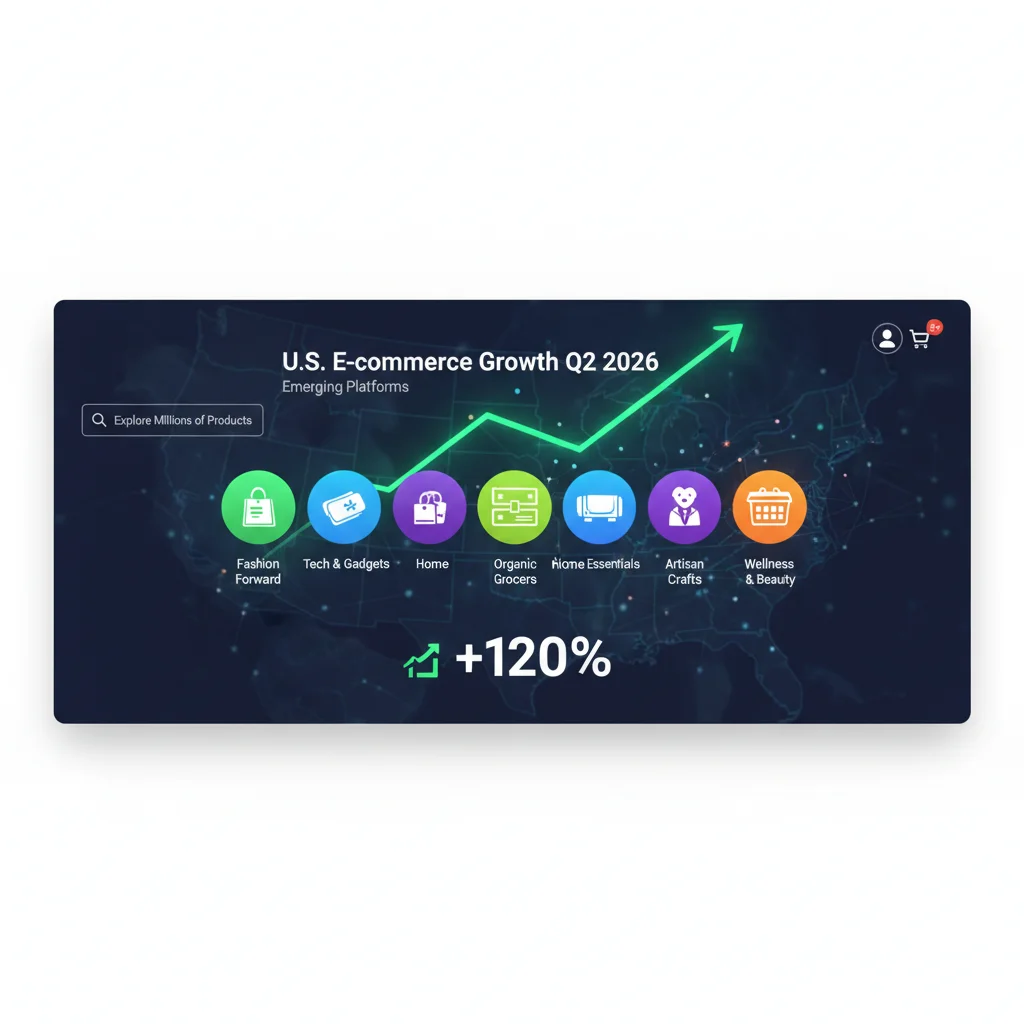
Decoding the 15% Surge: Emerging E-commerce Platforms in the U.S. (Q2 2026)
The digital retail landscape is in a constant state of flux, a dynamic arena where innovation and adaptation dictate success. As we delve into the second quarter of 2026, a compelling narrative emerges: the significant and sustained growth of Emerging E-commerce Platforms across the United States. Our analysis reveals an impressive 15% growth rate for these platforms, a figure that not only signifies robust expansion but also signals a fundamental shift in how consumers shop and businesses operate online. This isn’t merely a fleeting trend; it’s a profound evolution, reshaping market dynamics and offering unprecedented opportunities for businesses agile enough to adapt.
For years, the e-commerce sector has been dominated by a handful of established giants. While their influence remains substantial, the past few quarters, particularly Q2 2026, have showcased a remarkable rise of alternative, often niche-focused, or technologically advanced platforms. These Emerging E-commerce Platforms are not just carving out market share; they are redefining user experience, fostering direct-to-consumer (DTC) relationships, and providing specialized tools that cater to specific business needs. This article will dissect the factors contributing to this 15% growth, explore the characteristics of these burgeoning platforms, and offer insights into what their continued success means for the broader e-commerce ecosystem in the U.S.
Understanding this growth isn’t just about statistics; it’s about recognizing the underlying forces that are propelling these platforms forward. From advancements in AI-driven personalization to the increasing demand for sustainable and ethical consumption, these platforms are tapping into evolving consumer values and technological capabilities. Businesses, both large and small, are increasingly recognizing the strategic advantage of diversifying their online presence beyond traditional marketplaces, seeking out platforms that offer greater control, enhanced brand storytelling, and more direct engagement with their target audience. This strategic shift is a cornerstone of the 15% growth observed in Q2 2026, making the landscape of Emerging E-commerce Platforms a critical area of study for anyone invested in the future of retail.
The Catalyst for Growth: Why are Emerging E-commerce Platforms Thriving?
The impressive 15% growth of Emerging E-commerce Platforms in the U.S. during Q2 2026 is not accidental but rather the culmination of several interconnected factors. These catalysts span technological innovation, shifting consumer behaviors, and evolving business strategies. To truly grasp the significance of this growth, we must examine these drivers in detail.
Technological Advancements and Niche Specialization
One primary driver is the rapid pace of technological innovation. Many Emerging E-commerce Platforms are built on modern, flexible architectures that allow for greater customization, faster deployment of new features, and seamless integration with third-party tools. This technological agility enables them to offer highly specialized solutions that cater to specific industries or product categories. For instance, platforms focusing on sustainable goods, handcrafted items, or subscription box services can provide tailored functionalities that mega-platforms often cannot. This niche specialization attracts both businesses looking for a more relevant audience and consumers seeking curated experiences, directly contributing to the observed 15% growth.
Furthermore, the integration of artificial intelligence (AI) and machine learning (ML) is playing a pivotal role. These technologies are being used to enhance personalization, improve search functionalities, optimize pricing, and streamline customer service. AI-driven recommendations, for example, can significantly boost conversion rates and customer satisfaction, making these platforms more attractive to both sellers and buyers. The ability of these Emerging E-commerce Platforms to rapidly adopt and implement such cutting-edge technologies gives them a competitive edge and fuels their expansion.
Changing Consumer Expectations and Values
Consumer behavior has undergone a profound transformation. Today’s shoppers are not just looking for products; they are seeking experiences, values, and convenience. The 15% growth in Emerging E-commerce Platforms reflects a strong alignment with these evolving expectations. Consumers are increasingly valuing transparency, ethical sourcing, and sustainability. Many emerging platforms are built around these principles, attracting a growing segment of conscious consumers who prefer to support businesses that share their values.
Moreover, there’s a growing desire for unique and personalized products. Generic mass-market offerings are losing some of their appeal, paving the way for platforms that champion independent creators, small businesses, and bespoke items. These platforms often foster a stronger sense of community and direct engagement between sellers and buyers, creating a more intimate and trustworthy shopping environment. This shift from transactional shopping to relational commerce is a powerful engine behind the success of these new platforms.
Empowering Small and Medium-sized Businesses (SMBs)
SMBs are finding new avenues for growth through Emerging E-commerce Platforms. While large marketplaces offer broad reach, they often come with high fees, stringent rules, and intense competition. Emerging platforms, on the other hand, frequently provide more favorable terms, greater control over branding, and dedicated support for smaller enterprises. They offer intuitive interfaces and comprehensive tools that simplify inventory management, order fulfillment, marketing, and customer relationship management, often at a more accessible price point.
This empowerment allows SMBs to compete more effectively, reach global audiences without massive upfront investments, and build stronger brands. The increased success of SMBs on these platforms directly translates into higher transaction volumes and, consequently, contributes significantly to the overall 15% growth rate. These platforms are democratizing e-commerce, enabling a wider array of businesses to thrive in the digital economy.
Key Characteristics Defining These Growing Platforms
What sets these Emerging E-commerce Platforms apart from the established behemoths? Their 15% growth in Q2 2026 is attributable to a distinct set of characteristics that resonate with modern businesses and consumers. Understanding these attributes is crucial for any business contemplating its e-commerce strategy.
Focus on Niche Markets and Communities
Unlike general marketplaces that try to be everything to everyone, many successful Emerging E-commerce Platforms are highly specialized. They cater to specific interests, hobbies, or demographics. Examples include platforms for vintage clothing, artisanal foods, digital art, or even highly specific B2B supplies. This niche focus allows them to build strong, engaged communities of buyers and sellers who share common interests. This community aspect fosters loyalty and repeat business, which are vital for sustained growth. The targeted audience means less marketing spend for sellers and a more relevant shopping experience for buyers.
Enhanced Personalization and User Experience
The ability to deliver a highly personalized experience is a hallmark of these platforms. Leveraging data analytics and AI, they can offer product recommendations, customized storefronts, and tailored marketing messages that resonate deeply with individual users. This goes beyond simple product suggestions; it extends to personalized content, community features, and even unique pricing models. A superior user experience, characterized by intuitive navigation, fast loading times, and seamless checkout processes, is also a top priority, ensuring that customers have a positive interaction from start to finish.
Robust Integration Capabilities and API-First Approaches
Modern businesses rely on a complex ecosystem of software tools, from CRM to accounting to email marketing. Emerging E-commerce Platforms are designed with robust API (Application Programming Interface) capabilities, allowing for seamless integration with a wide array of third-party applications. This API-first approach provides businesses with the flexibility to connect their existing tools, automate workflows, and create a highly customized operational environment. This extensibility is a major draw for businesses looking to scale efficiently without being locked into proprietary systems, further fueling the 15% growth.
Direct-to-Consumer (DTC) Empowerment
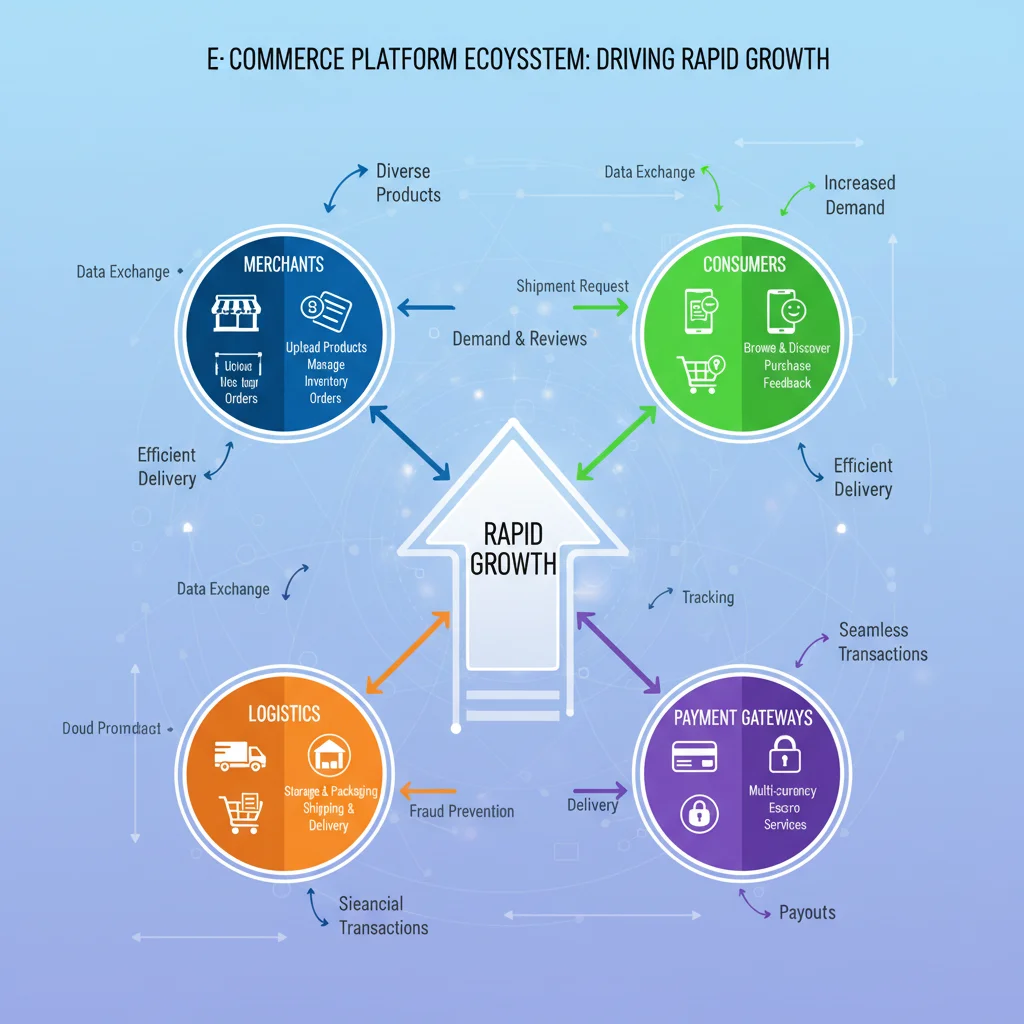
Many Emerging E-commerce Platforms are designed to empower brands to establish and grow their direct-to-consumer channels. This means providing tools for branding, content creation, customer engagement, and analytics that allow businesses to build a direct relationship with their customers, bypassing traditional intermediaries. The DTC model offers several advantages, including higher profit margins, greater control over brand messaging, and direct access to customer feedback. Platforms that facilitate this model are seeing significant uptake, as brands increasingly seek to own their customer relationships.
Emphasis on Sustainability and Ethical Practices
As consumer awareness around environmental and social issues grows, platforms that prioritize sustainability and ethical practices are gaining traction. This includes features that highlight eco-friendly products, transparent supply chains, fair trade certifications, and carbon offset options. By integrating these values into their core offerings, these Emerging E-commerce Platforms attract a growing segment of consumers who are willing to pay a premium for products that align with their ethical stance. This ethical alignment is not just a marketing ploy; it’s a fundamental part of their business model, contributing to their appeal and growth.
Impact on the Broader E-commerce Landscape
The 15% growth of Emerging E-commerce Platforms is not occurring in a vacuum; it has significant implications for the entire U.S. e-commerce landscape. This rise is forcing established players to innovate, creating new competitive dynamics, and opening up fresh opportunities for businesses and investors alike.
Increased Competition and Innovation
The success of emerging platforms is undoubtedly increasing competition within the e-commerce sector. This heightened rivalry is a boon for consumers, as it drives innovation across the board. Larger platforms are compelled to enhance their offerings, improve user experience, and even adopt some of the niche-focused strategies employed by their smaller counterparts. This competitive pressure leads to better services, more diverse product selections, and ultimately, a more robust and dynamic online retail environment. The established players are now watching these Emerging E-commerce Platforms closely, often seeking acquisition targets or inspiration for their own feature development.
Diversification of Online Retail Channels
For businesses, the proliferation of Emerging E-commerce Platforms means a greater diversification of online retail channels. Relying solely on one or two major marketplaces is becoming a less viable strategy. Businesses are increasingly adopting a multi-platform approach, leveraging the unique strengths of various platforms to reach different customer segments or achieve specific business objectives. This diversification reduces risk, expands market reach, and allows for more tailored marketing and sales strategies. The 15% growth indicates that this multi-channel approach is gaining significant traction among savvy businesses.
Shifting Investment and Venture Capital Focus
The impressive growth figures for Emerging E-commerce Platforms are naturally attracting significant attention from investors and venture capitalists. There’s a noticeable shift in investment focus towards disruptive technologies, niche markets, and platforms that demonstrate strong community building and sustainable growth models. This influx of capital further fuels the development and expansion of these platforms, allowing them to scale operations, invest in R&D, and enhance their market presence. The investment community recognizes the long-term potential in these agile and innovative players, driving their continued upward trajectory.
Challenges and Opportunities for Emerging Platforms
While the 15% growth is undeniably impressive, Emerging E-commerce Platforms also face their share of challenges. However, within these challenges lie significant opportunities for further innovation and expansion.
Scaling Infrastructure and Maintaining Customer Service
As these platforms grow rapidly, scaling their technological infrastructure and maintaining high levels of customer service can become a significant challenge. Ensuring uptime, managing increasing data loads, and providing responsive support to a growing user base requires substantial investment and strategic planning. Platforms that can effectively navigate these scaling hurdles will be well-positioned for sustained success. This is where robust cloud infrastructure and AI-driven support solutions become critical.
Building Trust and Brand Recognition
Establishing trust and building strong brand recognition against well-entrenched competitors is another hurdle. Consumers often gravitate towards familiar names. Emerging E-commerce Platforms must invest heavily in marketing, transparent communication, and consistent delivery of value to build their reputation. User reviews, influencer partnerships, and a strong online presence are vital for overcoming this challenge and converting initial interest into long-term loyalty. The 15% growth shows they are making inroads, but the journey to widespread recognition is ongoing.
Regulatory Compliance and Data Security
Navigating the complex landscape of regulatory compliance, especially concerning data privacy (e.g., CCPA, state-specific regulations), and ensuring robust cybersecurity measures are paramount. Breaches of trust or data can severely damage a platform’s reputation and halt its growth. Emerging E-commerce Platforms must prioritize security from the ground up, implementing best practices and staying abreast of evolving legal requirements. This is not just a compliance issue; it’s a fundamental aspect of building a trustworthy platform.

The Road Ahead: Projections and Future Trends
Given the strong performance in Q2 2026, with Emerging E-commerce Platforms demonstrating a 15% growth, what can we expect for the remainder of 2026 and beyond? Several trends are likely to shape their continued evolution.
Hyper-Personalization and AI Integration
The trend towards hyper-personalization will only intensify. Future Emerging E-commerce Platforms will leverage even more sophisticated AI and machine learning algorithms to create truly bespoke shopping experiences. This includes dynamic pricing, predictive analytics for inventory management, and even generative AI for product descriptions and marketing content. The goal will be to make every customer interaction feel uniquely tailored, further enhancing engagement and conversion rates.
Increased Focus on Social Commerce and Live Shopping
Social commerce and live shopping are rapidly gaining traction, particularly among younger demographics. Emerging E-commerce Platforms that successfully integrate these features, allowing for seamless purchasing directly from social media feeds or during live video streams, will unlock significant growth potential. This blurs the lines between entertainment, social interaction, and shopping, creating new avenues for discovery and sales.
Web3 and Decentralized E-commerce
While still in nascent stages, the principles of Web3 and decentralized e-commerce (DeCom) are starting to influence the development of new platforms. Concepts like NFTs for product authenticity, decentralized autonomous organizations (DAOs) for platform governance, and blockchain for secure transactions could redefine how Emerging E-commerce Platforms operate. While mainstream adoption is still some way off, platforms exploring these technologies could capture early mover advantages and offer entirely new value propositions.
Sustainable and Circular Economy Models
The demand for sustainable and ethically sourced products will continue to grow, pushing Emerging E-commerce Platforms to adopt and promote circular economy models. This includes facilitating product repairs, resales, and recycling programs directly within the platform. Platforms that can authentically integrate these practices into their core business model will not only attract environmentally conscious consumers but also contribute to a more sustainable future for retail, solidifying their growth trajectory.
Conclusion: A Dynamic Future for U.S. E-commerce
The 15% growth of Emerging E-commerce Platforms in the U.S. during Q2 2026 is a clear indicator of a vibrant, evolving market. These platforms, characterized by their agility, niche focus, technological sophistication, and commitment to evolving consumer values, are not just competing; they are innovating and expanding the very definition of online retail. They empower SMBs, offer unique shopping experiences, and are driving a new wave of competition and diversification across the digital landscape.
For businesses, the message is clear: ignoring these emerging players is no longer an option. Understanding their strengths, considering multi-platform strategies, and adapting to the evolving technological and consumer landscape are critical for sustained success. For consumers, this trend promises more choice, more personalized experiences, and platforms that increasingly align with their values.
As we move further into 2026 and beyond, the influence of these Emerging E-commerce Platforms will only continue to grow. Their ability to adapt, innovate, and cater to specific needs positions them as key drivers of future e-commerce growth. The 15% surge in Q2 is just a snapshot of a larger, ongoing transformation that promises a dynamic and exciting future for online retail in the United States.