Microlearning for Sales Teams: Boost Product Knowledge by 35% in 2026

Microlearning for Sales Teams: How U.S. Companies are Boosting Product Knowledge by 35% in 2026
In the fiercely competitive landscape of modern business, a well-informed sales team isn’t just an asset; it’s the bedrock of sustained success. U.S. companies, always at the forefront of innovation, are increasingly recognizing that traditional, lengthy training sessions are often ineffective in equipping sales professionals with the dynamic product knowledge they need. The solution? Microlearning for sales teams. This agile, bite-sized approach to education is not merely a trend; it’s a strategic imperative, projected to boost product knowledge by an astounding 35% by 2026 across leading organizations.
Imagine a sales professional on the go, needing to quickly grasp a new product feature or refresh their understanding of a competitor’s offering before an important client meeting. Traditional training methods would require them to sift through hours of material or attend a full-day seminar. With microlearning, this critical information is available in concise, easily digestible modules, often just a few minutes long, accessible right from their smartphone. This immediate access to relevant knowledge empowers sales teams to be more confident, articulate, and ultimately, more successful.
The Evolving Sales Landscape and the Need for Agile Learning
The sales environment is in constant flux. New products, evolving customer demands, competitive pressures, and rapid technological advancements mean that product information can become outdated almost as quickly as it’s introduced. Sales professionals are under immense pressure to be experts, not just in sales techniques, but in the intricate details of what they are selling. This constant need for updated information makes traditional, infrequent training models obsolete.
Sales teams often face several challenges that hinder their product knowledge:
- Information Overload: Too much information delivered at once leads to poor retention.
- Time Constraints: Sales professionals are always on the clock, making it difficult to dedicate long periods to training.
- Engagement Gap: Lengthy, passive training sessions can lead to disengagement and boredom.
- Relevance Disconnect: Generic training often fails to address specific, real-time needs.
These challenges underscore the necessity for a more dynamic and flexible approach to learning. This is precisely where microlearning for sales teams shines, offering a tailored solution that fits seamlessly into the fast-paced life of a sales professional.
What Exactly is Microlearning?
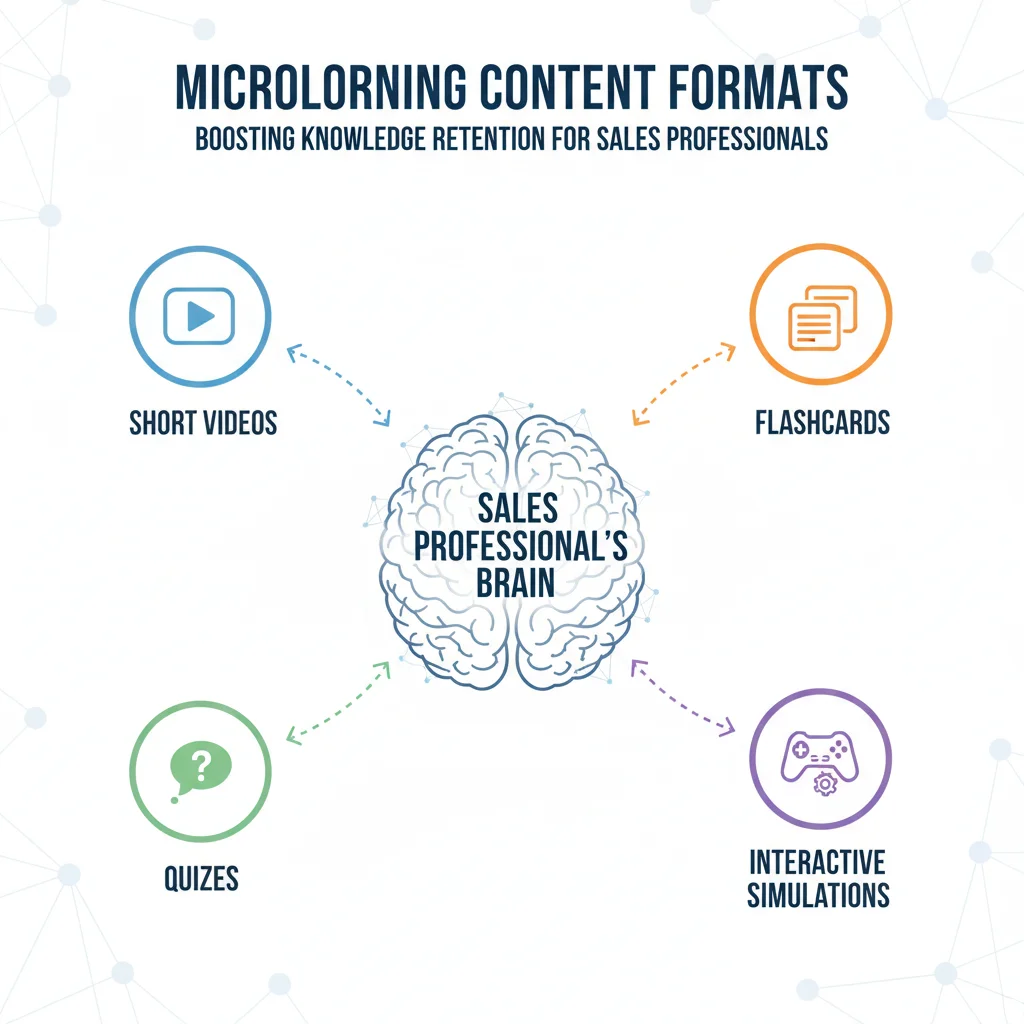
Microlearning, at its core, is the delivery of learning content in small, focused bursts. Instead of a two-hour webinar on an entire product line, microlearning breaks it down into several 3-5 minute modules, each focusing on a single concept, feature, or benefit. These modules can take various forms, including:
- Short videos (e.g., product demos, feature explanations)
- Interactive quizzes or flashcards
- Infographics or quick reference guides
- Short audio clips or podcasts
- Brief simulations or case studies
The key characteristics of effective microlearning are its brevity, focus, and accessibility. It’s designed to be consumed quickly, often on mobile devices, and directly applicable to immediate tasks or challenges. This approach directly addresses the limitations of traditional training by making learning efficient, engaging, and highly relevant.
Why U.S. Companies are Embracing Microlearning for Sales Teams
The adoption of microlearning for sales teams isn’t accidental; it’s a strategic decision driven by tangible benefits that directly impact the bottom line. Here’s why U.S. companies are increasingly integrating this methodology:
1. Enhanced Knowledge Retention and Recall
The human brain is not designed for continuous, long-form information absorption. Research consistently shows that shorter, focused learning sessions lead to better retention. Microlearning leverages this cognitive principle by delivering information in manageable chunks, allowing sales professionals to process, understand, and commit details to memory more effectively. This means when a client asks a specific question about a product, the sales rep can recall the answer confidently and accurately.
2. Improved Sales Performance and Quicker Ramp-Up Time
When sales teams have instant access to up-to-date product knowledge, they are better equipped to handle objections, highlight key benefits, and tailor solutions to customer needs. This translates directly into higher conversion rates and increased sales. Furthermore, microlearning significantly reduces the ramp-up time for new hires, enabling them to become productive members of the sales force much faster than with traditional, extensive onboarding programs.
3. Increased Engagement and Motivation
Traditional training can often feel like a chore. Microlearning, with its concise, interactive, and often gamified elements, makes learning more enjoyable and less daunting. The ability to learn on demand, at their own pace, and in formats they prefer (video, audio, text) keeps sales professionals more engaged and motivated to continuously improve their product knowledge.
4. Cost-Effectiveness and Scalability
Developing and deploying microlearning modules can be significantly more cost-effective than organizing lengthy in-person training sessions, which incur expenses for venues, travel, instructors, and lost selling time. Once created, microlearning content can be easily updated and scaled across different teams, regions, and even international markets, making it a highly efficient solution for large organizations.
5. Agility and Adaptability to Market Changes
The market doesn’t wait. When a new product is launched, a feature is updated, or a competitor introduces a new offering, sales teams need to be informed immediately. Microlearning allows companies to rapidly create and deploy targeted updates, ensuring their sales force is always equipped with the latest information to stay competitive.
Key Strategies for Implementing Microlearning for Sales Teams
Successfully integrating microlearning for sales teams requires a thoughtful strategy. Here are key steps and considerations for U.S. companies:
1. Identify Core Knowledge Gaps and Learning Objectives
Before developing content, understand what specific product knowledge areas need improvement. Conduct surveys, analyze sales performance data, and gather feedback from sales managers and reps. Define clear, measurable learning objectives for each microlearning module. For example, instead of ‘understand the new product,’ aim for ‘identify three key benefits of the new product for small businesses.’
2. Break Down Complex Information into Bite-Sized Chunks
This is the essence of microlearning. Take large topics and distill them into their most critical components. Each module should focus on a single concept, skill, or piece of information. Think about what a sales rep absolutely needs to know to address a specific customer question or overcome an objection.
3. Utilize Diverse Content Formats
Varying the content format keeps learning fresh and caters to different learning styles. Combine short videos, interactive quizzes, infographics, and quick reference guides. For example, a new product feature could be introduced with a 2-minute video demo, followed by a 3-question quiz, and a downloadable one-page PDF summary.
4. Ensure Mobile-First Accessibility
Sales professionals are often on the go. Microlearning content must be easily accessible and fully functional on smartphones and tablets. This means responsive design, intuitive navigation, and content optimized for smaller screens. A dedicated mobile learning app can significantly enhance the user experience.
5. Incorporate Gamification and Interactive Elements
To boost engagement, integrate gamified elements like points, badges, leaderboards, and challenges. Short, interactive quizzes, drag-and-drop exercises, and scenario-based simulations can make learning more active and enjoyable, turning training into a fun competition.
6. Provide Just-in-Time Learning Opportunities
The true power of microlearning for sales teams lies in its ability to provide information exactly when it’s needed. Integrate microlearning modules within your CRM system or sales enablement platform so reps can quickly pull up relevant information during a client call or before a meeting. Contextual learning is highly effective.
7. Measure and Iterate
Track key metrics such as module completion rates, quiz scores, knowledge retention, and ultimately, their impact on sales performance. Gather feedback from sales teams to understand what’s working and what isn’t. Use this data to continuously refine and improve your microlearning content and strategy.
Real-World Impact: How U.S. Companies are Benefiting
Leading U.S. companies across various sectors are already seeing significant returns on their investment in microlearning for sales teams. For instance, a major tech company reported a 20% increase in sales conversion rates for a complex product line after implementing daily 5-minute microlearning modules on product specifications and common customer objections. Another pharmaceutical firm saw a 30% reduction in new sales rep onboarding time, allowing them to hit their sales targets much sooner.
These success stories highlight a common thread: microlearning empowers sales professionals. It gives them the confidence that comes from deep product understanding, the agility to adapt to customer needs, and the efficiency to maximize their selling time. The projected 35% boost in product knowledge by 2026 isn’t an arbitrary number; it’s a reflection of the compounding benefits of a well-executed microlearning strategy.
Overcoming Potential Challenges
While the benefits are clear, implementing microlearning for sales teams isn’t without its challenges. Companies might face:
- Content Creation: Developing high-quality, engaging, and concise microlearning content requires skill and resources.
- Integration: Seamlessly integrating microlearning into existing sales workflows and tech stacks can be complex.
- Maintaining Engagement: While microlearning is inherently engaging, sustained interest requires fresh content and varied approaches.
- Measurement: Attributing direct sales results solely to microlearning can be challenging without robust analytics.
To overcome these, companies should invest in instructional design expertise, leverage modern learning platforms that offer easy integration, regularly refresh content, and establish clear KPIs from the outset to track effectiveness.
The Future of Sales Training: Personalized and Adaptive Microlearning
Looking ahead, the evolution of microlearning for sales teams will likely involve even greater personalization and adaptive learning paths. Imagine AI-driven systems that identify individual sales reps’ knowledge gaps based on their performance data and automatically deliver tailored microlearning modules to address those specific weaknesses. This hyper-personalized approach would maximize efficiency and impact.
Furthermore, the integration of virtual reality (VR) and augmented reality (AR) into microlearning could offer immersive product simulations and interactive role-playing scenarios, allowing sales professionals to practice their pitches and product explanations in a risk-free environment. These advancements promise to make sales training even more effective and engaging.

Conclusion: A Strategic Advantage for U.S. Sales Organizations
The evidence is compelling: microlearning for sales teams is not just a passing educational fad; it is a powerful, strategic tool that addresses the unique learning needs of modern sales professionals. By embracing this agile methodology, U.S. companies are not only solving long-standing challenges in product knowledge retention and sales enablement but are also positioning themselves for significant competitive advantage.
The projected 35% boost in product knowledge by 2026 for companies adopting microlearning is a testament to its effectiveness. It signifies a shift towards smarter, more efficient, and more impactful training that directly translates into improved sales performance, higher revenue, and a more confident, capable sales force. For any organization looking to empower its sales team and stay ahead in a rapidly changing market, investing in microlearning is no longer an option, but a necessity.
Start exploring how microlearning can transform your sales training today. The future of sales success is in bite-sized knowledge, delivered precisely when and where it’s needed most.