Microlearning for Sales Enablement: Achieve 90% Content Retention by 2026

The Role of Microlearning in 2026 Sales Enablement: Achieving 90% Content Retention (PRACTICAL SOLUTIONS)
In the rapidly evolving landscape of sales, staying ahead means not just acquiring knowledge, but truly retaining it. As we look towards 2026, the traditional models of sales training are proving increasingly ineffective in the face of information overload and short attention spans. Enter microlearning sales enablement – a strategic approach poised to revolutionize how sales teams learn, adapt, and perform. This article delves into the transformative power of microlearning, offering practical solutions to achieve an unprecedented 90% content retention rate for your sales force by 2026.
The sales environment of tomorrow demands agility, deep product knowledge, and impeccable communication skills. Yet, studies consistently show that a significant portion of traditional training content is forgotten within days or weeks. This knowledge decay is a critical challenge, directly impacting sales performance, customer engagement, and ultimately, revenue. Microlearning, with its focus on bite-sized, highly targeted content, emerges as the most potent antidote to this pervasive problem. By breaking down complex information into digestible modules, microlearning ensures that sales professionals can absorb, recall, and apply knowledge far more effectively than with conventional methods.
Our journey through this comprehensive guide will explore the ‘why’ and ‘how’ of integrating microlearning into your sales enablement strategy. We’ll examine the core principles of microlearning, its undeniable benefits for sales teams, and practical, actionable steps to implement a successful program. From content creation to delivery platforms and measuring impact, we’ll cover everything you need to know to harness the full potential of microlearning sales enablement and propel your team to new heights of success.
Understanding the Foundation: What is Microlearning in Sales Enablement?
At its heart, microlearning is about delivering learning content in small, focused bursts. For sales enablement, this means breaking down extensive product guides, sales methodologies, competitive analyses, and objection handling techniques into short, engaging modules. These modules typically range from 2 to 10 minutes in length and can take various forms: short videos, interactive quizzes, infographics, quick simulations, or even brief audio snippets.
The key differentiator of microlearning sales enablement lies in its adaptability and immediate applicability. Instead of marathon training sessions that pull sales reps away from their core duties, microlearning integrates seamlessly into their daily workflow. A rep can quickly review a specific product feature before a client call, practice a new sales pitch technique during a coffee break, or refresh their memory on a competitor’s weakness minutes before a meeting. This ‘just-in-time’ learning model is incredibly powerful, addressing the immediate knowledge gaps that often arise in the dynamic sales process.
Core Principles of Effective Microlearning for Sales
- Bite-Sized Content: The most fundamental principle. Information is segmented into small, manageable chunks, making it easier to consume and retain.
- Targeted and Relevant: Each microlearning module focuses on a single learning objective, directly addressing a specific skill or knowledge point relevant to the salesperson’s role.
- Engaging and Interactive: Static, text-heavy content is replaced with dynamic, interactive elements to maintain engagement and facilitate active learning.
- Accessible Anytime, Anywhere: Content is easily accessible on multiple devices (mobile, tablet, desktop), allowing reps to learn on their own terms and schedules.
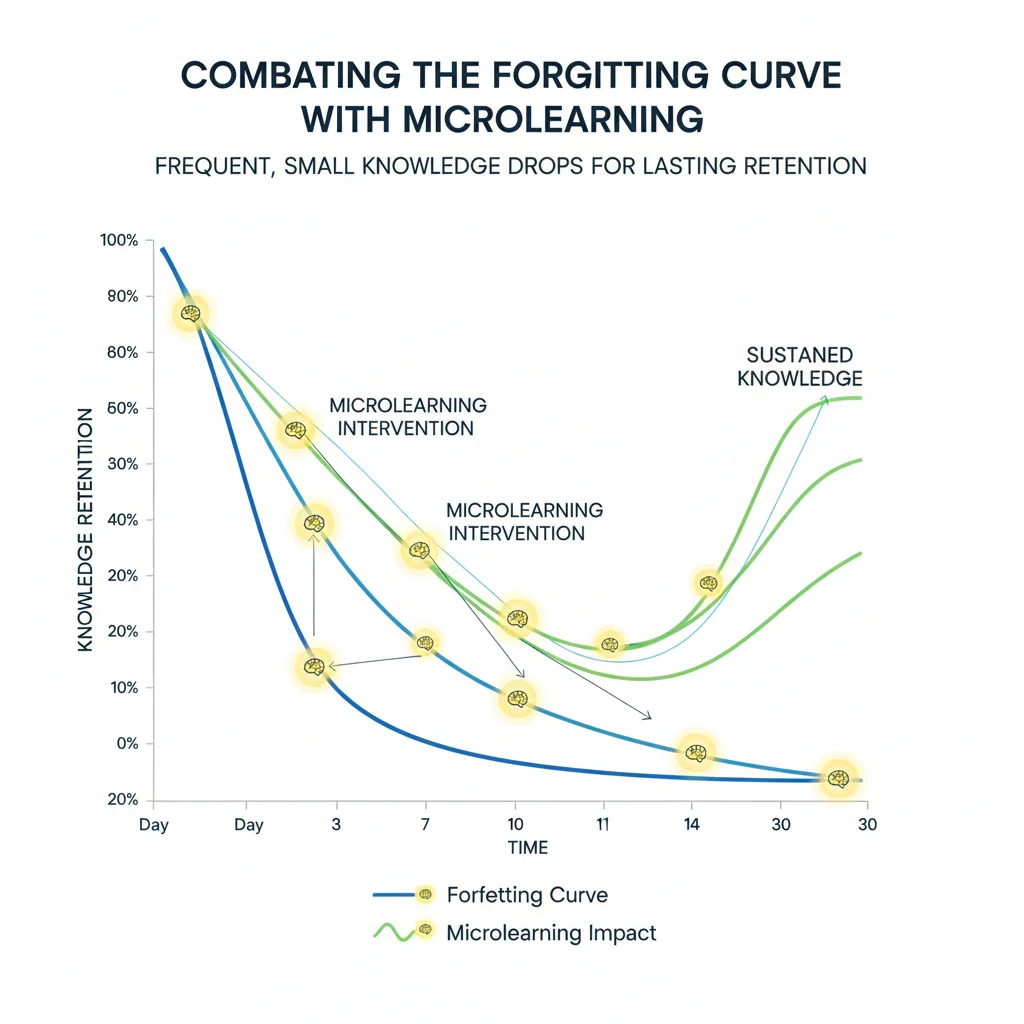
- Reinforcement and Repetition: Microlearning is often designed for spaced repetition, combating the ‘forgetting curve’ by revisiting key concepts at optimal intervals.
- Action-Oriented: The learning is directly tied to practical application, enabling sales reps to immediately use what they’ve learned in real-world scenarios.
By adhering to these principles, companies can create a learning ecosystem that not only educates but truly empowers their sales force, ensuring that critical information sticks and translates into improved performance.
The Unstoppable Benefits of Microlearning for Sales Teams by 2026
The shift towards microlearning sales enablement isn’t just a trend; it’s a strategic imperative with tangible benefits that directly impact the bottom line. By 2026, organizations that have embraced this approach will see significant advantages over their competitors.
1. Dramatically Improved Content Retention (Towards 90%)
This is the holy grail of sales training. Traditional long-form training sessions often lead to a rapid decay of knowledge – the infamous ‘forgetting curve.’ Microlearning directly counters this. By providing information in small, digestible chunks and facilitating spaced repetition, it helps cement knowledge in long-term memory. Imagine sales reps recalling 90% of product benefits, objection handling techniques, or competitive differentiators when they need them most – during a live customer interaction. This level of retention translates directly into more confident pitches, better answers to customer questions, and ultimately, higher close rates.
2. Enhanced Sales Productivity and Reduced Time-to-Competency
Sales reps spend less time in lengthy training sessions and more time selling. Microlearning allows them to quickly acquire specific skills or knowledge points as needed, reducing the time it takes for new hires to become fully productive and for existing reps to master new products or sales strategies. The ‘just-in-time’ nature of microlearning means reps can access crucial information precisely when they require it, minimizing disruption to their selling activities.
3. Greater Engagement and Motivation
Let’s be honest: traditional training can be tedious. Microlearning, with its varied formats (video, gamification, interactive quizzes) and short duration, is inherently more engaging. It respects the sales rep’s valuable time and caters to modern learning preferences. When learning is enjoyable and directly relevant, motivation soars, leading to higher completion rates and a more proactive approach to skill development.
4. Agility and Adaptability in a Dynamic Market
The sales landscape is constantly changing – new products, updated messaging, evolving competitor strategies. Microlearning platforms allow for rapid content creation and deployment. When a new feature is launched or a competitor makes a move, sales enablement teams can quickly create and distribute a 2-minute video or infographic update, ensuring the entire sales force is immediately armed with the latest information. This agility is crucial for maintaining a competitive edge.
5. Personalized Learning Paths
Not all sales reps have the same needs. Microlearning platforms can often be integrated with CRM data to identify individual skill gaps and recommend personalized learning modules. A rep struggling with objection handling might receive targeted micro-lessons on that topic, while another focusing on a new market segment gets relevant product deep-dives. This tailored approach maximizes the impact of learning efforts.
6. Improved Coaching and Feedback
Microlearning can provide valuable data on how reps are engaging with content and where they might be struggling. Sales managers can use this data to offer more targeted coaching and support, turning insights into actionable improvements. For example, if a team consistently performs poorly on a quiz about a specific product feature, managers know exactly where to focus their coaching efforts.
These benefits collectively paint a clear picture: microlearning sales enablement is not just an add-on; it’s a fundamental shift that empowers sales teams to be more knowledgeable, productive, and ultimately, more successful in the competitive market of 2026 and beyond.
Practical Solutions: Implementing Microlearning for 90% Content Retention
Achieving 90% content retention with microlearning sales enablement requires more than just breaking down content; it demands a strategic approach to design, delivery, and continuous optimization. Here are practical solutions to guide your implementation:
1. Conduct a Comprehensive Knowledge Gap Analysis
Before you create any content, understand what your sales team truly needs to learn. This involves:
- Performance Data Review: Analyze sales metrics (conversion rates, deal sizes, sales cycles) to identify areas of weakness.
- Manager Feedback: Gather insights from sales managers on common challenges, skill deficiencies, and frequently asked questions from reps.
- Sales Rep Surveys/Interviews: Directly ask reps what information they lack or struggle to recall.
- Customer Feedback: Understand what information customers find lacking or confusing from your sales team.
This analysis will inform your microlearning content strategy, ensuring every module addresses a real need.
2. Design Engaging and Diverse Microlearning Modules
Variety is key to maintaining engagement. Your microlearning content should be dynamic and cater to different learning styles:
- Short Video Tutorials (2-5 minutes): Ideal for product demos, process explanations, or role-playing snippets.
- Interactive Quizzes and Flashcards: Perfect for reinforcing key facts, product specifications, or competitive advantages.
- Infographics and Quick Guides: Excellent for visualizing complex data, sales process steps, or buyer personas.
- Scenario-Based Simulations: Allow reps to practice objection handling, pitching, or negotiation in a low-stakes environment.
- Audio Snippets/Podcasts (3-7 minutes): Useful for commuting or quick refreshers on sales tips or industry news.
- Case Studies/Success Stories (brief): Inspire and educate with real-world examples of successful sales strategies.
Focus on one learning objective per module and ensure a clear call to action or takeaway.
3. Leverage the Right Technology Platform
A robust Learning Experience Platform (LXP) or Learning Management System (LMS) with microlearning capabilities is crucial. Look for platforms that offer:
- Mobile-First Design: Essential for ‘learning on the go.’
- Intuitive User Interface: Easy for reps to navigate and find content.
- Content Authoring Tools: Enables quick creation and updates of micro-content.
- Analytics and Reporting: Track completion rates, engagement, and performance to identify areas for improvement.
- Integration Capabilities: Connects with CRM, sales enablement tools, and other systems for a seamless experience.
- Gamification Features: Leaderboards, badges, and points can boost motivation and friendly competition.
4. Implement Spaced Repetition and Reinforcement
This is critical for achieving high retention. Don’t just deliver content once. Design a system where key concepts are revisited:
- Scheduled Reminders: Automatically push short quizzes or refreshers on previously learned topics.
- Adaptive Learning Paths: The system identifies knowledge gaps based on quiz results and recommends relevant modules.
- Daily/Weekly Challenges: Short, optional challenges to keep knowledge fresh and competitive.
The goal is to gently re-expose reps to information before they forget it, solidifying it in their memory.
5. Integrate Microlearning into the Sales Workflow
For maximum impact, microlearning shouldn’t feel like an extra task. It should be an integrated part of the sales rep’s day:
- Pre-Call Prep: A 2-minute video on a specific client’s industry or a product feature relevant to their needs.
- Post-Call Review: A quick quiz on what was discussed or an interactive module on how to handle a specific objection encountered.
- Product Updates: Short announcements and feature explanations delivered instantly.
- Sales Meeting Agendas: Incorporate a 5-minute microlearning session at the start of team meetings.
When learning is contextual and timely, its effectiveness skyrockets.
6. Foster a Culture of Continuous Learning
Leadership buy-in is paramount. Sales leaders must champion microlearning, encourage its use, and integrate it into performance reviews. Make learning a part of the team’s DNA, celebrating achievements and providing incentives for engagement. Create a feedback loop where reps can suggest new microlearning topics or improvements to existing ones.

7. Measure, Analyze, and Iterate
Microlearning is not a set-it-and-forget-it solution. Continuously monitor its effectiveness:
- Engagement Metrics: Track module completion rates, time spent, and frequency of access.
- Knowledge Retention Scores: Use quizzes and assessments to measure how well information is being retained over time.
- Sales Performance Metrics: Correlate microlearning engagement with improvements in key sales KPIs (e.g., increased conversion rates, faster deal cycles, higher average deal value).
- Qualitative Feedback: Regularly solicit feedback from sales reps and managers.
Use these insights to refine your content, adjust delivery methods, and ensure your microlearning sales enablement program remains highly effective and relevant.
Overcoming Challenges in Microlearning Implementation
While the benefits of microlearning sales enablement are compelling, successful implementation isn’t without its challenges. Proactive planning and strategic foresight can help overcome these hurdles.
1. Content Overload vs. Bite-Sized
The temptation to simply chop up existing long-form content into smaller pieces can lead to ineffective microlearning. True microlearning requires a re-thinking of content. Each module needs to be self-contained, focused on a single learning objective, and designed for quick consumption. This requires instructional designers to be adept at distilling complex information into its most essential components.
2. Ensuring Consistency and Quality
With many short modules, maintaining a consistent brand voice, quality, and instructional design standard can be challenging. Establishing clear guidelines for content creation, using templates, and conducting thorough reviews are crucial. A dedicated sales enablement content team or a specialized vendor can help manage this.
3. Technology Adoption and Integration
Even the best microlearning platform is useless if sales reps don’t use it. Ensure the chosen platform is user-friendly, integrates seamlessly with existing sales tools (CRM, communication apps), and is actively promoted by sales leadership. Provide initial training on how to use the platform and highlight its benefits to the reps’ daily work.
4. Measuring ROI Effectively
Demonstrating the return on investment (ROI) for microlearning can be complex. It requires robust analytics that connect learning engagement and knowledge retention to tangible sales performance metrics. Develop clear KPIs from the outset and continuously track them, presenting data that correlates microlearning efforts with improved sales outcomes.
5. Keeping Content Up-to-Date
The sales environment is dynamic. Products change, competitors evolve, and market conditions shift. A microlearning program must have a clear process for continuous content updates and retirement of outdated modules. Assign ownership for content maintenance and schedule regular reviews to ensure accuracy and relevance.
By addressing these potential challenges head-on, organizations can build a resilient and highly effective microlearning sales enablement program that delivers sustained results.
The Future is Now: Microlearning and AI in Sales Enablement by 2026
Looking further into 2026, the synergy between microlearning sales enablement and Artificial Intelligence (AI) will unlock even greater potential. AI can revolutionize how microlearning content is delivered, personalized, and optimized, pushing content retention rates even higher.
AI-Powered Content Curation and Recommendation
AI algorithms can analyze a sales rep’s performance data, interaction history with learning modules, CRM activity, and even communication patterns to recommend hyper-personalized microlearning content. This means a rep struggling with a specific objection handling technique might automatically receive a relevant video or interactive simulation, without even having to search for it. AI can also curate external content, bringing in relevant industry news or competitor updates in bite-sized formats.
Intelligent Spaced Repetition
AI can take spaced repetition to the next level. Instead of fixed intervals, an AI-powered system can dynamically adjust the timing of knowledge refreshers based on an individual’s learning pace, memory decay patterns, and performance on previous assessments. This ensures optimal timing for reinforcement, maximizing long-term retention.
Automated Content Generation and Localization
While still emerging, AI could assist in generating initial drafts of microlearning content from longer documents or even adapt existing modules for different regional nuances or product variations, significantly speeding up content creation and localization processes.
Performance Prediction and Proactive Intervention
AI can analyze microlearning engagement data in conjunction with sales performance metrics to predict potential performance dips. For example, if a rep hasn’t engaged with recent product update modules, AI might flag this, prompting managers to offer targeted coaching or assign specific refreshers. This proactive approach helps prevent knowledge gaps before they impact sales.
Enhanced Analytics and Insights
AI can process vast amounts of learning and performance data to uncover deeper insights into what microlearning content is most effective, for whom, and under what circumstances. This allows sales enablement teams to continuously refine their strategy for maximum impact, driving towards that 90% content retention goal.
By embracing these AI-driven advancements, organizations can create a truly intelligent and adaptive microlearning sales enablement ecosystem that continuously optimizes learning and performance, making the 90% content retention target not just ambitious, but eminently achievable by 2026.
Conclusion: Your Path to 90% Content Retention with Microlearning
The journey to achieving 90% content retention in sales enablement by 2026 is ambitious but entirely within reach with the strategic implementation of microlearning. The traditional methods of ‘firehose’ training are no longer sustainable in the fast-paced, information-rich sales world. Instead, the future belongs to agile, engaging, and highly effective learning approaches that respect the salesperson’s time and directly contribute to their success.
Microlearning sales enablement offers a powerful framework to overcome the pervasive challenge of knowledge decay. By breaking down complex information into digestible, relevant, and accessible modules, companies can transform how their sales teams learn, retain, and apply critical knowledge. The benefits are clear: increased productivity, higher engagement, faster time-to-competency, and ultimately, significantly improved sales performance.
As you plan your sales enablement strategy for the coming years, consider these practical solutions: conducting thorough needs analyses, designing diverse and engaging content, leveraging robust technology, implementing intelligent spaced repetition, and fostering a culture of continuous learning. Embrace the potential of AI to further personalize and optimize your microlearning initiatives.
By proactively integrating microlearning sales enablement into the very fabric of your sales operations, you are not just investing in training; you are investing in a future where your sales team is consistently well-informed, highly skilled, and exceptionally effective. The 90% content retention target is not just a dream – it’s a strategic advantage waiting to be realized.
Start your microlearning journey today and empower your sales force to conquer the challenges and seize the opportunities of 2026 and beyond.