Next-Gen CPQ Solutions: Streamlining Quoting for US Enterprises by 40%

In today’s hyper-competitive business landscape, the ability to generate accurate, timely, and compelling quotes is paramount for sales success. For US enterprises, the traditional, often manual, quoting process has long been a bottleneck, hindering sales velocity and frustrating customers. However, a new era is dawning with the advent of next-gen CPQ solutions (Configure, Price, Quote). These advanced digital tools are not just improving efficiency; they are fundamentally transforming how businesses approach sales, promising to streamline quoting by an impressive 40% and drive substantial revenue growth by 2026.
The journey from initial customer inquiry to a closed deal is paved with numerous steps, and quoting stands as a critical juncture. Errors in pricing, incorrect product configurations, or slow response times can lead to lost opportunities and damaged customer relationships. This article delves into the transformative power of next-gen CPQ solutions, exploring their core functionalities, the significant benefits they offer, and how US enterprises are leveraging them to gain a competitive edge.
The Evolution of Quoting: From Manual Chaos to Digital Precision
For decades, quoting was a labor-intensive process. Sales representatives would sift through product catalogs, consult spreadsheets for pricing, and manually calculate discounts, often leading to inconsistencies and delays. The complexity only grew with larger product portfolios, intricate pricing rules, and the need for customized solutions. This manual approach was not only inefficient but also prone to human error, directly impacting profitability and customer satisfaction.
The first generation of CPQ tools began to address these challenges by digitizing some aspects of the quoting process. They offered basic configuration capabilities and centralized pricing data. While a significant improvement, these early solutions often lacked the flexibility, scalability, and advanced intelligence required for modern enterprise sales environments.
Enter next-gen CPQ solutions. These are not merely incremental upgrades; they represent a paradigm shift. Built on cloud-native architectures, infused with artificial intelligence (AI) and machine learning (ML), and designed for seamless integration with other enterprise systems, they offer an unprecedented level of automation, accuracy, and strategic insight. They are designed to handle the intricate demands of complex product offerings, dynamic pricing strategies, and global sales operations, making them indispensable for US enterprises aiming for sustained growth.
Unpacking the Core Functionalities of Next-Gen CPQ Solutions
What sets next-gen CPQ solutions apart? It’s their sophisticated blend of features that automate, optimize, and intelligentize every aspect of the quoting process. Let’s break down the key functionalities:
1. Advanced Product Configuration
At the heart of any CPQ system is its configuration engine. Next-gen solutions take this to an entirely new level. They can handle highly complex product catalogs with millions of possible variations, parts, and dependencies. Using rule-based logic and often AI, they guide sales reps through the configuration process, ensuring that only valid and manufacturable product combinations are created. This eliminates errors, reduces the need for constant engineering validation, and empowers sales teams to confidently offer customized solutions.
For US enterprises dealing with highly configurable products, such as industrial machinery, specialized software, or complex service bundles, this capability is a game-changer. It ensures that every quote is technically feasible and meets customer requirements precisely, significantly cutting down on rework and order fulfillment issues.
2. Dynamic Pricing and Discounting
Pricing is rarely static, especially in competitive markets. Next-gen CPQ solutions feature robust pricing engines that can manage complex pricing models, including volume discounts, tiered pricing, subscription pricing, regional pricing, and promotional offers. They can apply these rules dynamically, ensuring that the most accurate and profitable price is always presented.
Furthermore, these systems often incorporate AI-driven insights to suggest optimal pricing strategies based on historical sales data, market conditions, and customer profiles. They can also automate the approval workflow for discounts, ensuring that sales reps stay within predefined guardrails while still having the flexibility to negotiate. This dynamic capability is crucial for maintaining profitability and responding swiftly to market shifts.
3. Automated Quote Generation and Document Management
Once a product is configured and priced, generating a professional, branded quote document is the next step. Next-gen CPQ solutions automate this process entirely. They pull data directly from the system to create polished proposals, contracts, and other sales documents in various formats (PDF, Word, etc.). This not only saves an enormous amount of time but also ensures consistency in branding and messaging across all sales interactions.
Document management features also allow for easy version control, e-signature integration, and secure storage, streamlining the entire sales cycle from quote to contract. This automation reduces administrative burden on sales teams, freeing them up to focus on selling.
4. Seamless Integration with CRM, ERP, and Other Systems
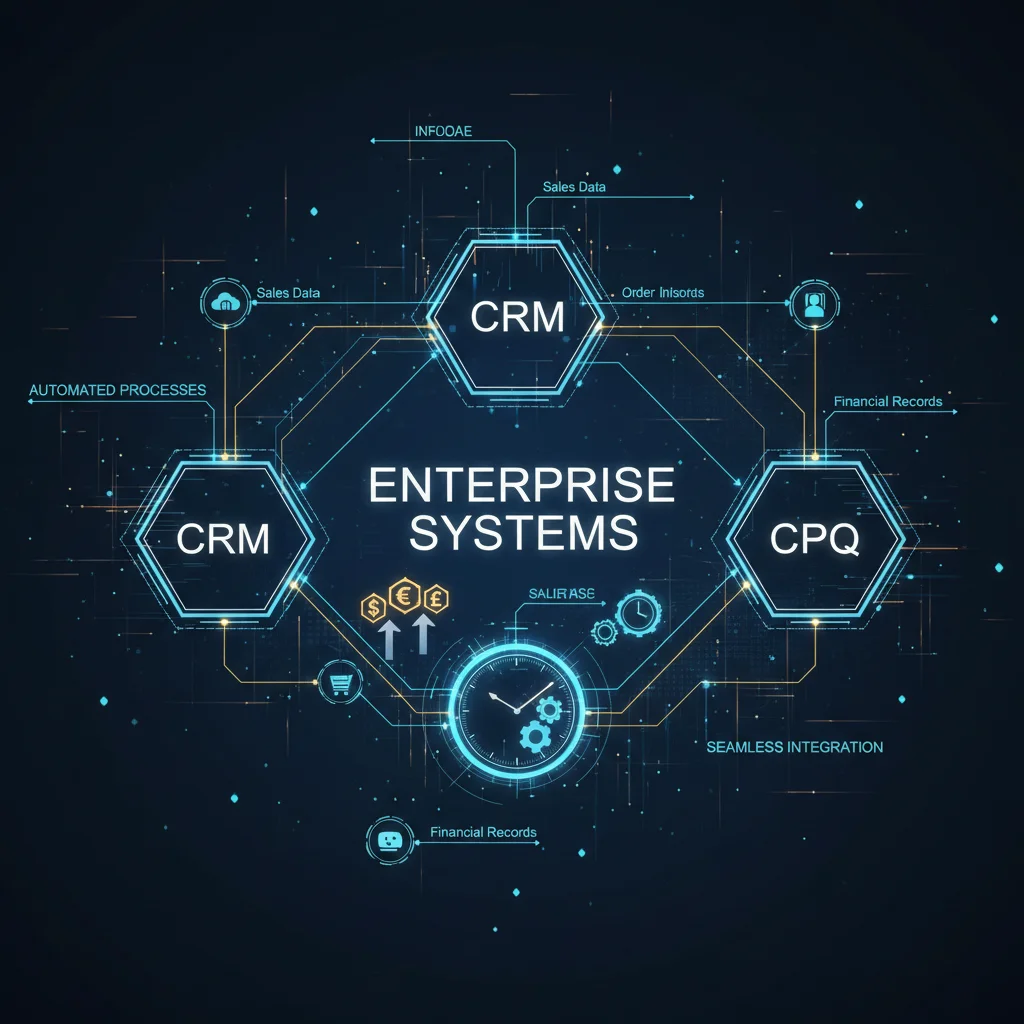
The true power of next-gen CPQ solutions lies in their ability to integrate seamlessly with existing enterprise ecosystems. They typically connect with Customer Relationship Management (CRM) systems (like Salesforce or Microsoft Dynamics) to leverage customer data and sales pipeline information. Integration with Enterprise Resource Planning (ERP) systems ensures that pricing and product data are always up-to-date and that orders can be fulfilled efficiently.
This interconnectedness creates a single source of truth for sales data, eliminating data silos and ensuring that all departments are working with the most current information. This holistic view is vital for strategic decision-making and operational efficiency.

The Quantifiable Benefits: 40% Streamlining and Beyond
The promise of streamlining quoting by 40% for US enterprises is not an exaggeration; it’s a realistic outcome supported by numerous case studies and industry reports. Let’s explore the multifaceted benefits that contribute to this significant efficiency gain and beyond:
1. Accelerated Sales Cycles
By automating configuration, pricing, and quote generation, next-gen CPQ solutions drastically reduce the time it takes to create and deliver a quote. What once took hours or even days can now be accomplished in minutes. This speed is critical in a fast-paced market, allowing sales teams to respond to customer inquiries almost instantaneously, thereby gaining a significant competitive advantage and improving win rates.
2. Enhanced Quote Accuracy and Reduced Errors
Manual processes are inherently prone to error. Incorrect configurations, miscalculated discounts, or outdated pricing can lead to costly rework, customer dissatisfaction, and revenue leakage. CPQ systems eliminate these human errors by enforcing rules and automating calculations, ensuring every quote is 100% accurate. This precision translates directly into higher profitability and fewer post-sales issues.
3. Increased Sales Productivity
Free from the administrative burden of manual quoting, sales representatives can dedicate more time to actual selling activities – prospecting, nurturing leads, and building customer relationships. This increase in productive selling time directly correlates with higher sales volumes and overall team performance. The 40% streamlining of the quoting process directly translates into a significant boost in sales productivity.
4. Improved Customer Experience
Customers today expect fast, accurate, and personalized responses. Next-gen CPQ solutions enable sales teams to meet and exceed these expectations. By providing quick, professional, and error-free quotes for even the most complex products, businesses can deliver a superior customer experience, fostering trust and loyalty. The ability to quickly iterate on configurations and pricing during a customer conversation is also a powerful tool for engagement.
5. Better Sales Visibility and Forecasting
With all quoting data centralized and integrated, sales managers gain unprecedented visibility into their sales pipeline. They can track quote statuses, analyze win/loss rates, identify bottlenecks, and forecast sales with greater accuracy. This data-driven insight empowers better strategic planning and resource allocation.
6. Optimized Pricing Strategies and Profit Margins
The advanced analytics and AI capabilities within next-gen CPQ solutions provide insights into which pricing strategies are most effective, allowing businesses to optimize their pricing for maximum profitability. By ensuring that discounts are applied strategically and within approved limits, enterprises can protect their margins while remaining competitive.
Key Considerations for US Enterprises Adopting Next-Gen CPQ
While the benefits are clear, successful implementation of next-gen CPQ solutions requires careful planning and execution. US enterprises should consider several factors:
1. Defining Clear Objectives
Before selecting a solution, clearly define what success looks like. Is the primary goal to reduce quoting time, improve accuracy, increase sales productivity, or all of the above? Having well-defined objectives will guide the selection process and ensure alignment across departments.
2. Data Preparation and Integration Strategy
The effectiveness of a CPQ system heavily relies on clean, accurate product and pricing data. Enterprises must invest time in data cleansing and developing a robust integration strategy with existing CRM, ERP, and other relevant systems. A phased integration approach can often mitigate risks.
3. User Adoption and Training
Even the most advanced CPQ system will fail if users don’t adopt it. Comprehensive training programs, ongoing support, and involving sales teams in the selection and design process are crucial for successful user adoption. Highlighting the benefits to individual reps can drive engagement.
4. Scalability and Flexibility
Choose a next-gen CPQ solution that can grow with your business. It should be flexible enough to adapt to evolving product lines, pricing models, and market demands. Cloud-native solutions often offer superior scalability and easier maintenance.
5. Vendor Selection
Partner with a vendor that has a proven track record, understands your industry’s specific challenges, and offers strong support. Look for solutions that are continuously innovated and updated to stay ahead of technological advancements.
The Future of Sales: AI and Machine Learning in CPQ
The 40% streamlining of quoting is just the beginning. The future of next-gen CPQ solutions is deeply intertwined with advancements in AI and machine learning. These technologies are already enhancing CPQ capabilities and will continue to do so:
- Predictive Analytics for Pricing: AI can analyze vast datasets to predict optimal pricing strategies, taking into account market trends, competitor pricing, customer behavior, and even economic indicators.
- Guided Selling and Recommendations: ML algorithms can provide intelligent recommendations to sales reps on product configurations, upsell opportunities, and cross-sell suggestions based on customer history and similar successful deals. This transforms sales reps into expert consultants.
- Automated Contract Review: AI-powered tools can assist in reviewing contract terms, identifying potential risks, and ensuring compliance, further accelerating the sales cycle and reducing legal overhead.
- Natural Language Processing (NLP): Future CPQ systems may leverage NLP to understand customer requirements directly from emails or voice interactions, automatically initiating the configuration and quoting process.
These intelligent features will not only further reduce manual effort but also empower sales teams with actionable insights, leading to more strategic selling and even higher win rates. US enterprises that embrace these AI-driven capabilities within their CPQ platforms will be best positioned for market leadership.
Real-World Impact: Case Studies and Success Stories
Across various industries, US enterprises are already realizing significant gains from implementing next-gen CPQ solutions. Manufacturing companies are reducing order errors by over 90%, leading to substantial savings in rework and warranty claims. Software companies are cutting quote generation time from days to minutes, allowing their sales teams to close more deals per quarter. Service providers are accurately bundling complex service packages, improving customer satisfaction and increasing average deal size.
The 40% efficiency gain in quoting directly translates into millions of dollars in saved operational costs and increased revenue for large enterprises. Beyond the quantifiable metrics, the intangible benefits of improved employee morale, enhanced brand reputation, and stronger customer relationships are equally valuable.
Conclusion: Embracing the CPQ Revolution for 2026 and Beyond
The imperative for US enterprises to adopt next-gen CPQ solutions is clearer than ever. The ability to configure complex products, price them accurately, and generate professional quotes with unprecedented speed and precision is no longer a luxury but a necessity for staying competitive. By streamlining quoting processes by 40% or more, these digital tools are not just optimizing sales; they are fundamentally transforming the entire customer journey and empowering businesses to achieve remarkable growth.
As we look towards 2026, the enterprises that invest in these intelligent, integrated platforms will be the ones that lead their markets, build stronger customer relationships, and maximize their revenue potential. The future of sales is automated, intelligent, and customer-centric, and next-gen CPQ solutions are at the forefront of this revolution. It’s time for every US enterprise to evaluate how these powerful tools can redefine their sales strategy and unlock their full potential.