Mastering Omnichannel CX: A 2026 Blueprint for US E-retailers
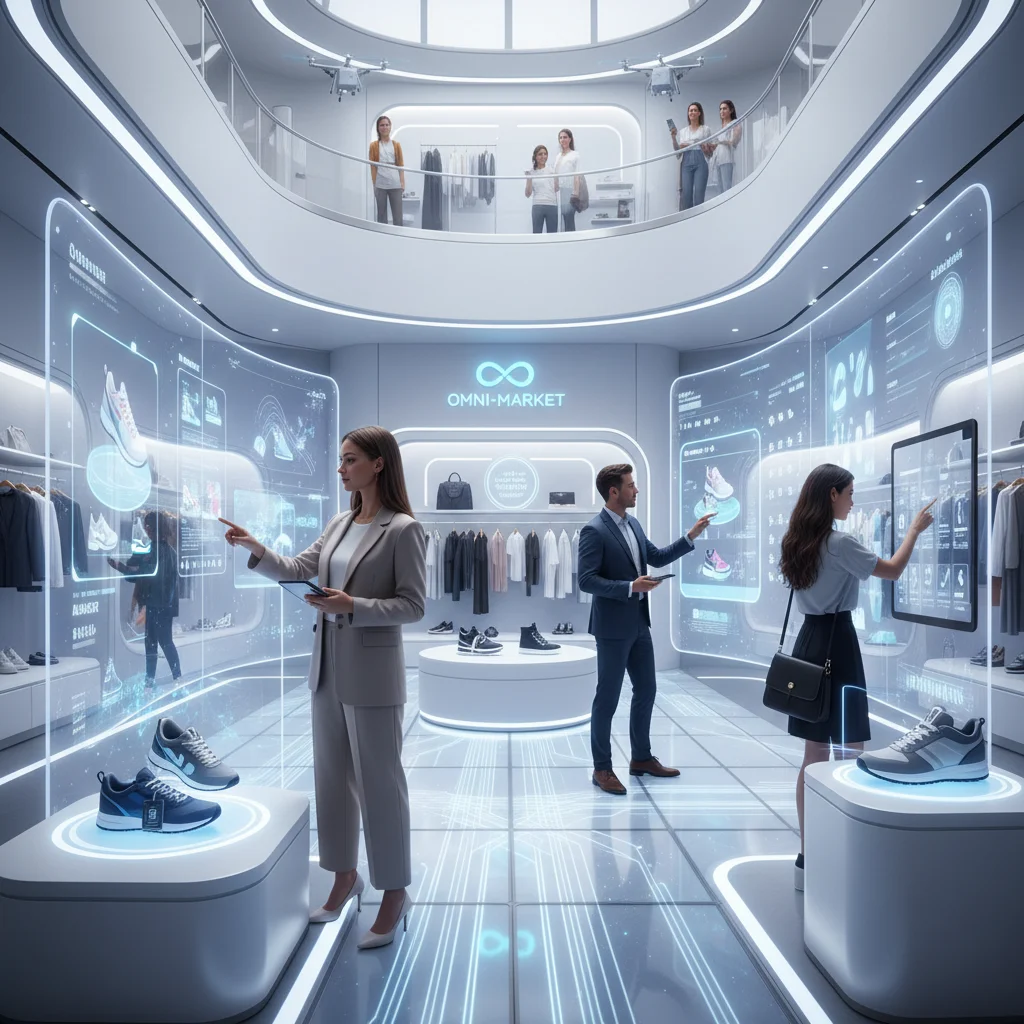
The retail landscape is constantly evolving, driven by unprecedented technological advancements and shifting consumer expectations. For US e-retailers, the imperative to deliver a truly seamless and exceptional customer experience (CX) has never been more critical. As we look towards 2026, the concept of omnichannel CX is no longer a buzzword but the foundational pillar for sustained growth and competitive advantage. This comprehensive guide will delve into the strategies, technologies, and best practices necessary for US e-retailers to master Omnichannel CX E-retail by 2026.
In an era where consumers interact with brands across a multitude of touchpoints – from social media and mobile apps to physical stores and voice assistants – a disjointed experience can lead to frustration and lost sales. Omnichannel CX E-retail is about creating a unified, consistent, and personalized customer journey, regardless of the channel or device used. It’s about understanding that the customer doesn’t see channels; they see a single brand interaction. By 2026, those e-retailers who have successfully integrated their channels and data will be the ones who thrive.
Understanding the Evolution of Customer Expectations
Before diving into the ‘how,’ it’s crucial to understand the ‘why.’ Customer expectations have skyrocketed. Fueled by tech giants and innovative startups, consumers now demand instant gratification, hyper-personalization, and effortless interactions. They expect to start a conversation on a chatbot, continue it with a human agent via email, and pick up an order in-store, all without repeating themselves or encountering inconsistencies. This heightened expectation is the driving force behind the urgent need for robust Omnichannel CX E-retail strategies.
By 2026, these expectations will only intensify. Younger generations, digital natives, will form an even larger segment of the consumer base, bringing with them an inherent expectation of digital fluency and integrated services. E-retailers must anticipate these shifts and build flexible, scalable omnichannel architectures that can adapt to future innovations and consumer behaviors. Ignoring these trends is akin to planning for obsolescence.
The Pillars of Effective Omnichannel CX in E-retail
Building a truly effective Omnichannel CX E-retail strategy requires a multi-faceted approach, focusing on several key pillars:
1. Unified Customer Data Platform (CDP)
At the heart of any successful omnichannel strategy lies a unified view of the customer. A CDP collects and integrates customer data from all touchpoints – online purchases, browsing history, social media interactions, customer service inquiries, in-store visits, and more – into a single, comprehensive profile. This unified data empowers e-retailers to understand customer behavior, preferences, and needs at an individual level.
Without a CDP, data remains siloed, leading to fragmented customer experiences. Imagine a customer contacting support about an online order, only for the agent to have no visibility into their browsing history or previous interactions. This creates friction and erodes trust. By 2026, a sophisticated CDP will be non-negotiable for any US e-retailer serious about Omnichannel CX E-retail.
2. Seamless Channel Integration
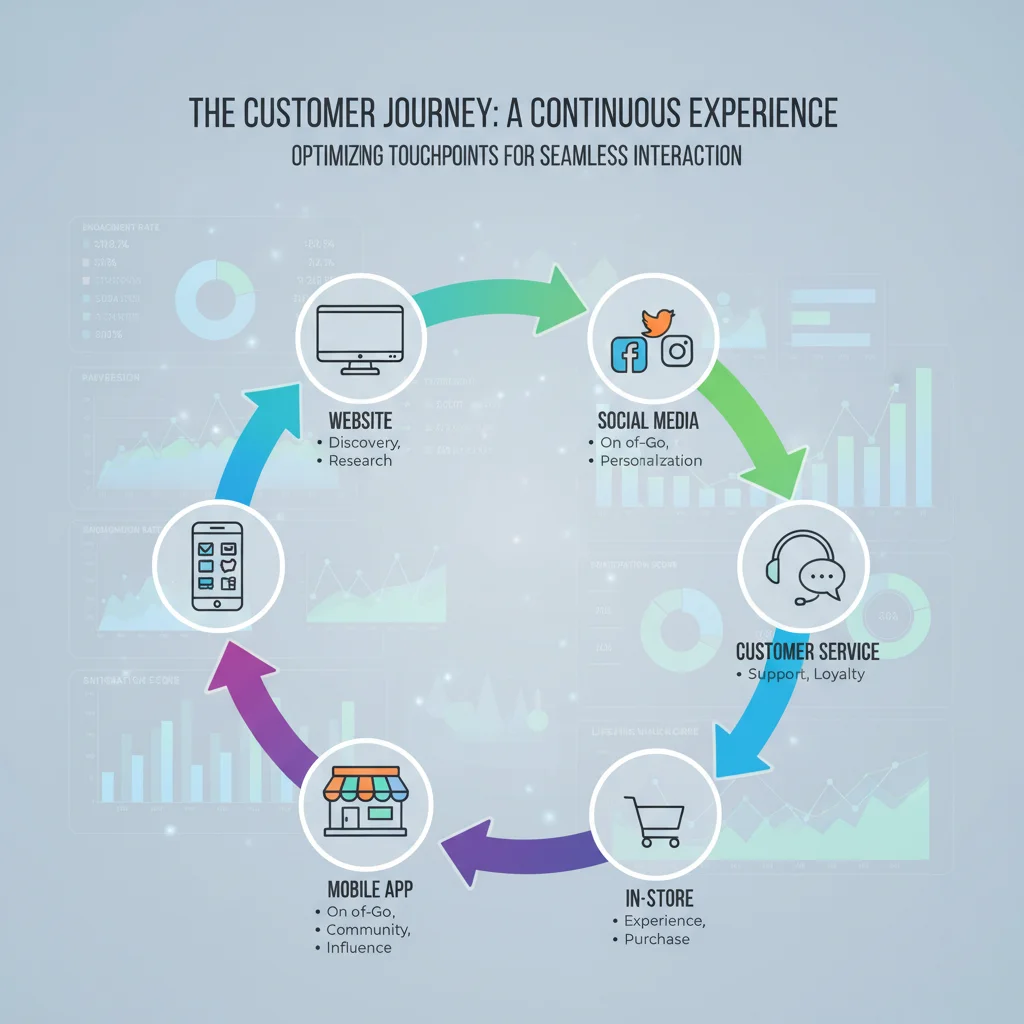
True omnichannel means that all channels, whether digital or physical, are not just present but are deeply interconnected and communicate with each other. This includes:
- Website & Mobile App: Consistent branding, product information, pricing, and user experience. A customer should be able to add an item to their cart on the website and find it there when they open the mobile app.
- Social Media: Integrated customer service, shoppable posts, and personalized advertising that aligns with broader marketing efforts and customer profiles.
- Email & SMS Marketing: Personalized campaigns triggered by customer behavior, integrating with CRM and inventory systems.
- Physical Stores (for brick-and-mortar e-retailers): Click-and-collect, in-store returns for online purchases, endless aisle options via tablets, and personalized recommendations based on online history.
- Customer Service: Agents should have access to a complete customer history across all channels, enabling them to provide informed and efficient support.
The goal is to eliminate any friction points as customers transition between channels, making the experience feel natural and effortless. This level of integration requires robust APIs and a clear understanding of the customer journey.
3. Hyper-Personalization at Scale
With a unified customer data platform, e-retailers can move beyond basic personalization to hyper-personalization. This means:
- Personalized Product Recommendations: Based on past purchases, browsing behavior, demographic data, and even real-time context (e.g., weather, location).
- Tailored Content & Offers: Dynamic website content, personalized emails, and targeted ads that resonate with individual customer preferences.
- Contextual Interactions: Responding to customer queries with relevant information, anticipating needs based on their journey stage, and offering proactive support.
AI and machine learning play a pivotal role here, analyzing vast amounts of data to identify patterns and predict customer needs, enabling e-retailers to deliver truly individualized experiences that drive engagement and loyalty. This is where Omnichannel CX E-retail truly shines, making customers feel seen and valued.
4. Frictionless Checkout & Fulfillment
The final stages of the customer journey – checkout and fulfillment – are critical. Any friction here can lead to abandoned carts and negative perceptions. Omnichannel CX E-retail demands:
- Streamlined Checkout Processes: Guest checkout options, multiple payment methods (including digital wallets), and pre-filled information for returning customers.
- Flexible Fulfillment Options: Standard shipping, expedited shipping, same-day delivery, buy online pick-up in-store (BOPIS), and curbside pickup. Customers expect choices and transparency regarding delivery times and costs.
- Easy Returns & Exchanges: A hassle-free process for returns, whether online or in-store, with clear policies and efficient processing.
Logistics and supply chain management become integral parts of the CX equation. E-retailers must invest in robust inventory management systems that provide real-time stock availability across all channels to avoid disappointing customers.
Key Technologies Driving Omnichannel CX in 2026
Achieving advanced Omnichannel CX E-retail by 2026 relies heavily on leveraging cutting-edge technologies:
1. Artificial Intelligence (AI) & Machine Learning (ML)
AI and ML are the engines behind personalization, predictive analytics, and efficient customer service. They power:
- Chatbots & Virtual Assistants: Providing instant 24/7 support, answering FAQs, guiding customers through purchases, and escalating complex issues to human agents.
- Predictive Analytics: Forecasting customer behavior, identifying at-risk customers, and optimizing inventory.
- Recommendation Engines: Delivering highly relevant product suggestions across all touchpoints.
- Sentiment Analysis: Understanding customer emotions from text and voice interactions to improve service quality.
By 2026, AI won’t just be an add-on; it will be deeply embedded in every aspect of the Omnichannel CX E-retail ecosystem, automating routine tasks and augmenting human capabilities.
2. Internet of Things (IoT)
While often associated with smart homes, IoT has significant implications for Omnichannel CX E-retail. In a physical retail context, IoT devices can track customer movement, provide personalized offers via beacons, and manage smart shelves. For e-retailers, IoT can connect smart devices to the purchasing journey, for example, allowing customers to reorder consumables directly from their smart appliances.
The data generated by IoT devices, when integrated into a CDP, provides even richer insights into customer behavior and preferences, enabling more proactive and personalized interactions.
3. Augmented Reality (AR) & Virtual Reality (VR)
AR and VR are transforming the online shopping experience. AR allows customers to virtually try on clothes, place furniture in their homes, or visualize products in a real-world setting before purchasing. VR offers immersive shopping experiences, creating virtual storefronts that mimic the physical retail environment.
These technologies reduce uncertainty, enhance engagement, and bridge the gap between digital browsing and physical interaction, significantly improving the pre-purchase phase of the Omnichannel CX E-retail journey.
4. Voice Commerce & Conversational AI
The rise of smart speakers and voice assistants means voice commerce is a growing channel. E-retailers must optimize their product catalogs and checkout processes for voice commands. Conversational AI goes beyond simple commands, enabling natural language interactions for product discovery, customer support, and order management.
By 2026, a significant portion of online transactions and customer service interactions will likely begin or be completed via voice, making it a critical component of a truly omnichannel strategy.
5. Blockchain for Transparency and Trust
While not directly a CX tool, blockchain technology can enhance trust and transparency, indirectly impacting Omnichannel CX E-retail. It can be used for supply chain traceability, ensuring product authenticity, and secure payment processing. This transparency builds consumer confidence, especially for products where origin and ethical sourcing are important.
Mapping the Omnichannel Customer Journey
A crucial step in implementing Omnichannel CX E-retail is meticulously mapping the customer journey. This involves:
- Identifying All Touchpoints: List every single point where a customer can interact with your brand, both online and offline.
- Understanding Customer Goals & Pain Points: For each stage of the journey, what is the customer trying to achieve? What obstacles might they encounter?
- Analyzing Data & Feedback: Use analytics, surveys, and customer service interactions to understand actual customer behavior and sentiment.
- Designing Seamless Transitions: How can customers move effortlessly from one touchpoint to another without friction?
- Iterate and Optimize: Customer journeys are not static. Continuously monitor, gather feedback, and refine your omnichannel strategy.
This mapping exercise highlights areas of fragmentation and helps prioritize investments in technology and process improvements. It’s a continuous process that ensures your Omnichannel CX E-retail strategy remains agile and customer-centric.

Challenges and How to Overcome Them
Implementing a robust Omnichannel CX E-retail strategy is not without its challenges:
1. Data Silos and Integration Complexity
Many e-retailers operate with legacy systems that store data in separate, incompatible databases. Integrating these systems to form a unified CDP can be complex and resource-intensive. Solution: Invest in modern, API-first platforms, utilize middleware, and consider a phased approach to integration. Prioritize critical data points first.
2. Organizational Silos
Different departments (marketing, sales, customer service, IT) often work independently, leading to inconsistent messaging and fractured customer experiences. Solution: Foster a customer-centric culture across the entire organization. Implement cross-functional teams, shared KPIs, and regular communication to ensure everyone is aligned with the Omnichannel CX E-retail vision.
3. Measuring ROI
Quantifying the return on investment for omnichannel initiatives can be challenging, as the benefits are often indirect (e.g., increased customer loyalty, reduced churn). Solution: Establish clear metrics and KPIs from the outset, focusing on customer lifetime value (CLTV), customer satisfaction (CSAT), net promoter score (NPS), and conversion rates across channels. Use attribution models to understand the impact of various touchpoints.
4. Keeping Up with Technology
The pace of technological change is rapid. What’s cutting-edge today might be standard tomorrow. Solution: Adopt a flexible and modular technology stack. Partner with innovative tech providers and regularly review and update your technology roadmap. Focus on platforms that offer scalability and easy integration.
5. Privacy and Data Security
Collecting and utilizing vast amounts of customer data comes with significant responsibility. E-retailers must ensure compliance with data privacy regulations (e.g., CCPA, upcoming state-specific laws) and maintain robust security measures to protect customer information. Solution: Implement strong data governance policies, prioritize data encryption, and be transparent with customers about data usage. Build trust through ethical data practices.
Best Practices for US E-retailers by 2026
To truly excel in Omnichannel CX E-retail, consider these best practices:
- Start with the Customer: Always begin by understanding your customer’s needs and preferences. Use data, feedback, and empathy to design your experiences.
- Invest in a Robust CDP: This is the single most important technological investment for omnichannel success.
- Prioritize Mobile-First Design: A significant portion of e-commerce interactions occurs on mobile devices. Ensure your mobile experience is flawless.
- Empower Your Employees: Provide customer service teams with the tools, training, and information they need to deliver consistent, high-quality support across all channels.
- Personalize, Don’t Creep: Leverage data for personalization, but be mindful of privacy and avoid interactions that feel intrusive.
- Test and Learn: Continuously A/B test different approaches, gather feedback, and iterate on your omnichannel strategies.
- Embrace Emerging Technologies: Stay abreast of new technologies like generative AI, spatial computing, and advanced analytics. Experiment with them to find innovative ways to enhance CX.
- Focus on Customer Lifetime Value (CLTV): Shift focus from transactional sales to building long-term customer relationships through exceptional experiences.
- Build a Culture of Continuous Improvement: Omnichannel CX is not a one-time project but an ongoing commitment to excellence.
The Future of Omnichannel CX E-retail: Beyond 2026
Looking beyond 2026, the evolution of Omnichannel CX E-retail will be shaped by even more advanced technologies and deeper integration. We can anticipate:
- Proactive & Predictive CX: Systems will anticipate customer needs before they even arise, offering solutions or suggestions proactively.
- Hyper-Immersive Experiences: The metaverse and advanced VR/AR will create highly immersive, personalized shopping environments that blur the lines between physical and digital.
- Ethical AI & Data Usage: Increased focus on transparent, fair, and secure AI models and data practices will be paramount to maintaining customer trust.
- Sustainability & Social Impact Integration: Consumers will increasingly expect brands to integrate their sustainability efforts and social impact initiatives into the CX, making these factors influential in purchasing decisions.
- Seamless B2B2C Omnichannel: For brands selling through partners, the omnichannel experience will extend to ensuring consistency and quality across the entire value chain.
The journey to mastering Omnichannel CX E-retail is continuous. It requires foresight, adaptability, and an unwavering commitment to putting the customer at the center of every decision.
Conclusion
For US e-retailers, 2026 represents a critical juncture. The brands that successfully implement and refine their Omnichannel CX E-retail strategies will be those that capture market share, build enduring customer loyalty, and drive sustainable growth. It’s about more than just technology; it’s about a fundamental shift in how businesses view and interact with their customers. By investing in unified data, seamless integration, hyper-personalization, and cutting-edge technologies, e-retailers can create customer journeys that are not just efficient but truly delightful, setting the stage for success in the dynamic retail landscape of tomorrow.
The time to act is now. Begin by auditing your current customer touchpoints, identifying areas of friction, and laying the groundwork for a robust omnichannel future. Your customers, and your bottom line, will thank you for it.