Optimizing Your Sales Stack: A 2026 Guide to Integrating 4 Key Digital Tools for a Seamless Workflow

Optimizing Your Sales Stack: A 2026 Guide to Integrating 4 Key Digital Tools for a Seamless Workflow
In the dynamic landscape of 2026, the efficiency and effectiveness of your sales operations are more critical than ever. The modern sales professional navigates a complex ecosystem of customer expectations, market fluctuations, and technological advancements. To thrive, businesses must move beyond siloed systems and embrace a holistic, integrated approach to their sales technology. This comprehensive guide will delve into how to achieve optimal sales stack optimization by strategically integrating four key digital tools, ensuring a seamless workflow that propels your team towards unprecedented success.
The concept of a ‘sales stack’ refers to the collection of tools and technologies your sales team uses to facilitate the sales process, from lead generation and nurturing to closing deals and post-sales support. A well-optimized sales stack isn’t just about having the latest software; it’s about how these tools work together, creating a synergistic environment that maximizes productivity, enhances decision-making, and ultimately drives revenue. In 2026, this integration is no longer a luxury but a necessity for competitive advantage.
The digital transformation has reshaped every aspect of business, and sales is at its forefront. Customers are more informed, demanding, and connected, requiring sales teams to be agile, responsive, and data-driven. Without a seamlessly integrated sales stack, teams risk inefficiencies, data inconsistencies, missed opportunities, and a fragmented customer experience. Our focus here is on identifying the cornerstone tools and outlining a strategic approach to their integration, transforming your sales process into a finely tuned, revenue-generating machine.
Understanding the Modern Sales Stack in 2026
Before we dive into specific tools, it’s crucial to understand the evolving nature of the sales stack itself. What constituted an effective sales stack a few years ago might be insufficient today. The emphasis has shifted from simply automating tasks to enabling intelligent, personalized, and predictive selling. This requires tools that not only manage data but also interpret it, offering actionable insights and automating complex workflows.
Key trends influencing sales stack optimization in 2026 include:
- AI and Machine Learning Integration: AI is no longer just a buzzword; it’s an embedded component in leading sales tools, offering predictive analytics, personalized content recommendations, and intelligent automation.
- Hyper-Personalization at Scale: Customers expect tailored experiences. Sales tools must enable teams to deliver personalized interactions efficiently across all touchpoints.
- Data-Driven Decision Making: Access to real-time, consolidated data is paramount. Tools must integrate to provide a unified view of the customer journey, enabling informed strategic decisions.
- Remote and Hybrid Work Enablement: The sales stack must support distributed teams, ensuring seamless collaboration and access to resources regardless of location.
- Emphasis on Customer Experience (CX): Sales is increasingly seen as a critical component of the overall customer experience. Tools must contribute to a smooth, positive journey from initial contact to long-term relationship.
The goal of sales stack optimization is to create a unified ecosystem where information flows freely and accurately between different systems, eliminating manual data entry, reducing errors, and freeing up sales professionals to focus on what they do best: selling and building relationships.
The Four Pillars of Your Integrated Sales Stack
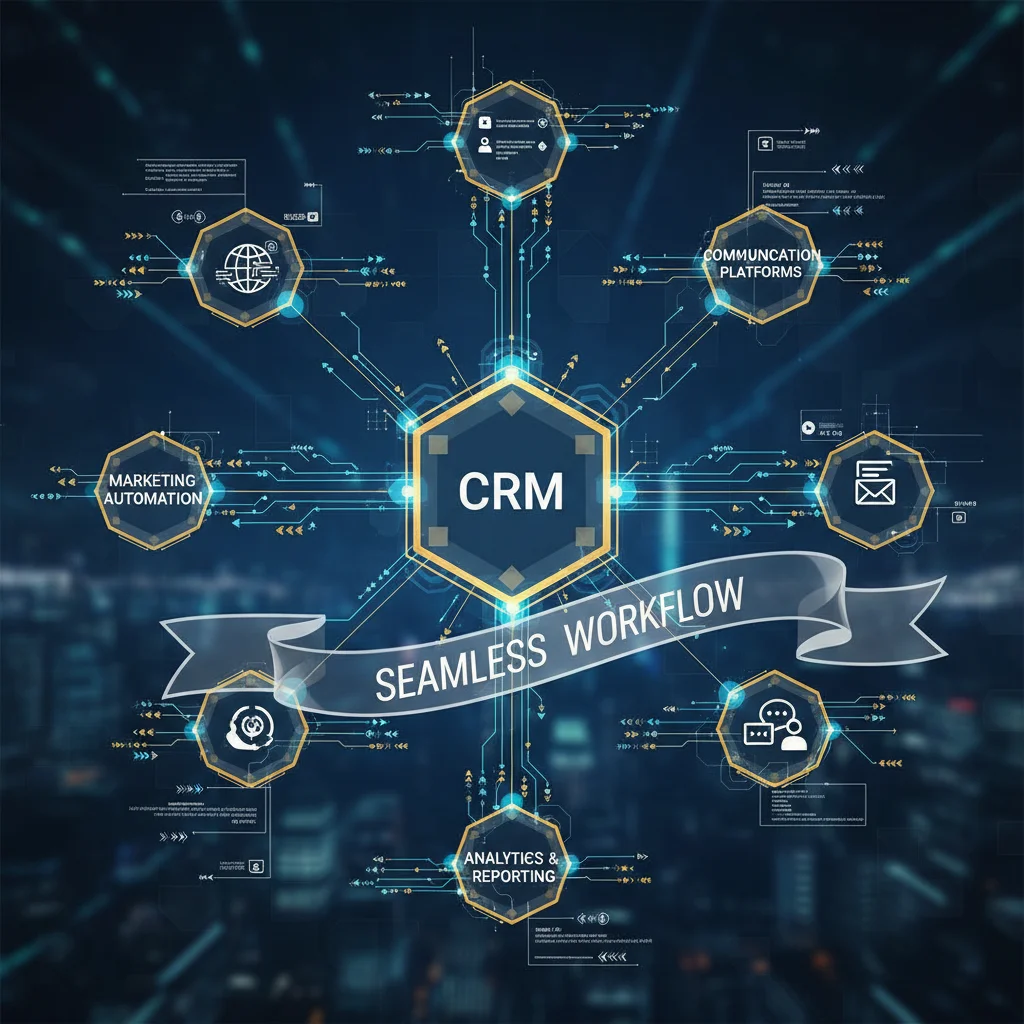
To achieve a truly seamless workflow, we will focus on integrating four fundamental categories of digital tools. While specific vendor names may vary, the core functionalities remain consistent and are essential for any modern sales operation.
1. Customer Relationship Management (CRM) System
The CRM is the undisputed heart of any sales stack. It’s where all customer and prospect data resides, tracking interactions, managing pipelines, and providing a comprehensive view of the customer journey. In 2026, CRMs are more intelligent, extensible, and central to sales stack optimization than ever before.
Why it’s crucial for sales stack optimization:
- Centralized Data Repository: A single source of truth for all customer information, preventing data silos and inconsistencies.
- Pipeline Management: Visualizing and managing the sales pipeline, from lead to close, enabling better forecasting and resource allocation.
- Activity Tracking: Logging all customer interactions (emails, calls, meetings) to provide context and history for every sales engagement.
- Reporting and Analytics: Generating insights into sales performance, identifying bottlenecks, and informing strategic adjustments.
- Automation Hub: Serving as the central platform from which many sales automations are triggered and managed.
Integration Imperatives:
Your CRM must be the foundational piece that integrates with all other tools. Data should flow bi-directionally, ensuring that information updated in one system is immediately reflected in the CRM, and vice-versa. This real-time synchronization is paramount for effective sales stack optimization.
2. Sales Engagement Platform (SEP)
Sales Engagement Platforms are designed to streamline and automate outreach activities, allowing sales teams to engage with prospects and customers more efficiently and consistently across multiple channels. These platforms are critical for executing personalized communication at scale.
Why it’s crucial for sales stack optimization:
- Multi-Channel Outreach: Managing email sequences, social media interactions, phone calls, and video messages from a single platform.
- Personalization at Scale: Using dynamic fields and templates to personalize communications without manual effort.
- Automated Follow-ups: Scheduling and executing follow-up sequences based on prospect behavior, ensuring no lead falls through the cracks.
- Performance Analytics: Tracking open rates, click-through rates, reply rates, and conversion metrics for outreach campaigns, allowing for continuous optimization.
- Time Savings: Significantly reducing the manual effort involved in prospecting and outreach, freeing up sales reps for higher-value activities.
Integration Imperatives:
The SEP must integrate seamlessly with your CRM to pull prospect data, log all outreach activities, and update lead statuses. This ensures that every interaction is recorded in the CRM, providing a complete history and enabling accurate reporting on engagement effectiveness. Without this integration, sales reps would have to manually update CRM records, defeating the purpose of automation and hindering sales stack optimization.

3. Marketing Automation Platform (MAP)
While primarily a marketing tool, a Marketing Automation Platform plays a vital role in the sales process by nurturing leads, scoring them, and passing qualified prospects to sales. The seamless hand-off between marketing and sales is a cornerstone of effective sales stack optimization.
Why it’s crucial for sales stack optimization:
- Lead Nurturing: Automating communication workflows to educate and engage leads until they are sales-ready.
- Lead Scoring: Assigning scores to leads based on their engagement and demographic information, helping sales prioritize who to contact.
- Content Personalization: Delivering relevant content to prospects at different stages of their buyer’s journey.
- Campaign Management: Executing and tracking marketing campaigns that generate and qualify leads.
- Sales-Marketing Alignment: Bridging the gap between marketing efforts and sales follow-up, ensuring a cohesive customer journey.
Integration Imperatives:
The MAP must have a robust, bi-directional integration with the CRM. This allows marketing to pass qualified leads with rich context to sales, and for sales to provide feedback on lead quality back to marketing. This feedback loop is essential for refining lead scoring models and improving the overall quality of leads, directly contributing to sales stack optimization.
4. Communication & Collaboration Platform
In a world of remote and hybrid teams, robust communication and collaboration tools are essential for internal team efficiency and external customer engagement. These platforms facilitate real-time communication, document sharing, and project management, ensuring that the sales team operates as a cohesive unit.
Why it’s crucial for sales stack optimization:
- Internal Team Communication: Instant messaging, video conferencing, and shared channels for quick problem-solving and information dissemination.
- External Customer Communication: Integrated communication channels (e.g., video conferencing for demos, shared document collaboration) for engaging with prospects and customers.
- Knowledge Sharing: Centralized repositories for sales playbooks, product information, and competitive intelligence.
- Project Management: Tracking team tasks, sales initiatives, and collaborative projects.
- Seamless Hand-offs: Facilitating smooth transitions between different team members or departments during the sales cycle.
Integration Imperatives:
While not always a direct data integration like CRM and MAP, the communication platform should integrate with calendars, document storage, and potentially the CRM for logging meeting notes or sharing relevant customer information. The goal is to minimize context switching and ensure all relevant information is easily accessible to sales teams, enhancing overall sales stack optimization.
The Strategic Integration Process for Optimal Sales Stack Optimization
Integrating these four pillars effectively requires more than just connecting APIs. It demands a strategic approach, careful planning, and continuous optimization.
Phase 1: Assessment and Planning
- Current State Analysis: Document your existing sales process, identifying all tools currently in use, their functionalities, and any existing integration points. Pinpoint pain points, inefficiencies, and data silos.
- Define Clear Objectives: What do you want to achieve with sales stack optimization? (e.g., reduce sales cycle by X%, increase lead conversion by Y%, improve sales rep productivity by Z%).
- Identify Key Requirements: Based on your objectives, list the essential features and integration capabilities each tool must possess.
- Vendor Selection: Research and select vendors whose tools best meet your requirements and offer robust integration capabilities. Prioritize platforms with open APIs and a strong track record of integration.
- Map the Customer Journey: Visualize how a prospect moves through your sales funnel and identify all touchpoints. This will inform where data needs to flow between systems.
Phase 2: Implementation and Integration
- Start with the CRM as the Core: Ensure your CRM is robust and properly configured as it will be the central hub for data.
- Phased Rollout: Instead of integrating everything at once, consider a phased approach. Integrate two tools, test thoroughly, then add the next. A common starting point is CRM and SEP.
- Data Migration and Cleansing: Before integrating, clean your existing data to ensure accuracy and consistency. Define clear rules for data synchronization and conflict resolution.
- Automate Workflows: Leverage the integration capabilities to automate repetitive tasks. For example, when a lead reaches a certain score in your MAP, automatically create a task in the CRM for a sales rep and trigger an email sequence in the SEP.
- User Training: Provide comprehensive training to your sales team on how to use the integrated tools and the new workflows. Emphasize the benefits of the new system for their daily tasks.
Phase 3: Monitoring, Optimization, and Continuous Improvement
- Establish KPIs: Define key performance indicators (KPIs) to measure the success of your sales stack optimization efforts. This could include sales cycle length, conversion rates, sales rep productivity, and customer satisfaction.
- Regular Audits: Periodically review your integrations to ensure they are functioning correctly and that data is flowing as expected. Address any issues promptly.
- Gather Feedback: Continuously solicit feedback from your sales team. They are on the front lines and can provide invaluable insights into what’s working and what needs improvement.
- Stay Updated: The technology landscape evolves rapidly. Keep abreast of updates and new features from your chosen vendors and be prepared to adapt your stack as needed.
- Iterative Refinement: Sales stack optimization is not a one-time project but an ongoing process. Be prepared to make adjustments, introduce new tools, or replace existing ones as your business needs and market conditions change.
Advanced Strategies for Maximizing Sales Stack Optimization
Beyond the basic integration, several advanced strategies can further enhance your sales stack’s performance and truly achieve a seamless workflow.
Leveraging AI and Predictive Analytics Directly
Many modern CRMs and SEPs now come with built-in AI capabilities. Utilize these to:
Predictive Lead Scoring: Identify which leads are most likely to convert based on historical data.
Next-Best Action Recommendations: Guide sales reps on the most effective next step for each prospect.
Sales Forecasting: Improve the accuracy of your sales predictions, enabling better resource planning.
Sentiment Analysis: Analyze customer communications to gauge sentiment and identify potential issues or opportunities.
Implementing Revenue Operations (RevOps)
RevOps is a strategic approach that aligns sales, marketing, and customer success teams under a unified operational framework. This alignment is inherently supported by a well-integrated sales stack. By bringing these departments together, you can:
Break Down Silos: Ensure all revenue-generating functions work towards common goals.
Streamline Processes: Optimize the entire customer journey from initial lead to retention.
Improve Data Visibility: Provide a holistic view of the customer across all stages.
Enhance Accountability: Clearly define roles and responsibilities within the revenue funnel.
Personalized Content Delivery at Scale
With integrated MAP and SEP, you can deliver highly personalized content based on a prospect’s behavior, industry, and stage in the buying journey. This includes:
Dynamic Website Content: Showing different content to visitors based on their CRM data.
Tailored Email Campaigns: Sending emails with specific product recommendations or case studies.
Relevant Sales Collateral: Equipping sales reps with the exact materials needed for each prospect interaction.
Establishing a Strong Data Governance Strategy
As you integrate more tools, the volume and complexity of your data will increase. A robust data governance strategy is crucial to maintain data quality, security, and compliance. This includes:
Data Ownership: Clearly define who is responsible for specific data sets.
Data Standards: Implement consistent naming conventions and data entry protocols.
Access Control: Manage who has access to sensitive data across different platforms.
Regular Audits: Conduct frequent checks to ensure data accuracy and compliance with regulations like GDPR or CCPA.
Common Challenges in Sales Stack Optimization and How to Overcome Them
While the benefits of an optimized sales stack are clear, the journey can be fraught with challenges. Anticipating and addressing these can significantly smooth the integration process.
Challenge 1: Data Silos and Inconsistent Data
Problem: Different tools holding conflicting or incomplete customer data, leading to a fragmented view and poor decision-making.
Solution: Implement a robust data governance strategy from the outset. Prioritize a single source of truth (usually the CRM) and ensure all integrations enforce consistent data entry and synchronization rules. Regular data cleansing and validation processes are critical.
Challenge 2: Resistance to Change from Sales Teams
Problem: Sales reps may be comfortable with their existing tools and workflows, resisting new systems or processes.
Solution: Involve sales teams in the selection and implementation process. Clearly communicate the benefits (e.g., more time for selling, better lead quality, easier access to information). Provide comprehensive, hands-on training and ongoing support. Highlight success stories and champions within the team.
Challenge 3: Integration Complexity and Technical Hurdles
Problem: Connecting disparate systems can be technically challenging, requiring expertise in APIs, data mapping, and troubleshooting.
Solution: Choose tools with native integrations or robust API documentation. Consider using integration platforms as a service (iPaaS) solutions if your needs are complex. Don’t hesitate to consult with integration specialists or your vendor’s support teams. Plan for thorough testing at each stage of integration.
Challenge 4: Cost of Implementation and Maintenance
Problem: Investing in new tools and integration can be expensive, both in terms of software licenses and implementation resources.
Solution: Conduct a thorough cost-benefit analysis. Focus on the ROI each integration will bring. Prioritize integrations that address the most significant pain points and offer the highest potential for efficiency gains and revenue growth. Remember that the cost of inaction (lost productivity, missed opportunities) can be far greater.
Challenge 5: Vendor Lock-in and Scalability Concerns
Problem: Becoming overly reliant on a single vendor or choosing tools that can’t scale with your business.
Solution: Opt for tools with open APIs and a strong ecosystem of integrations. Evaluate vendors based on their flexibility, scalability, and commitment to future-proofing their platforms. Plan for growth and choose tools that can accommodate increasing data volumes and user numbers.
The Future of Sales Stack Optimization: 2026 and Beyond
Looking ahead, the evolution of the sales stack will continue at a rapid pace. We can expect even deeper integration of AI, hyper-automation, and an increased focus on the ethical implications of data usage. The lines between sales, marketing, and customer service tools will further blur, leading to more unified ‘revenue operations’ platforms.
Personalization will become even more sophisticated, moving beyond basic segmentation to truly individualized experiences driven by real-time data and predictive models. Virtual and augmented reality might find niche applications in product demonstrations and customer engagement, further enriching the sales experience.
For businesses, the imperative remains clear: continuous sales stack optimization is not a one-time project but an ongoing strategic endeavor. Those who embrace this philosophy will be best positioned to adapt to changing market conditions, delight their customers, and consistently achieve their revenue goals in 2026 and beyond.
Conclusion
The journey to an optimally integrated sales stack in 2026 is a strategic imperative for any forward-thinking business. By understanding the critical roles of CRM, Sales Engagement Platforms, Marketing Automation Platforms, and Communication & Collaboration tools, and by meticulously planning their integration, you can unlock unparalleled efficiencies and drive significant growth.
Remember, sales stack optimization is about creating a symbiotic relationship between technology and your sales team. It’s about empowering your reps with the right tools, the right data, and a seamless workflow that allows them to focus on building relationships and closing deals, rather than wrestling with disparate systems. Embrace the future of sales by investing in a truly integrated and optimized sales stack, and watch your business thrive.