Boost Sales: Personalized Sales Coaching for 9% Win Rate Increase

In the fiercely competitive landscape of U.S. sales, achieving sustained growth and outperforming rivals requires more than just a great product or service. It demands a highly skilled, motivated, and continuously evolving sales force. The ambitious goal of achieving a 9% increase in deal win rates for U.S. sales teams by mid-2026 isn’t just a pipe dream; it’s an attainable reality through the strategic implementation of personalized sales coaching. This isn’t your grandfather’s sales training; it’s a dynamic, data-driven, and highly individualized approach designed to unlock the full potential of every sales professional.
Traditional one-size-fits-all sales training often falls short because it fails to address the unique strengths, weaknesses, and learning styles of individual salespeople. In contrast, personalized sales coaching zeroes in on specific areas for improvement, leveraging insights from performance data, call recordings, and one-on-one interactions to craft bespoke development plans. This tailored approach fosters a deeper level of engagement, accelerates skill acquisition, and ultimately translates into tangible improvements in sales outcomes, most notably, deal win rates.
The imperative for this targeted approach is clear. In a market where every percentage point of gain can mean millions in revenue, organizations cannot afford to leave potential on the table. By focusing on personalized development, companies empower their sales teams to navigate complex sales cycles, build stronger customer relationships, and close more deals effectively. This article will delve into the multifaceted benefits of personalized sales coaching, explore the methodologies for its successful implementation, and provide a roadmap for U.S. sales organizations aiming to hit that crucial 9% increase in deal win rates within the next few years.
The Strategic Imperative for Personalized Sales Coaching
Why is personalized sales coaching not just a good idea, but a strategic imperative for U.S. sales teams today? The answer lies in the evolving nature of sales itself. Modern buyers are more informed, have higher expectations, and demand more personalized interactions. Generic sales pitches and outdated techniques are no longer sufficient to capture their attention or earn their trust. Sales professionals need to be agile, empathetic, and highly skilled in nuanced communication, negotiation, and problem-solving.
Moreover, the talent landscape for sales is fiercely competitive. Attracting and retaining top sales talent requires offering more than just compensation; it demands investment in their professional development. Personalized coaching demonstrates a commitment to an individual’s growth, fostering loyalty and reducing costly turnover. When salespeople feel valued and see a clear path for improvement, their motivation and performance naturally increase.
From a business perspective, the financial benefits are substantial. A 9% increase in deal win rates can directly translate into significant revenue growth without necessarily increasing the sales team size or marketing spend. It optimizes existing resources and maximizes the return on investment in your sales force. This efficiency is crucial in today’s economic climate, where every dollar counts.
Understanding the "Why" Behind the 9% Goal
Setting an ambitious target like a 9% increase in deal win rates by mid-2026 isn’t arbitrary. It’s a measurable, impactful goal that serves as a powerful motivator and a benchmark for success. This specific percentage often represents the sweet spot where targeted coaching efforts yield significant, noticeable improvements without being unrealistic. It’s enough to differentiate a company from its competitors and make a substantial impact on the bottom line.
Achieving this goal requires a systematic approach, starting with a clear understanding of current performance, identifying key areas for improvement, and then implementing tailored coaching programs. It’s about moving from reactive problem-solving to proactive development, continuously refining sales strategies based on real-time data and individual feedback.
Core Components of Effective Personalized Sales Coaching
Effective personalized sales coaching is built upon several foundational pillars that differentiate it from generic training programs. These components ensure that the coaching is relevant, actionable, and impactful for each individual sales professional.
1. Data-Driven Diagnostics
The first step in personalized coaching is a thorough diagnosis of an individual’s performance. This involves analyzing a wide array of data points, including:
- CRM Data: Win rates, deal sizes, sales cycle length, conversion rates at each stage of the funnel.
- Call Recordings and Transcripts: Analyzing communication style, objection handling, discovery questions, and closing techniques.
- Email and Messaging Analytics: Effectiveness of outreach, personalization, and follow-up.
- Customer Feedback: Direct feedback from clients on salesperson interactions.
This data provides an objective baseline and highlights specific areas where a salesperson excels and where they struggle. For example, one salesperson might excel at discovery but falter during objection handling, while another might struggle with initial outreach but shine in closing. Personalized coaching addresses these specific gaps.
2. Individualized Development Plans (IDPs)
Based on the diagnostic insights, a customized Individualized Development Plan (IDP) is created for each sales professional. This plan outlines specific, measurable, achievable, relevant, and time-bound (SMART) goals. It details the skills to be developed, the resources available (e.g., training modules, role-playing scenarios, shadow sessions), and the timeline for achieving these goals.
The IDP is a living document, regularly reviewed and updated based on progress and evolving needs. It ensures that coaching efforts are always aligned with the individual’s most pressing development areas and the overall sales objectives.
3. One-on-One Coaching Sessions
At the heart of personalized coaching are regular, dedicated one-on-one sessions between the coach and the sales professional. These sessions are not just about reviewing metrics; they are opportunities for:
- Feedback and Reflection: Providing constructive feedback on recent calls or deals and encouraging self-reflection.
- Skill Practice: Role-playing challenging scenarios, practicing new techniques, and refining messaging.
- Problem Solving: Collaboratively strategizing on current deals, overcoming obstacles, and addressing specific customer situations.
- Motivation and Support: Offering encouragement, celebrating successes, and addressing any challenges impacting performance or morale.
These sessions are tailored to the individual’s learning style and pace, making the coaching process highly effective and engaging.

4. Continuous Learning and Reinforcement
Personalized sales coaching is an ongoing process, not a one-time event. It involves continuous learning, reinforcement, and adaptation. This includes:
- Micro-learning modules: Short, focused training content delivered digitally to reinforce specific skills.
- Peer coaching and mentorship: Creating opportunities for experienced salespeople to mentor newer team members.
- Real-time feedback tools: Utilizing technology to provide immediate feedback on calls or interactions.
- Regular performance reviews: Tracking progress against IDP goals and adjusting strategies as needed.
This continuous loop of learning and feedback ensures that new skills are not just acquired but also consistently applied and refined in real-world sales scenarios.
Benefits of Personalized Sales Coaching for U.S. Sales Teams
The investment in personalized sales coaching yields a multitude of benefits that directly contribute to achieving and surpassing the 9% increase in deal win rates.
1. Enhanced Sales Performance and Productivity
By focusing on individual strengths and weaknesses, coaching directly improves the effectiveness of each salesperson. This leads to:
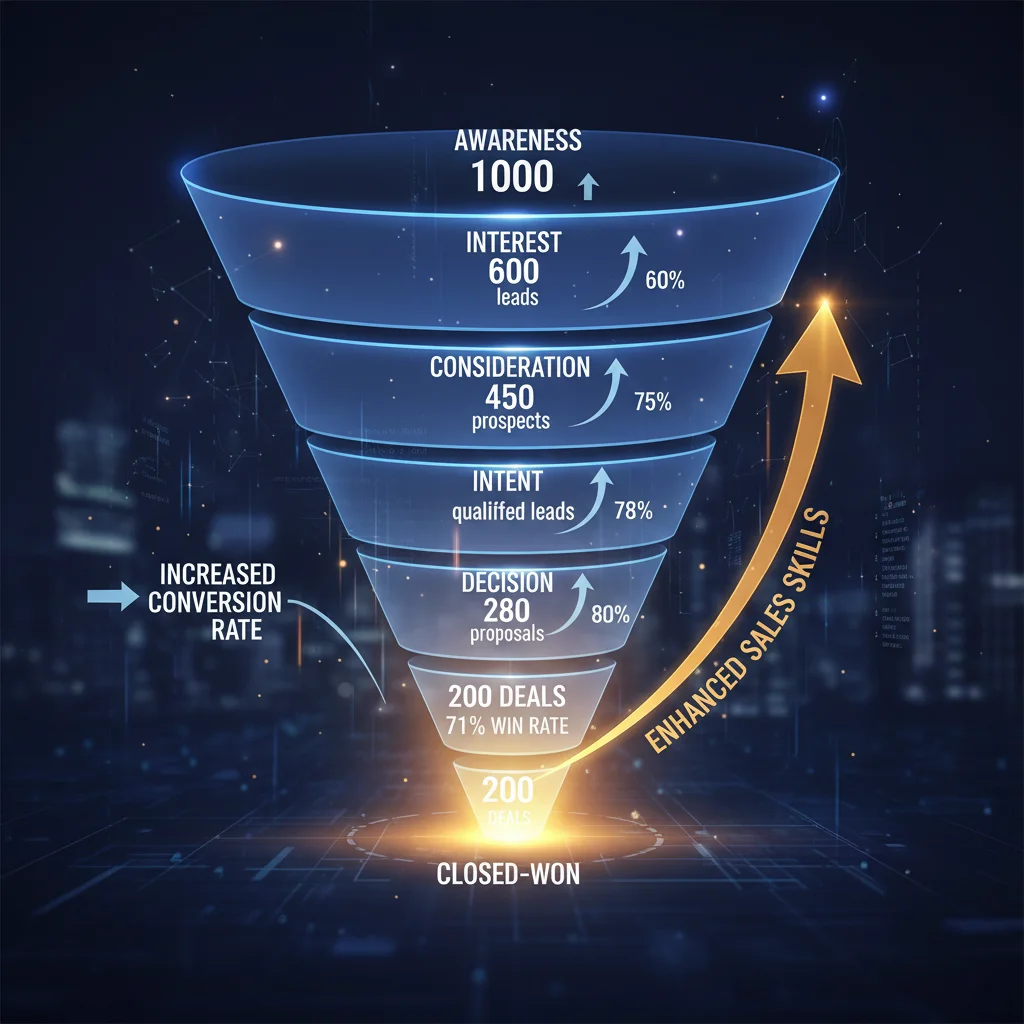
- Higher Conversion Rates: Better objection handling, more effective discovery, and stronger closing skills.
- Increased Deal Sizes: Salespeople become more adept at identifying and articulating value, leading to larger average deal values.
- Shorter Sales Cycles: Improved efficiency in navigating the sales process and accelerating decision-making.
- Improved Pipeline Health: Better qualification of leads and more strategic pipeline management.
2. Improved Sales Team Morale and Retention
When salespeople feel supported, understood, and invested in, their job satisfaction significantly increases. Personalized coaching fosters a sense of:
- Value and Recognition: Individuals feel that their growth is a priority for the organization.
- Competence and Confidence: As skills improve, so does self-assurance in their ability to perform.
- Career Growth: A clear path for development and advancement within the company.
This translates into lower turnover rates, reducing the significant costs associated with recruiting and training new sales talent.
3. Greater Adaptability and Agility
The market is constantly changing. New competitors emerge, customer needs evolve, and economic conditions shift. Personalized coaching equips sales teams with the ability to:
- Quickly adopt new strategies: Salespeople can rapidly incorporate new product knowledge, messaging, or sales methodologies.
- Respond to market shifts: The team becomes more resilient and capable of adapting to unforeseen challenges.
- Innovate and experiment: Coaching encourages a mindset of continuous improvement and trying new approaches.
4. Stronger Customer Relationships
Better-trained salespeople are better at building rapport, understanding customer needs, and providing tailored solutions. This leads to:
- Increased Customer Satisfaction: Clients feel heard and understood, leading to more positive interactions.
- Higher Customer Loyalty: Stronger relationships foster trust and repeat business.
- More Referrals: Satisfied customers are more likely to recommend your business to others.
Implementing Personalized Sales Coaching: A Roadmap to 9% Win Rate Increase
Achieving a 9% increase in deal win rates by mid-2026 through personalized sales coaching requires a structured and committed approach. Here’s a roadmap for U.S. sales organizations:
Step 1: Assess Current State and Define Clear Objectives
- Baseline Performance: Conduct a thorough audit of current deal win rates, sales cycle lengths, average deal sizes, and individual salesperson metrics.
- Identify Gaps: Pinpoint specific areas where the team and individual salespeople are underperforming.
- Set SMART Goals: Beyond the 9% win rate increase, define specific objectives for individual skills, such as improving discovery call conversion by X% or reducing objection handling time by Y seconds.
Step 2: Invest in Coaching Talent and Tools
- Develop Internal Coaches: Train sales managers to become effective coaches, focusing on active listening, constructive feedback, and individualized development planning.
- Consider External Coaches: For specialized skills or to kickstart the program, external sales coaching experts can provide valuable insights and accelerate results.
- Leverage Technology: Implement CRM systems with robust reporting, call recording and transcription software, sales enablement platforms, and AI-powered coaching tools to provide data-driven insights and automate feedback.
Step 3: Develop and Implement Individualized Coaching Plans
- Create IDPs: Work with each salesperson to develop a personalized development plan based on their diagnostic assessment and career aspirations.
- Schedule Regular 1:1s: Establish a consistent cadence for one-on-one coaching sessions (e.g., weekly or bi-weekly).
- Focus on Actionable Feedback: Ensure feedback is specific, timely, and focused on behaviors and outcomes rather than just results.
Step 4: Foster a Culture of Continuous Learning
- Encourage Peer Learning: Create opportunities for salespeople to learn from each other through peer mentoring, best practice sharing sessions, and collaborative problem-solving.
- Provide Ongoing Resources: Offer access to a library of sales training content, industry insights, and competitive intelligence.
- Celebrate Successes: Recognize and reward improvements and achievements to reinforce positive behaviors and motivate the team.
Step 5: Monitor, Measure, and Adjust
- Track Key Metrics: Continuously monitor deal win rates, individual performance against IDP goals, sales cycle length, and other relevant KPIs.
- Gather Feedback: Regularly solicit feedback from salespeople on the effectiveness of the coaching program.
- Iterate and Refine: Use data and feedback to make ongoing adjustments to coaching strategies, content, and processes.
Overcoming Challenges in Personalized Sales Coaching Implementation
While the benefits of personalized sales coaching are undeniable, implementing it successfully can present challenges. Anticipating and addressing these can pave the way for smoother adoption and greater success.
1. Time Commitment from Managers
One of the biggest hurdles is the time commitment required from sales managers. Personalized coaching is not a quick fix; it demands dedicated time for preparation, one-on-one sessions, and follow-up. To mitigate this:
- Streamline processes: Use technology to automate data collection and reporting, freeing up manager time.
- Train managers effectively: Equip them with efficient coaching techniques and frameworks.
- Adjust manager KPIs: Incorporate coaching effectiveness into manager performance evaluations.
- Consider dedicated coaches: For larger teams, a dedicated sales coach can alleviate the burden on frontline managers.
2. Resistance to Change
Some salespeople, especially experienced ones, might be resistant to coaching, viewing it as a sign of underperformance or unnecessary interference. To overcome this:
- Emphasize growth, not criticism: Position coaching as an investment in their career and a path to higher earnings, not punitive.
- Secure leadership buy-in: Ensure senior leadership champions the initiative and participates in the coaching process where appropriate.
- Showcase early wins: Highlight success stories from individuals who have benefited from coaching.
- Involve salespeople in IDP creation: Give them ownership over their development plans.
3. Lack of Consistent Data and Metrics
Without reliable data, personalized coaching becomes guesswork. Organizations might struggle with inconsistent data collection or a lack of tools to analyze performance effectively. Solutions include:
- Standardize data entry: Ensure sales teams consistently update CRM records.
- Invest in robust analytics platforms: Utilize tools that can aggregate and visualize performance data.
- Focus on key metrics: Don’t get overwhelmed by too much data; identify the most impactful KPIs for coaching.
4. Scaling Coaching Efforts
As sales teams grow, scaling personalized coaching can become complex. Strategies for scalability include:
- Leveraging AI and automation: AI-powered tools can provide automated feedback on calls and emails, augmenting human coaching.
- Developing a coaching framework: Provide managers with a consistent framework and resources to ensure quality and consistency across teams.
- Peer coaching programs: Empowering top performers to coach others can extend coaching capacity.
The Future of Sales: Hyper-Personalization and Sustained Growth
The journey to a 9% increase in deal win rates through personalized sales coaching is not merely about hitting a numerical target; it’s about transforming the very fabric of your sales organization. It’s about fostering a culture of continuous improvement, empowerment, and strategic excellence.
As we move towards mid-2026 and beyond, the sales landscape will continue to evolve at a rapid pace. Hyper-personalization, driven by advanced analytics and artificial intelligence, will become even more critical. Sales professionals who are adept at leveraging these tools, coupled with their finely honed interpersonal skills, will be the ones who consistently outperform.
Personalized sales coaching is the bridge that connects current capabilities with future demands. It ensures that your U.S. sales teams are not just keeping pace with change but are actively shaping it, leading the way in customer engagement, value delivery, and, ultimately, revenue generation. By committing to this tailored approach, organizations are not just investing in their sales force; they are investing in a future of sustained growth, competitive advantage, and unparalleled success.
The 9% goal is ambitious, but with a well-executed personalized sales coaching strategy, it is well within reach. It’s time for U.S. sales leaders to embrace this transformative approach and equip their teams with the skills, confidence, and support needed to thrive in the complex and rewarding world of modern sales.