Personalized Sales Enablement: Boost Customer Engagement by 18% in 2026

Personalized Sales Enablement: A 2026 Strategy to Increase Customer Engagement by 18% (Practical Solutions)
The sales landscape is in constant flux, driven by evolving customer expectations and technological advancements. In this dynamic environment, a one-size-fits-all approach to sales is no longer sufficient. Today’s buyers crave relevance, understanding, and a personalized experience that speaks directly to their unique needs and challenges. This is where personalized sales enablement emerges not just as a buzzword, but as a critical strategic imperative for businesses aiming for sustainable growth and a significant competitive advantage. We project that by 2026, companies effectively implementing personalized sales enablement strategies will see an average increase of 18% in customer engagement.
But what does ‘personalized sales enablement’ truly entail, and how can your organization harness its power to achieve such impressive gains? This comprehensive guide will delve into the core principles, practical strategies, and technological backbone required to build a robust personalized sales enablement framework. We’ll explore how data, artificial intelligence, and a customer-centric mindset can transform your sales operations, fostering deeper connections and driving measurable results.
The Imperative of Personalization in Modern Sales
In an era saturated with information and choices, customers are more discerning than ever. They expect brands to understand their pain points, anticipate their needs, and offer solutions that are tailor-made for their specific context. Generic sales pitches and irrelevant content are not just ignored; they actively detract from the customer experience, leading to disengagement and lost opportunities. The demand for personalization isn’t a trend; it’s the new standard.
Personalized sales enablement is the strategic process of equipping sales teams with the right content, tools, training, and processes to deliver highly relevant and individualized experiences to prospects and customers throughout their buying journey. It moves beyond simply knowing a customer’s name; it involves understanding their industry, company size, role, specific challenges, past interactions, and even their preferred communication style. This deep understanding allows sales professionals to become trusted advisors, offering genuine value rather than just pushing products.
Why 18% Customer Engagement by 2026?
The 18% target for increased customer engagement by 2026 is ambitious yet entirely achievable through a concerted effort in personalized sales enablement. This projection is based on several factors:
- Rising Customer Expectations: As technology makes personalization easier, customer expectations will continue to climb. Companies that meet these expectations will stand out.
- Advancements in AI and Data Analytics: The rapid evolution of AI and machine learning provides unprecedented capabilities for understanding customer behavior and automating personalization at scale.
- Competitive Differentiator: In crowded markets, personalization offers a significant competitive edge, leading to higher customer satisfaction, loyalty, and ultimately, engagement.
- Improved Sales Efficiency: When sales teams are enabled with personalized insights, they spend less time on irrelevant activities and more time on high-value interactions, leading to better outcomes.
Achieving this level of engagement translates directly into tangible business benefits: higher conversion rates, shorter sales cycles, increased average deal size, and improved customer retention. It’s a holistic approach that benefits both the customer and the bottom line.
Pillars of Effective Personalized Sales Enablement
Building a successful personalized sales enablement strategy requires a multi-faceted approach, focusing on several key areas:
1. Data-Driven Customer Understanding
At the heart of any effective personalization strategy is data. Without a deep, granular understanding of your customers, personalization remains superficial. This involves collecting, analyzing, and acting upon vast amounts of data from various sources.
- CRM Data: Your Customer Relationship Management (CRM) system is the foundational source of customer information. Ensure it’s clean, up-to-date, and comprehensive, capturing not just contact details but also interaction history, purchase history, preferences, and feedback.
- Behavioral Data: Track how prospects and customers interact with your website, emails, content, and products. What pages do they visit? What content do they download? How long do they spend on certain sections? This reveals their interests and intent.
- Third-Party Data: Augment your internal data with external insights such as industry trends, competitor analysis, economic indicators, and firmographics to gain a broader perspective on your target accounts.
- Intent Data: Utilize intent data providers to identify companies and individuals actively researching solutions like yours, even before they engage with your brand directly. This allows for proactive and highly relevant outreach.
The goal is to create rich, 360-degree customer profiles that empower sales reps with actionable insights, allowing them to tailor their approach with precision.
2. AI and Machine Learning for Hyper-Personalization
Manual personalization at scale is impractical. This is where Artificial Intelligence (AI) and Machine Learning (ML) become indispensable. AI-powered tools can process and analyze vast datasets far more efficiently than humans, identifying patterns and generating insights that drive hyper-personalization.
- Content Recommendation Engines: AI can analyze a prospect’s profile and behavioral data to recommend the most relevant content (e.g., case studies, whitepapers, blog posts) at each stage of their buying journey.
- Predictive Analytics: ML algorithms can predict which prospects are most likely to convert, which customers are at risk of churn, and what products or services they might be interested in next. This allows sales teams to prioritize their efforts and proactively address needs.
- Automated Outreach Personalization: AI can assist in crafting personalized email subject lines, body copy, and call-to-actions based on individual preferences and past interactions, significantly improving open and response rates.
- Dynamic Pricing and Offers: For certain industries, AI can enable dynamic pricing models and personalized offers based on a customer’s specific value to the business and their likelihood to purchase.
- Conversation Intelligence: AI tools can analyze sales calls and meetings to identify key topics, customer sentiment, and effective sales techniques, providing real-time coaching and post-call insights for reps.
Integrating AI into your sales enablement stack is no longer optional; it’s a fundamental component for achieving true personalization at scale.
3. Customized Content and Messaging
Generic content is a conversion killer. Personalized sales enablement demands content and messaging that resonate deeply with the individual buyer. This means moving beyond broad industry-specific content to highly tailored materials.
- Segmented Content Libraries: Organize your content by industry, company size, role, pain point, and product interest. This makes it easier for sales reps to find and deliver relevant assets.
- Dynamic Content Creation: Leverage tools that allow for on-the-fly customization of content. This could include personalized landing pages, interactive presentations that adapt to buyer responses, or case studies that highlight relevant customer success stories.
- Value-Based Messaging: Shift from feature-focused selling to value-based messaging. Show how your solution directly addresses the prospect’s specific challenges and helps them achieve their unique goals.
- Personalized Video: Short, personalized video messages from sales reps can significantly increase engagement and build rapport, especially when addressing specific questions or providing tailored demonstrations.
- Sales Playbooks with Personalization Options: Develop playbooks that guide reps on how to personalize their outreach and conversations, providing templates and frameworks that can be easily adapted.
Implementing Personalized Sales Enablement: A Step-by-Step Guide
Transitioning to a personalized sales enablement model requires careful planning and execution. Here’s a practical roadmap:
Step 1: Assess Current Capabilities and Identify Gaps
Before embarking on any major change, understand your current state. Evaluate your existing sales processes, technology stack, content library, and sales team’s skills. Ask:
- What data are we currently collecting about our customers? Is it comprehensive and accessible?
- What tools do we have for content management, CRM, and sales engagement?
- How do our sales reps currently personalize their interactions? What are their challenges?
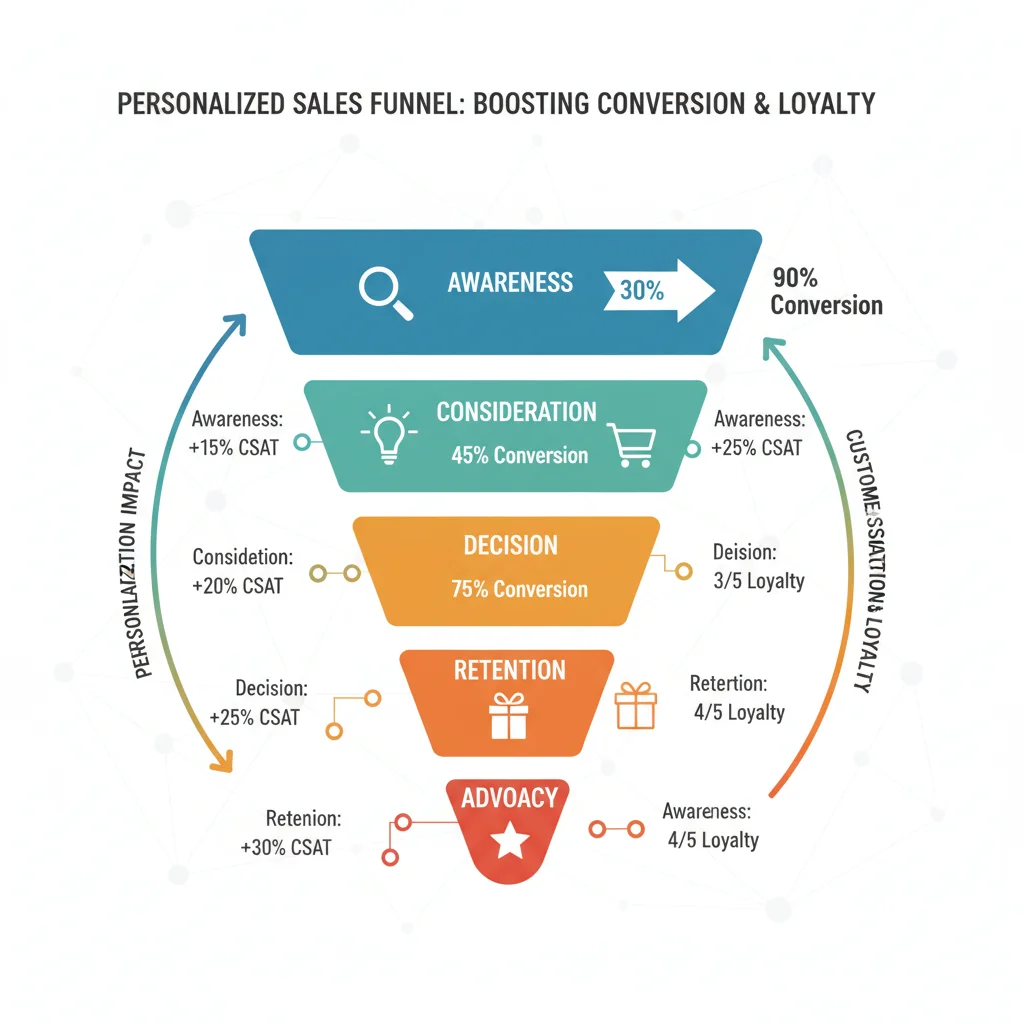
- Where are the biggest opportunities for personalization to impact our sales funnel?
This assessment will highlight areas needing improvement and help prioritize your efforts.
Step 2: Define Your Ideal Customer Profiles (ICPs) and Buyer Personas
Personalization starts with knowing who you’re selling to. Develop detailed ICPs for target companies and comprehensive buyer personas for key stakeholders within those companies. Go beyond demographics to include their goals, challenges, motivations, preferred communication channels, and common objections.
Step 3: Invest in the Right Technology Stack
A robust tech stack is crucial for scaling personalization. Consider solutions that offer:
- Advanced CRM: A powerful CRM with strong data management and integration capabilities.
- Sales Enablement Platforms (SEPs): Platforms that centralize content, provide training, offer analytics, and facilitate personalized content delivery.
- AI-Powered Sales Tools: Solutions for predictive analytics, intent data, conversation intelligence, and automated personalization.
- Content Management System (CMS): A flexible CMS that supports dynamic content and easy customization.
- Marketing Automation: For nurturing leads with personalized content before they reach sales.
Ensure these tools integrate seamlessly to create a unified view of the customer.
Step 4: Develop a Personalized Content Strategy
Audit your existing content and identify gaps. Create new content specifically designed to address the needs of your different buyer personas at various stages of their journey. Focus on:
- Educational Content: Blog posts, whitepapers, webinars addressing common pain points.
- Solution-Oriented Content: Case studies, product demos, ROI calculators showing how your solution solves specific problems.
- Decision-Stage Content: Competitive comparisons, testimonials, personalized proposals.
Crucially, ensure this content is easily discoverable and customizable by your sales team.
Step 5: Train and Coach Your Sales Team
Technology and content are only as effective as the people using them. Comprehensive training is essential. Teach your sales reps:
- How to use the new tech stack: Proficiency in CRM, SEP, and AI tools.
- The art of personalization: How to leverage data and insights to tailor conversations, emails, and presentations.
- Active listening and questioning: To uncover individual needs and adapt their approach in real-time.
- Value-based selling: Focusing on how your solution impacts the customer’s business.
Ongoing coaching and feedback loops are vital for continuous improvement.
Step 6: Measure, Analyze, and Optimize
Personalization is an iterative process. Continuously monitor key metrics to understand what’s working and what’s not. Track:
- Customer Engagement Metrics: Email open rates, click-through rates, content consumption, meeting attendance, response rates.
- Sales Performance Metrics: Conversion rates at each stage, sales cycle length, average deal size, win rates.
- Customer Satisfaction (CSAT) and Net Promoter Score (NPS): To gauge the overall impact on customer experience.
Use these insights to refine your strategies, optimize your content, and improve your sales processes. A/B testing different personalized approaches can yield valuable lessons.
Challenges and How to Overcome Them
While the benefits of personalized sales enablement are clear, implementing it isn’t without its challenges. Organizations may encounter:
Data Silos and Quality Issues
Many companies struggle with fragmented data spread across different systems, making it difficult to create a unified customer view. Poor data quality (incomplete, inaccurate, or outdated information) further exacerbates this problem.
- Solution: Implement a robust data integration strategy. Use APIs to connect different systems (CRM, marketing automation, customer service). Invest in data cleansing and enrichment tools. Establish clear data governance policies to ensure data accuracy and consistency.
Resistance to Change from Sales Teams
Salespeople, accustomed to traditional methods, may resist adopting new tools and processes, perceiving them as additional burdens rather than enablers.
- Solution: Involve sales reps in the planning process from the beginning. Clearly communicate the ‘why’ behind the changes and demonstrate how personalization will make their jobs easier and more effective. Provide extensive training and ongoing support. Celebrate early wins to build momentum and buy-in.
Lack of Relevant Content
Even with data, if there isn’t enough varied and high-quality content to personalize, efforts will fall flat.
- Solution: Conduct a thorough content audit. Identify content gaps based on buyer personas and sales funnel stages. Develop a content creation roadmap, prioritizing personalized assets. Consider leveraging user-generated content or partnering with marketing to co-create materials.
Measuring ROI Effectively
Attributing specific revenue gains directly to personalized sales enablement can be complex.
- Solution: Define clear KPIs from the outset. Use attribution models that link personalized activities to sales outcomes. Track engagement metrics (e.g., increased email open rates, higher meeting acceptance) as leading indicators. Continuously refine your measurement framework to demonstrate tangible value.

The Future of Personalized Sales Enablement: 2026 and Beyond
Looking ahead to 2026, personalized sales enablement will become even more sophisticated and integrated. We can expect:
- Ultra-Personalization with Generative AI: Generative AI will move beyond simple content recommendations to dynamically create highly personalized content, emails, and even sales scripts in real-time, adapting to the nuances of each conversation.
- Predictive and Prescriptive Insights: AI will not only predict customer behavior but also prescribe the exact next best action for a sales rep, including the optimal time to reach out, the most effective channel, and the most relevant message.
- Human-AI Collaboration: The focus will shift to seamless collaboration between sales professionals and AI tools, where AI handles the heavy lifting of data analysis and personalization, freeing up reps to focus on building relationships and closing deals.
- Experiential Personalization: Beyond content, personalization will extend to the entire customer experience, including personalized product demonstrations, tailored onboarding processes, and custom support interactions.
- Ethical AI and Data Privacy: As personalization becomes more advanced, there will be an increased emphasis on ethical AI practices and robust data privacy measures, building trust with customers.
The companies that embrace these advancements will be the ones that truly differentiate themselves and achieve unparalleled levels of customer engagement and loyalty.
Conclusion: Embrace Personalization for Unprecedented Engagement
The journey to increasing customer engagement by 18% through personalized sales enablement by 2026 is not merely about adopting new technologies; it’s about fundamentally shifting your sales philosophy to be relentlessly customer-centric. It requires a commitment to understanding your buyers at a deeper level, leveraging data and AI to deliver hyper-relevant experiences, and empowering your sales team with the tools and training they need to excel.
By investing in robust data infrastructure, integrating advanced AI capabilities, crafting highly customized content, and fostering a culture of continuous learning within your sales organization, you can transform your sales processes. This strategic evolution will not only meet the rising expectations of modern buyers but will also create stronger, more meaningful customer relationships, driving sustainable growth and positioning your business as a leader in the competitive landscape. The future of sales is personal, and the time to embrace it is now.