Predictive Analytics in Sales: Boosting Conversion by 20% by 2026

In the dynamic and hyper-competitive world of sales, staying ahead often means leveraging every possible advantage. Traditional sales methodologies, while foundational, are increasingly being augmented, and in some cases, transformed by advanced technologies. Among these, predictive sales analytics stands out as a game-changer, offering an unprecedented ability to peer into the future of sales performance. This isn’t just about making educated guesses; it’s about using sophisticated algorithms and vast datasets to forecast outcomes with remarkable accuracy, thereby enabling proactive strategies that drive significant growth.
Imagine a sales force that not only understands its current pipeline but can also anticipate which leads are most likely to convert, which customers are at risk of churn, and what products will appeal most to specific segments. This is the promise of predictive sales analytics. By analyzing historical data, market trends, customer behavior, and a myriad of other variables, predictive models can identify patterns and correlations that are invisible to the human eye. The result? A granular understanding of customer intent and a clear roadmap for sales teams to optimize their efforts, leading to higher efficiency and, crucially, a substantial boost in conversion rates.
Our deep dive into this transformative technology reveals that businesses embracing predictive sales analytics are not just hoping for better results; they are systematically engineering them. Industry experts and early adopters are projecting that by 2026, companies effectively integrating these analytical tools into their sales enablement strategies could see their lead conversion rates increase by as much as 20%. This isn’t a minor improvement; it’s a monumental shift that redefines what’s possible in sales, moving from reactive responses to proactive, data-driven interventions. This article will explore the core concepts of predictive sales analytics, its multifaceted benefits, practical implementation strategies, and the compelling reasons why it’s becoming an indispensable tool for any forward-thinking sales organization.
The Essence of Predictive Sales Analytics
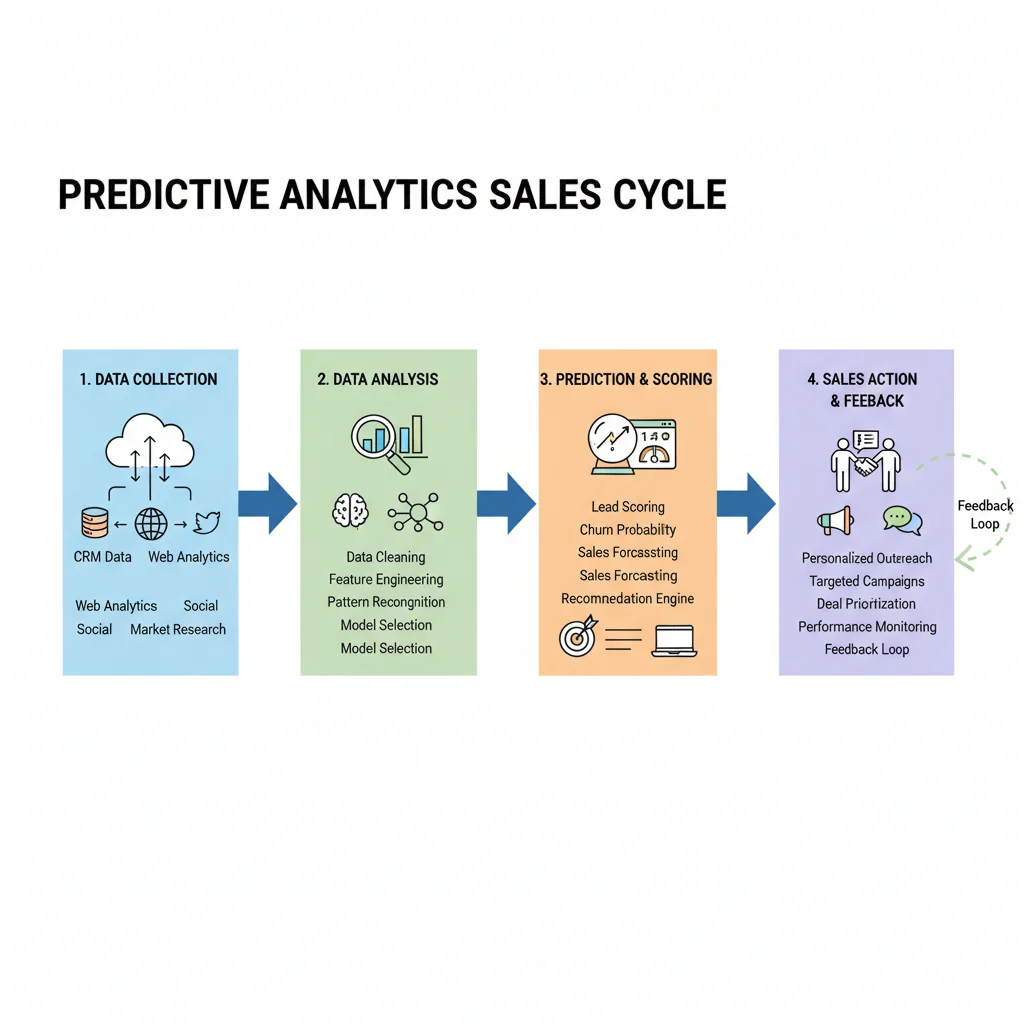
At its heart, predictive sales analytics is the application of statistical algorithms and machine learning techniques to historical and real-time sales data to forecast future sales outcomes. It moves beyond descriptive analytics (what happened) and diagnostic analytics (why it happened) to prescriptive analytics (what will happen and what to do about it). This advanced form of analysis synthesizes information from various sources – CRM systems, marketing automation platforms, external market data, social media, and more – to build models that can predict future events with a high degree of confidence.
The core components of a robust predictive sales analytics system typically include:
- Data Collection and Integration: Gathering vast amounts of relevant data from disparate sources and consolidating it into a unified, accessible format. This includes customer demographics, purchase history, website interactions, email engagement, social media activity, sales call logs, and market trends.
- Data Cleansing and Preparation: Ensuring the quality and consistency of the data. Dirty data can lead to inaccurate predictions, so this step involves identifying and correcting errors, handling missing values, and transforming data into a suitable format for analysis.
- Model Development: Employing various machine learning algorithms (e.g., regression analysis, classification, clustering, neural networks) to build predictive models. These models learn from historical patterns to identify relationships and make predictions.
- Model Validation and Deployment: Testing the accuracy and reliability of the models using new, unseen data. Once validated, the models are deployed, often integrated directly into existing sales tools and dashboards, providing actionable insights to sales teams.
- Continuous Monitoring and Refinement: Predictive models are not static; they need to be continuously monitored for performance and retrained with new data to maintain their accuracy as market conditions and customer behaviors evolve.
The power of predictive sales analytics lies in its ability to identify subtle signals and complex interactions that human analysts might miss. For instance, it can determine that a lead who interacted with a specific piece of content, visited certain product pages multiple times, and is from a particular industry segment has an 80% higher probability of converting within the next two weeks. This level of insight transforms sales from an art into a more precise science.
Key Benefits of Implementing Predictive Sales Analytics
The adoption of predictive sales analytics offers a multitude of benefits that directly impact a company’s bottom line and operational efficiency. These advantages extend across the entire sales cycle, from lead generation to post-sale customer retention.
1. Enhanced Lead Qualification and Prioritization:
One of the most significant benefits is the ability to accurately score and prioritize leads. Instead of relying on generic scoring models, predictive analytics assesses the likelihood of a lead converting based on a comprehensive set of factors. This means sales reps can focus their limited time and resources on the leads most likely to close, dramatically improving efficiency and conversion rates. It helps in identifying the ‘hottest’ leads, reducing the time spent on unqualified prospects, and accelerating the sales cycle.
2. Improved Sales Forecasting Accuracy:
Traditional sales forecasting often relies on gut feelings or extrapolations of past performance, which can be prone to inaccuracies. Predictive sales analytics, however, uses historical data, market trends, seasonality, and even external economic indicators to generate highly accurate sales forecasts. This improved accuracy allows businesses to better allocate resources, manage inventory, set realistic goals, and make more informed strategic decisions.
3. Optimized Sales Strategies and Personalization:
With insights into customer behavior and preferences, sales teams can tailor their strategies to individual prospects. Predictive models can suggest the best products or services to recommend, the optimal timing for outreach, and even the most effective communication channels. This personalization not only increases the chances of conversion but also enhances the customer experience, fostering stronger relationships.
4. Reduced Churn and Improved Customer Retention:
Predictive analytics isn’t just for new sales; it’s also a powerful tool for customer retention. By analyzing customer usage patterns, support interactions, and feedback, predictive models can identify customers who are at risk of churning. This early warning system allows sales and customer success teams to intervene proactively, offering targeted solutions or incentives to retain valuable customers, thereby protecting recurring revenue.
5. Enhanced Sales Team Productivity and Motivation:
By providing sales reps with a clear understanding of where to focus their efforts, predictive analytics reduces wasted time and frustration. When reps are consistently engaging with qualified leads and seeing higher success rates, their productivity and motivation naturally increase. This leads to a more engaged and effective sales force.
6. Data-Driven Decision Making:
At an organizational level, predictive sales analytics empowers leadership with data-backed insights to make strategic decisions. This includes decisions about market expansion, product development, pricing strategies, and resource allocation. It shifts decision-making from intuition to empirical evidence, leading to more robust and successful business outcomes.
Implementing Predictive Sales Analytics: A Roadmap to Success
Successfully integrating predictive sales analytics into your sales enablement strategy requires careful planning and execution. It’s not merely about purchasing software; it’s about a holistic approach that encompasses data, technology, processes, and people.
Step 1: Define Clear Objectives and KPIs
Before embarking on any implementation, clearly define what you aim to achieve with predictive analytics. Are you looking to increase lead conversion by 20%? Reduce customer churn by 15%? Improve forecast accuracy by 10%? Specific, measurable objectives will guide your strategy and allow you to track progress. Identify the key performance indicators (KPIs) that will measure the success of your predictive models.
Step 2: Assess Your Data Landscape
Data is the lifeblood of predictive analytics. Conduct a thorough audit of your existing data sources. Where is your customer data stored? Is it clean, consistent, and accessible? You’ll need data from your CRM, marketing automation, ERP, customer service, website analytics, and potentially external sources. Identify any data gaps or quality issues that need to be addressed before feeding it into predictive models.
Step 3: Choose the Right Technology and Partners
The market offers a wide array of predictive analytics tools, from standalone platforms to integrated modules within CRM systems. Consider factors such as ease of integration, scalability, customization options, and the level of technical expertise required. For many companies, partnering with a data science consultant or a vendor specializing in sales analytics can accelerate implementation and ensure best practices are followed. Look for solutions that can handle large datasets, offer intuitive interfaces for sales teams, and provide clear, actionable insights.
Step 4: Start Small and Iterate
Don’t try to solve all your sales challenges at once. Begin with a pilot project focused on a specific objective, such as lead scoring for a particular product line or customer segment. This allows you to test the models, gather feedback, and refine your approach before a broader rollout. An iterative approach ensures that you learn and adapt, continuously improving the accuracy and utility of your predictive insights.
Step 5: Integrate with Existing Sales Workflows
For predictive analytics to be effective, its insights must be seamlessly integrated into the daily workflows of your sales team. This means providing real-time recommendations within the CRM, automating lead prioritization in sales queues, and offering personalized content suggestions. If sales reps have to go to a separate system to get insights, adoption will be low. The goal is to make data-driven selling intuitive and effortless.
Step 6: Train and Enable Your Sales Team
Technology alone is not enough. Your sales team needs to understand how to interpret and act on the insights provided by predictive sales analytics. Provide comprehensive training that covers not just the ‘how-to’ of the tools but also the ‘why’ behind the predictions. Foster a culture of data literacy and emphasize that these tools are designed to augment their skills, not replace them. Encourage feedback from the sales team to continuously improve the models and their integration.
Step 7: Monitor, Measure, and Refine
Predictive models are not set-it-and-forget-it solutions. Regularly monitor the performance of your models against your defined KPIs. Are they accurately predicting conversions? Are they identifying at-risk customers effectively? As market conditions, customer behaviors, and your own sales strategies evolve, your models will need to be updated and retrained. This continuous refinement process ensures that your predictive analytics capability remains sharp and relevant, delivering consistent value.
The Future is Now: Forecasting a 20% Boost in Lead Conversion by 2026
The ambitious forecast of a 20% boost in lead conversion by 2026 through the adoption of predictive sales analytics is not merely speculative; it is grounded in the tangible results already being observed by early adopters. This significant uplift stems from several compounding factors that predictive analytics directly addresses.
Firstly, the precision in lead qualification means sales teams spend less time on dead ends. Imagine a sales rep making 100 calls, and instead of 10 qualified leads, they get 20. This immediate doubling of qualified opportunities, achieved through smarter prioritization, directly translates to higher conversion potential. The time saved from pursuing low-probability leads can be reinvested into nurturing high-potential prospects or engaging in more strategic activities.
Secondly, the ability to personalize outreach based on predictive insights dramatically increases engagement. When a sales message resonates deeply with a prospect’s specific needs, pain points, and preferences – all identified by analytics – the likelihood of that message leading to a meaningful interaction and subsequent conversion skyrockets. This personalization moves beyond generic segmentation to a truly individualized approach, making each interaction more impactful.
Thirdly, optimized timing for interventions plays a crucial role. Predictive models can identify the ‘moment of truth’ – the precise time when a prospect is most receptive to an offer or when a customer is most likely to churn. Acting at these critical junctures, rather than relying on a fixed schedule, ensures that sales efforts are maximally effective. This could mean sending a follow-up email precisely when a prospect is reviewing pricing pages, or offering a proactive solution to a customer showing signs of dissatisfaction.
Moreover, the continuous feedback loop inherent in predictive analytics means that sales processes are constantly improving. Each interaction, each conversion, and each loss provides new data that refines the models, making them even more accurate over time. This iterative enhancement ensures sustained growth in conversion rates, rather than a one-off improvement.
The 20% increase isn’t just about closing more deals; it’s about closing the right deals, faster and more efficiently. It represents a fundamental shift in how sales organizations operate, moving towards a proactive, data-driven methodology that maximizes every sales opportunity. Companies that embrace this shift are not just adapting to the future of sales; they are actively shaping it.

Overcoming Challenges and Ensuring Long-Term Success
While the benefits of predictive sales analytics are compelling, its successful implementation is not without challenges. Addressing these proactively is key to ensuring long-term success and realizing the promised boost in conversion rates.
Data Quality and Availability:
As mentioned, poor data quality can cripple any analytics initiative. Organizations must invest in data governance strategies, data cleansing tools, and processes to ensure the accuracy, completeness, and consistency of their data. Fragmentation of data across various systems is another common issue, requiring robust integration solutions.
Talent Gap:
Implementing and managing predictive analytics requires a blend of data science expertise, business acumen, and sales knowledge. Many companies face a talent gap in these areas. This can be addressed through upskilling existing employees, hiring specialized data scientists, or partnering with external consultancies that possess the necessary expertise.
Change Management and Adoption:
Introducing new technologies can be met with resistance from sales teams accustomed to traditional methods. Effective change management is crucial. This involves clear communication about the benefits, comprehensive training, involving sales reps in the process, and demonstrating early wins to build confidence and foster adoption. Emphasize that predictive tools are designed to empower, not replace, human intuition and relationships.
Ethical Considerations and Data Privacy:
The use of customer data for predictive modeling raises important ethical considerations and privacy concerns. Organizations must ensure compliance with data protection regulations (e.g., GDPR, CCPA) and maintain transparency with customers about how their data is being used. Building trust is paramount.
Measuring ROI:
Clearly demonstrating the return on investment (ROI) of predictive analytics initiatives can sometimes be challenging, especially in the early stages. It’s important to establish baseline metrics before implementation and consistently track the KPIs defined in Step 1. This provides concrete evidence of the impact on conversion rates, revenue, and efficiency, justifying continued investment.
Continuous Evolution:
The predictive analytics landscape is constantly evolving with new algorithms, tools, and data sources. To maintain a competitive edge, organizations must commit to continuous learning, experimentation, and adaptation. This means regularly reviewing and updating models, exploring new data points, and staying abreast of technological advancements.
Conclusion: The Imperative of Predictive Sales Analytics
The journey towards a 20% boost in lead conversion by 2026 is not just an aspiration; it’s a strategic imperative for businesses looking to thrive in an increasingly data-driven economy. Predictive sales analytics offers the roadmap to achieve this by transforming sales from a reactive, intuition-based endeavor into a proactive, data-powered science. It empowers sales teams to work smarter, not just harder, by guiding them to the most promising opportunities, enabling highly personalized engagements, and optimizing the timing of every interaction.
The competitive advantages gained from superior lead qualification, accurate forecasting, enhanced personalization, and improved customer retention are too significant to ignore. While challenges exist, they are surmountable with a clear strategy, the right technological investments, a commitment to data quality, and a focus on empowering the sales force. The companies that embrace predictive sales analytics today are not just preparing for the future; they are actively creating it, positioning themselves for unparalleled growth and market leadership.
Investing in predictive sales analytics is no longer an option for ambitious sales organizations; it is a fundamental requirement for sustained success. The insights gained provide a powerful lens through which to view the sales landscape, revealing hidden opportunities and guiding strategic decisions that will undoubtedly redefine the benchmarks for lead conversion and overall sales performance in the years to come. The 20% boost is not just a number; it’s a testament to the transformative power of data in the hands of a forward-thinking sales team.