How Predictive Analytics Tools Can Identify 3 Key Sales Opportunities for Your Business Next Month
In today’s hyper-competitive business landscape, relying on intuition or historical data alone is no longer sufficient for sustained growth. Businesses are constantly seeking an edge, a way to peer into the future and anticipate market shifts, customer needs, and emerging trends. This is where the power of predictive sales opportunities comes into play. Predictive analytics, a sophisticated branch of data science, equips organizations with the ability to forecast future outcomes based on historical data. By leveraging advanced algorithms and machine learning, businesses can transform vast amounts of raw data into actionable insights, pinpointing where the most lucrative sales opportunities lie.
Imagine knowing, with a high degree of certainty, which customers are most likely to convert, which products will be in high demand, or which sales strategies will yield the best results in the coming weeks. This isn’t science fiction; it’s the reality that predictive analytics offers. For any business striving to optimize its sales efforts, reduce wasted resources, and significantly boost its bottom line, understanding and implementing predictive analytics is no longer an option but a necessity. This comprehensive guide will delve into how these powerful tools can identify three crucial sales opportunities for your business next month, providing you with a roadmap to proactive, data-driven sales success.
The Foundational Role of Predictive Analytics in Modern Sales
Before we pinpoint specific opportunities, it’s essential to grasp the fundamental role predictive analytics plays in revolutionizing sales. Traditionally, sales efforts have been reactive, responding to customer inquiries or market demands as they arise. Predictive analytics flips this model, making sales proactive and strategic. It moves beyond simply reporting what happened in the past to predicting what will happen in the future.
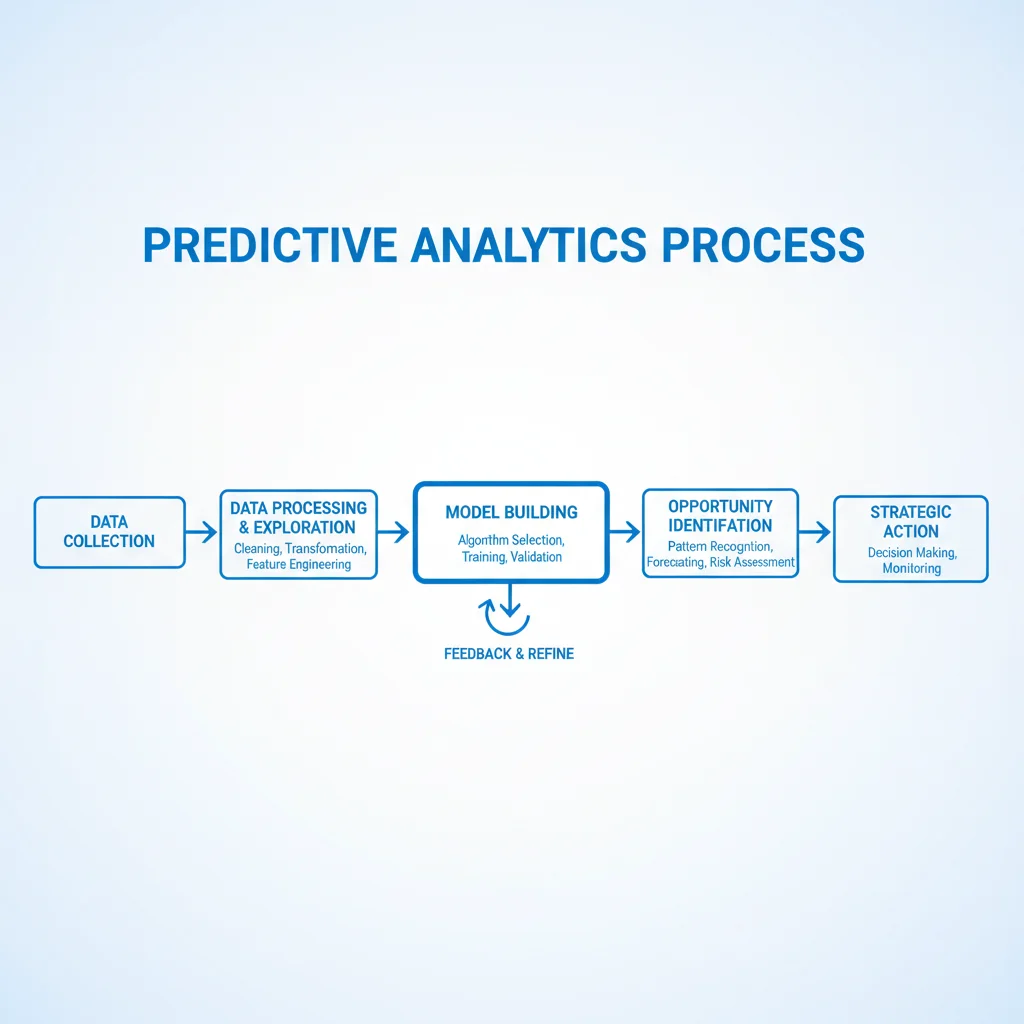
At its core, predictive analytics involves several key steps: data collection, data cleaning and preparation, model building, deployment, and continuous refinement. It gathers data from various sources – CRM systems, ERPs, marketing automation platforms, social media, customer service interactions, and even external market data. This data is then processed and analyzed to identify patterns, correlations, and anomalies. Machine learning algorithms are trained on this historical data to create models that can forecast future events or behaviors. These models are then used to generate insights that inform sales strategies, allowing businesses to anticipate customer needs, identify potential churn, and uncover hidden revenue streams. The ability to identify predictive sales opportunities stems directly from this robust analytical process.
The benefits are manifold: improved sales forecasting accuracy, enhanced customer targeting, optimized resource allocation, higher conversion rates, and ultimately, increased revenue. By understanding the ‘why’ behind customer behavior and market trends, sales teams can move from guesswork to informed decision-making, leading to more efficient and effective sales cycles. This proactive stance ensures that your sales team is always one step ahead, ready to capitalize on upcoming possibilities rather than playing catch-up.
Opportunity 1: Identifying High-Potential Customer Segments for Targeted Outreach
One of the most immediate and impactful ways predictive analytics can drive sales is by identifying high-potential customer segments. Not all customers are created equal, and not all marketing or sales efforts yield the same return. Wasting resources on unlikely prospects is inefficient and costly. Predictive analytics excels at segmenting your customer base based on their likelihood to purchase, their potential lifetime value, and their responsiveness to specific offers.
How Predictive Analytics Achieves This:
- Behavioral Analysis: Predictive models analyze past purchasing behavior, website interactions, email engagement, and customer service history. They look for patterns that indicate a predisposition to buy certain products or services. For instance, a customer who frequently views product pages, adds items to their cart but doesn’t complete the purchase, or downloads specific whitepapers might be flagged as a high-potential lead.
- Demographic and Psychographic Profiling: By combining internal data with external demographic and psychographic information, predictive tools can build comprehensive customer profiles. This allows for the identification of segments that share characteristics with your most valuable existing customers.
- Propensity Modeling: This is a core technique where models calculate the probability of a customer performing a specific action, such as making a purchase, subscribing to a service, or upgrading their plan. Customers with a high propensity score can then be prioritized for sales outreach.
- Churn Prediction: Conversely, predictive analytics can identify customers at risk of churning. By understanding the factors that lead to customer attrition, businesses can proactively intervene with retention strategies, which can be just as valuable as acquiring new customers.
Actionable Insights for Next Month:
For your business next month, this translates into a clear directive: focus your sales and marketing efforts on these identified high-potential segments. Instead of broad-stroke campaigns, you can craft highly personalized messages and offers that resonate deeply with their specific needs and pain points. This precision targeting significantly increases conversion rates and optimizes your marketing spend. For example, if the analytics predict a segment of small businesses in the tech sector is highly likely to adopt a new CRM feature, your sales team can prepare tailored presentations and case studies specifically for them. This strategic focus on predictive sales opportunities ensures maximum impact from every interaction.
Opportunity 2: Pinpointing Optimal Product/Service Bundles and Cross-Selling Opportunities
Another powerful application of predictive analytics is its ability to uncover optimal product or service bundles and identify lucrative cross-selling opportunities. Many businesses leave money on the table by not effectively recommending additional products or services that complement a customer’s existing purchases or expressed interests. Predictive analytics can bridge this gap by intelligently suggesting relevant additions that enhance the customer’s experience and increase their lifetime value.
How Predictive Analytics Achieves This:
- Association Rule Mining: This technique identifies relationships between items in large datasets. For example, it might discover that customers who buy product A frequently also buy product B. This insight forms the basis for ‘customers who bought this also bought…’ recommendations.
- Collaborative Filtering: Similar to how streaming services recommend movies, collaborative filtering models analyze user behavior and item characteristics to predict what other items a customer might like based on the preferences of similar users.
- Next Best Offer (NBO) Modeling: NBO models determine the most appropriate product or service to offer a customer at a given point in time. This considers not just what they might like, but also their current needs, past interactions, and the business’s strategic goals.
- Market Basket Analysis: By examining the combinations of items customers purchase together, businesses can identify natural product groupings. This helps in creating attractive bundles that meet multiple customer needs simultaneously.
The insights derived from these analyses are invaluable. They move beyond simple guesswork, providing data-backed recommendations that are far more likely to convert. This proactive approach to identifying predictive sales opportunities in bundling and cross-selling can significantly boost average transaction values and customer loyalty.
Actionable Insights for Next Month:
For the coming month, leverage these insights to design highly effective upsell and cross-sell campaigns. For instance, if predictive analytics reveals that customers purchasing your entry-level software package are highly likely to upgrade to the premium version within three months, your sales team can proactively reach out with targeted upgrade offers around the two-month mark. Similarly, if there’s a strong association between a specific service and a complementary product, create bundles that offer a discount when purchased together. This not only increases sales but also enhances customer satisfaction by providing them with solutions they genuinely need, often before they even realize it themselves. Train your sales representatives to use these data-driven recommendations during customer interactions, empowering them with intelligent talking points and personalized suggestions.
Opportunity 3: Optimizing Sales Forecasting and Resource Allocation
Accurate sales forecasting is the cornerstone of effective business planning. Without it, companies struggle with inventory management, staffing levels, budget allocation, and overall strategic direction. Predictive analytics elevates sales forecasting from an educated guess to a data-driven science, providing a much clearer vision of future demand and revenue. This, in turn, allows for optimal resource allocation, ensuring your business is prepared to capitalize on upcoming trends and avoid potential pitfalls.
How Predictive Analytics Achieves This:
- Time Series Analysis: This method examines historical sales data over time to identify trends, seasonality, and cyclical patterns. Predictive models can then project these patterns into the future, providing highly accurate forecasts.
- Regression Analysis: By identifying causal relationships between sales and various influencing factors (e.g., marketing spend, economic indicators, competitor activity, weather), regression models can predict sales based on changes in these variables.
- Machine Learning Algorithms: More advanced algorithms like neural networks or gradient boosting can process complex, non-linear relationships within data, leading to even more precise forecasts, especially when dealing with large and varied datasets.
- Scenario Planning: Predictive tools can simulate different scenarios (e.g., a new competitor entering the market, a sudden economic downturn, a successful marketing campaign) to estimate their potential impact on sales, allowing businesses to prepare contingency plans.
The ability to accurately predict future sales allows businesses to proactively manage their operations. This foresight is a critical component for identifying and capitalizing on predictive sales opportunities by ensuring resources are always aligned with anticipated demand.
Actionable Insights for Next Month:
For the upcoming month, accurate sales forecasts derived from predictive analytics can inform several critical business decisions:
- Inventory Management: Avoid stockouts or overstocking by aligning inventory levels with predicted demand. This reduces carrying costs and ensures products are available when customers want them.
- Staffing: Optimize sales team staffing by anticipating periods of high or low demand. During predicted high-demand periods, you can allocate more sales representatives or launch targeted incentive programs. During low periods, focus on training or strategic planning.
- Marketing Budget Allocation: Allocate your marketing budget more effectively by investing heavily in campaigns that predictive models suggest will yield the highest ROI in the coming month. This could mean shifting budget towards specific channels or product promotions.
- Strategic Planning: Use the forecasts to set realistic and ambitious sales targets, develop strategic initiatives, and identify potential market shifts that require a proactive response. This allows for agility and responsiveness in a dynamic market.
Implementing Predictive Analytics: Key Considerations
While the benefits of leveraging predictive analytics for predictive sales opportunities are clear, successful implementation requires careful planning and execution. It’s not just about acquiring a tool; it’s about integrating a data-driven culture into your sales and marketing operations.
1. Data Quality is Paramount:
Predictive models are only as good as the data they’re fed. Ensure your data is clean, accurate, consistent, and comprehensive. Invest in data governance strategies to maintain high data quality across all your systems. Inaccurate or incomplete data will lead to flawed predictions and misguided strategies.
2. Start Small and Scale Up:
You don’t need to tackle every sales opportunity at once. Begin with a specific, manageable project, such as predicting customer churn or identifying the next best offer for a particular product line. Demonstrate success with a small project, learn from the experience, and then gradually expand your predictive analytics initiatives across the organization. This iterative approach builds confidence and allows for continuous improvement.
3. Choose the Right Tools and Expertise:
There’s a wide array of predictive analytics tools available, from standalone platforms to integrated CRM functionalities. Select tools that align with your business needs, budget, and existing technology stack. More importantly, ensure you have access to the right expertise, whether through in-house data scientists, external consultants, or a combination of both. Understanding the nuances of model building, interpretation, and deployment is crucial.

4. Integrate with Existing Workflows:
For predictive insights to be truly actionable, they must be seamlessly integrated into your sales and marketing workflows. This means empowering sales representatives with real-time recommendations in their CRM, automating personalized email campaigns based on predicted customer behavior, and ensuring marketing teams can easily access segmented customer lists for targeted advertising. The goal is to make data-driven decision-making intuitive and effortless.
5. Continuous Monitoring and Refinement:
Predictive models are not static. Market conditions change, customer behaviors evolve, and new data becomes available. Regularly monitor the performance of your predictive models, assess the accuracy of their forecasts, and refine them as needed. This continuous feedback loop ensures that your predictive analytics capabilities remain relevant and effective over time, always optimizing for the latest predictive sales opportunities.
6. Foster a Data-Driven Culture:
Ultimately, the success of predictive analytics hinges on the organization’s willingness to embrace a data-driven culture. This involves training sales and marketing teams on how to interpret and act on predictive insights, encouraging experimentation, and celebrating successes that stem from data-informed decisions. Leadership buy-in is critical to drive this cultural shift.
The Future of Sales: Proactive and Personalized
The landscape of sales is continually evolving, and its future is undeniably proactive and personalized. Businesses that successfully harness the power of predictive analytics will be the ones that not only survive but thrive in this dynamic environment. By systematically identifying predictive sales opportunities, they can move beyond traditional sales methods and embrace a more intelligent, efficient, and customer-centric approach.
Imagine a sales team that spends less time cold calling and more time nurturing high-potential leads, armed with insights into their specific needs and preferences. Envision marketing campaigns that resonate deeply with individual customer segments, leading to higher engagement and conversion rates. Picture a business that avoids costly inventory mistakes and allocates resources precisely where they will yield the greatest return.
This is the promise of predictive analytics. It transforms data from a mere record of the past into a powerful compass guiding future sales success. By focusing on the three key opportunities outlined – identifying high-potential customer segments, pinpointing optimal product bundles, and optimizing sales forecasting – your business can unlock unprecedented growth and solidify its competitive advantage in the coming month and beyond. Embracing these tools is not just about technology adoption; it’s about adopting a smarter, more strategic way of doing business that prioritizes foresight and precision.
Conclusion: Capitalizing on Predictive Sales Opportunities
In conclusion, the ability to identify and act upon predictive sales opportunities is a game-changer for any business aiming for sustained growth and profitability. Predictive analytics tools provide the foresight necessary to move beyond reactive sales strategies to a proactive, data-driven methodology. By meticulously analyzing vast datasets, these tools empower businesses to:
- Target High-Potential Customer Segments: Focus your sales and marketing efforts on individuals and groups most likely to convert, leading to higher efficiency and better ROI.
- Uncover Optimal Product/Service Bundles and Cross-Selling Opportunities: Increase average transaction value and customer lifetime value by intelligently recommending complementary products and services.
- Optimize Sales Forecasting and Resource Allocation: Achieve greater accuracy in predicting future demand, enabling better inventory management, staffing decisions, and strategic planning.
The journey to integrating predictive analytics into your sales operations may seem daunting, but the rewards are substantial. By prioritizing data quality, starting with manageable projects, investing in the right tools and expertise, and fostering a data-driven culture, your business can systematically build a powerful predictive capability. This will not only transform your sales approach for the next month but also establish a foundation for continuous, intelligent growth in the long term. Embrace the future of sales today, and leverage predictive analytics to unlock your business’s full potential.