Q4 2025 E-commerce Performance: Amazon, eBay, Shopify Analysis
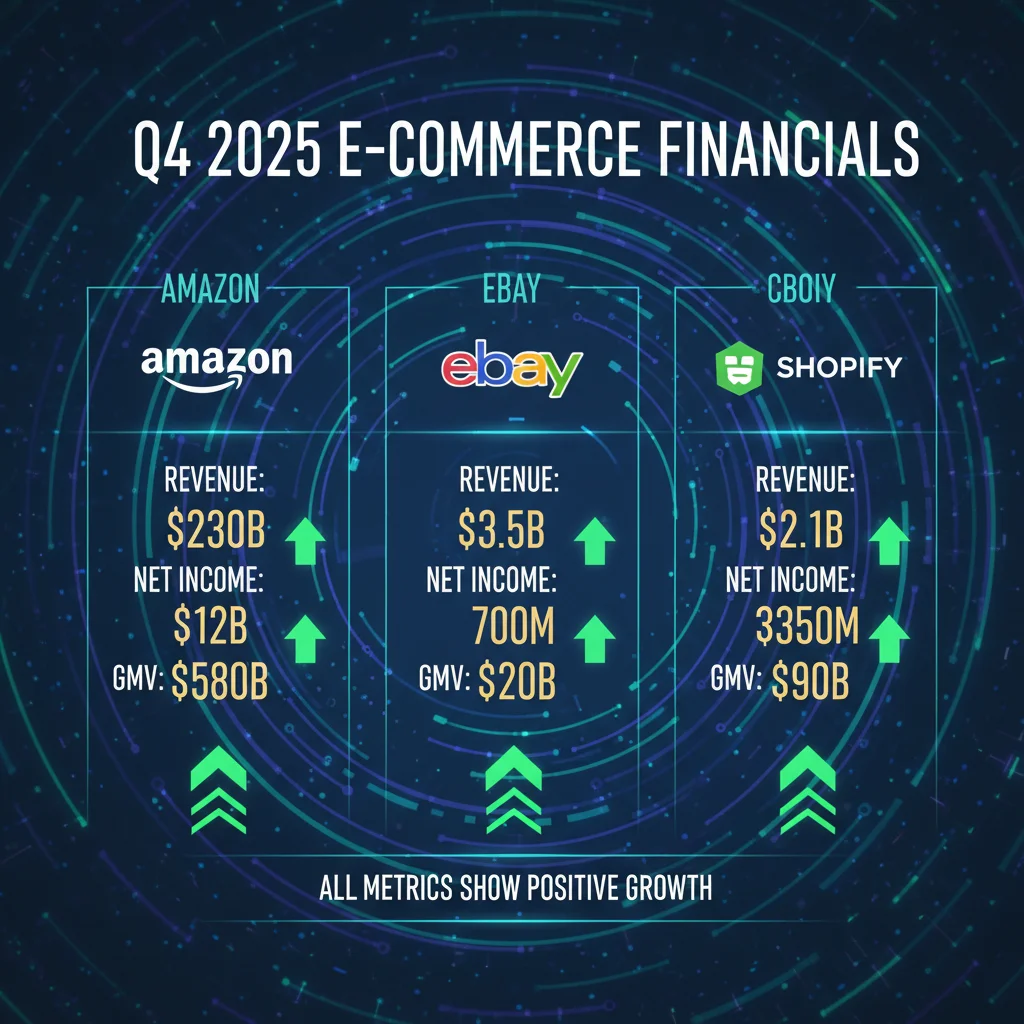
Q4 2025 E-commerce Performance: Amazon, eBay, Shopify Analysis
The final quarter of 2025 has once again underscored the dynamic and fiercely competitive landscape of the global e-commerce sector. As consumers increasingly rely on digital channels for their purchasing needs, the performance of leading platforms like Amazon, eBay, and Shopify offers invaluable insights into broader economic trends, technological advancements, and shifting consumer behaviors. This comprehensive analysis delves deep into the Q4 2025 performance metrics of these three e-commerce behemoths, examining their revenue growth, profitability, market share, and strategic initiatives to provide a holistic view of where the industry is headed. Understanding how these giants fared in the critical holiday shopping season is paramount for investors, retailers, and anyone with a vested interest in the future of online retail. Our focus on e-commerce Q4 2025 performance will highlight key differentiators and shared challenges faced by these industry leaders.
The period from October to December is traditionally the strongest for e-commerce, driven by major shopping events such as Black Friday, Cyber Monday, and the festive season. Consequently, the Q4 results often serve as a bellwether for the entire year’s performance and set the tone for the upcoming fiscal year. While all three platforms operate within the same overarching e-commerce sphere, their business models and strategic priorities vary significantly. Amazon, a direct-to-consumer giant with a vast marketplace and cloud services, continues to push boundaries across multiple sectors. eBay, a pioneering online auction and marketplace platform, has been recalibrating its strategy to focus on unique inventory and a more managed payments system. Shopify, on the other hand, empowers millions of merchants worldwide to build and scale their own online stores, representing the backbone of independent e-commerce. Each of these distinct approaches yields different financial outcomes and market positions, making a comparative analysis of their e-commerce Q4 2025 results particularly insightful.
This report will dissect the financial statements, earnings calls, and market reports for each company, extracting the most pertinent information to paint a clear picture of their standing. We will explore revenue figures, Gross Merchandise Volume (GMV), net income, operating expenses, and future guidance. Beyond the numbers, we will also consider the qualitative factors influencing their performance, such as supply chain resilience, advertising effectiveness, innovation in logistics, and customer acquisition strategies. The aim is to offer a nuanced understanding of their individual trajectories and their collective impact on the broader e-commerce ecosystem. The competitive dynamics in e-commerce Q4 2025 are intense, and understanding the strategies employed by these leaders is crucial.
Amazon’s Dominance and Diversification in Q4 2025
Amazon’s Q4 2025 performance continued to demonstrate its unparalleled scale and strategic diversification. As the undisputed leader in online retail, Amazon’s results are often seen as a proxy for the health of the entire e-commerce industry. For Q4 2025, analysts had projected robust growth, and the company largely met or exceeded these expectations, driven by strong holiday sales and continued expansion of its Amazon Web Services (AWS) segment. The ability of Amazon to leverage its vast logistics network, Prime membership benefits, and extensive product catalog consistently positions it for strong performance, even amidst macroeconomic headwinds. The company’s investments in same-day and next-day delivery capabilities, particularly in urban centers, played a significant role in customer satisfaction and repeat purchases during the peak shopping season, directly impacting its e-commerce Q4 2025 figures.
Revenue and Profitability
Amazon reported a substantial increase in net sales for Q4 2025, with e-commerce sales showing healthy year-over-year growth. The North America segment, encompassing online stores, physical stores, and advertising services, remained the largest contributor to revenue. International sales also saw considerable growth, albeit with currency fluctuations posing some challenges. A critical aspect of Amazon’s financial strength lies in its AWS segment, which consistently delivers high-margin revenue. In Q4 2025, AWS continued its strong trajectory, providing a significant boost to overall operating income and offsetting some of the thinner margins in the core retail business. This diversification is a key strategic advantage for Amazon, allowing it to navigate fluctuating retail demand more effectively. The synergy between its retail and cloud services further solidifies its market position, making its e-commerce Q4 2025 results a testament to its integrated strategy.
Net income for Amazon in Q4 2025 reflected a combination of strong sales, efficient cost management, and the profitability of AWS. The company’s ongoing efforts to optimize its fulfillment network, including the automation of warehouses and strategic placement of distribution centers, contributed to improved operational efficiencies. Advertising services, a rapidly growing segment for Amazon, also played a crucial role in enhancing profitability. As more brands seek to reach Amazon’s massive customer base, advertising revenue has become a significant and high-margin income stream. This multi-faceted approach to revenue generation and profit optimization is a hallmark of Amazon’s strategy, underpinning its consistent performance in e-commerce Q4 2025.
Strategic Initiatives and Future Outlook
Amazon’s strategic initiatives in Q4 2025 focused on several key areas. Continued investment in AI and machine learning for personalized recommendations and enhanced customer service remained a priority. The expansion of its grocery delivery services, both through Amazon Fresh and Whole Foods Market, indicated a strong push into the lucrative online grocery market. Furthermore, Amazon’s ventures into healthcare, exemplified by Amazon Pharmacy and Amazon Clinic, signaled its long-term ambitions beyond traditional retail. These strategic moves, while requiring significant upfront investment, are designed to create new growth avenues and solidify Amazon’s position as an indispensable part of consumers’ lives. The outlook for Amazon post-Q4 2025 remains positive, with analysts anticipating continued growth driven by its diverse portfolio and relentless innovation. The company’s ability to adapt and innovate will be crucial in sustaining its leadership in the evolving e-commerce Q4 2025 landscape and beyond.
eBay’s Resurgence and Niche Market Focus in Q4 2025
eBay, a veteran in the e-commerce space, has been on a journey of strategic transformation, aiming to shed its image as merely an auction site and reposition itself as a destination for unique and authenticated inventory. Q4 2025 results for eBay reflect the progress of these strategic shifts, particularly its focus on categories like collectibles, luxury goods, and refurbished electronics. While not matching Amazon’s sheer scale, eBay’s performance in the holiday quarter demonstrated resilience and a growing ability to cater to specific consumer niches. This targeted approach has been instrumental in stabilizing its user base and improving transaction values, which are vital for its sustained growth in the competitive e-commerce Q4 2025 environment.
Gross Merchandise Volume and Revenue Trends
eBay’s Gross Merchandise Volume (GMV) for Q4 2025 showed a more stable trend compared to previous quarters, indicating that its efforts to attract higher-value items and engage passionate buyers are yielding results. The company’s emphasis on ‘focus categories’ – those with higher average selling prices and greater buyer engagement – has been a cornerstone of its strategy. Revenue growth, primarily driven by transaction fees and advertising, also saw a modest but positive trajectory. The shift to a managed payments system, which gives eBay more control over the transaction process and allows for additional monetization opportunities, continued to be a key revenue driver in Q4 2025. This strategic pivot is helping eBay to capture more value from each transaction and improve its overall financial health. Understanding the intricacies of eBay’s GMV performance is key to analyzing its e-commerce Q4 2025 standing.

Operational Efficiency and Seller Experience
A significant part of eBay’s strategy involves enhancing the seller experience and improving operational efficiency. In Q4 2025, the company continued to roll out new tools and features designed to help sellers manage their inventory more effectively, improve listing visibility, and streamline shipping processes. Initiatives such as authentication services for luxury items (watches, sneakers, handbags) have not only boosted buyer confidence but also attracted more high-value sellers to the platform. By focusing on trust and authenticity, eBay aims to differentiate itself from competitors and create a more premium marketplace experience. These improvements are crucial for retaining existing sellers and attracting new ones, which in turn contributes to a healthier ecosystem and better GMV performance. The impact of these operational improvements is clearly visible in eBay’s e-commerce Q4 2025 report.
Challenges and Outlook
Despite positive strides, eBay still faces significant challenges. Competition from both large marketplaces like Amazon and specialized platforms remains intense. The company’s ability to consistently attract and retain buyers and sellers in its focus categories will be critical. Macroeconomic factors, such as inflation and consumer spending patterns, also continue to influence its performance. However, eBay’s clear strategic direction, focused on creating a curated marketplace for enthusiasts and collectors, positions it for sustainable growth within its chosen niches. The outlook for eBay beyond Q4 2025 hinges on its continued execution of this strategy and its ability to innovate within its core strengths. The journey of eBay in the e-commerce Q4 2025 landscape illustrates the importance of strategic niche targeting.
Shopify’s Merchant Empowerment and Ecosystem Expansion in Q4 2025
Shopify, the leading e-commerce platform for independent businesses, continued its impressive growth trajectory in Q4 2025, driven by the ongoing democratization of online retail. Shopify’s business model, which provides a comprehensive suite of tools for merchants to build, operate, and grow their online stores, has proven incredibly resilient and adaptable. The holiday quarter saw millions of merchants leveraging Shopify’s platform to reach consumers worldwide, resulting in robust Gross Merchandise Volume (GMV) and subscription revenue growth. Shopify’s success is intrinsically linked to the success of its merchants, making its e-commerce Q4 2025 performance a reflection of the broader independent business landscape.
GMV and Revenue Growth Drivers
Shopify’s Q4 2025 GMV soared, indicating strong sales activity across its vast merchant base. This growth was fueled by several factors, including the continued expansion of e-commerce globally, the adoption of new features and services by merchants, and the overall strength of the holiday shopping season. Revenue for Shopify is primarily generated through two main segments: Subscription Solutions and Merchant Solutions. Subscription Solutions, which includes monthly fees for its platform, saw steady growth as more businesses launched and scaled their online presence. Merchant Solutions, encompassing payment processing (Shopify Payments), shipping, and financing (Shopify Capital), experienced even faster growth, directly correlating with the increase in GMV. The deepening penetration of Shopify Payments, in particular, has been a significant driver of revenue and profitability. Analyzing these drivers is essential for understanding Shopify’s strong e-commerce Q4 2025 results.
Ecosystem Expansion and Merchant Services
Shopify’s strategic focus in Q4 2025 remained on expanding its ecosystem and offering more value-added services to its merchants. The company continued to invest heavily in its fulfillment network, Shopify Fulfillment Network (SFN), aiming to provide a seamless, end-to-end logistics solution for its merchants. While still in its early stages, SFN is crucial for enabling smaller businesses to compete with larger retailers on shipping speed and efficiency. Additionally, Shopify continued to enhance its platform with new marketing tools, international selling capabilities, and integration with various sales channels, including social media platforms. These efforts empower merchants to reach a wider audience and optimize their sales strategies, directly contributing to Shopify’s overall success. The breadth of services offered by Shopify is a key factor in its impressive e-commerce Q4 2025 performance.
Competitive Landscape and Future Outlook
Shopify operates in a competitive environment, facing challenges from other e-commerce platforms, website builders, and even marketplaces that offer direct selling options. However, its strong brand recognition, extensive app ecosystem, and focus on merchant success continue to be powerful differentiators. The outlook for Shopify post-Q4 2025 remains highly optimistic. The company is well-positioned to capitalize on the long-term trend of businesses moving online and the increasing demand for flexible, scalable e-commerce solutions. Continued innovation in its platform, expansion of its merchant services, and strategic partnerships will be key to sustaining its rapid growth. The dynamic nature of e-commerce Q4 2025 shows that platforms empowering independent businesses have a bright future.
Comparative Analysis of Key Metrics: Amazon vs. eBay vs. Shopify in Q4 2025
While each platform demonstrated unique strengths in Q4 2025, a direct comparison of their key metrics reveals divergent strategies and market positions. Amazon’s sheer scale and diversified revenue streams, particularly from AWS, make it a powerhouse with immense financial leverage. Its ability to invest heavily in logistics, technology, and new ventures ensures its continued market dominance. The company’s focus on customer convenience and a vast product selection remains unmatched, driving its consistent growth in e-commerce Q4 2025.
eBay, on the other hand, is a story of strategic refinement. Its GMV, while not growing at the same explosive rate as Shopify’s, shows stability and improvement in average transaction value. This indicates that its strategy of focusing on unique and authenticated inventory is resonating with a specific segment of buyers and sellers. eBay’s challenge lies in continuing to differentiate itself and attract high-value transactions while maintaining its broad appeal. The managed payments system is a significant step in this direction, offering more control and monetization opportunities. Its performance in e-commerce Q4 2025 reflects a more focused and intentional approach.
Shopify’s growth is a testament to the thriving ecosystem of independent merchants. Its GMV growth rate often surpasses both Amazon’s retail segment and eBay’s overall GMV, reflecting the rapid adoption of its platform by new and existing businesses. Shopify’s revenue growth, particularly from Merchant Solutions, highlights the effectiveness of its integrated services. The platform’s success is less about direct competition with Amazon or eBay and more about empowering its merchants to compete effectively in the broader e-commerce landscape. Its strong e-commerce Q4 2025 results underscore the power of the creator economy and independent retail.
Market Share and Competitive Dynamics
In terms of market share, Amazon continues to hold the dominant position in the US e-commerce market. However, Shopify’s increasing GMV signifies its growing influence as a facilitator of e-commerce, creating a powerful network of independent stores that collectively represent a significant portion of online retail activity. eBay maintains a strong presence in niche categories, carving out its own space rather than directly competing head-on with Amazon’s broad offerings. The competitive dynamics in e-commerce Q4 2025 are not a zero-sum game; rather, they reflect a diversified and expanding market where different models can thrive.
The holiday season of Q4 2025 showcased the resilience of the e-commerce sector and the strategic prowess of its leading players. While Amazon continues to set the benchmark for scale and diversification, eBay is demonstrating the power of niche focus and strategic transformation. Shopify, by empowering millions of merchants, is fostering a vibrant ecosystem of independent online businesses. Each platform’s performance offers valuable lessons and insights into the future direction of online retail. As we move into 2026, the trends observed in e-commerce Q4 2025 – including the emphasis on logistics, personalized experiences, and diversified revenue streams – will undoubtedly continue to shape the industry.
Future Trends and Implications for E-commerce Beyond Q4 2025
The insights gleaned from the e-commerce Q4 2025 performance of Amazon, eBay, and Shopify provide a crucial roadmap for future trends and implications within the digital retail landscape. Several overarching themes are emerging that will continue to shape the industry well into 2026 and beyond. Understanding these trends is vital for businesses, investors, and consumers alike to navigate the evolving market effectively.
The Rise of AI and Personalization
Artificial intelligence and machine learning are no longer nascent technologies but integral components of e-commerce operations. In Q4 2025, all three platforms demonstrated increased reliance on AI for everything from personalized product recommendations and dynamic pricing to optimized logistics and customer service chatbots. This trend is set to accelerate, leading to even more tailored shopping experiences, increased conversion rates, and greater operational efficiencies. The ability to predict consumer behavior and offer highly relevant content will be a key differentiator. The sophisticated use of AI will define the next era of e-commerce Q4 2025 and beyond.
Supply Chain Resilience and Localization
The challenges faced by global supply chains in recent years have prompted e-commerce giants to invest heavily in resilience and localization. Amazon’s continued expansion of its fulfillment network and Shopify’s investment in SFN are direct responses to this need. In Q4 2025, platforms focused on diversifying their supply routes, increasing local warehousing, and leveraging data to anticipate and mitigate disruptions. This trend towards more robust and localized supply chains will continue, aiming to reduce delivery times, lower costs, and enhance customer satisfaction. The lessons learned from previous disruptions informed the strong supply chain performance seen in e-commerce Q4 2025.
The Blurring Lines Between Online and Offline Retail
The distinction between online and offline retail continues to blur. Amazon’s expansion into physical stores, Shopify’s point-of-sale (POS) solutions for brick-and-mortar merchants, and eBay’s focus on unique items that might typically be found in specialty stores, all point to an increasingly omnichannel approach. In Q4 2025, consumers expected seamless transitions between digital and physical shopping experiences. This integration will deepen, with technologies like augmented reality (AR) for virtual try-ons and in-store pickup options becoming standard, creating a more cohesive retail journey. This omnichannel approach was a significant factor in the success stories of e-commerce Q4 2025.
Sustainability and Ethical E-commerce
Consumer demand for sustainable and ethically sourced products is growing, and e-commerce platforms are responding. In Q4 2025, there was increased emphasis on transparent supply chains, eco-friendly packaging, and supporting local businesses. Platforms that can effectively communicate their sustainability efforts and provide tools for merchants to do the same will gain a competitive advantage. This trend is not just about corporate social responsibility; it’s becoming a crucial factor in consumer purchasing decisions. The pressure for more sustainable practices will only intensify post-e-commerce Q4 2025.
The Creator Economy and Direct-to-Consumer (DTC) Growth
Shopify’s success is largely a reflection of the burgeoning creator economy and the direct-to-consumer (DTC) movement. More individuals and small businesses are bypassing traditional retail channels to sell directly to their audience. This trend is empowering entrepreneurs and fostering innovation. In Q4 2025, platforms that provided robust tools for content creators, social media integration, and community building saw significant engagement. The continued growth of the creator economy will fuel demand for flexible, scalable e-commerce solutions, driving further innovation in platforms like Shopify. The independent merchant’s strength was clearly demonstrated in e-commerce Q4 2025.
Global Expansion and Cross-Border E-commerce
While the US market remains significant, global expansion and cross-border e-commerce are critical growth avenues. All three platforms invested in international capabilities in Q4 2025, from localized payment options and multi-currency support to simplified international shipping. As digital borders become less restrictive, the ability to effectively serve customers worldwide will be a key determinant of long-term success. This global outlook will continue to drive strategic decisions and technological developments in the years following e-commerce Q4 2025.
Conclusion: A Resilient and Evolving E-commerce Landscape
The Q4 2025 performance of Amazon, eBay, and Shopify paints a picture of a resilient, dynamic, and continuously evolving e-commerce landscape. Each platform, with its distinct business model and strategic priorities, demonstrated strengths and areas for continued development. Amazon solidified its dominance through diversification and scale, eBay showed promising results from its niche focus and strategic repositioning, and Shopify continued to champion the independent merchant, fostering a thriving ecosystem of DTC businesses.
The key takeaways from e-commerce Q4 2025 emphasize the importance of adaptability, technological innovation, and a deep understanding of consumer needs. As the industry moves forward, the trends of AI-driven personalization, supply chain optimization, omnichannel integration, sustainability, and the growth of the creator economy will continue to shape how we shop and sell online. Businesses looking to thrive in this environment must remain agile, embrace new technologies, and prioritize customer experience above all else.
The competitive yet collaborative nature of the e-commerce market ensures that innovation will remain at the forefront, benefiting consumers with more choices, faster deliveries, and increasingly personalized shopping journeys. The insights from this Q4 2025 analysis serve not just as a retrospective but as a forward-looking guide for anyone navigating the exciting world of online retail.