Boost Retail ROI 30%: Advanced SEO Strategies for 2026 US Digital Retailers

The digital retail landscape in the United States is more competitive than ever. As we approach 2026, e-commerce businesses are constantly seeking innovative ways to not only survive but thrive, driving significant returns on investment (ROI). While many strategies vie for attention, advanced Search Engine Optimization (SEO) stands out as a foundational pillar for sustainable growth and a remarkable 30% ROI improvement. This comprehensive guide will delve into the practical solutions and financial impact of implementing cutting-edge SEO strategies tailored specifically for US digital retailers.
The promise of a 30% ROI improvement isn’t just an aspirational goal; it’s an achievable target for retailers who are willing to move beyond basic SEO tactics and embrace a more sophisticated, data-driven approach. This involves a deep understanding of evolving search engine algorithms, consumer behavior, and the specific nuances of the US market. By focusing on areas often overlooked or under-optimized, digital retailers can unlock substantial gains in organic traffic, conversion rates, and ultimately, profitability.
For too long, SEO has been viewed as a technical necessity rather than a strategic investment. However, in the current climate, a robust SEO strategy is directly correlated with financial performance. Every improvement in search visibility, every increased click-through rate, and every optimized product page contributes directly to the bottom line. This article will break down the advanced techniques that will position your digital retail business for unprecedented success by 2026.
Understanding the Evolving US Digital Retail Landscape
Before diving into specific strategies, it’s crucial to acknowledge the dynamic nature of the US digital retail sector. Consumer expectations are higher, competition is fiercer, and search engines are continually refining their ranking factors to deliver the most relevant and high-quality results. Key trends shaping this landscape include:
- Mobile-First Dominance: A significant portion of online shopping in the US now occurs on mobile devices. Google’s mobile-first indexing is a clear indicator of this shift, making mobile optimization non-negotiable.
- Voice Search Proliferation: The rise of smart speakers and voice assistants means more consumers are using conversational queries. Retailers must adapt their content to capture this growing segment.
- Personalization and User Experience (UX): Shoppers expect highly personalized experiences. Search engines reward websites that offer excellent UX, as it directly impacts engagement and conversion.
- Sustainability and Ethical Sourcing: A growing number of US consumers are factoring environmental and social responsibility into their purchasing decisions. SEO strategies can highlight these aspects effectively.
- Visual Search and AI: Technologies like Google Lens are changing how consumers search for products, emphasizing the importance of high-quality images and structured data.
These trends aren’t just external forces; they are integral components that must be woven into your advanced SEO strategy to achieve that 30% ROI improvement. Ignoring them is akin to navigating a complex terrain with an outdated map.
Pillar 1: Hyper-Targeted Keyword Strategy and Semantic SEO
The days of simply stuffing keywords are long gone. Achieving significant Retail SEO ROI requires a sophisticated approach to keyword research and implementation. By 2026, semantic SEO will be paramount.
Long-Tail and Conversational Keywords
Focus on longer, more specific keyword phrases that indicate higher purchase intent. For instance, instead of just "women’s shoes," target "comfortable black leather ankle boots for wide feet." These keywords have lower search volume but significantly higher conversion rates because they match specific consumer needs. Analyze search queries for common questions, comparisons, and feature-based searches.
Entity-Based SEO
Google understands entities (people, places, things, concepts) and their relationships. Optimize your product descriptions, category pages, and blog content not just for keywords, but for the entities associated with your products. For a clothing retailer, this might mean explicitly linking "sustainable cotton" to "eco-friendly fashion" and "ethical manufacturing." This builds topical authority and helps search engines understand the full context of your offerings.
Competitive Keyword Gap Analysis
Utilize advanced tools to identify keywords your competitors rank for but you don’t. This isn’t just about direct product comparisons; it extends to informational content that addresses pain points or questions related to your products. Filling these content gaps can drive highly qualified traffic.
Intent Optimization
Every keyword has an underlying user intent (informational, navigational, transactional, commercial investigation). Ensure your content perfectly matches this intent. A product page should be transactional, a blog post informational, and a comparison page commercial investigation. Misalignment leads to high bounce rates and lost opportunities.
Pillar 2: Technical SEO Excellence for E-commerce
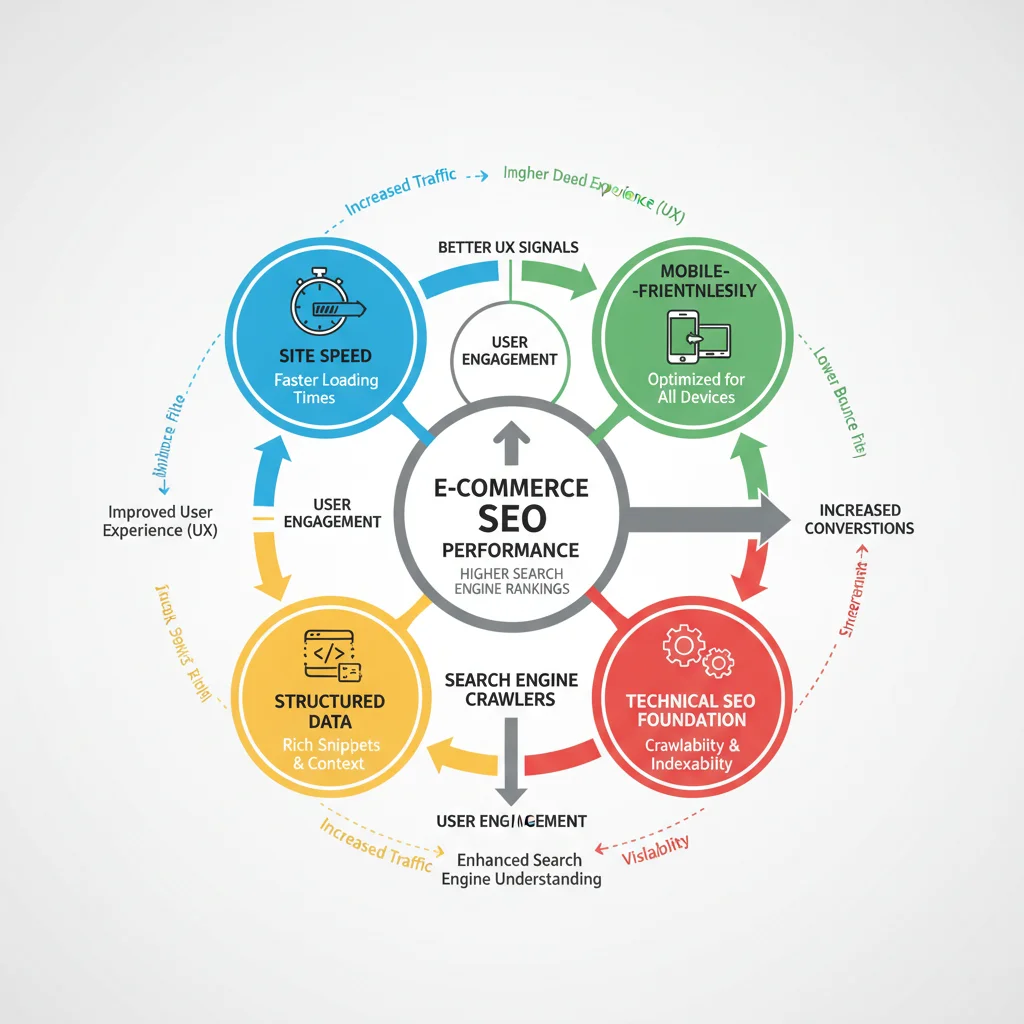
A flawless technical foundation is non-negotiable for achieving a 30% Retail SEO ROI. Technical issues can silently erode your rankings and user experience.
Core Web Vitals and Page Experience
Google’s Core Web Vitals (Largest Contentful Paint, First Input Delay, Cumulative Layout Shift) are critical ranking factors. Invest in optimizing page load speed, responsiveness, and visual stability. This often involves:
- Image optimization (compression, next-gen formats like WebP).
- Minifying CSS and JavaScript.
- Leveraging Content Delivery Networks (CDNs).
- Server response time improvements.
- Implementing lazy loading for images and videos.
A faster, smoother experience directly impacts user satisfaction and conversion rates, contributing significantly to ROI.
Structured Data Markup (Schema)
Implement comprehensive Schema Markup (Product, Offer, Review, BreadcrumbList, Organization, HowTo, FAQPage) to help search engines understand your content better and display rich results. Rich snippets for product ratings, pricing, and availability can dramatically increase click-through rates (CTR) from search results, driving more qualified traffic. This is a direct lever for Retail SEO ROI.
Mobile-First Indexing and Optimization
Ensure your mobile site is not just responsive but fully optimized for performance and user experience. This includes:
- Touch-friendly navigation.
- Legible font sizes.
- Optimized images for mobile.
- Fast loading times on mobile networks.
- Clear calls to action (CTAs).
Crawlability and Indexability
Regularly audit your site for crawl errors, broken links, duplicate content issues, and incorrect robot.txt directives. Ensure all important product and category pages are easily discoverable by search engine bots. Implement canonical tags correctly to prevent duplicate content penalties, especially common in e-commerce with variations of products.
Pillar 3: Content Marketing for E-commerce Authority and Conversions
Content is king, but strategic content is sovereign. To achieve a 30% Retail SEO ROI, your content strategy must go beyond basic product descriptions.
Comprehensive Product Pages
These are your conversion workhorses. Optimize them with:
- Detailed Descriptions: Answer every potential customer question. Use rich, descriptive language that incorporates target keywords naturally.
- High-Quality Media: Multiple images from different angles, 360-degree views, and product videos.
- User-Generated Content: Reviews, ratings, and customer photos. This builds trust and provides fresh content.
- FAQs: Directly address common questions about the product, shipping, returns, etc.
- Cross-Selling and Up-Selling: Suggest related products to increase average order value (AOV).
Category Page Optimization
Category pages are crucial for mid-funnel traffic. Optimize them with:
- Unique, keyword-rich descriptions: Avoid generic text.
- Faceted navigation SEO: Ensure filters and facets are crawlable and don’t create duplicate content issues.
- Internal linking: Link to relevant subcategories and top products.
Informational and Lifestyle Content
Create blog posts, buying guides, style tips, and "how-to" articles that address customer pain points and interests. This type of content:
- Attracts top-of-funnel traffic.
- Establishes your brand as an authority.
- Provides internal linking opportunities to product pages.
- Can be optimized for voice search queries.
For example, a home goods retailer could publish "Guide to Choosing the Best Ergonomic Office Chair" or "Seasonal Decorating Ideas for a Cozy Home."
Video Content Optimization
Video is a powerful engagement tool. Optimize product videos and informational videos for search by including:
- Keyword-rich titles and descriptions.
- Transcripts.
- Schema markup for videos.
- Hosting on YouTube and embedding on your site.
Pillar 4: Off-Page SEO and Authority Building
Even with perfect on-page and technical SEO, you need external validation to truly excel. Building domain authority is essential for long-term Retail SEO ROI.
Strategic Link Building
Focus on acquiring high-quality, relevant backlinks from authoritative websites. This is not about quantity but quality. Strategies include:
- Guest Blogging: Contribute valuable content to industry-relevant blogs.
- Broken Link Building: Find broken links on authoritative sites and suggest your content as a replacement.
- Resource Page Link Building: Get your site listed on relevant resource pages.
- Digital PR: Create compelling content (e.g., industry reports, unique studies, viral campaigns) that naturally attracts media attention and backlinks.
- Supplier/Partner Links: Request links from your suppliers or business partners.
Local SEO for Brick-and-Mortar Integration
If you have physical stores, local SEO is critical. Optimize your Google Business Profile (GBP) with accurate information, high-quality photos, and encourage customer reviews. Ensure consistent Name, Address, Phone (NAP) information across all online directories. Local search can drive both online and in-store sales, significantly boosting overall Retail SEO ROI.
Brand Mentions and Reputation Management
Monitor online mentions of your brand and products. Respond to reviews (both positive and negative) to build trust and demonstrate customer care. Positive brand sentiment not only influences consumer decisions but can also signal authority to search engines.
Pillar 5: Advanced Analytics and AI-Driven Optimization
The path to a 30% Retail SEO ROI is paved with data. Leveraging advanced analytics and AI will allow for continuous improvement and precise strategy adjustments.
Granular ROI Tracking
Implement robust analytics (e.g., Google Analytics 4, Adobe Analytics) to track every SEO-driven conversion. Understand not just total sales, but also average order value, customer lifetime value (CLTV) from organic traffic, and the specific keywords and content pieces contributing most to revenue. Attribute revenue accurately to organic search channels.
A/B Testing and Conversion Rate Optimization (CRO)
Continuously test different elements of your product pages, category pages, and calls to action. A/B test headlines, product image layouts, button colors, and copy. Even small improvements in conversion rates can have a massive impact on overall Retail SEO ROI.
Predictive Analytics and AI
Utilize AI-powered tools to:
- Identify Emerging Trends: Predict future keyword trends and consumer preferences to create content proactively.
- Personalize User Experiences: AI can help dynamically adjust content and product recommendations based on user behavior, leading to higher engagement and conversions.
- Automate Technical Audits: AI tools can quickly identify and even suggest fixes for technical SEO issues.
- Content Generation and Optimization: While AI won’t replace human creativity, it can assist in generating outlines, optimizing existing content for readability and SEO, and identifying content gaps.
Competitor Intelligence
Advanced tools allow you to monitor competitor SEO strategies in real-time. Track their keyword rankings, backlink profiles, content strategies, and even their technical SEO improvements. This intelligence provides valuable insights for refining your own tactics and staying ahead.
Measuring and Achieving the 30% ROI Improvement
How do you quantify a 30% Retail SEO ROI improvement? It starts with establishing clear baselines and setting measurable KPIs.
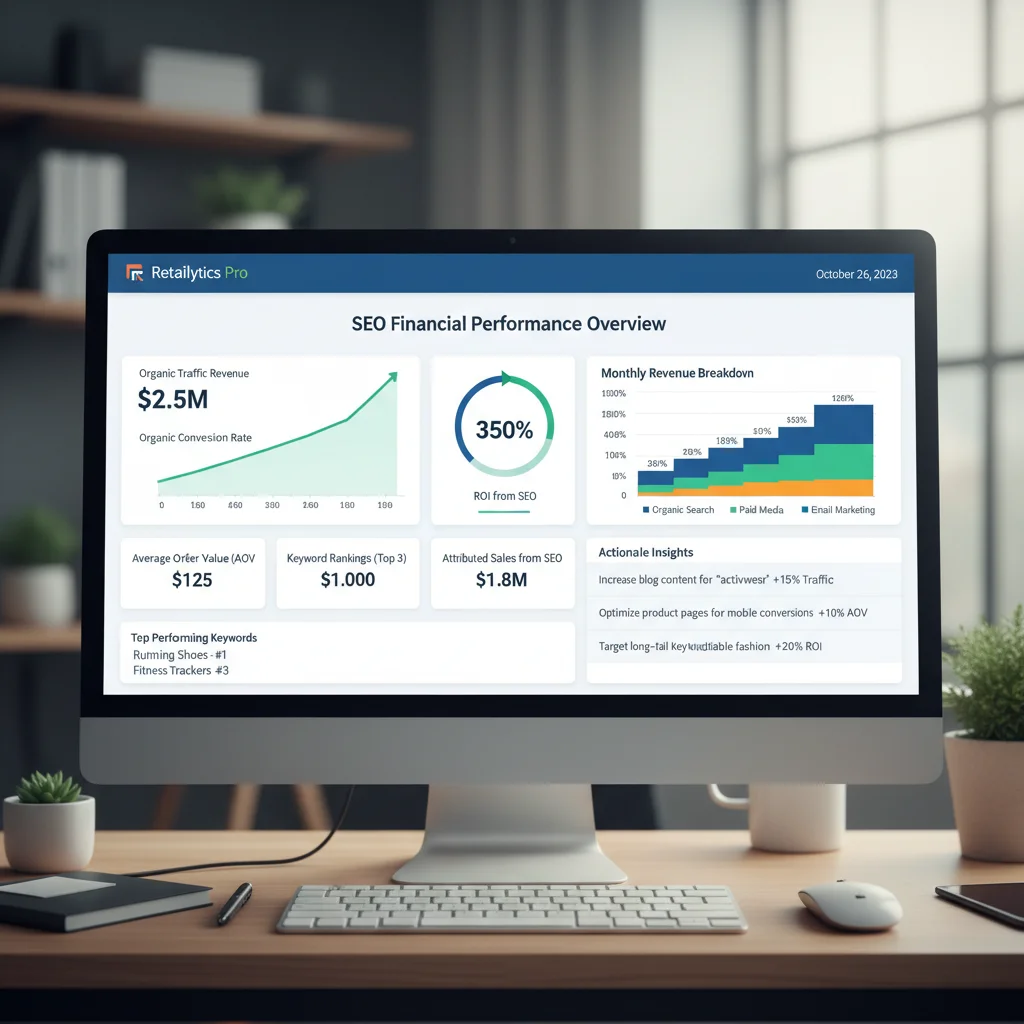
Key Performance Indicators (KPIs)
- Organic Traffic Growth: Increase in visitors from search engines.
- Keyword Rankings: Improvement in positions for target keywords.
- Click-Through Rate (CTR): Higher percentage of searchers clicking your listings.
- Conversion Rate: Percentage of organic visitors who complete a purchase.
- Average Order Value (AOV): Increase in the average amount spent per transaction from organic traffic.
- Revenue from Organic Search: Total sales generated directly from organic traffic.
- Customer Lifetime Value (CLTV) from Organic: The total revenue expected from a customer acquired through organic search.
Calculating ROI
ROI = ( (Revenue from SEO – Cost of SEO) / Cost of SEO ) * 100
To achieve a 30% improvement, you’ll need to meticulously track these metrics and understand how each SEO initiative contributes to the overall financial picture. For example, improving site speed by 1 second might lead to a 5% increase in conversion rate, which directly translates to increased revenue and a higher ROI.
Case Study Snippet (Hypothetical)
"A mid-sized US apparel retailer implemented a comprehensive advanced SEO strategy over 18 months, focusing on semantic keyword optimization, Core Web Vitals improvements, and a robust content marketing plan for their blog. They invested $X in SEO tools, agency fees, and content creation. Before the strategy, organic search contributed $Y in monthly revenue. After 18 months, organic revenue increased to $Z. Their initial ROI was 150%, and the advanced strategies boosted it to 250%, representing a 100 percentage point increase, far exceeding the 30% improvement target."
This kind of measurable impact is what advanced SEO brings to the table. It’s not just about traffic; it’s about profitable traffic.
Future-Proofing Your Retail SEO for 2026 and Beyond
The digital world never stands still. To maintain and exceed a 30% Retail SEO ROI, continuous adaptation is key.
Embrace EAT (Expertise, Authoritativeness, Trustworthiness)
Google increasingly prioritizes content from sources demonstrating high EAT. For retailers, this means showcasing product expertise, building brand authority through thought leadership, and fostering trust through transparent policies and excellent customer service. Highlight industry awards, certifications, and expert endorsements.
Prepare for Generative AI in Search
Search Generative Experience (SGE) and similar AI-powered search features are evolving rapidly. Retailers need to optimize their content to be easily digestible and summarizable by AI. This means clear, concise answers to questions, well-structured data, and authoritative sources. Being featured in an AI-generated summary could be the new top ranking.
Sustainability and Ethical SEO
As consumer consciousness grows, highlighting your brand’s commitment to sustainability, ethical sourcing, and fair labor practices can become a powerful SEO differentiator. Use relevant keywords, create dedicated content, and ensure this information is easily discoverable.
Omnichannel SEO
Integrate your online and offline experiences. Ensure your local SEO efforts complement your e-commerce strategy. Consider how in-store experiences can drive online engagement and vice-versa. A seamless omnichannel journey strengthens brand loyalty and overall search performance.
Conclusion: Your Path to 30% Retail SEO ROI
Achieving a 30% ROI improvement for US digital retailers by 2026 through advanced SEO strategies is an ambitious yet entirely attainable goal. It requires a strategic shift from merely optimizing for search engines to optimizing for the entire customer journey, backed by data and continuous innovation.
By focusing on hyper-targeted keyword strategies, technical SEO excellence, conversion-focused content marketing, robust authority building, and advanced analytics, digital retailers can build a resilient and highly profitable online presence. The financial impact of these efforts is not incremental; it’s transformative. The time to invest in a sophisticated approach to Retail SEO ROI is now, positioning your business at the forefront of the competitive US digital marketplace for years to come.
Start auditing your current SEO performance, identify your biggest opportunities, and commit to a strategic roadmap that incorporates these advanced principles. The rewards, measured in increased traffic, higher conversions, and substantial ROI, will undoubtedly make the investment worthwhile.