Budgeting for Sales Enablement 2026: Maximizing ROI with $50K Investment

In the rapidly evolving landscape of B2B sales, the strategic allocation of resources is paramount to achieving sustained growth and competitive advantage. As we look towards 2026, the imperative to invest wisely in sales enablement becomes even more pronounced. For many organizations, particularly small to medium-sized businesses or departments within larger enterprises, operating with a defined, limited budget – such as an annual investment of $50,000 – necessitates a meticulous approach to ensure every dollar contributes to a tangible return on investment (ROI). This comprehensive guide delves into how to effectively structure and deploy a sales enablement budget for 2026, focusing on maximizing financial impact and driving superior sales performance.
Sales enablement is more than just providing sales teams with tools; it’s a holistic strategy designed to equip salespeople with the content, training, and technology they need to sell more effectively. It’s about optimizing every stage of the sales cycle, from prospecting to closing, and ensuring that sellers are empowered to deliver consistent value to prospects and customers. Without a clear budget and a well-defined strategy, even the most promising enablement initiatives can falter. Therefore, understanding how to stretch a $50,000 budget to achieve significant results in 2026 is a critical skill for any sales leader or enablement professional.
Understanding the Core Components of Sales Enablement
Before diving into budget allocation, it’s essential to define the key pillars of sales enablement that typically require investment. These components form the foundation of any successful enablement program and will guide our budgetary decisions:
- Content Management and Creation: Providing sales teams with relevant, high-quality content (e.g., case studies, battle cards, product sheets, presentations) is fundamental. This includes the tools to manage and distribute this content efficiently.
- Training and Coaching: Continuous learning is vital. This encompasses onboarding new reps, ongoing product training, sales methodology reinforcement, and coaching to improve individual performance.
- Technology and Tools: Software solutions that automate tasks, provide insights, and streamline workflows are indispensable. Examples include CRM integrations, sales engagement platforms, learning management systems (LMS), and sales intelligence tools.
- Analytics and Measurement: The ability to track, analyze, and report on the effectiveness of enablement initiatives is crucial for demonstrating ROI and making data-driven adjustments.
- Process Optimization: Refining sales processes to remove bottlenecks and improve efficiency directly impacts seller productivity.
Each of these areas presents opportunities for investment, and the challenge within a $50,000 budget lies in prioritizing and finding the most impactful solutions. The goal is not just to spend the money, but to invest it strategically to generate a measurable return.
Strategic Allocation of a $50,000 Sales Enablement Budget for 2026
With a $50,000 annual budget, a balanced approach is key. We need to focus on high-impact areas that directly contribute to revenue generation and sales team efficiency. Here’s a potential breakdown and justification for each category:
1. Sales Technology & Tools (Estimated: $20,000 – $25,000)
Technology is often the backbone of modern sales enablement. Even with a limited budget, strategic investments can yield significant returns. The focus should be on tools that enhance productivity, provide crucial insights, and streamline workflows. Given the 2026 horizon, consider solutions that leverage AI or machine learning for greater efficiency.
- Sales Engagement Platform (SEP) Integration ($8,000 – $10,000): A robust SEP (e.g., Outreach, Salesloft, Apollo.io) allows reps to automate outreach, track engagement, and personalize communications at scale. Integrating this with your existing CRM is vital for a seamless workflow. Choose a tier that fits your team size and essential features.
- Content Management System (CMS) / Sales Asset Management (SAM) ($5,000 – $7,000): A dedicated platform for organizing, distributing, and tracking sales content ensures reps can quickly find and utilize the most effective materials. This could be a standalone SAM tool or a robust feature within a broader sales enablement platform. Think about tools like Highspot, Seismic (entry-level), or even a well-structured SharePoint/Google Drive with strong search capabilities if budget is extremely tight.
- Sales Intelligence/Data Enrichment Tool ($4,000 – $6,000): Access to accurate prospect data (e.g., LinkedIn Sales Navigator, ZoomInfo Lite, Lusha) helps reps identify and qualify leads more efficiently, reducing wasted time and improving targeting. This is a crucial investment for improving prospecting effectiveness and lead quality.
- Lightweight Learning Management System (LMS) or Training Platform ($3,000 – $5,000): While a full-fledged LMS can be expensive, many affordable options exist (e.g., Lessonly, TalentLMS, or even specialized modules within your SEP) that allow for structured training paths, quizzes, and performance tracking. This is essential for consistent training delivery.
Justification: This allocation prioritizes tools that directly impact rep productivity, content utilization, and lead quality. These are fundamental drivers of sales performance and offer measurable improvements in efficiency and conversion rates. Automation and better data mean more selling time for reps.
2. Training & Coaching Initiatives (Estimated: $15,000 – $18,000)
Even the best tools are ineffective without skilled users. Investing in ongoing training and coaching ensures your sales team is proficient in using new technologies, adept at sales methodologies, and continuously improving their selling skills.
- Virtual Sales Training Programs ($7,000 – $9,000): Partner with an external consultant or leverage online courses for specialized training in areas like objection handling, negotiation skills, product knowledge, or value-based selling. Focus on programs that offer practical application and measurable outcomes. Consider hybrid models or recorded sessions to maximize reach.
- Internal Coaching Development ($4,000 – $5,000): Train sales managers to be more effective coaches. This could involve workshops on active listening, feedback delivery, and performance management. A strong coaching culture amplifies the impact of all other enablement efforts.
- Content Creation & Customization for Training ($3,000 – $4,000): Develop bespoke training materials, playbooks, and quick reference guides tailored to your specific products, services, and sales processes. This ensures relevance and immediate applicability for your team. This might include hiring a freelance instructional designer for specific modules.

Justification: Training and coaching directly enhance seller capabilities, leading to improved conversion rates, higher deal sizes, and faster sales cycles. This investment ensures that your team is not only equipped with the right tools but also possesses the skills to leverage them effectively. A well-trained team is a confident and productive team.
3. Content Strategy & Creation Support (Estimated: $7,000 – $10,000)
Sales content is the fuel for your sales engine. Reps need access to compelling, up-to-date, and relevant materials to engage prospects effectively at every stage of the buyer’s journey. This budget segment ensures that content is not only available but also impactful.
- Freelance Content Creation ($4,000 – $6,000): Engage freelance writers or designers to create specific, high-impact sales assets. This could include new case studies, industry-specific whitepapers, updated battle cards, or compelling video snippets. Focus on gaps identified by the sales team.
- Content Audits & Optimization ($1,000 – $2,000): Periodically review existing content for effectiveness, accuracy, and relevance. This ensures that reps are using the most impactful materials and identifies areas for improvement or retirement of outdated assets.
- Template Development & Personalization ($2,000): Invest in creating customizable email templates, presentation decks, and proposal templates that allow reps to quickly personalize communications while maintaining brand consistency and messaging.
Justification: High-quality, relevant content empowers reps to have more meaningful conversations, differentiate your offerings, and accelerate the sales cycle. This investment directly supports lead nurturing and conversion efforts, improving the efficiency of your sales messaging.
4. Analytics, Reporting & Optimization (Estimated: $3,000 – $5,000)
Measurement is critical for demonstrating ROI and continuously improving your enablement efforts. This budget ensures you have the capabilities to track performance and make data-driven decisions.
- CRM Reporting Enhancements ($1,500 – $2,500): Invest in customizing CRM dashboards and reports to track key sales enablement metrics. This might involve working with a CRM consultant for a few hours or purchasing advanced reporting add-ons. Focus on metrics like content usage, training completion rates, sales cycle length, and win rates associated with enabled reps.
- Feedback Mechanisms & Surveys ($500 – $1,000): Allocate funds for tools or processes to gather regular feedback from the sales team on the effectiveness of enablement initiatives, content, and tools. This could be a simple survey tool subscription or dedicated time for feedback sessions.
- Pilot Programs & A/B Testing ($1,000 – $1,500): Dedicate a small portion of the budget to pilot new tools or training methods with a small group of reps before a full rollout. This allows for testing and optimization before a larger investment, minimizing risk.
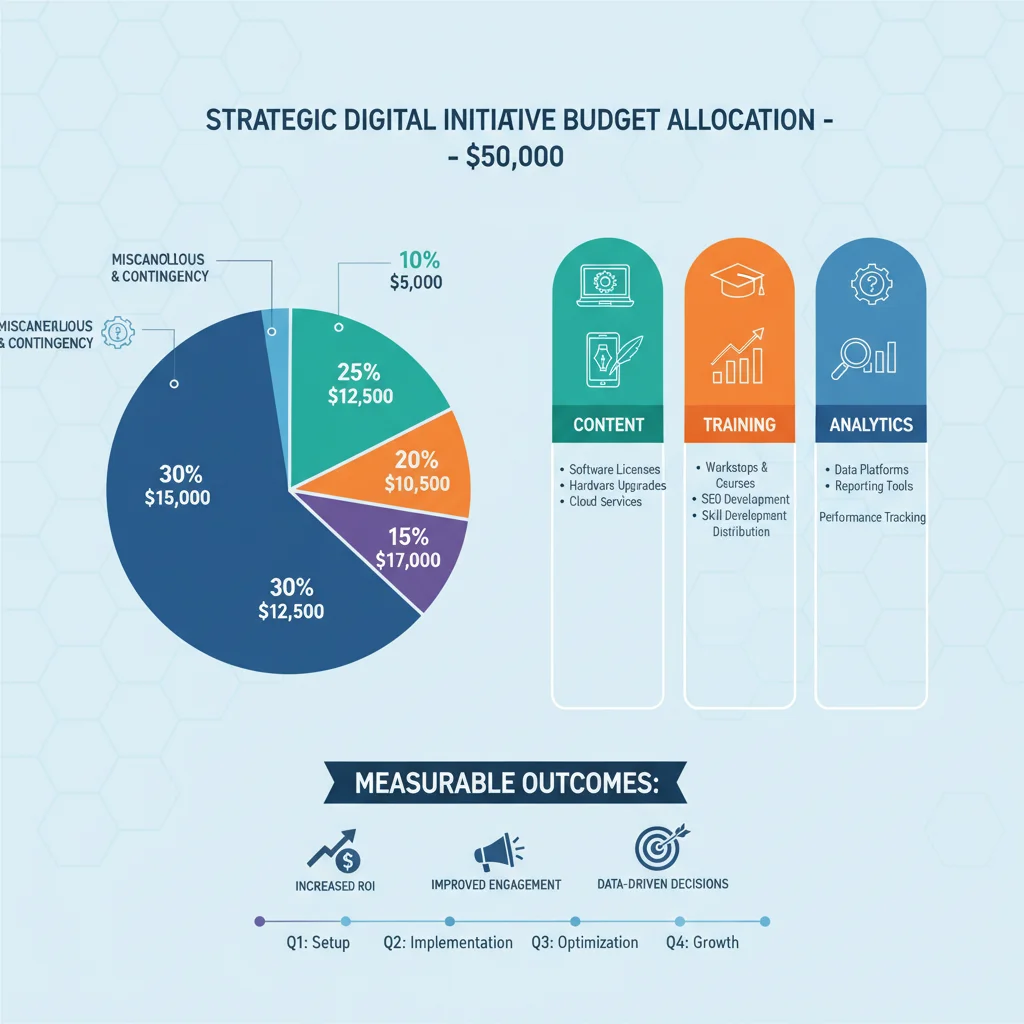
Justification: Without robust analytics, it’s impossible to prove the value of your sales enablement investments. This allocation ensures you can track key performance indicators (KPIs), identify areas for improvement, and demonstrate a clear ROI to stakeholders, fostering continuous optimization.
Maximizing ROI with a $50,000 Sales Enablement Budget
Operating with a finite budget demands ingenuity and a sharp focus on ROI. Here are strategies to maximize the impact of your $50,000 sales enablement budget:
1. Prioritize High-Impact Initiatives
Not all enablement efforts are created equal. Identify the biggest bottlenecks in your sales process or the most significant skill gaps in your team. Focus your budget on addressing these critical areas first. For example, if your reps struggle with prospecting, invest more in sales intelligence and engagement tools. If product knowledge is lacking, prioritize product training and content.
2. Leverage Existing Resources and Free Tools
Before investing in new software, evaluate what you already have. Can your CRM be better utilized? Are there free trials or freemium versions of tools that meet basic needs? Google Workspace or Microsoft 365 often include collaboration and content management features that can be leveraged effectively for sales content.
3. Negotiate and Bundle
When purchasing software, always negotiate. Many vendors offer discounts for annual commitments, multi-year contracts, or bundling services. Don’t be afraid to ask for a better deal or explore alternative providers.
4. Focus on Training the Trainers
Instead of hiring external trainers for every session, invest in developing your internal sales managers into effective coaches. This creates a sustainable coaching culture and reduces ongoing training costs. Empowering managers to deliver consistent, relevant coaching is a force multiplier.
5. Content Repurposing
Maximize your content budget by repurposing existing assets. A whitepaper can become a series of blog posts, an infographic, social media snippets, and even talking points for a sales pitch. This extends the life and reach of your content without incurring significant new creation costs.
6. Phased Implementation
Instead of trying to implement everything at once, adopt a phased approach. Roll out new tools or training programs to a smaller group first, gather feedback, refine, and then scale. This minimizes risk and allows for adjustments based on real-world usage.
7. Measure Everything
Establish clear KPIs for every initiative. Track content usage, training completion rates, sales productivity metrics (e.g., calls made, emails sent), conversion rates, average deal size, and sales cycle length. Regularly review these metrics to understand what’s working and what isn’t, and adjust your budget accordingly. This data-driven approach is fundamental to proving ROI.
Measuring the Financial Impact of Your Sales Enablement Budget
Demonstrating the financial impact of a $50,000 sales enablement budget is crucial for securing future investment and proving its value. Here are key metrics and approaches:
- Increased Sales Productivity: Track metrics like the number of sales activities per rep, time spent selling vs. administrative tasks, and lead response times. Enablement should lead to more efficient reps.
- Improved Win Rates: Monitor the percentage of opportunities that convert into closed deals. Effective enablement (better content, training, tools) should directly impact this.
- Reduced Sales Cycle Length: Shorter sales cycles mean faster revenue generation. Tools and training that streamline processes can significantly reduce the time from lead to close.
- Higher Average Deal Size: Enablement can equip reps to sell more effectively, potentially upselling or cross-selling, leading to larger average transaction values.
- Faster Onboarding Time: A well-structured enablement program can significantly reduce the time it takes for new reps to become fully productive, saving on recruitment and training costs.
- Revenue Attribution: Where possible, link specific enablement initiatives to revenue generation. For example, if a new battle card helps close a deal, track its usage. While direct attribution can be challenging, looking at trends and correlations is vital.
- Reduced Churn/Improved Retention: For existing customers, sales enablement can equip account managers to better serve and retain clients, impacting customer lifetime value.
By consistently tracking these metrics and communicating the results to leadership, you can clearly articulate the ROI of your $50,000 investment. For instance, if a $10,000 investment in a sales engagement platform leads to a 10% increase in qualified leads and a 5% improvement in win rates, the financial return can be substantial and easily quantifiable.
Challenges and Considerations for 2026
As you plan your sales enablement budget for 2026, be mindful of emerging trends and potential challenges:
- AI Integration: Artificial intelligence will continue to play a larger role in sales. Consider how AI-powered tools (e.g., for call transcription analysis, predictive analytics, content generation assistance) can fit into your budget.
- Hybrid Work Models: The shift to hybrid or remote sales teams requires enablement solutions that are accessible and effective regardless of location. Ensure your chosen tools and training methods support this flexibility.
- Data Privacy and Security: With increasing regulations, ensure any new tools or platforms comply with data privacy standards and protect sensitive customer information.
- Seller Burnout: Sales is a demanding profession. Enablement should also focus on making reps’ jobs easier and more fulfilling, reducing burnout and improving retention.
- Economic Uncertainty: Be prepared to adapt your budget if economic conditions change. Flexibility is key, so prioritize initiatives that offer quick wins and demonstrable value.
Proactive planning around these challenges will ensure your sales enablement budget remains resilient and effective in 2026.
Conclusion: Investing Smartly for Sales Success in 2026
A $50,000 annual budget for sales enablement in 2026 is a significant investment that, when managed strategically, can yield profound financial returns. By prioritizing essential technology, robust training, compelling content, and rigorous analytics, organizations can empower their sales teams to perform at their peak. The key is to focus on initiatives that directly impact efficiency, effectiveness, and ultimately, revenue generation. Remember to continuously measure, adapt, and optimize your investments to ensure every dollar contributes to maximizing ROI. With a well-thought-out sales enablement budget plan, 2026 can be a year of unprecedented growth and sales success.