Boost Customer Satisfaction: Sales Enablement & CX Integration for 7% Growth
In today’s hyper-competitive business landscape, customer satisfaction is no longer just a metric; it’s the bedrock of sustainable growth and brand loyalty. Businesses are constantly seeking innovative strategies to not only meet but exceed customer expectations. One of the most potent, yet often underutilized, approaches lies in the synergistic integration of sales enablement CX – aligning sales enablement initiatives directly with customer experience (CX) objectives. This strategic alignment holds the key to unlocking significant improvements in customer satisfaction scores, with ambitious targets like a 7% improvement by year-end 2026 being entirely achievable.
The journey from initial contact to post-purchase support is a continuous narrative that shapes a customer’s perception of your brand. Sales teams, often the first point of contact, play a pivotal role in setting the stage for this experience. When sales professionals are not only equipped with product knowledge but also deeply ingrained in the principles of customer experience, the entire customer journey transforms. This comprehensive guide will delve into the critical intersection of sales enablement and customer experience, exploring how their integration can drive measurable improvements in customer satisfaction and foster long-term success.
The Imperative of Customer Satisfaction in the Modern Era
Before we dive into the ‘how,’ let’s reiterate the ‘why.’ Why is customer satisfaction so paramount? In an age where information is readily available and switching costs are often low, customer loyalty is a fragile commodity. Satisfied customers are not just repeat buyers; they are brand advocates, providing invaluable word-of-mouth marketing and acting as a buffer against competitive pressures. Conversely, dissatisfied customers can quickly erode a brand’s reputation through negative reviews and public complaints, impacting future sales and overall market share.
Studies consistently show a strong correlation between high customer satisfaction and increased profitability. Companies that excel in CX often report higher revenue growth, greater customer retention, and improved employee morale. The investment in enhancing customer satisfaction is not merely a cost center; it’s a strategic investment with a tangible return. Therefore, understanding and actively managing customer satisfaction scores (CSAT, NPS, CES) becomes a core business imperative.
Defining Sales Enablement and Customer Experience
What is Sales Enablement?
Sales enablement is a strategic, ongoing process that equips client-facing employees with the content, guidance, and training they need to effectively engage buyers. Its primary goal is to improve sales productivity and performance. This includes providing sales teams with:
- Relevant Content: Case studies, product sheets, presentations, competitive battlecards, and more.
- Tools and Technology: CRM systems, sales automation platforms, analytics dashboards.
- Training and Coaching: Product knowledge, sales methodologies, communication skills, objection handling.
- Insights and Data: Market trends, customer behavior, performance analytics.
The core objective of sales enablement is to empower sales representatives to sell more effectively, efficiently, and consistently, ultimately contributing to revenue growth.
What is Customer Experience (CX)?
Customer experience (CX) encompasses the entire journey of a customer’s interactions with a company, from initial awareness to post-purchase support and beyond. It’s the sum of all perceptions and feelings a customer has about a brand. Key components of a positive CX include:
- Ease of Interaction: Seamless navigation, intuitive processes.
- Personalization: Tailored communications and offers.
- Efficiency: Quick resolution of issues, prompt responses.
- Emotional Connection: Feeling valued, understood, and respected.
- Consistency: Uniform quality across all touchpoints.
CX is about creating memorable, positive interactions that foster loyalty and advocacy. It extends far beyond simple customer service; it’s an organizational philosophy that places the customer at the center of every business decision.
The Synergy: How Sales Enablement Fuels Superior CX
The connection between sales enablement CX might not be immediately obvious to all, but it is profound. Sales professionals are often the first human touchpoint a potential customer has with your brand. Their ability to understand needs, articulate value, and build trust directly influences the initial customer experience. A poorly enabled sales team can derail a potential customer relationship before it even begins, irrespective of how good your product or service might be.
Conversely, a well-enabled sales team, one that is deeply aligned with CX principles, can set the stage for an exceptional customer journey. Here’s how:
1. Consistent Messaging and Brand Promise
Sales enablement ensures that sales teams are equipped with up-to-date and consistent messaging that accurately reflects the brand’s value proposition and promise. When sales reps convey a clear, unified message, it builds trust and sets realistic expectations. This prevents the disconnect that can occur when sales promises don’t align with what the customer experiences post-purchase, a common cause of dissatisfaction.
2. Deeper Understanding of Customer Needs
Effective sales enablement goes beyond product features; it trains sales professionals to be active listeners and strategic problem-solvers. By understanding the customer’s challenges, goals, and pain points, sales reps can offer truly relevant solutions, not just push products. This customer-centric approach during the sales cycle directly contributes to a positive initial experience and lays the groundwork for a successful long-term relationship.
3. Personalized Interactions
With the right tools and training from sales enablement, sales teams can leverage customer data to personalize interactions. This means understanding their industry, their specific role, and their previous engagements with the company. Personalized communication makes customers feel valued and understood, significantly enhancing their overall experience.
4. Efficient Onboarding and Transition
A seamless transition from sales to implementation or customer success is crucial for CX. Sales enablement can facilitate this by ensuring sales teams capture relevant customer information and communicate it effectively to subsequent departments. This prevents customers from having to repeat information, a common frustration, and ensures a smooth start to their journey with your product or service.
5. Proactive Problem Solving
Enabled sales teams are better equipped to anticipate potential customer issues based on their deep understanding of the product and customer profile. They can proactively address concerns or set appropriate expectations, preventing future dissatisfaction. This foresight is a hallmark of superior customer experience.
Strategies for Integrating Sales Enablement and CX to Drive a 7% Improvement
Achieving a 7% improvement in customer satisfaction scores by year-end 2026 requires a deliberate, structured approach to integrating sales enablement CX. Here are key strategies:
1. Unify Data and Analytics Across Sales and CX Teams
The foundation of any successful integration is shared data. Break down data silos between sales, marketing, and customer service. Implement a robust CRM system that provides a 360-degree view of the customer, accessible to all relevant teams. This includes sales history, communication logs, service tickets, and, critically, customer feedback data (CSAT, NPS, CES scores, qualitative comments).
- Actionable Insight: Use this unified data to identify patterns in successful sales cycles that lead to high satisfaction and pinpoint areas where initial sales interactions contribute to later customer churn or dissatisfaction.
2. Develop a Shared Customer Journey Map
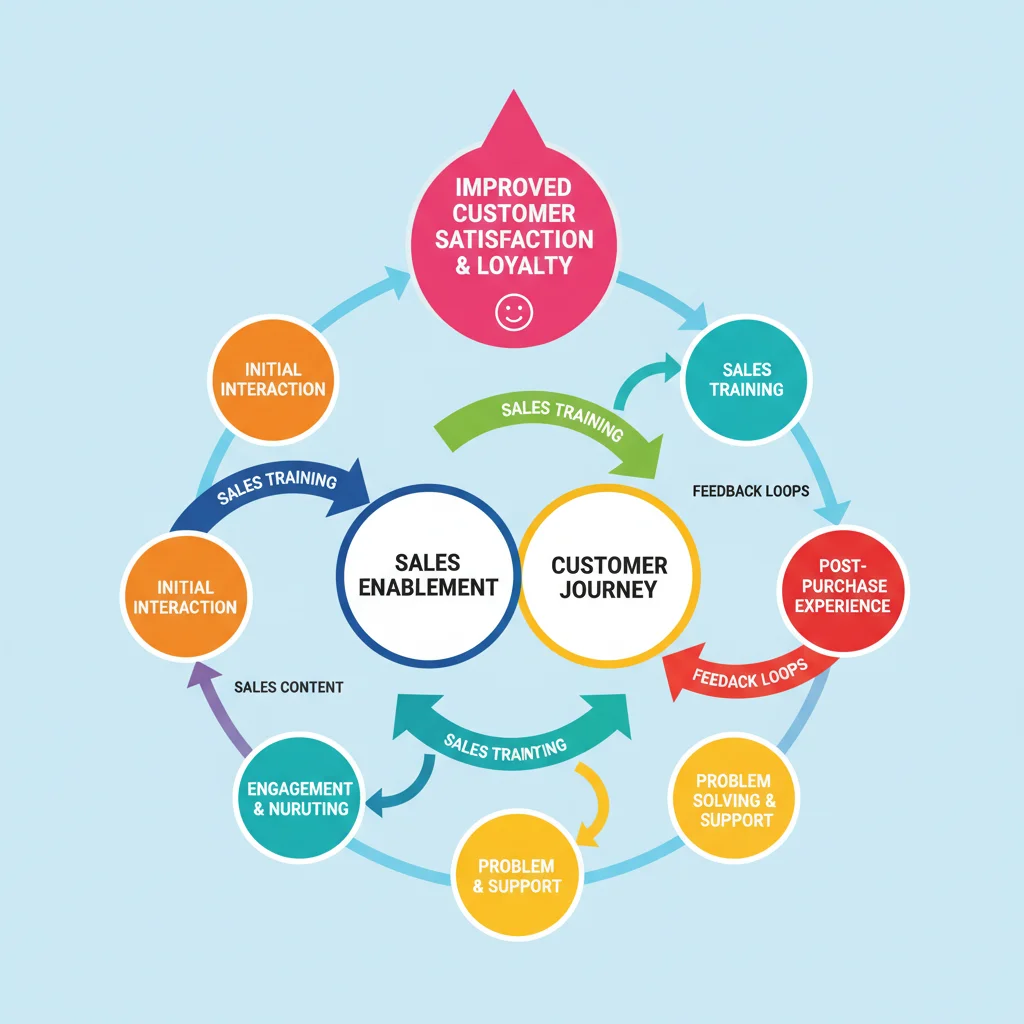
Collaboratively create a comprehensive customer journey map that details every touchpoint, from initial awareness to advocacy. Involve representatives from sales, marketing, customer service, and product development. This exercise helps identify critical moments of truth where sales interactions significantly impact CX.
- Actionable Insight: Pinpoint where sales enablement can equip reps with specific content or training to enhance the customer experience at each stage. For example, providing sales with FAQs from customer support to proactively address common concerns.
3. Integrate CX Metrics into Sales Training and Coaching
Traditional sales training often focuses solely on conversion rates and revenue. To integrate sales enablement CX, incorporate customer satisfaction metrics into sales training programs. Educate sales teams on the direct impact of their actions on CSAT, NPS, and customer retention.
- Actionable Insight: Implement role-playing scenarios that focus on empathetic listening, setting realistic expectations, and handling customer objections in a way that prioritizes long-term satisfaction. Reward sales reps not just for closing deals, but for deals that lead to highly satisfied, retained customers.
4. Equip Sales with Customer-Centric Content and Tools
Sales enablement content should not just be about product features; it must also include resources that help sales reps understand customer challenges and provide value. This includes:
- CX Best Practice Guides: Short guides on active listening, empathy, and managing customer expectations.
- Success Stories Focused on Customer Outcomes: Case studies that highlight how previous customers achieved their goals, not just how they used the product.
- Tools for Personalization: CRM functionalities that allow for quick access to customer history and preferences, enabling tailored conversations.
- Feedback Mechanisms: Easy ways for sales to capture customer sentiment during interactions and feed it back into the system.
5. Foster Cross-Functional Collaboration and Communication
Regular communication between sales and CX teams is paramount. Establish formal channels for feedback and collaboration. This could include:
- Joint Training Sessions: Where sales and customer service teams learn from each other’s perspectives.
- Shared Goals and KPIs: Aligning sales incentives with customer satisfaction metrics.
- Regular Cross-Functional Meetings: To discuss customer feedback, identify common pain points, and brainstorm solutions.
When sales understands the challenges faced by customer service, and customer service understands the promises made by sales, a more cohesive and customer-centric approach emerges.
6. Implement a Feedback Loop from CX to Sales Enablement
Customer feedback is a goldmine of information for improving sales enablement. Ensure that insights from CSAT surveys, NPS scores, and customer service interactions are regularly analyzed and fed back into the sales enablement program.
- Actionable Insight: If a recurring customer complaint stems from a misunderstanding during the sales process, sales enablement can create targeted training or content to address that specific issue. This iterative process ensures continuous improvement.
7. Leverage Technology for Seamless Handoffs
Technology plays a crucial role in ensuring that the customer experience remains smooth even as the customer transitions from sales to other departments. Implement systems that allow for seamless transfer of information, such as:
- Integrated CRM and Customer Service Platforms: Ensuring that all customer interactions are logged and visible to all relevant teams.
- Automated Workflows: Triggering follow-up actions or alerts based on sales milestones or customer feedback.
- Knowledge Bases: Providing sales reps with access to the same support documentation that customers and service agents use, promoting consistency.
Measuring Success: Tracking Your 7% Improvement Goal
Achieving a 7% improvement in customer satisfaction scores by year-end 2026 requires rigorous measurement and continuous monitoring. Here are key metrics and approaches:
Primary Metrics:
- Customer Satisfaction Score (CSAT): Directly measures customer happiness with a specific interaction or product.
- Net Promoter Score (NPS): Measures customer loyalty and willingness to recommend.
- Customer Effort Score (CES): Measures the ease of a customer’s interaction with the company.
Secondary Metrics (Indicators of CX Health):
- Customer Churn Rate: A decrease indicates improved satisfaction and retention.
- Customer Lifetime Value (CLTV): Increased CLTV often correlates with higher satisfaction.
- Repeat Purchase Rate: A strong indicator of customer loyalty.
- Sales Cycle Length: While not directly CX, an efficient sales cycle can contribute to a positive initial experience.
- Sales Win Rate: Improved win rates, especially when tied to satisfied customers, indicate effective enablement.
Benchmarking and Goal Setting:
Establish a baseline for your current customer satisfaction scores. Then, set clear, measurable milestones towards your 7% improvement goal. For example, aim for a 1-2% increase each quarter. Regularly review these metrics in cross-functional meetings. Celebrate successes and analyze shortfalls to refine your sales enablement CX strategies.
Overcoming Challenges in Sales Enablement and CX Integration
Integrating sales enablement CX isn’t without its hurdles. Common challenges include:
- Siloed Departments: Overcoming the traditional separation between sales and customer service teams.
- Resistance to Change: Sales teams may be hesitant to adopt new methodologies that emphasize CX over pure closing metrics.
- Lack of Executive Buy-in: Without top-level support, cross-functional initiatives can falter.
- Inconsistent Data: Poor data quality or disparate systems can hinder a unified view of the customer.
- Attribution Challenges: Difficulty in directly attributing CX improvements to specific sales enablement efforts.
To overcome these, focus on:
- Strong Leadership: Executive sponsorship is crucial for driving cultural change.
- Clear Communication: Explain the ‘why’ behind the integration and its benefits for all teams and the customer.
- Phased Implementation: Start with pilot programs and scale gradually.
- Continuous Training and Support: Provide ongoing resources and coaching.
Case Study Snippet: ‘TechSolutions Inc.’
TechSolutions Inc., a B2B SaaS provider, struggled with a high churn rate despite strong sales performance. Their CSAT scores for new customers were consistently below industry average. Upon analysis, they discovered a significant disconnect between sales promises and post-purchase reality.
The Solution: TechSolutions implemented a comprehensive sales enablement CX strategy:
- They integrated their CRM with their customer support platform, providing sales with full visibility into support tickets and common customer issues.
- Sales training was revamped to include modules on realistic expectation setting, empathetic communication, and a deeper understanding of the customer success journey.
- New sales content was developed, focusing on customer success stories and detailed implementation guides, rather than just feature lists.
- Sales compensation was partially tied to new customer CSAT scores and 90-day retention rates.
The Result: Within 18 months, TechSolutions saw a 6% increase in their new customer CSAT scores and a 10% reduction in churn for customers onboarded after the new program. This demonstrates the tangible impact of aligning sales enablement with customer experience objectives.

The Future of Sales: CX-Driven Enablement
The distinction between sales and customer service is blurring. In the future, every customer-facing role will be expected to contribute to a positive customer experience. Sales professionals will evolve from mere transaction facilitators to strategic advisors who guide customers through their journey, ensuring satisfaction at every step. This paradigm shift necessitates a proactive and continuous investment in sales enablement CX.
Organizations that embrace this integrated approach will not only achieve their customer satisfaction goals but also build a more resilient, customer-centric culture that drives sustainable growth and competitive advantage. The 7% improvement in customer satisfaction scores by year-end 2026 is not just a target; it’s a testament to the power of a unified, customer-first strategy.
Conclusion: Unleashing the Power of Integrated Sales Enablement and CX
The pursuit of enhanced customer satisfaction is a continuous journey, but one that yields immense rewards. By strategically integrating sales enablement with customer experience initiatives, businesses can create a powerful synergy that transforms customer interactions, builds lasting loyalty, and drives significant growth. The goal of a 7% improvement in customer satisfaction scores by year-end 2026 is not merely aspirational; it is an achievable outcome for organizations committed to breaking down silos, fostering collaboration, and placing the customer at the very heart of their sales strategy.
Remember, every sales interaction is a foundational brick in the edifice of your customer’s overall experience. Equip your sales teams with the knowledge, tools, and empathy to lay those bricks with precision and care, and watch your customer satisfaction scores, and ultimately your business, flourish. The time to invest in sales enablement CX is now – the returns are too significant to ignore.