Measuring Sales Enablement ROI: A 3-Month Framework for US Digital Sales Teams (Financial Impact)
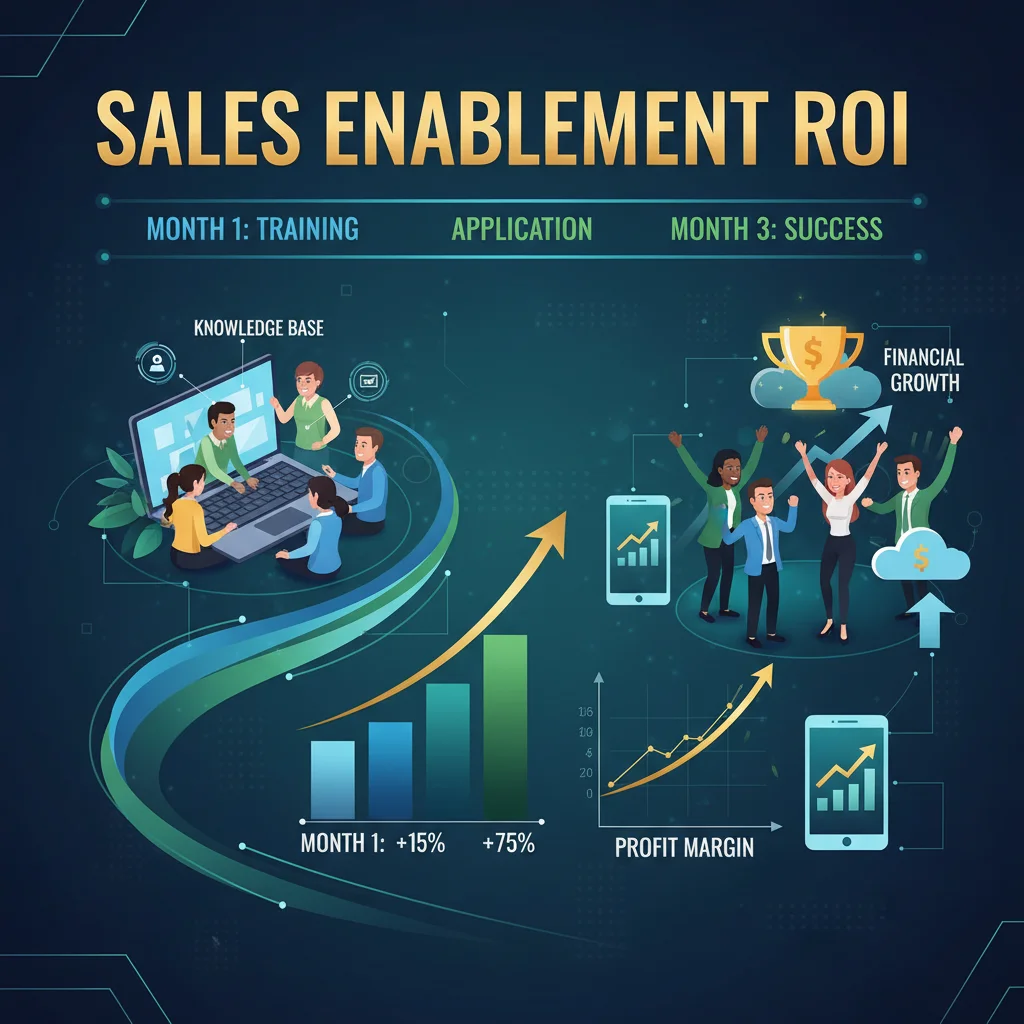
In the fiercely competitive landscape of US digital sales, simply investing in sales enablement isn’t enough. To truly justify the resources allocated and demonstrate tangible value, organizations must meticulously measure the Sales Enablement ROI. This isn’t just about showing activity; it’s about proving direct financial impact. For digital sales teams, where data is abundant and processes are often streamlined, the opportunity to quantify this return is immense. This comprehensive guide introduces a practical, 3-month framework designed specifically for US digital sales teams to effectively track, analyze, and optimize their sales enablement initiatives, ultimately revealing their true financial contribution.
Many sales leaders grapple with articulating the precise financial benefits of their enablement programs. They see improved rep confidence, better content utilization, and more efficient processes, but translating these into hard numbers – revenue generated, costs saved, or market share gained – often remains a challenge. Our framework bridges this gap, providing a structured approach to move beyond anecdotal evidence to concrete, data-driven insights. By focusing on a 3-month cycle, teams can implement changes, observe initial results, and make informed adjustments swiftly, ensuring continuous improvement and maximum impact on the bottom line.
This article will delve into why measuring Sales Enablement ROI is critical, outline the key metrics to track, and then walk you through our detailed 3-month framework. We’ll cover everything from setting a baseline and selecting the right tools to analyzing results and presenting a compelling case for continued investment. Whether you’re a sales leader, enablement professional, or a digital sales rep looking to understand the bigger picture, this framework will equip you with the knowledge and tools to transform your sales enablement strategy into a verifiable profit driver.
Why Measuring Sales Enablement ROI is Non-Negotiable for Digital Sales Teams
In today’s data-driven world, every business function is under scrutiny to demonstrate its value. Sales enablement, while widely recognized for its strategic importance, is no exception. For US digital sales teams, where investments in technology, content, and training can be substantial, proving Sales Enablement ROI is not just good practice; it’s essential for securing future funding, optimizing resource allocation, and maintaining competitive advantage.
Justifying Investment and Budget Allocation
Without clear ROI metrics, sales enablement initiatives can be perceived as cost centers rather than revenue generators. When you can present a clear financial return – for example, that every dollar invested in sales enablement generated $X in additional revenue – you provide an undeniable justification for your budget. This becomes particularly crucial in economic downturns or when competing for internal resources. Digital sales, by its nature, often involves significant tech stack investments, and demonstrating how enablement enhances the utility and return of these tools is paramount.
Optimizing Strategies and Programs
Measuring ROI isn’t just about looking backward; it’s about looking forward. By understanding which enablement activities yield the highest returns, you can refine your strategies. Is that new AI-powered sales tool truly boosting productivity and conversion rates? Is the intensive product training translating into larger deal sizes? Quantifying the impact allows you to double down on what works and pivot away from what doesn’t. This iterative optimization is key to building a highly effective and agile sales enablement function, especially in the fast-evolving digital sales environment.
Enhancing Sales Performance and Productivity
Ultimately, sales enablement aims to make sales reps more effective. When you measure ROI, you’re not just tracking financial outcomes; you’re also assessing the efficiency and productivity gains of your team. This could include a reduction in sales cycle length, an increase in average deal size, improved win rates, or higher quota attainment. These performance improvements directly translate into greater revenue and profitability. For digital sales teams, where speed and efficiency are critical, even marginal improvements can have a significant cumulative effect.
Aligning Sales and Marketing Efforts
Effective sales enablement often sits at the intersection of sales and marketing. By demonstrating the ROI of enablement, you can better align these two crucial departments. Marketing can see how their content is being utilized by sales and its impact on deals, while sales can provide clear feedback on what enablement resources are most impactful. This shared understanding, backed by data, fosters collaboration and ensures that both teams are working towards common revenue goals, a critical factor for success in digital sales where the customer journey is often integrated across multiple touchpoints.
Key Metrics for Measuring Sales Enablement ROI in Digital Sales
Before diving into the framework, it’s vital to identify the right metrics. For digital sales teams, these metrics should ideally be quantifiable, trackable through CRM and sales engagement platforms, and directly linkable to revenue. Here are the core categories:
1. Revenue-Related Metrics
- Win Rate: The percentage of proposals or opportunities that result in a closed-won deal. An increase here directly impacts revenue.
- Average Deal Size: If enablement helps reps upsell or cross-sell more effectively, this metric will rise.
- Sales Cycle Length: Shorter sales cycles mean reps can close more deals in the same amount of time, boosting overall revenue.
- Quota Attainment: The percentage of reps hitting or exceeding their sales targets. Higher attainment signifies more effective sales.
- Revenue per Rep: A direct measure of individual productivity and the overall impact of enablement on output.
- New Logo Acquisition vs. Expansion Revenue: Understanding if enablement is more effective for acquiring new customers or growing existing accounts.
2. Productivity and Efficiency Metrics
- Time Spent Selling: Enablement should reduce time spent on administrative tasks or searching for content, freeing up reps to sell more.
- Content Utilization & Engagement: Tracking which enablement content is used, how often, and its correlation with deal progression.
- Training Completion & Performance: Linking training module completion to improved performance metrics.
- Lead Conversion Rates: How effectively enablement helps reps convert leads at various stages of the funnel.
- Follow-up Effectiveness: Tracking the number of successful follow-ups and their impact on engagement.
3. Cost-Related Metrics
- Cost of Sales: Enablement can reduce this by making sales processes more efficient.
- Ramp-up Time for New Hires: Faster ramp-up means new reps become productive sooner, reducing the cost of onboarding.
- Sales Attrition Rate: Highly enabled and successful reps are often more satisfied and less likely to leave, reducing recruitment and training costs.
4. Qualitative & Engagement Metrics (to support quantitative data)
- Rep Feedback Scores: Surveys on the usefulness of enablement tools, content, and training.
- Confidence Levels: Reps’ self-reported confidence in product knowledge, objection handling, and closing.
- Manager Feedback: Observations from sales managers on team performance improvements.
The key is to select a manageable set of 5-7 core metrics that are most relevant to your specific enablement goals and can be reliably tracked within your existing digital sales infrastructure (CRM, sales engagement platforms, learning management systems).
The 3-Month Sales Enablement ROI Framework for US Digital Sales Teams
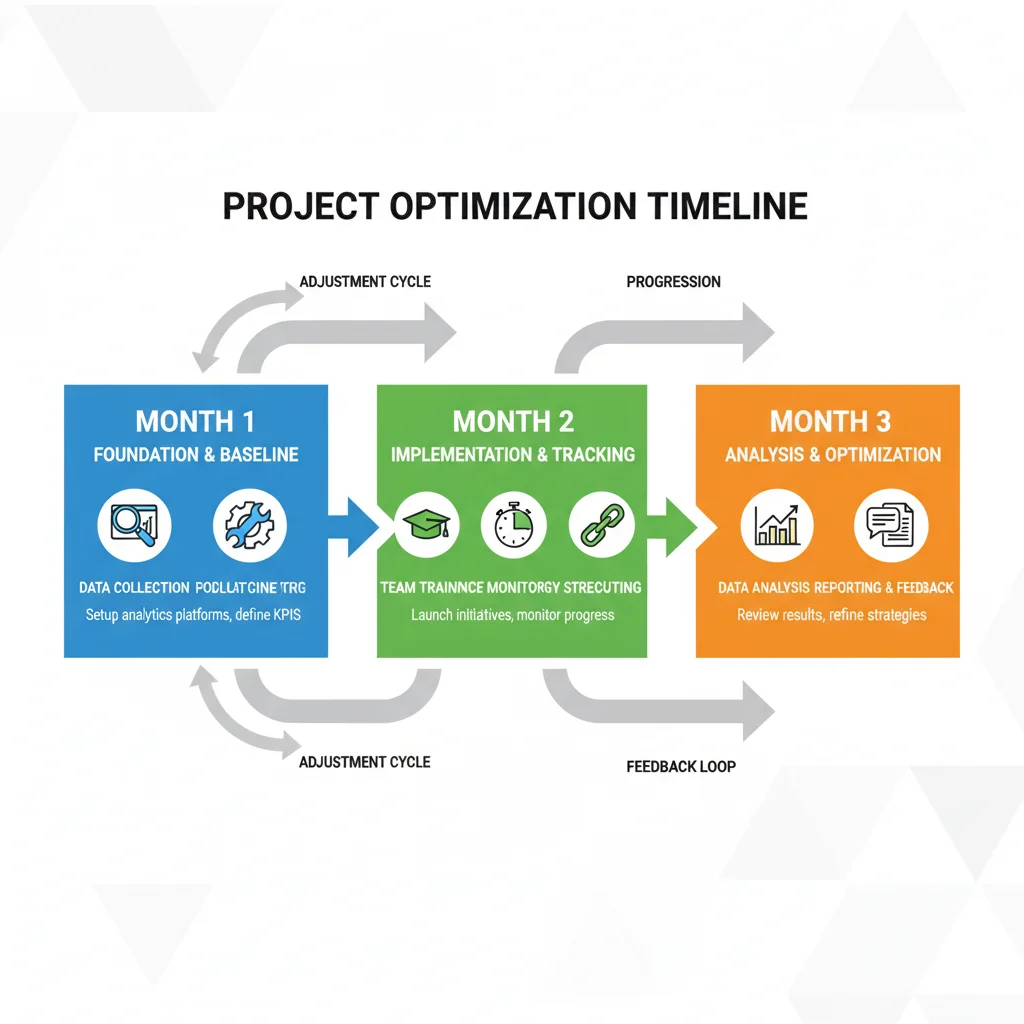
This framework is designed to provide actionable steps over a short, impactful period, allowing for rapid iteration and demonstration of value. Each month builds upon the last, culminating in a clear ROI picture.
Month 1: Foundation and Baseline Establishment
The first month is all about setting the stage. You can’t measure progress without knowing where you started. This phase is critical for establishing a solid baseline against which all future improvements will be measured.
Week 1-2: Define Goals and Identify Key Metrics
- Align with Business Objectives: What are the overarching business goals? (e.g., increase market share by 5%, boost Q3 revenue by 10%, reduce customer churn). Your enablement goals must directly support these.
- Specific Enablement Goals: Translate business goals into specific, measurable, achievable, relevant, and time-bound (SMART) enablement objectives. For example: “Increase win rate for product X by 15% within 3 months” or “Reduce new rep ramp-up time by 20%.”
- Select Core Metrics: Based on your goals, choose 5-7 key metrics from the categories above that you will track rigorously. Ensure these metrics are quantifiable and accessible through your existing tech stack.
- Identify Target Audience: Which sales teams or segments are you focusing your enablement efforts on? Is it new hires, a specific product line team, or the entire digital sales force?
Week 3-4: Baseline Data Collection and Tool Integration
- Gather Historical Data: Collect 3-6 months of historical data for each chosen metric. This is your baseline. For instance, what was the average win rate, deal size, or sales cycle length before any new enablement initiatives? Utilize your CRM (e.g., Salesforce), sales engagement platforms (e.g., Salesloft, Outreach), and learning management systems (LMS).
- Audit Current State: Document existing sales processes, content availability, training programs, and tech stack usage. What are the current pain points? Where are the inefficiencies?
- Ensure Data Tracking Mechanisms: Verify that your systems (CRM, SEP) are correctly configured to track the chosen metrics automatically. If there are gaps, work with IT/operations to implement necessary tracking fields or integrations. This might involve custom fields, dashboards, or reports.
- Establish a Control Group (if possible): For more precise measurement, consider if a control group (a segment of the sales team that does not receive the new enablement initiative) is feasible. While challenging in dynamic digital sales, it offers a cleaner comparison. If not, rely on historical data as your baseline.
Month 2: Implementation and Continuous Tracking
With a solid foundation in place, Month 2 is about executing your enablement initiatives and meticulously tracking their impact in real-time.
Week 5-6: Launch Enablement Initiatives and Initial Rollout
- Deploy Targeted Programs: Launch the specific sales enablement programs identified in Month 1. This could include new training modules (e.g., advanced objection handling for digital pitches), new sales content (e.g., interactive product demos, battle cards), new tools (e.g., AI-powered conversation intelligence), or process improvements.
- Communicate Clearly: Ensure the sales team understands the purpose of the new initiatives, how they will be supported, and how their performance will be measured. Transparency is key to adoption.
- Train and Onboard: Provide comprehensive training on any new tools, content, or methodologies. Don’t assume reps will figure it out. Offer ongoing support and quick-start guides.
- Monitor Adoption: Track the usage of new tools and consumption of new content. Low adoption rates will skew your ROI results. Address any barriers to adoption proactively.
Week 7-8: Ongoing Tracking, Feedback, and Iteration
- Continuous Data Collection: Systematically collect data for your chosen metrics. Compare weekly/bi-weekly against your established baseline. Look for early trends.
- Gather Qualitative Feedback: Conduct regular check-ins with sales managers and reps. What’s working? What’s not? Are there unexpected challenges? Use surveys, one-on-one meetings, and team discussions to gather insights.
- Initial Adjustments: Based on early data and feedback, make immediate, small adjustments to your enablement programs. This agile approach prevents major issues from derailing your efforts. For example, if a training module isn’t resonating, refine its content or delivery method.
- Reinforce Best Practices: Share early success stories and highlight reps who are effectively leveraging the new enablement resources. This peer reinforcement can boost adoption and motivation.
Month 3: Analysis, Optimization, and Reporting
The final month culminates in a comprehensive analysis of your efforts, leading to actionable insights and a clear presentation of your Sales Enablement ROI.
Week 9-10: Deep Dive Analysis and Impact Assessment
- Compare Current Data to Baseline: Perform a thorough comparison of your current performance metrics (post-enablement) against the baseline established in Month 1. Quantify the changes.
- Calculate Cost of Enablement: Sum up all direct and indirect costs associated with the enablement initiative (e.g., software licenses, training materials, personnel time, content creation).
- Quantify Financial Impact: Translate the improvements in your metrics into monetary terms. For example:
- Increased Win Rate: If your win rate increased by 5% and your average deal size is $10,000, calculate the additional revenue generated from those extra wins.
- Reduced Sales Cycle: If the sales cycle shortened by 10 days, estimate the additional deals closed due to this efficiency.
- Increased Average Deal Size: Calculate the total additional revenue from larger deals.
- Reduced Ramp-up Time: Estimate the cost savings from new hires becoming productive faster.
- Calculate ROI: Use the classic ROI formula:
ROI = (Net Financial Gain - Cost of Investment) / Cost of Investment * 100%
A positive ROI indicates a successful investment. - Correlate Qualitative with Quantitative: Connect the qualitative feedback (rep confidence, manager observations) to the quantitative results. Does higher confidence correlate with better win rates?

Week 11-12: Optimization, Reporting, and Future Planning
- Develop Optimization Recommendations: Based on your analysis, identify specific areas for improvement. Which initiatives should be scaled? Which need further refinement? Which should be discontinued?
- Create an ROI Report: Compile a clear, concise, and compelling report for stakeholders (sales leadership, finance, marketing). Include:
- Executive Summary (key findings and ROI percentage).
- Goals and Baseline.
- Enablement Initiatives Launched.
- Key Metrics and Their Improvement.
- Detailed Financial Impact Calculation.
- Challenges and Learnings.
- Recommendations for Future Strategy.
- Communicate Results: Present the ROI report to relevant stakeholders. Be prepared to answer questions and defend your findings with data. Celebrate successes and acknowledge areas for growth.
- Plan Next Steps: Use the insights gained to inform the next cycle of sales enablement strategy. What new goals will be set for the next 3-6 months? How will you build upon these successes?
Challenges and Best Practices for Digital Sales Enablement ROI Measurement
While the framework provides a clear path, certain challenges are inherent in measuring Sales Enablement ROI. Being aware of these and adopting best practices can significantly improve the accuracy and credibility of your results.
Common Challenges:
- Attribution Complexity: It can be challenging to isolate the exact impact of enablement from other factors (market conditions, product changes, marketing campaigns).
- Data Silos: Information scattered across multiple systems (CRM, LMS, content platforms) can make unified tracking difficult.
- Lagging Indicators: Some ROI metrics (e.g., large deal closures) have long sales cycles, making immediate 3-month impact harder to see.
- Resistance to Change: Sales reps might resist new tools or processes, affecting adoption and skewing results.
- Lack of Baseline Data: If historical data isn’t robust, establishing a true baseline can be problematic.
Best Practices for Success:
- Start Small and Scale: Don’t try to measure everything at once. Focus on a few critical metrics and a specific enablement initiative, then expand.
- Leverage Technology: Invest in integrated sales tech stacks that allow for seamless data flow between CRM, sales engagement, and enablement platforms. Dashboards and automated reporting are invaluable.
- Continuous Feedback Loop: Regularly solicit feedback from sales reps and managers. Their qualitative insights often explain the ‘why’ behind the quantitative data.
- Iterate and Adapt: Sales enablement is not a one-time project. It’s an ongoing process. Be prepared to refine your programs and measurement strategies based on what you learn.
- Communicate Value Internally: Regularly share progress and early wins with the sales team to foster buy-in and demonstrate that their efforts are being tracked and valued.
- Partner with Finance: Collaborate with your finance department to ensure your ROI calculations are robust and credible. They can provide valuable insights into cost accounting and revenue attribution.
- Focus on Leading and Lagging Indicators: While revenue is a lagging indicator, track leading indicators like content engagement, training completion, and activity levels. These can predict future success.
- Standardize Definitions: Ensure everyone involved understands what each metric means and how it’s calculated to avoid inconsistencies.
The Long-Term Impact of Consistent Sales Enablement ROI Measurement
While this framework focuses on a 3-month cycle for rapid impact assessment, the benefits of consistently measuring Sales Enablement ROI extend far beyond a quarterly report. Over time, this disciplined approach transforms sales enablement from a supportive function into a strategic growth engine.
Firstly, it fosters a culture of accountability and continuous improvement. When every enablement initiative is tied to measurable outcomes, the team becomes more focused on delivering tangible results. This iterative process of planning, executing, measuring, and optimizing leads to increasingly effective programs that are precisely tailored to the needs of the digital sales team and the market.
Secondly, consistent ROI measurement builds credibility and trust with executive leadership and finance departments. When enablement can consistently demonstrate its financial contribution, it secures greater buy-in, increased budget allocation, and a stronger voice in strategic planning. This elevated status allows enablement teams to drive more impactful initiatives and truly shape the future of sales.
Thirdly, it provides a competitive edge. Digital sales environments are constantly evolving. Companies that can quickly identify which enablement strategies are working (and which aren’t) can adapt faster, outmaneuver competitors, and capitalize on new market opportunities. This agility is powered by data-driven insights derived from robust ROI measurement.
Finally, it empowers the sales team itself. When reps see that the enablement resources provided directly lead to their success and higher earnings, their engagement and adoption rates soar. They become active participants in the enablement process, providing valuable feedback that further refines programs and creates a virtuous cycle of improvement. This translates into a more motivated, effective, and ultimately, a more successful digital sales force.
Conclusion: Driving Financial Growth Through Data-Driven Sales Enablement
For US digital sales teams, the ability to measure Sales Enablement ROI is no longer a luxury; it’s a strategic imperative. The 3-month framework outlined here provides a practical, actionable roadmap to move beyond assumptions and demonstrate the undeniable financial impact of your enablement efforts. By meticulously defining goals, establishing baselines, tracking key metrics, and conducting thorough analysis, you can transform your sales enablement function into a verifiable profit center.
Embrace this framework to not only justify your investments but also to continuously refine your strategies, empower your sales team, and drive significant, sustainable revenue growth. The future of digital sales belongs to those who can not only enable their teams but also prove the quantifiable return on every enablement dollar spent.