
Measuring Sales Enablement ROI: Key Metrics for 2026 to Justify Your Investment and See a 25% Return
In the dynamic landscape of modern sales, the concept of sales enablement has transcended from a buzzword to a critical strategic imperative. Companies are increasingly investing in programs, tools, and training designed to equip their sales teams with everything they need to sell more effectively. However, with any significant investment, the inevitable question arises: what is the Sales Enablement ROI? How do we measure its effectiveness, justify the expenditure, and, more importantly, ensure a substantial return, perhaps even aiming for a 25% return on investment by 2026?
Understanding and articulating the Sales Enablement ROI is no longer a luxury; it’s a necessity. In a world where budgets are scrutinized and every dollar must demonstrate its value, sales enablement leaders must be able to present clear, quantifiable evidence of their programs’ impact. This comprehensive guide will delve into the essential metrics and strategic approaches required to accurately measure Sales Enablement ROI in 2026, providing a roadmap to not only justify your current investments but also to secure future resources and drive unparalleled sales success.
The Evolving Landscape of Sales Enablement in 2026
Before we dive into the specifics of measuring Sales Enablement ROI, it’s crucial to acknowledge how sales enablement itself is evolving. By 2026, sales enablement is far more than just content management or basic sales training. It encompasses a holistic approach that integrates technology, data analytics, personalized coaching, and continuous learning. Artificial intelligence (AI) and machine learning (ML) play significant roles in personalizing content delivery, predicting sales outcomes, and identifying areas for individual rep improvement. The emphasis has shifted from merely providing resources to actively guiding and optimizing every stage of the sales cycle.
This evolution means that the traditional ways of measuring success might no longer suffice. We need more sophisticated, data-driven metrics that can capture the nuanced impact of these advanced enablement strategies. The goal is not just to see if sales are happening, but to understand why they are happening, how enablement contributed, and what specific elements of the enablement program are driving the most significant returns. This deeper understanding is paramount for calculating accurate Sales Enablement ROI.
Why Measuring Sales Enablement ROI is More Critical Than Ever
In today’s competitive business environment, every department is under pressure to demonstrate its value. Sales enablement, despite its undeniable importance, is no exception. Here’s why measuring Sales Enablement ROI is more critical than ever:
- Budget Justification: Enablement programs require significant investment in technology, personnel, and content. Quantifiable ROI data is essential for justifying these budgets and securing continued funding.
- Strategic Alignment: Measuring ROI helps align enablement efforts with overarching business goals, ensuring that programs are directly contributing to revenue generation and market share growth.
- Program Optimization: By understanding which aspects of enablement yield the highest returns, organizations can refine their strategies, reallocate resources, and continuously improve program effectiveness.
- Credibility and Influence: Demonstrating tangible returns elevates the sales enablement function within the organization, establishing its credibility and increasing its influence on broader sales strategy.
- Competitive Advantage: Companies that effectively measure and optimize their sales enablement can gain a significant competitive edge by ensuring their sales teams are consistently performing at their peak.
Defining Success: What Does a 25% Return Mean for Sales Enablement?
Setting a target of a 25% return on investment for sales enablement by 2026 is ambitious but achievable with the right strategy and measurement framework. But what exactly does a 25% return look like? It means that for every dollar invested in sales enablement, the organization sees an additional $1.25 in revenue or cost savings directly attributable to those enablement efforts. This isn’t just about increased sales volume; it also encompasses efficiency gains, reduced ramp-up time for new hires, improved win rates, and higher customer retention.
Achieving this level of return requires a meticulous approach to tracking, analyzing, and attributing success. It demands a shift from anecdotal evidence to hard data, from subjective assessments to objective metrics. The journey to a 25% Sales Enablement ROI begins with identifying the right key performance indicators (KPIs) and establishing a robust measurement framework.
Key Metrics for Measuring Sales Enablement ROI in 2026
To accurately calculate Sales Enablement ROI, we need to look beyond simple revenue figures. A comprehensive approach involves tracking a blend of leading and lagging indicators across different stages of the sales process. Here are the key metrics to focus on by 2026:
1. Revenue-Based Metrics
These are the most direct indicators of impact on the bottom line.
- Increased Win Rates: One of the most direct impacts of effective sales enablement is an improvement in the percentage of opportunities converted into closed-won deals. Track win rates before and after enablement initiatives.
- Average Deal Size: Enablement can equip reps to upsell, cross-sell, and articulate value more effectively, leading to larger average deal sizes.
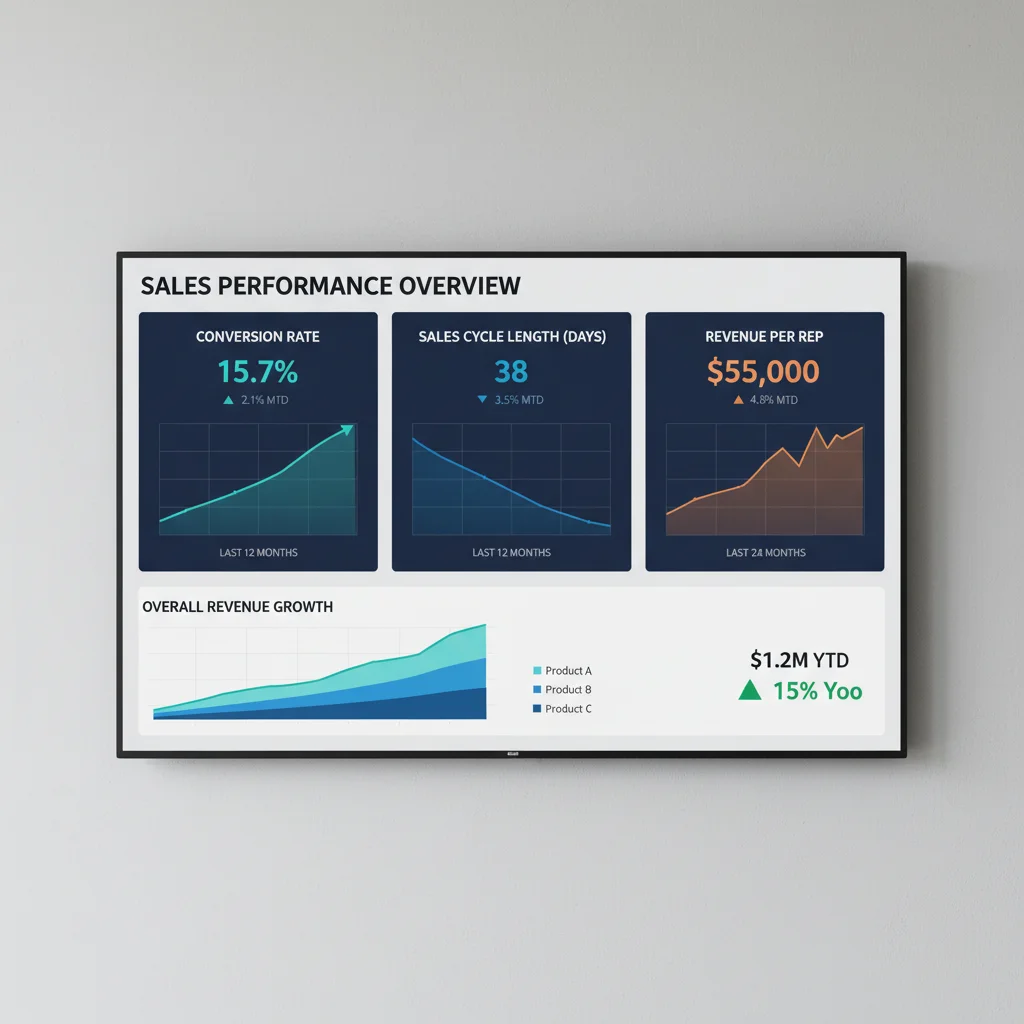
- Sales Cycle Length: Shorter sales cycles mean faster revenue generation. Enablement can streamline processes, provide quick access to information, and improve buyer-seller interactions, reducing the time it takes to close deals.
- Quota Attainment: This classic metric remains crucial. Track the percentage of reps hitting or exceeding their quotas, and analyze if enablement programs correlate with higher attainment.
- Revenue per Sales Rep: A higher revenue per rep indicates greater productivity and efficiency, often a direct result of effective enablement.
- New Logo Acquisition vs. Expansion Revenue: Differentiate between revenue from new customers and revenue from existing customers. Enablement can impact both, but understanding the specific contributions helps refine strategies.
2. Efficiency and Productivity Metrics
These metrics highlight how enablement makes the sales team more efficient, saving time and resources.
- Ramp-Up Time for New Hires: A critical metric. Effective onboarding and training, a core component of sales enablement, should significantly reduce the time it takes for new reps to become fully productive and hit their quotas.
- Time Spent Selling vs. Non-Selling Activities: Enablement tools and processes (e.g., CRM optimization, content automation) should reduce the time reps spend on administrative tasks, allowing them more time to engage with prospects.
- Content Utilization and Effectiveness: Track which content pieces are being used by reps, how often, and which ones correlate with higher engagement rates or closed deals. This helps optimize content strategy.
- Sales Tool Adoption Rates: If enablement invests in new tools (CRM, sales engagement platforms, AI assistants), track their adoption. High adoption suggests perceived value and potential for efficiency gains.
3. Sales Rep Competency and Engagement Metrics
These metrics focus on the human element of sales – the skills, knowledge, and motivation of the sales team.
- Knowledge Retention from Training: Use quizzes, certifications, and practical assessments to measure how well reps retain and apply information from training modules.
- Skill Proficiency Scores: Implement regular skill assessments (e.g., role-playing, simulated calls) to track improvements in areas like objection handling, prospecting, and negotiation.
- Sales Rep Satisfaction and Engagement: Engaged reps are more productive. Surveys and feedback mechanisms can gauge their satisfaction with enablement resources and support.
- Manager Coaching Effectiveness: Enablement often includes training for sales managers. Measure the impact of this training on their coaching quality and, consequently, on their team’s performance.
4. Customer-Centric Metrics
Ultimately, effective sales enablement should lead to better customer experiences and relationships.
- Customer Satisfaction (CSAT) / Net Promoter Score (NPS): Improved sales interactions, driven by enablement, can lead to higher customer satisfaction and loyalty.
- Customer Retention & Churn Rates: Sales enablement can contribute to selling to the right customers and setting accurate expectations, leading to higher retention.
- Customer Lifetime Value (CLTV): By fostering stronger relationships and enabling upsells, enablement can increase the overall value a customer brings over their tenure.
Establishing a Baseline and Attribution Model for Sales Enablement ROI
Before you can measure a 25% Sales Enablement ROI, you need to establish a baseline. This involves collecting data for all the relevant metrics before any new enablement initiative is implemented. Without a baseline, it’s impossible to demonstrate improvement or attribute success to your programs.
Attribution is perhaps the trickiest part of measuring Sales Enablement ROI. Sales success is influenced by many factors (market conditions, product quality, marketing efforts, etc.). To isolate the impact of enablement, consider these strategies:
- Control Groups: If feasible, implement enablement programs with one group of reps and use another similar group as a control, comparing their performance over time.
- Time-Series Analysis: Track metrics over an extended period before and after enablement interventions to identify significant shifts.
- Correlation Studies: Look for strong correlations between enablement activities (e.g., content usage, training completion) and positive sales outcomes.
- Qualitative Feedback: Supplement quantitative data with feedback from sales reps and managers on how enablement resources directly helped them close deals or improve their performance.
- Multi-Touch Attribution Models: While complex, these models can help assign credit to various touchpoints, including enablement, in the sales journey.
Calculating the Cost of Sales Enablement
To calculate Sales Enablement ROI, you also need to accurately quantify your investment. This includes:
- Personnel Costs: Salaries of enablement staff, trainers, content creators.
- Technology & Tools: Subscriptions for sales enablement platforms, CRM add-ons, content management systems, AI tools.
- Content Creation: Costs associated with developing sales collateral, presentations, case studies, and training materials.
- Training & Development: External training programs, workshops, certifications, travel expenses.
- Opportunity Cost: The time reps spend in training or using enablement tools instead of selling, though this is often offset by increased efficiency.
Summing up all these direct and indirect costs will give you the ‘Investment’ part of your ROI equation.
The ROI Formula for Sales Enablement
Once you have your benefits (quantified improvements in revenue, efficiency, etc.) and your costs, the basic ROI formula applies:
ROI = (Net Benefits - Cost of Investment) / Cost of Investment * 100%
For example, if your sales enablement program led to an attributable increase in revenue of $1,000,000 and cost $200,000 to implement, your ROI would be:
ROI = ($1,000,000 - $200,000) / $200,000 * 100% = $800,000 / $200,000 * 100% = 4 * 100% = 400%
This means for every dollar invested, you gained $4.00 back, far exceeding your 25% target. The challenge lies in accurately quantifying those ‘Net Benefits’ and attributing them specifically to enablement efforts.
Leveraging Technology for Enhanced ROI Measurement
By 2026, technology is indispensable for measuring Sales Enablement ROI. Modern sales enablement platforms, integrated with CRM systems, offer robust analytics capabilities:
- Integrated Dashboards: Centralized views of all key metrics, allowing for real-time tracking and analysis.
- AI-Powered Attribution: Advanced algorithms can help distribute credit for closed deals across various enablement touchpoints.
- Content Analytics: Track content usage, engagement, and conversion rates to understand which materials are most effective.
- Learning Management Systems (LMS): Monitor training completion, quiz scores, and skill development over time.
- Call Intelligence: Analyze sales calls for adherence to best practices, effective messaging, and areas for coaching, directly linking enablement training to real-world performance.

Strategies to Achieve and Exceed a 25% Sales Enablement ROI by 2026
Measuring ROI is one thing; actively working to achieve a significant return like 25% is another. Here are strategies to maximize your Sales Enablement ROI:
- Align Enablement with Business Objectives: Ensure every enablement initiative directly supports a clear business goal, whether it’s increasing market share, launching a new product, or improving customer retention.
- Personalize and Localize Content: Generic content has limited impact. Use data to tailor content to specific buyer personas, industries, and even individual sales reps’ needs.
- Implement Continuous Learning & Coaching: Enablement isn’t a one-off event. Foster a culture of continuous learning, supported by personalized coaching based on performance data.
- Optimize Onboarding Programs: A highly effective onboarding program is perhaps the fastest way to see ROI. Reduce ramp-up time significantly by providing structured, comprehensive training and resources.
- Leverage AI and Automation: Use AI for content recommendations, sales forecasting, lead scoring, and automating repetitive tasks, freeing up reps to focus on selling.
- Foster Cross-Functional Collaboration: Work closely with marketing, product, and customer success teams to ensure enablement content and strategies are aligned and supported across the organization.
- Gather Regular Feedback: Actively solicit feedback from sales reps and managers on the usefulness and effectiveness of enablement programs. Use this feedback to iterate and improve.
- Focus on High-Impact Areas: Identify the biggest pain points or opportunities for improvement in your sales cycle and direct enablement efforts there for maximum impact. For instance, if conversion rates at a specific stage are low, focus enablement on improving skills and resources for that stage.
- Invest in Sales Manager Enablement: Managers are multipliers. Equipping them with the skills to coach, motivate, and develop their teams effectively will amplify the impact of all other enablement efforts.
Reporting and Communicating Sales Enablement ROI
Once you’ve measured your Sales Enablement ROI, the next crucial step is to effectively communicate it to stakeholders, particularly leadership and finance. Your reports should be:
- Clear and Concise: Avoid jargon. Present data in an easy-to-understand format with executive summaries.
- Data-Driven: Back up every claim with hard numbers and clear attribution.
- Impact-Oriented: Focus on the business impact – how enablement contributed to revenue, profitability, and strategic goals.
- Forward-Looking: Don’t just report on the past. Use current ROI to project future returns and justify continued or increased investment.
- Visual: Use charts, graphs, and infographics to make complex data digestible and compelling.
Regular reporting, perhaps quarterly or bi-annually, will help maintain visibility and reinforce the value of sales enablement within the organization. This ongoing dialogue is vital for securing the resources needed to continually optimize and expand your programs, ultimately contributing to that ambitious 25% return.
Challenges in Measuring Sales Enablement ROI and How to Overcome Them
While the path to measuring Sales Enablement ROI is clear, it’s not without its hurdles. Common challenges include:
- Data Silos: Information scattered across different systems (CRM, LMS, content platforms) makes comprehensive analysis difficult.
- Attribution Complexity: As mentioned, isolating the exact impact of enablement from other factors is challenging.
- Lack of Baseline Data: Starting an enablement program without prior data makes ROI measurement retrospective and less impactful.
- Resistance to Change: Sales teams might resist new tools or training, impacting adoption rates and skewing results.
- Defining ‘Success’: Different stakeholders might have varying definitions of what constitutes a successful enablement program.
To overcome these, focus on:
- System Integration: Invest in platforms that integrate seamlessly or use data aggregation tools.
- Clear KPIs from the Outset: Define what will be measured and why before launching any program.
- Pilot Programs: Test new initiatives with smaller groups to refine processes and gather initial data.
- Change Management: Communicate the benefits of enablement clearly, involve sales reps in the design process, and provide ongoing support.
- Stakeholder Alignment: Get agreement on success metrics from all key stakeholders early in the process.
Conclusion: Driving a 25% Return Through Strategic Sales Enablement ROI Measurement
By 2026, the organizations that thrive will be those that not only invest in robust sales enablement but also master the art and science of measuring its impact. Achieving a 25% Sales Enablement ROI is an ambitious yet attainable goal that requires a strategic, data-driven approach.
By meticulously tracking key revenue, efficiency, competency, and customer-centric metrics, establishing clear baselines, and leveraging advanced technology for attribution, sales enablement leaders can move beyond anecdotal evidence. They can present compelling, quantifiable proof of their programs’ value, justify investments, and continuously optimize their strategies for maximum impact.
The future of sales is enabled. And the future of sales enablement is measurable. Embrace the metrics, refine your programs, and empower your sales force to consistently exceed targets, ensuring your investment not only pays off but generates substantial, demonstrable returns for years to come.