Sales Rep Onboarding in 2026: Cutting Time-to-Productivity by 4 Weeks
Sales Rep Onboarding in 2026: Cutting Time-to-Productivity by 4 Weeks
In the fiercely competitive landscape of 2026, the success of any sales organization hinges critically on its ability to rapidly transform new hires into high-performing revenue generators. The traditional, lengthy sales rep onboarding processes are no longer sustainable. Businesses are under immense pressure to achieve faster time-to-productivity, not just to meet quarterly targets but to gain a significant competitive edge. This article delves into groundbreaking strategies and technological advancements poised to revolutionize sales rep onboarding, aiming to cut the time-to-productivity by an ambitious four weeks.
The imperative to accelerate sales rep onboarding has never been stronger. As markets evolve at an unprecedented pace, and customer expectations become more sophisticated, sales professionals need to be equipped with the right knowledge, skills, and tools almost instantaneously. The cost of a prolonged ramp-up period extends beyond lost revenue; it impacts team morale, customer relationships, and overall organizational efficiency. By optimizing the onboarding journey, companies can not only boost their bottom line but also foster a more engaged, confident, and effective sales force.
We are not just talking about minor tweaks to existing programs; we are exploring a paradigm shift in how companies approach sales rep onboarding. This involves leveraging artificial intelligence, virtual reality, hyper-personalized learning paths, and a data-driven approach to every stage of the onboarding process. The goal is to create an immersive, efficient, and highly effective experience that prepares new sales reps to hit their quotas faster than ever before. Let’s explore how to achieve this ambitious target.
The Evolving Landscape of Sales in 2026: Why Speed Matters More Than Ever
The sales environment of 2026 is characterized by several key trends that underscore the urgency of efficient sales rep onboarding. Digital transformation has permeated nearly every industry, leading to more informed customers who expect highly personalized and relevant interactions. The rise of sophisticated sales technologies, from advanced CRMs to AI-powered analytics, means that sales reps need to be tech-savvy from day one. Furthermore, the prevalence of remote and hybrid work models necessitates onboarding programs that are flexible, accessible, and equally effective regardless of geographical location.
Increased Competition and Market Volatility
In 2026, market competition is fiercer than ever. New entrants, disruptive technologies, and rapidly shifting customer demands mean that organizations cannot afford to have sales reps operating at less than full capacity for extended periods. Every week an SDR or AE spends in a non-productive state is a week of lost opportunities and revenue that competitors might capture. This heightened competitive pressure directly translates into a demand for faster, more effective sales rep onboarding processes. Companies that can get their new hires productive quicker will inherently gain a significant advantage.
Sophisticated Customer Expectations
Today’s buyers are more educated, demanding, and digitally native. They expect personalized experiences, deep product knowledge, and solutions tailored to their specific, often complex, needs. This requires sales reps to not only understand the product inside out but also to be adept at consultative selling, empathy, and leveraging data to inform their strategies. Traditional onboarding, which often focuses on product features over customer solutions, falls short. 2026 onboarding must equip reps with the ability to navigate these sophisticated customer journeys from the outset.
The Rise of AI and Automation in Sales
Artificial intelligence and automation are no longer future concepts; they are integral to modern sales operations. From lead scoring and prospecting to CRM updates and sales forecasting, AI tools are augmenting the sales process. New sales reps must be trained not just on how to use these tools but how to strategically leverage them to enhance their performance, streamline their workflows, and focus on high-value activities. Integrating AI literacy into the core of sales rep onboarding is paramount for success in 2026.
Remote and Hybrid Work Models
The shift towards remote and hybrid work environments has fundamentally changed how teams collaborate and learn. Onboarding programs must be designed to be equally effective whether a new rep is in the office, working from home, or a combination of both. This requires robust digital learning platforms, virtual collaboration tools, and a focus on building connections and company culture remotely. A well-designed remote onboarding program can actually accelerate time-to-productivity by providing flexible, on-demand access to resources and training.
Pre-Boarding: Setting the Stage for Rapid Success (Weeks -4 to 0)
The journey to cutting time-to-productivity by four weeks doesn’t begin on a rep’s first day; it starts much earlier, during the pre-boarding phase. This critical period, commencing weeks before their official start date, is an often-underutilized opportunity to lay a robust foundation for success. By strategically engaging new hires before they even walk through the door (or log into their first virtual meeting), companies can significantly reduce the initial ramp-up time.
Automated and Personalized Pre-Boarding Journeys
In 2026, pre-boarding is highly automated and personalized. Upon accepting an offer, new reps receive access to a dedicated, AI-powered pre-boarding portal. This portal isn’t a generic collection of documents; it’s a dynamic platform that adapts to the rep’s prior experience, role, and even their preferred learning style. It includes:
- Welcome Videos: Personalized messages from leadership, their direct manager, and future team members, building immediate rapport.
- Company Culture Immersion: Access to internal communication channels, employee directories, and virtual tours of the office (if applicable), fostering a sense of belonging.
- Foundational Product Knowledge: Gamified modules and interactive simulations introducing core product features, value propositions, and common use cases. This allows reps to arrive with a basic understanding, rather than starting from scratch.
- Sales Process Overview: Simplified visual guides and short videos explaining the company’s sales methodology, CRM basics, and key performance indicators (KPIs).
- Peer Introductions: Virtual introductions to a designated ‘onboarding buddy’ or mentor from the sales team, facilitating early connections and a go-to person for questions.
- Essential Tool Setup: Instructions and early access to set up necessary software and accounts (CRM, communication platforms, sales enablement tools), ensuring technical readiness on day one.
This proactive approach ensures that by their official start date, new reps are not only familiar with the company and its offerings but also feel integrated and prepared to dive into more intensive training.
Leveraging AI for Skill Gap Identification
Pre-boarding in 2026 also incorporates AI-driven assessments to identify potential skill gaps before the rep even starts. Short, adaptive quizzes and scenario-based questions can pinpoint areas where a new hire might need additional support, such as specific industry knowledge, objection handling techniques, or CRM proficiency. This data allows the onboarding team to tailor the initial training modules, creating a truly personalized learning path from day one, rather than a one-size-fits-all approach that can waste valuable time.
The Accelerated Onboarding Core: Weeks 1-4
The first month is critical for any new sales rep. In 2026, this period is intensely focused, highly interactive, and designed for maximum knowledge retention and practical application. The goal is to move beyond passive learning to active engagement, ensuring reps are not just absorbing information but applying it in simulated and real-world scenarios.
Immersive VR/AR Sales Simulations
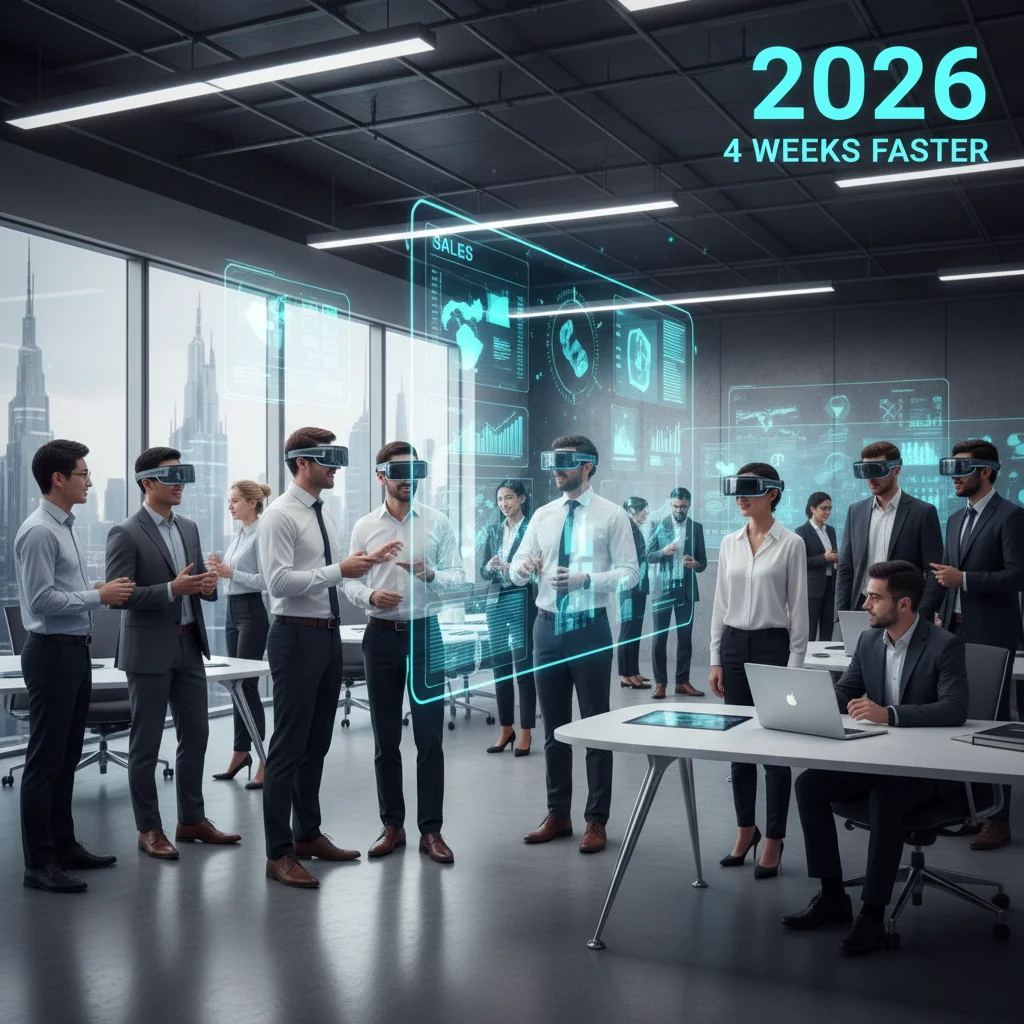
One of the most transformative elements of 2026 sales rep onboarding is the widespread adoption of Virtual Reality (VR) and Augmented Reality (AR) for sales simulations. Instead of role-playing with a manager, new reps practice in hyper-realistic virtual environments. These simulations can:
- Recreate Customer Scenarios: From cold calls to complex negotiation meetings, reps can practice with AI-powered virtual customers who react realistically, providing immediate feedback on their approach, tone, and messaging.
- Product Demonstrations: AR allows reps to overlay digital product features onto physical objects or present complex solutions in an interactive, 3D environment, mastering product demos before facing real clients.
- Objection Handling Training: Real-time feedback from AI coaches within the VR environment helps reps refine their responses to common objections, improving their confidence and effectiveness.
- Virtual Ride-Alongs: New hires can virtually ‘sit in’ on successful sales calls conducted by top performers, observing best practices without disrupting live client interactions.
This immersive training provides a safe space for reps to fail fast, learn, and iterate, building muscle memory and confidence much quicker than traditional methods.
Microlearning and Spaced Repetition Platforms
Recognizing the limitations of human attention spans and memory, 2026 onboarding heavily utilizes microlearning modules delivered through AI-powered platforms. Instead of lengthy training sessions, information is broken down into bite-sized, engaging content (short videos, interactive quizzes, infographics) that can be consumed on demand. Spaced repetition algorithms ensure that key information is reinforced at optimal intervals, preventing the ‘forgetting curve’ and cementing knowledge. This approach allows reps to integrate learning into their daily workflow without feeling overwhelmed.
Dedicated Sales Enablement Portals with AI Search
Every new rep gains access to an advanced sales enablement portal, powered by AI search and recommendation engines. This portal is a single source of truth for all sales collateral, playbooks, competitive intelligence, and customer success stories. The AI component allows reps to quickly find highly specific information, such as a case study for a particular industry or an objection handling script for a new product feature, significantly reducing the time spent searching for resources. This immediate access to relevant information empowers reps to respond to customer queries confidently and accurately.
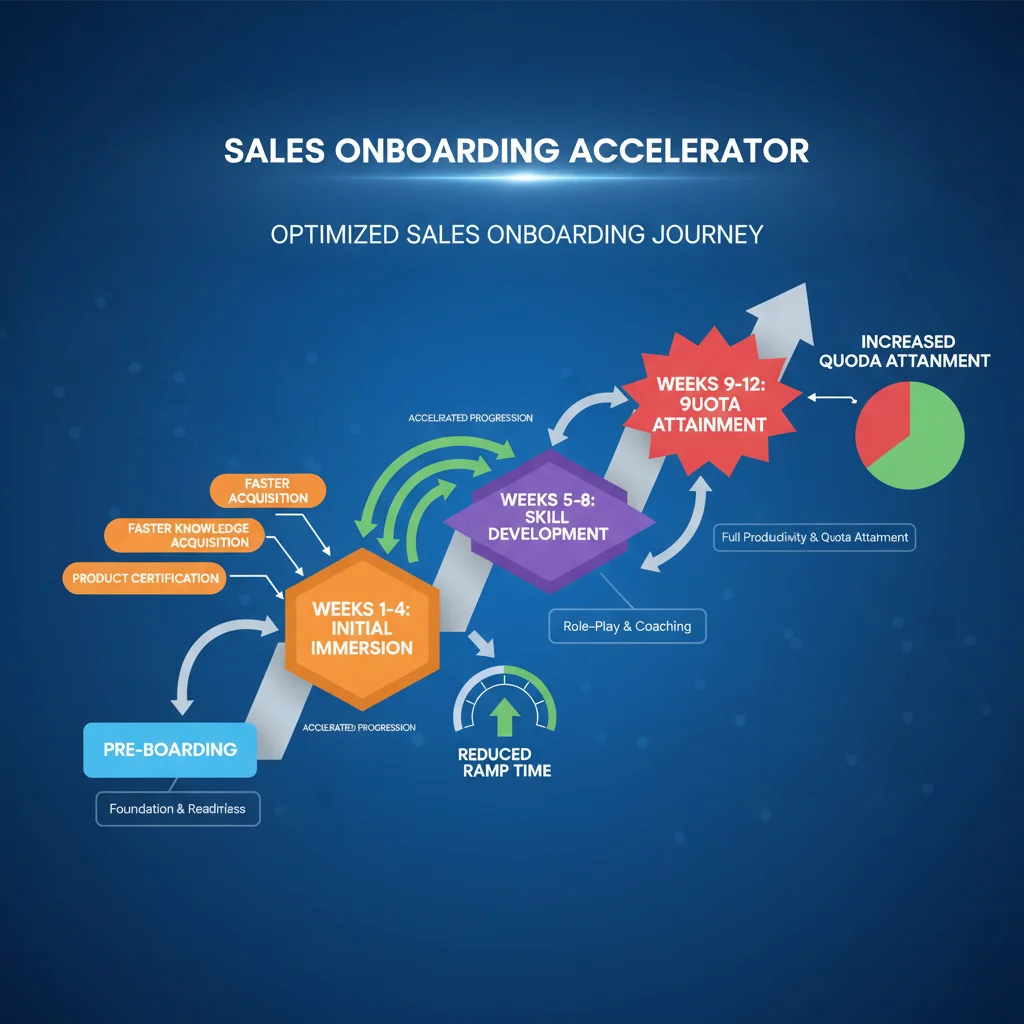
The Data-Driven Ramp-Up: Weeks 5-8
After the initial intensive training, weeks 5-8 are about applying learned skills in real-world scenarios, supported by continuous feedback and data analytics. This phase focuses on practical execution, guided by intelligent systems that pinpoint areas for improvement and celebrate early successes. This is where the rubber truly meets the road, and the effectiveness of the accelerated sales rep onboarding becomes evident.
AI-Powered Call Coaching and Deal Analysis
In 2026, every sales call is an opportunity for learning. AI-powered conversation intelligence tools analyze sales calls in real-time or post-call, transcribing conversations, identifying key topics, sentiment, and adherence to sales scripts or methodologies. For new reps, this means:
- Automated Feedback: Immediate, objective feedback on their speaking pace, use of filler words, questioning techniques, and how effectively they address customer pain points.
- Identification of Best Practices: AI can highlight moments where a rep successfully handled an objection or closed for the next step, allowing them to review and replicate these successes.
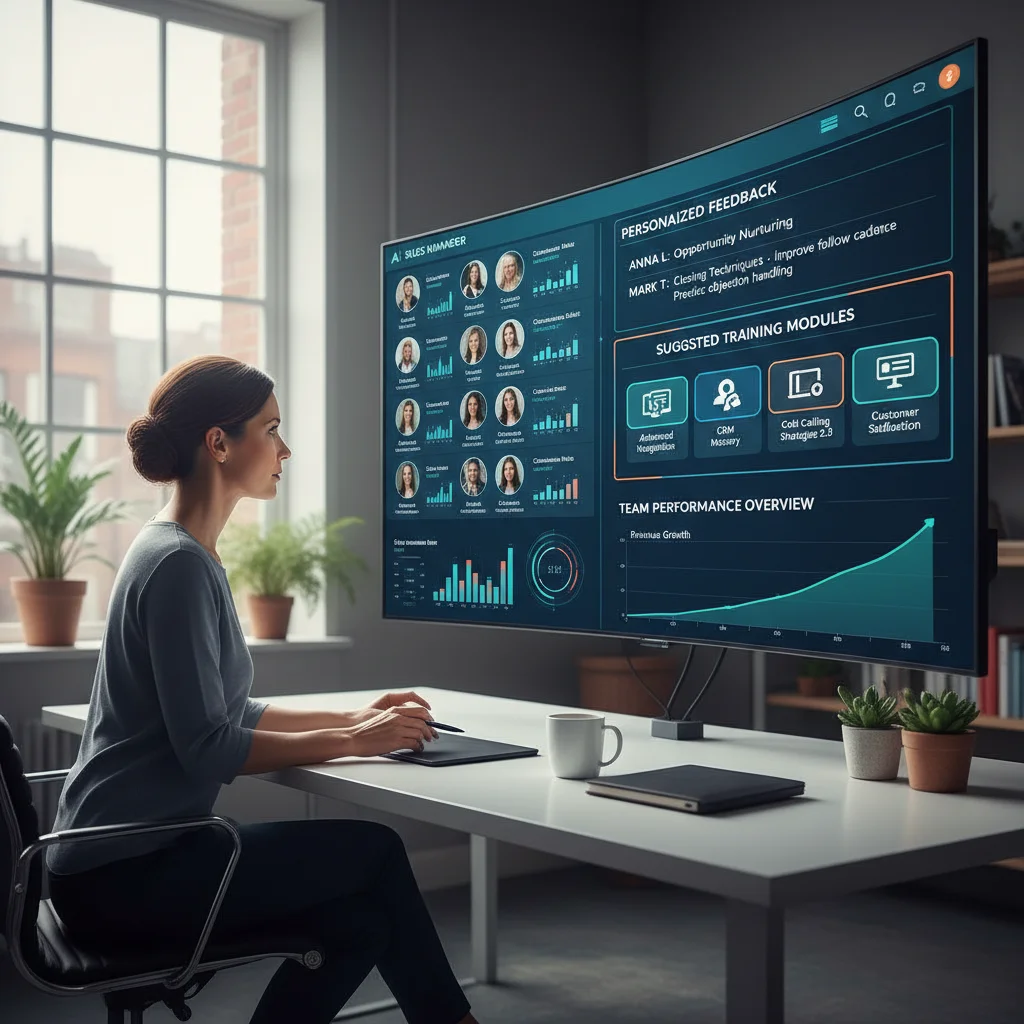
- Personalized Coaching Recommendations: Based on call analysis, the AI suggests specific training modules, peer call recordings, or coaching points for their manager to address, making coaching hyper-targeted and efficient.
This rapid feedback loop is instrumental in accelerating skill development and correcting course early, preventing bad habits from forming.
Personalized Learning Paths Driven by Performance Data
No two sales reps are identical, and their learning journeys shouldn’t be either. By week 5, the onboarding platform has accumulated enough data on each rep’s performance, skill assessments, and call analyses to create highly personalized, adaptive learning paths. If a rep is struggling with product knowledge for a specific vertical, the system automatically assigns additional microlearning modules, recommended readings, and targeted VR simulations. If another excels at prospecting but needs help with closing, their path will focus on advanced negotiation tactics and objection handling. This dynamic adjustment ensures that training is always relevant and impactful, maximizing efficiency and minimizing wasted time on already mastered topics.
Embedded Mentorship and Peer Learning Programs
While technology plays a massive role, human connection remains vital. The accelerated onboarding program integrates structured mentorship and peer learning. Each new rep is paired with an experienced, high-performing sales veteran (their ‘onboarding buddy’ or mentor) who provides guidance, answers questions, and shares real-world insights. Regular check-ins, both formal and informal, are encouraged. Furthermore, peer learning groups, facilitated through virtual collaboration platforms, allow new reps to share experiences, challenges, and solutions, fostering a supportive community and accelerating collective learning.
Measuring Success and Continuous Optimization
Cutting time-to-productivity by four weeks requires rigorous measurement and continuous optimization. In 2026, data analytics are at the heart of every sales rep onboarding program, providing granular insights into what’s working, what’s not, and where further improvements can be made.
Real-Time Performance Dashboards
Managers and reps alike have access to real-time dashboards that track key onboarding metrics. These go beyond traditional activity metrics to include:
- Learning Module Completion Rates and Scores: Indicating engagement and comprehension of training content.
- Simulation Performance: Scores and feedback from VR/AR simulations, highlighting areas of strength and weakness.
- Call Analysis Metrics: Talk-to-listen ratio, sentiment analysis, adherence to messaging, and successful outcome rates from AI-powered call coaching.
- Early Stage Pipeline Metrics: Number of qualified leads generated, meetings booked, and initial proposals sent, providing early indicators of ramp-up progress.
- Time to First Deal and Quota Attainment: The ultimate measure of productivity, tracked against accelerated targets.
These dashboards provide immediate visibility into a rep’s progress and allow for proactive intervention if they fall behind.
Predictive Analytics for Onboarding Success
Leveraging the vast amount of data collected, predictive analytics models are used to forecast a new rep’s likelihood of success. By analyzing historical data of successful reps and comparing it with the current performance and learning trajectory of new hires, these models can identify reps who might be at risk of underperforming, allowing for early, targeted interventions. This proactive approach ensures that resources are allocated efficiently to support those who need it most, preventing potential attrition and accelerating the overall ramp-up.
A/B Testing and Iterative Improvement
The onboarding program itself is subject to continuous improvement. Different training modules, coaching methodologies, and pre-boarding content are A/B tested to determine their impact on time-to-productivity. Feedback from new hires, managers, and top performers is systematically collected and analyzed. This iterative process ensures that the sales rep onboarding program is constantly evolving, adapting to new market conditions, product changes, and best practices, thereby maintaining its efficacy in cutting down ramp-up time.
Integrating Sales Rep Onboarding with the Sales Tech Stack
The synergy between the onboarding platform and the broader sales tech stack is crucial for a seamless and accelerated experience. In 2026, onboarding systems are not standalone; they are deeply integrated with CRM, sales enablement, communication, and analytics platforms.
Seamless CRM Integration
New reps learn to use the CRM not as a separate tool, but as an integral part of their daily workflow from day one. Onboarding modules include hands-on training directly within a sandbox CRM environment, allowing reps to practice logging activities, updating opportunities, and managing their pipeline without impacting live data. AI-guided prompts within the CRM can even suggest next steps based on the stage of a deal, reinforcing learned behaviors.
Sales Enablement Platform as the Learning Hub
The sales enablement platform serves as the central hub for all learning content, accessible directly from the tools reps use daily. This means training materials, playbooks, and competitive intelligence are contextually available when a rep needs them most, perhaps during a call or while preparing for a meeting. This ‘just-in-time’ learning capability significantly speeds up information retrieval and application.
Communication and Collaboration Tools
Integrated communication platforms (e.g., Slack, Microsoft Teams) are used for instant messaging with mentors, managers, and peers, as well as for sharing quick updates and celebrating successes. Video conferencing tools are seamlessly integrated for virtual coaching sessions, team meetings, and customer calls, ensuring reps are proficient with these essential communication channels from the outset.
The Cultural Impact of Accelerated Onboarding
Beyond the measurable improvements in productivity, an accelerated and highly effective sales rep onboarding program has profound cultural benefits. It signals to new hires that the company is invested in their success, values their time, and operates with efficiency and innovation at its core. This fosters a sense of belonging, confidence, and loyalty from day one.
Increased Confidence and Motivation
When new reps feel well-prepared, supported, and quickly achieve their first successes, their confidence soars. This early momentum is critical for long-term motivation and job satisfaction. A streamlined onboarding process reduces anxiety and imposter syndrome, allowing reps to focus their energy on selling rather than struggling to understand basic processes or product details.
Reduced Attrition Rates
High sales rep attrition is a costly problem. An effective onboarding program that quickly integrates reps into the team and sets them up for success significantly reduces early-stage turnover. When reps feel competent and valued, they are more likely to stay, contributing to a stable and experienced sales force.
Stronger Team Cohesion
By facilitating early connections through mentorship programs, peer learning groups, and collaborative virtual environments, accelerated onboarding builds stronger team cohesion. New reps feel like an integral part of the team faster, leading to better collaboration, knowledge sharing, and a more positive overall work environment.
Conclusion: The Future of Sales Rep Onboarding is Now
The goal of cutting time-to-productivity for sales rep onboarding by four weeks in 2026 is not merely aspirational; it is achievable through strategic implementation of advanced technologies and methodologies. By embracing AI-powered pre-boarding, immersive VR/AR simulations, personalized learning paths, data-driven coaching, and seamless tech stack integration, organizations can transform their onboarding processes into powerful engines of rapid revenue generation.
The benefits extend far beyond financial metrics, fostering a culture of high performance, continuous learning, and strong team cohesion. As the sales landscape continues to evolve, companies that prioritize and innovate their sales rep onboarding will not only survive but thrive, consistently outperforming their competitors and building a resilient, highly effective sales force ready for the challenges of tomorrow. The time to re-imagine and revolutionize your onboarding strategy is now.