Small Business Online Growth: 3% Market Share Gain Explained (2026)

U.S. Online Market Share: Why Small Businesses Gained 3% in Early 2026 and How to Replicate It
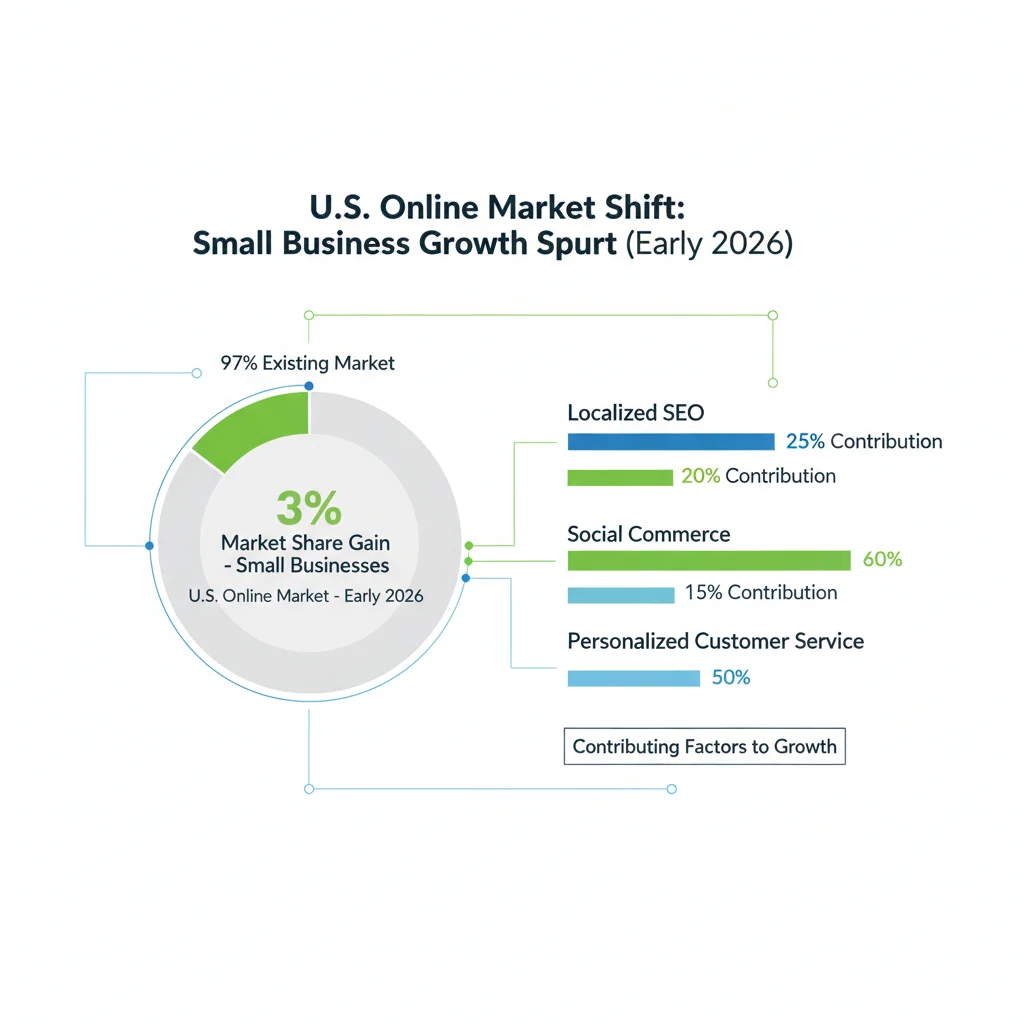
The digital landscape is constantly shifting, but rarely do we see such a significant and rapid change as the one observed in early 2026. Reports indicate that U.S. small businesses collectively captured an additional 3% of the online market share, a remarkable achievement in an arena often dominated by corporate giants. This surge in small business online growth is not merely a statistical anomaly; it represents a fundamental shift in consumer behavior, technological adoption, and strategic adaptation by countless entrepreneurs. Understanding the underlying causes of this growth and, more importantly, how to replicate it, is crucial for any small business aiming to thrive in the coming years.
For years, the narrative has been one of large corporations leveraging massive budgets and sophisticated algorithms to dominate e-commerce. However, early 2026 proved that agility, authenticity, and a deep understanding of local communities can be powerful equalizers. This article delves into the multifaceted reasons behind this impressive small business online growth, examining the strategies that propelled these businesses forward and providing a tangible roadmap for others to follow.
The Shifting Tides: Why Consumers Chose Small Businesses
Several converging factors contributed to the consumer pivot towards smaller online retailers. This wasn’t a sudden, unprompted change, but rather the culmination of evolving preferences and a growing appreciation for what small businesses uniquely offer.
The Quest for Authenticity and Values Alignment
In an increasingly homogenized digital world, consumers are actively seeking authenticity. They want to know the story behind a product, the passion of its creator, and the values upheld by the business they support. Small businesses, by their very nature, are often better positioned to convey this authenticity. Their origin stories are frequently more personal, their commitment to ethical practices more transparent, and their connection to local communities more profound. This resonated deeply with a segment of consumers who were growing weary of impersonal transactions with large, faceless corporations.
Personalization Over Mass Production
The rise of hyper-personalization in marketing has primed consumers to expect tailored experiences. While large enterprises struggle to personalize at scale without feeling artificial, small businesses can offer genuine, human-centric personalization. This might manifest as handwritten thank-you notes, personalized product recommendations based on direct interactions, or bespoke services that larger companies simply cannot provide. This level of individualized attention fostered stronger customer loyalty and word-of-mouth referrals, significantly boosting small business online growth.
Community Support and Local Impact
The events of recent years have amplified a global desire to support local economies and communities. Consumers became more conscious of where their money was going and the direct impact it had. Choosing a small business often meant supporting a neighbor, contributing to local job creation, and keeping money within the community. Online platforms made it easier than ever for consumers to find and support these local businesses, even if the transaction occurred purely digitally. This renewed focus on local impact was a powerful driver for the observed small business online growth.
Improved Digital Presence and Accessibility
Crucially, small businesses significantly upped their game in terms of digital presence. Gone are the days when a basic social media page sufficed. Early 2026 saw a widespread adoption of sophisticated, yet affordable, e-commerce tools, robust website builders, and effective digital marketing strategies. This made small businesses more discoverable and accessible online, closing the technological gap that once separated them from larger competitors. This improved digital infrastructure was fundamental to their market share gains.
Strategic Pillars of Small Business Online Growth in 2026
The 3% gain wasn’t accidental; it was the result of deliberate and often innovative strategies employed by forward-thinking small business owners. Here are the key strategic pillars that underpinned this impressive small business online growth:
1. Hyper-Localized SEO and Content Marketing
Small businesses excelled at leveraging local search engine optimization (SEO) to connect with nearby customers. This went beyond simply listing their address on Google My Business. It involved creating highly localized content — blog posts about local events, products tailored to regional preferences, and partnerships with other local businesses. By optimizing for local keywords and demonstrating strong local relevance, these businesses appeared higher in search results for consumers looking for specific products or services in their area. This strategy proved incredibly effective in driving targeted traffic and converting local interest into online sales.
2. Mastering Social Commerce and Community Building
Social media platforms evolved significantly, and small businesses were quick to adapt to the rise of social commerce. Instead of just using social media for branding, they integrated direct selling features, live shopping events, and personalized customer service through platforms like Instagram, TikTok, and Facebook. More importantly, they focused on building genuine online communities around their brands. This involved engaging directly with followers, responding to comments, and creating content that fostered a sense of belonging. This community-first approach translated into higher engagement, trust, and ultimately, sales, fueling their small business online growth.
3. Agile E-commerce Solutions and User Experience
The accessibility of user-friendly and affordable e-commerce platforms like Shopify, WooCommerce, and Squarespace allowed small businesses to create professional, mobile-responsive online stores without needing extensive technical expertise or large investments. Furthermore, these businesses prioritized user experience (UX). They focused on clear product descriptions, high-quality imagery, intuitive navigation, and streamlined checkout processes. A seamless online shopping experience minimized cart abandonment and encouraged repeat purchases, directly contributing to their market share increase.

4. Leveraging Personalized Email Marketing and CRM
While large businesses often rely on broad, automated email campaigns, successful small businesses utilized email marketing for highly personalized communication. They segmented their customer lists based on purchase history, browsing behavior, and expressed interests. This allowed them to send targeted promotions, exclusive offers, and content that truly resonated with individual customers. Integrating customer relationship management (CRM) tools, even simple ones, helped them track interactions and build stronger, more personal relationships, driving repeat business and enhancing overall small business online growth.
5. Embracing Niche Markets and Unique Value Propositions
Instead of trying to compete directly with large retailers on price or breadth of inventory, successful small businesses doubled down on niche markets. They identified underserved segments of the market and developed unique products or services that catered specifically to those needs. Their value proposition often centered around craftsmanship, sustainability, ethical sourcing, or highly specialized expertise. This focus allowed them to build strong brand loyalty within their chosen niches, creating a dedicated customer base less susceptible to general market fluctuations.
6. Strategic Partnerships and Collaborations
Early 2026 also saw an increase in strategic collaborations between small businesses. This included cross-promotional efforts with complementary brands, joint marketing campaigns, and even shared fulfillment or logistics solutions. By pooling resources and leveraging each other’s customer bases, these partnerships allowed small businesses to expand their reach and offer enhanced value to their customers, contributing to the collective small business online growth.
How Your Small Business Can Replicate This Success
The good news is that the strategies that led to this significant small business online growth are not proprietary secrets. They are actionable steps that any small business can implement. Here’s a roadmap to help you replicate their success:
1. Refine Your Digital Presence and Mobile Experience
- Invest in a Professional Website: Ensure your website is modern, visually appealing, and reflects your brand. Use a reliable e-commerce platform that allows for easy product management and secure transactions.
- Prioritize Mobile Responsiveness: A significant portion of online shopping happens on mobile devices. Your website must be perfectly optimized for smartphones and tablets, offering a seamless and fast browsing experience.
- Optimize for Speed: Slow loading times kill conversions. Regularly check your website’s speed and optimize images and code to ensure quick loading.
2. Master Local SEO and Content Marketing
- Claim and Optimize Your Google My Business Profile: This is fundamental for local visibility. Ensure all information is accurate, add high-quality photos, and encourage customer reviews.
- Create Localized Content: Write blog posts, guides, or videos that are relevant to your local community. Think about local events, partnerships, or unique aspects of your area that you can tie into your products or services.
- Utilize Local Keywords: Research and incorporate keywords that include your city, neighborhood, or region into your website content and product descriptions.
3. Embrace Social Commerce and Build Community
- Choose the Right Platforms: Identify where your target audience spends their time online and focus your efforts there.
- Engage Authentically: Don’t just post; interact. Respond to comments and messages, run polls, and ask questions to foster a sense of community.
- Experiment with Social Shopping Features: Explore live shopping, shoppable posts, and in-app checkout options offered by platforms like Instagram and Facebook.
- Showcase Your Story: Use social media to share the human side of your business — your passion, your process, and your team.
4. Implement Personalized Marketing Strategies
- Segment Your Audience: Use your CRM or email marketing tool to categorize your customers based on their interests, past purchases, or engagement levels.
- Craft Personalized Emails: Send targeted promotions, birthday discounts, or recommendations based on individual preferences.
- Leverage Customer Data (Responsibly): Use insights from your website analytics and sales data to understand customer behavior and tailor your offerings.
5. Focus on Niche Excellence and Unique Value
- Identify Your Niche: What makes your business unique? What specific problem do you solve, or what specific desire do you fulfill for a particular group of people?
- Articulate Your Value Proposition: Clearly communicate why customers should choose you over larger competitors. Is it superior quality, ethical sourcing, personalized service, or a unique product?
- Build a Strong Brand Identity: Consistent branding across all online touchpoints helps differentiate you and resonates with your target niche.
6. Seek Strategic Partnerships
- Collaborate with Complementary Businesses: Partner with other small businesses that serve a similar audience but offer non-competing products or services.
- Co-host Events or Webinars: Expand your reach by sharing audiences with partners.
- Cross-Promote on Social Media: Leverage each other’s followings to gain new exposure.
The Role of Technology and Adaptability
A crucial, often overlooked, aspect of the 2026 small business online growth was the rapid adoption of new technologies and a willingness to adapt. Small businesses, unburdened by corporate bureaucracy, could pivot quickly, test new tools, and implement changes far faster than their larger counterparts.
Embracing AI and Automation (Smartly)
While large corporations have invested heavily in complex AI, small businesses strategically adopted simpler AI-powered tools. This included AI-driven content creation assistants for social media posts, chatbots for instant customer service, and AI-powered analytics to gain insights from their data. These tools helped small businesses streamline operations, improve efficiency, and enhance customer interactions without incurring prohibitive costs.
Data-Driven Decision Making
Successful small businesses moved away from guesswork and embraced data. They regularly monitored website traffic, conversion rates, social media engagement, and sales data. This allowed them to identify what was working, what wasn’t, and to make informed decisions about their marketing and product strategies. This data-driven approach was a significant factor in optimizing their online efforts and driving sustained small business online growth.
Continuous Learning and Iteration
The businesses that saw the most significant gains were those committed to continuous learning. They stayed abreast of new digital marketing trends, e-commerce features, and consumer behaviors. They were not afraid to experiment, learn from failures, and iterate on their strategies. This agile mindset is a powerful asset for any small business looking to compete in the fast-paced online world.
Challenges and Considerations for Sustained Growth
While the 3% market share gain is a celebrated victory, small businesses must remain vigilant. The online landscape is dynamic, and new challenges will inevitably arise. Sustaining this small business online growth requires ongoing effort and strategic foresight.
Managing Scalability
As online sales increase, small businesses often face challenges related to scalability. This includes managing inventory, fulfilling orders efficiently, handling increased customer service inquiries, and potentially hiring new staff. Proactive planning for growth, including investing in scalable e-commerce platforms and robust logistics solutions, is crucial.
Navigating Privacy Regulations and Data Security
With increased online activity comes greater responsibility for data privacy and security. Small businesses must stay informed about evolving data protection regulations (e.g., state-specific privacy laws) and implement robust security measures to protect customer information. Building and maintaining customer trust in this area is paramount.
Combating Market Saturation
As more small businesses enter the online space, market saturation can become a concern. To counteract this, businesses must continuously innovate, refine their unique value propositions, and deepen their relationships with their customer base. Standing out in a crowded market will always be a challenge, but authenticity and exceptional service remain powerful differentiators.
Conclusion: The Future is Bright for Agile Small Businesses
The early 2026 reports affirming the 3% increase in U.S. online market share for small businesses serve as a powerful testament to their resilience, adaptability, and strategic prowess. This isn’t just a fleeting trend; it signals a significant shift in consumer preference and a leveling of the playing field in e-commerce. By focusing on authenticity, community, personalized experiences, and smart digital strategies — including localized SEO, social commerce, and agile e-commerce solutions — small businesses have proven their capacity to not only compete but to thrive.
For entrepreneurs looking to replicate this success, the roadmap is clear: embrace digital tools, understand your niche, connect genuinely with your customers, and never stop learning and adapting. The era of significant small business online growth is here, and with the right strategies, your business can be a part of this exciting movement, securing its place in the evolving digital economy for years to come.