U.S. Digital Sales 2026: Marketplaces’ 40% Dominance Explained

The Shifting Sands of E-commerce: U.S. Digital Sales and Marketplaces’ Ascent to 40% by 2026
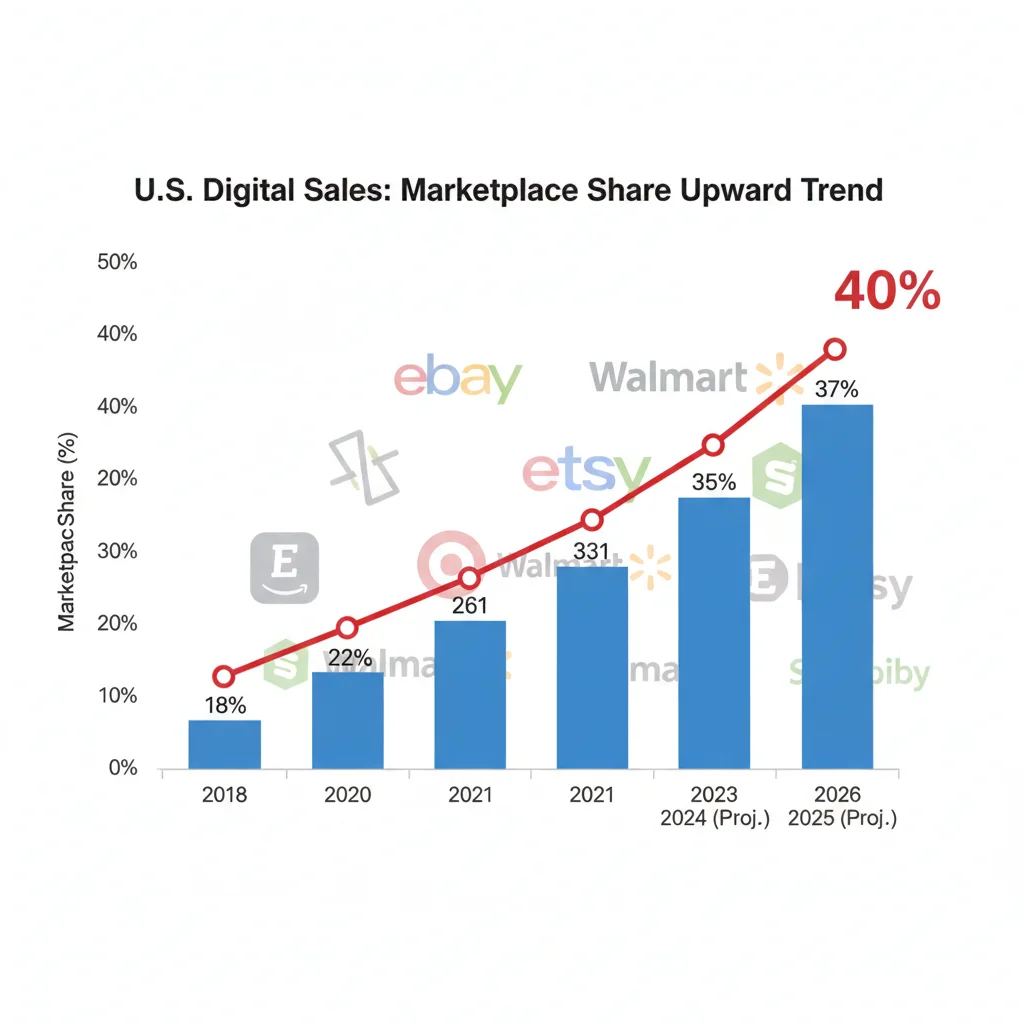
The landscape of retail is in a constant state of flux, but few shifts have been as profound and rapid as the rise of digital marketplaces. As we hurtle towards 2026, industry analysts and economic forecasters are painting a clear picture: marketplaces are not just growing; they are set to become the undisputed titans of U.S. digital sales, projected to command an astonishing 40% share. This isn’t just a statistic; it’s a seismic shift with far-reaching implications for businesses, consumers, and the very fabric of commerce. Understanding this trajectory, the forces driving it, and what it means for the future is paramount for anyone operating within or adjacent to the digital economy.
The journey to this 40% milestone by 2026 is paved with innovation, evolving consumer behaviors, and strategic adaptations by both established giants and nimble newcomers. From the convenience factor to the breadth of selection, marketplaces have cultivated an environment that resonates deeply with the modern shopper. But what exactly underpins this phenomenal growth? How are traditional retailers adapting, and what challenges and opportunities lie ahead as US Digital Marketplaces 2026 solidify their dominance? This comprehensive exploration will delve into these critical questions, offering insights into the mechanisms of this transformation and providing a roadmap for navigating the future of online retail.
The Irresistible Pull: Why Marketplaces Dominate U.S. Digital Sales
The ascent of US Digital Marketplaces 2026 to a 40% share of U.S. digital sales is not a sudden phenomenon but the culmination of several powerful, interconnected trends. At its core, the success of marketplaces lies in their ability to address fundamental consumer needs and offer unparalleled advantages over traditional e-commerce models.
Convenience and Selection: The Dual Pillars of Marketplace Appeal
One of the most compelling reasons consumers flock to marketplaces is the sheer convenience they offer. Imagine needing a new gadget, a book, and groceries. Instead of visiting three separate websites, a marketplace allows you to fulfill all these needs in a single transaction, often with consolidated shipping and a familiar user interface. This ‘one-stop-shop’ experience saves time and reduces friction, making the shopping journey smoother and more enjoyable. The vast selection available on platforms like Amazon, eBay, and Walmart Marketplace is another undeniable draw. Consumers have access to millions of products from thousands of sellers, often at competitive prices, all within a few clicks. This breadth of choice fosters a sense of empowerment, allowing shoppers to find exactly what they need, compare options, and make informed decisions.
Trust and Reliability: Building Consumer Confidence
For many consumers, purchasing from an established marketplace carries an inherent level of trust. These platforms have invested heavily in robust customer service, secure payment gateways, and buyer protection policies. This reduces the perceived risk associated with online shopping, especially when purchasing from unfamiliar third-party sellers. The review and rating systems prevalent on marketplaces also play a crucial role. They provide social proof and transparency, allowing prospective buyers to gauge product quality and seller reliability based on the experiences of others. This ecosystem of trust is a powerful differentiator, encouraging repeat purchases and fostering loyalty.
Competitive Pricing and Value Proposition
The competitive nature of marketplaces often drives down prices. With numerous sellers vying for customer attention, price wars are common, benefiting the consumer. Furthermore, marketplaces frequently offer deals, discounts, and loyalty programs that enhance the overall value proposition. The ability to easily compare prices from different sellers for the same product is a significant advantage, ensuring that consumers feel confident they are getting the best possible deal. This focus on value, coupled with convenience and selection, creates a highly attractive proposition for the modern digital shopper.
Logistics and Fulfillment Efficiencies
Many leading marketplaces have developed sophisticated logistics and fulfillment networks that ensure fast, reliable, and often free shipping. Programs like Amazon Prime have set a high bar for delivery expectations, and other marketplaces are continually striving to match or exceed these standards. This operational excellence removes a major pain point for consumers and significantly enhances the overall shopping experience. For sellers, these fulfillment services often streamline their operations, allowing them to focus on product development and marketing rather than the complexities of shipping and handling.
The Strategic Imperative: Adapting to the Marketplace-Dominated Future
For businesses, the projected 40% share of US Digital Marketplaces 2026 in U.S. digital sales presents both immense opportunities and significant challenges. The days of solely relying on a proprietary e-commerce website are increasingly becoming a relic of the past for many. A multi-channel strategy that prominently features marketplace integration is no longer optional but a strategic imperative.
For Brands and Retailers: Navigating the Marketplace Ecosystem
Brands and retailers must carefully consider their marketplace strategy. For some, it means embracing marketplaces as a primary sales channel, leveraging their vast customer reach and established infrastructure. This often involves optimizing product listings for marketplace search algorithms, managing inventory across multiple platforms, and understanding the nuances of each marketplace’s fee structure and policies. For others, marketplaces serve as a complementary channel, driving brand awareness and customer acquisition while their direct-to-consumer (DTC) website remains the hub for brand building and customer loyalty. The key is to find the right balance that aligns with business objectives and resource capabilities.
The Challenge of Differentiation and Brand Control
While marketplaces offer unparalleled access to customers, they also pose challenges, particularly regarding brand differentiation and control. On a marketplace, a brand’s products are often listed alongside numerous competitors, making it harder to stand out. Maintaining a consistent brand image and customer experience can also be difficult when operating within a third-party platform’s framework. Businesses must invest in compelling product descriptions, high-quality imagery, and proactive customer service to distinguish themselves. Furthermore, exploring strategies like ‘storefronts’ within marketplaces or leveraging advertising tools can help brands create a more curated and engaging presence.
Data and Analytics: Unlocking Marketplace Insights
Marketplaces generate vast amounts of data, from sales trends to customer demographics and search queries. Businesses that effectively collect, analyze, and act upon this data will gain a significant competitive edge. Understanding which products perform best, identifying emerging trends, and optimizing pricing strategies based on marketplace insights can drive growth and profitability. However, accessing and synthesizing this data across different platforms can be complex, requiring sophisticated analytics tools and expertise.
Technological Innovations Fueling Marketplace Growth
The projected dominance of US Digital Marketplaces 2026 is inextricably linked to ongoing technological advancements. These innovations are not only enhancing the customer experience but also streamlining operations for sellers, creating a more efficient and dynamic ecosystem.
Artificial Intelligence and Personalization
Artificial intelligence (AI) is at the forefront of marketplace innovation. AI-powered recommendation engines analyze past purchases, browsing history, and demographic data to offer highly personalized product suggestions, significantly increasing conversion rates. Chatbots and virtual assistants enhance customer service, providing instant support and answering queries around the clock. For sellers, AI can optimize pricing, forecast demand, and even assist in catalog management, making it easier to scale operations.
Enhanced Search and Discovery
As the number of products on marketplaces continues to swell, effective search and discovery mechanisms become paramount. Advanced search algorithms, natural language processing, and visual search capabilities are making it easier for consumers to find exactly what they’re looking for, even with vague descriptions or images. This improved discoverability benefits both buyers and sellers, connecting products with their ideal customers more efficiently.
Seamless Mobile Experience
With mobile commerce continuing its relentless growth, marketplaces have invested heavily in creating intuitive and responsive mobile apps and websites. Features like one-click purchasing, secure mobile payment options, and personalized notifications contribute to a seamless mobile shopping experience. This mobile-first approach is crucial for capturing the increasingly large segment of consumers who primarily shop from their smartphones and tablets.
Blockchain for Transparency and Trust (Emerging)
While still in nascent stages, blockchain technology holds significant promise for marketplaces. It can enhance transparency in supply chains, verify product authenticity, and streamline payment processes. For consumers, this could mean greater confidence in the origin and quality of products, especially in categories prone to counterfeiting. For sellers, it could offer more secure and efficient transaction processing. As the technology matures, we can expect to see more widespread adoption within marketplace ecosystems.
Impact on Traditional Retail and the Future of E-commerce
The rise of US Digital Marketplaces 2026 to 40% of U.S. digital sales is not happening in a vacuum. It has profound implications for traditional retail models and is actively reshaping the broader e-commerce landscape.
The Blurring Lines Between Online and Offline
As marketplaces grow, the distinction between online and offline retail continues to blur. Many marketplaces are experimenting with physical presences, pop-up shops, and partnerships with brick-and-mortar stores. Conversely, traditional retailers are increasingly adopting marketplace models, either by launching their own or by selling on established platforms. This omnichannel approach is becoming the norm, offering consumers a flexible and integrated shopping experience regardless of the channel.
New Business Models and Entrepreneurial Opportunities
Marketplaces have democratized e-commerce, lowering the barrier to entry for small businesses and entrepreneurs. Individuals and small brands can now reach a global audience without the need for significant investment in their own e-commerce infrastructure. This has fostered a vibrant ecosystem of third-party sellers, leading to greater product diversity and innovation. The ‘creator economy’ and ‘side hustles’ are further amplified by the accessibility of marketplaces, allowing individuals to monetize their passions and skills on a broader scale.
Regulatory Scrutiny and Competition Concerns
The immense power wielded by dominant marketplaces has attracted increased regulatory scrutiny. Concerns around anti-competitive practices, data privacy, and fair treatment of third-party sellers are growing. Governments and consumer advocacy groups are closely examining how these platforms operate, and future regulations could significantly impact their business models. Businesses selling on marketplaces must stay abreast of these developments, as changes in policy could affect their ability to operate or the terms of their engagement.

Challenges and Opportunities for Sellers in a Marketplace-Dominated World
While the 40% market share of US Digital Marketplaces 2026 signifies opportunity, it also brings a unique set of challenges for businesses operating within this ecosystem. Navigating these complexities effectively will be crucial for sustained success.
Intense Competition and Pricing Pressures
The ease of entry into marketplaces means a crowded playing field. Businesses face intense competition, not just from direct rivals but also from private labels offered by the marketplaces themselves. This often leads to pricing pressures, where margins can be squeezed. Sellers must focus on differentiation beyond price, emphasizing unique value propositions, superior customer service, and innovative product offerings.
Dependency on Marketplace Algorithms and Policies
A significant challenge is the dependency on marketplace algorithms for product visibility and the adherence to ever-evolving platform policies. Changes in algorithms can drastically impact sales overnight, and policy updates can require significant operational adjustments. Sellers must continuously monitor these changes, optimize their listings, and diversify their sales channels to mitigate risks associated with over-reliance on a single platform.
Building Customer Relationships and Loyalty
While marketplaces offer access to a vast customer base, they often act as intermediaries, making it challenging for individual sellers to build direct relationships and foster long-term customer loyalty. The customer interaction is primarily with the marketplace, not always directly with the brand. Businesses must find creative ways to engage with customers post-purchase, such as including branded inserts in packaging, encouraging direct sign-ups for newsletters, or leveraging social media to build community off-platform.
Leveraging Marketplace Features for Growth
Despite the challenges, marketplaces offer powerful tools and features that, when utilized effectively, can drive significant growth. Advertising platforms, promotional tools, and analytics dashboards provided by marketplaces can help sellers increase visibility, target specific customer segments, and optimize their performance. Investing in learning and mastering these tools is essential for maximizing success within the marketplace environment.
Consumer Expectations and the Future of Shopping
The growing influence of US Digital Marketplaces 2026 is also shaping consumer expectations, setting new benchmarks for convenience, speed, and personalization. Understanding these evolving demands is key for all players in the retail space.
Hyper-Personalization and Curated Experiences
Consumers now expect highly personalized shopping experiences. Marketplaces, with their vast data reservoirs, are well-positioned to deliver this through tailored recommendations, customized interfaces, and relevant promotions. Going forward, the expectation for curated experiences, perhaps even through AI-powered personal shoppers or highly specialized niche marketplaces, will only intensify.
Sustainability and Ethical Sourcing
A growing segment of consumers is increasingly concerned with the environmental and social impact of their purchases. Marketplaces that can clearly communicate and verify sustainable practices, ethical sourcing, and transparent supply chains will gain a significant advantage. Features that allow consumers to filter products based on these criteria are becoming more common and will be a key differentiator.
Instant Gratification and Seamless Returns
The expectation for fast, often same-day or next-day delivery, has become a standard, largely driven by marketplace efficiencies. Coupled with this is the demand for hassle-free and convenient return processes. Marketplaces that continue to innovate in these areas, perhaps through drone delivery, localized fulfillment centers, or simplified return drop-off points, will further solidify their position.
The Role of Voice Commerce and Augmented Reality
While still emerging, voice commerce and augmented reality (AR) are set to play a more significant role in the future of online shopping. Marketplaces are investing in these technologies to offer new ways for consumers to discover products and visualize them in their own environments. Imagine asking your smart speaker to order household essentials or using AR to see how a piece of furniture looks in your living room before purchasing.
Conclusion: Navigating the New E-commerce Epoch
The projection of US Digital Marketplaces 2026 capturing 40% of U.S. digital sales is more than just a forecast; it’s a declaration of a new e-commerce epoch. This shift is reshaping how businesses operate, how consumers shop, and the very structure of the retail industry. The driving forces are clear: unparalleled convenience, vast selection, competitive pricing, and technological innovation. For businesses, adaptation is not merely about survival but about thriving in this evolving landscape. This means embracing multi-channel strategies, leveraging data insights, and continuously innovating to differentiate within a crowded market.
Consumers, on the other hand, can look forward to even more personalized, convenient, and efficient shopping experiences, albeit with an increasing awareness of the ethical and sustainable implications of their choices. The future of U.S. digital sales is undeniably intertwined with the trajectory of marketplaces. As we move closer to 2026, those who understand and proactively respond to these profound changes will be best positioned to capture the opportunities in this dynamic and rapidly expanding digital frontier. The journey ahead promises continued innovation, healthy competition, and an ever-more integrated and intelligent shopping experience for all.