Voice Commerce U.S. Growth: 25% Market Expansion by 2027

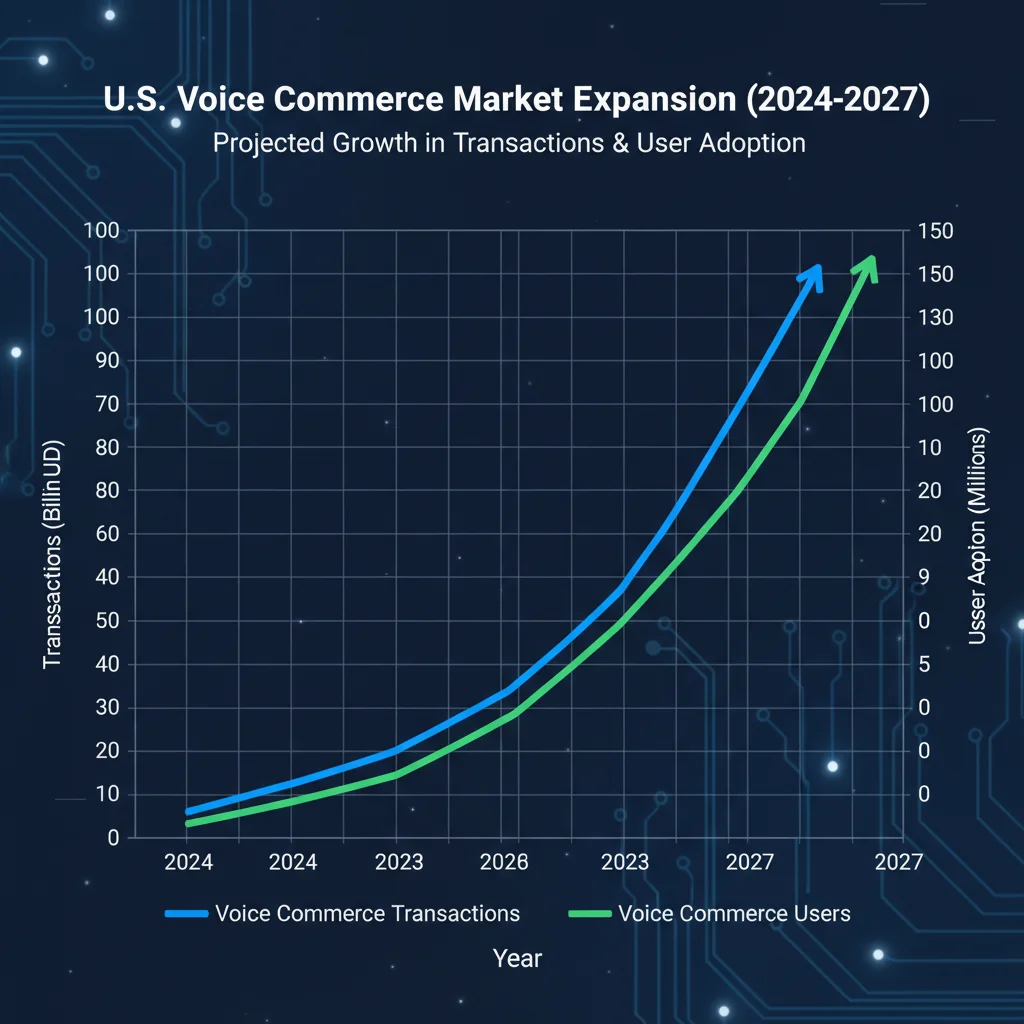
The retail landscape is in a perpetual state of evolution, constantly reshaped by technological advancements and shifting consumer behaviors. Among the most transformative trends emerging in recent years, voice commerce stands out as a powerful contender, poised to redefine how consumers interact with brands and make purchases. In the United States, this burgeoning sector is not just growing; it’s on the cusp of a significant boom, with projections indicating a staggering 25% market expansion by 2027. This isn’t merely a niche trend; it represents a fundamental shift in the digital shopping experience, demanding attention and strategic adaptation from businesses across all sectors.
The allure of voice commerce lies in its inherent convenience and hands-free operation. In an increasingly fast-paced world, consumers are constantly seeking ways to simplify their lives and streamline daily tasks. Voice assistants, embedded in smart speakers, smartphones, and even vehicles, offer an intuitive and efficient interface for everything from ordering groceries to checking product availability. This article will delve deep into the factors fueling this impressive Voice Commerce Growth, explore the challenges businesses must overcome, and provide actionable insights for companies looking to capitalize on this lucrative opportunity.
The Accelerating Momentum Behind Voice Commerce Growth in the U.S.
Several converging forces are propelling the projected 25% expansion of voice commerce in the U.S. market. Understanding these drivers is crucial for businesses aiming to develop effective voice commerce strategies.
Increased Smart Speaker Adoption and Ubiquity
The proliferation of smart speakers like Amazon Echo and Google Home has been a primary catalyst. These devices have moved beyond early adopters to become mainstream household fixtures. Their affordability, ease of use, and integration with various services have made them indispensable for many daily routines. As more households acquire and regularly use these devices, the comfort level with voice interfaces for tasks beyond simple queries naturally extends to shopping.
Advancements in Artificial Intelligence and Natural Language Processing (NLP)
The intelligence behind voice assistants has dramatically improved. Modern AI and NLP algorithms are far better at understanding complex commands, varied accents, and conversational nuances. This enhanced accuracy reduces frustration for users and makes voice interactions more fluid and reliable, directly impacting the willingness of consumers to trust these systems with their purchasing decisions. The ability of voice assistants to learn user preferences and anticipate needs further personalizes the shopping experience, driving repeat engagement and fostering customer loyalty.
The Convenience Factor: Hands-Free Shopping
In a society that values efficiency, the ability to shop hands-free is a significant draw. Imagine ordering groceries while cooking, reordering household staples from another room, or adding items to a shopping list while driving. Voice commerce offers unparalleled convenience, freeing up hands and attention for other tasks. This ‘ambient’ shopping experience integrates seamlessly into consumers’ lives, making purchasing less of a deliberate act and more of an organic part of their day.
Growing Consumer Trust and Familiarity with Voice Technology
As consumers become more accustomed to interacting with voice assistants for information retrieval, entertainment, and home automation, their trust in the technology for more sensitive tasks, such as financial transactions, gradually increases. The more positive experiences users have, the more likely they are to embrace voice commerce as a legitimate and secure shopping channel. Building this trust is a continuous process that relies on consistent performance and robust security measures.
The Rise of Voice-First Search and Discovery
The way consumers search for products is evolving. Instead of typing keywords into a search bar, they are increasingly asking voice assistants direct questions. This shift from visual to auditory search has profound implications for product discovery and brand visibility. Businesses that optimize their product listings and content for voice search queries will gain a significant competitive advantage, directly contributing to their Voice Commerce Growth.
Key Sectors Poised for Significant Voice Commerce Expansion
While voice commerce has the potential to impact nearly every retail sector, some areas are particularly ripe for significant growth due to their inherent characteristics and consumer needs.
Groceries and Household Essentials
This category is a natural fit for voice commerce. Recurring purchases, often of the same items, make reordering through voice commands incredibly efficient. Consumers can maintain shopping lists and add items as they run out, simplifying weekly or monthly grocery runs. The convenience of hands-free ordering while in the kitchen or managing other household tasks is a major draw.
Fast Food and Restaurant Orders
Ordering takeout or delivery via voice is gaining traction. The ability to quickly reorder a favorite meal or customize an order without navigating menus on a screen saves time and effort. Partnerships between restaurants and voice assistant platforms are making this process increasingly seamless, driving this aspect of Voice Commerce Growth.
Electronics and Smart Home Devices
Given that many voice commerce interactions originate from smart home devices, it’s logical that consumers would also use these platforms to purchase related electronics and smart home gadgets. Voice assistants can provide product comparisons, read reviews, and facilitate purchases, especially for items that are frequently bundled or complement existing smart home ecosystems.
Digital Content and Subscriptions
Purchasing audiobooks, music subscriptions, or digital games through voice commands offers immediate gratification. The integration of voice assistants with digital marketplaces makes these transactions quick and effortless, capitalizing on impulse purchases and subscription renewals.
Challenges and Hurdles on the Path to 25% Expansion
Despite the immense potential, the journey to a 25% market expansion for voice commerce in the U.S. is not without its obstacles. Businesses must proactively address these challenges to foster widespread adoption and maintain consumer trust.
Security and Privacy Concerns
Consumer apprehension about the security of personal data and payment information is a significant barrier. Users need strong assurances that their financial details are protected when making voice purchases. Transparency about data collection and usage, coupled with robust encryption and authentication methods, will be critical in assuaging these fears. Furthermore, the perception of voice assistants ‘always listening’ can deter some users from fully embracing the technology for sensitive transactions.
Limited Visual Cues and Product Discovery
One of the biggest differences between traditional e-commerce and voice commerce is the absence of a visual interface. Consumers rely heavily on product images, detailed descriptions, and customer reviews when making purchasing decisions. In a voice-only environment, conveying this information effectively is challenging. Businesses need to develop innovative ways to describe products, offer concise yet informative details, and guide users through choices without visual aids. This limitation particularly impacts categories where aesthetics or complex specifications are important.
Complex Purchase Processes and Customization
While simple reorders are well-suited for voice, complex purchases involving multiple options, comparisons, or extensive customization can be cumbersome. Imagine trying to configure a custom-built computer or select all the variables for a personalized gift using only voice commands. The back-and-forth required can quickly become frustrating. Solutions like guided conversations, pre-set preferences, and seamless transitions to visual interfaces when necessary will be vital for handling more intricate transactions.
Brand Discoverability and SEO for Voice
Traditional SEO focuses on keywords and visual search results. Voice search optimization requires a different approach, emphasizing natural language queries, conversational phrases, and featured snippets. Brands need to ensure their products are easily discoverable when consumers ask questions like, "What’s the best running shoe?" or "Order more coffee." This involves optimizing product descriptions for spoken language, ensuring clear brand names, and potentially investing in voice-specific advertising. The first result in a voice search often wins the purchase, making discoverability paramount for sustained Voice Commerce Growth.
Lack of Standardization Across Platforms
The voice assistant ecosystem is fragmented, with Amazon Alexa, Google Assistant, Apple Siri, and others operating independently. This lack of standardization can create inconsistencies in user experience and development challenges for businesses trying to reach a broad audience. Developing for multiple platforms requires significant resources and attention to detail to ensure a consistent brand experience.
Strategies for Businesses to Harness Voice Commerce Growth
To successfully tap into the projected 25% market expansion, businesses must adopt a proactive and strategic approach to voice commerce. Ignoring this trend is no longer an option; embracing it offers a significant competitive edge.
Optimize for Voice Search and Natural Language
This is perhaps the most fundamental step. Businesses need to analyze how consumers speak when asking for products or services. Focus on long-tail keywords, conversational phrasing, and question-based queries. Ensure product descriptions are concise, clear, and feature key information that can be easily conveyed by a voice assistant. Consider creating FAQ sections specifically designed for voice queries, answering common questions in a direct and succinct manner.
Simplify the User Experience (UX) for Voice
Voice interactions must be intuitive and frictionless. Design voice flows that are logical, minimize the number of steps, and provide clear prompts. For complex purchases, offer options for users to refine their choices or switch to a visual interface if needed. Personalization is key; leverage past purchase history and preferences to offer tailored recommendations and expedite reorders. The goal is to make the voice shopping experience as effortless as possible, fostering repeat engagement and driving Voice Commerce Growth.
Prioritize Security and Build Trust
Implement robust security measures for all voice transactions. This includes multi-factor authentication, clear confirmation prompts, and transparent privacy policies. Educate consumers about the security features in place. Building trust is paramount; a single security breach or perceived privacy violation can severely damage consumer confidence and hinder adoption.
Develop Voice-Specific Content and Product Descriptions
Rewriting product descriptions for a voice-first environment is essential. Focus on key benefits, unique selling propositions, and concise summaries. Consider how a voice assistant would read out the information and ensure it is engaging and informative without visual aids. For example, instead of a long paragraph, break down information into easily digestible bullet points or short sentences. Think about how to answer common product questions efficiently through voice.
Integrate Voice Commerce Across Channels
Voice commerce shouldn’t exist in a silo. Integrate it seamlessly with existing e-commerce platforms, mobile apps, and even physical store experiences. Allow customers to start a shopping cart on their phone, add items via voice, and complete the purchase on their desktop. This omnichannel approach provides flexibility and caters to diverse consumer preferences, enhancing the overall customer journey and contributing to sustained Voice Commerce Growth.
Leverage Personalization and AI
Use AI to analyze customer data and offer personalized recommendations, promotions, and expedited reordering options. The more tailored the voice shopping experience, the more likely consumers are to engage. Voice assistants can learn individual preferences, dietary restrictions, favorite brands, and purchase habits, making future interactions even more efficient and relevant. This level of personalization is a powerful driver for customer loyalty.
Experiment with Voice Advertising
As voice commerce matures, so too will voice advertising. Explore opportunities for sponsored product placements in voice search results or conversational ads that are contextually relevant to user queries. This is a nascent area, but early movers can gain a significant advantage in brand visibility and customer acquisition. Carefully consider how voice ads can enhance, rather than interrupt, the user experience.
Monitor and Adapt to Evolving Technology
The voice technology landscape is still rapidly evolving. Businesses must continuously monitor advancements in AI, NLP, and voice assistant capabilities. Be prepared to adapt strategies and invest in new tools and platforms to stay ahead of the curve. Regular testing and feedback loops will be crucial for refining the voice commerce experience and ensuring it meets evolving consumer expectations.

The Future Landscape: Beyond 2027
The projected 25% market expansion by 2027 is just a stepping stone. Beyond this horizon, voice commerce is expected to become an even more integrated and indispensable part of the retail ecosystem. We can anticipate further advancements in:
- Proactive Voice Assistants: Devices that anticipate needs and offer suggestions before being explicitly asked, based on learned patterns and contextual information. Imagine your smart speaker suggesting you reorder coffee when it detects your stock is low.
- Enhanced Multimodal Experiences: While voice-first, future interactions will likely combine voice with subtle visual cues on screens (e.g., smart displays, TVs, or even augmented reality interfaces) to provide a richer, more informative shopping experience when needed.
- Hyper-Personalization: Voice assistants will become even more adept at understanding individual preferences, moods, and even emotional states, leading to highly personalized product recommendations and shopping journeys.
- Seamless Integration with IoT: As more devices become connected, voice commerce will extend to an even wider array of products and services, creating a truly interconnected shopping environment.
These developments will further solidify the position of voice commerce as a critical sales channel, making the early adoption and strategic planning relevant today even more impactful in the long run. The businesses that invest wisely in understanding and implementing voice commerce strategies now will be the ones best positioned to thrive in this evolving retail landscape.
Conclusion: Seizing the Voice Commerce Opportunity
The U.S. market is on the cusp of a significant transformation in retail, driven by the rapid Voice Commerce Growth. With a projected 25% market expansion by 2027, the opportunity for businesses to innovate, engage customers, and capture new revenue streams is immense. While challenges related to security, visual limitations, and platform fragmentation exist, proactive strategies focused on voice search optimization, intuitive UX, robust security, and personalized experiences can pave the way for success.
Businesses that embrace voice commerce not as a fleeting trend, but as a fundamental shift in consumer behavior, will be the ones to reap the rewards. By investing in the right technologies, understanding the nuances of voice interaction, and prioritizing the customer experience, companies can not only meet the demands of the modern consumer but also secure a dominant position in the future of retail. The time to act is now; the voice of commerce is speaking, and its message is clear: adapt or be left behind.